Mostrar mensagens com a etiqueta pseudo-tradução. Mostrar todas as mensagens

quinta-feira, 10 de setembro de 2015

"História de D. Afonso de Brás, filho de Gil Brás de Santilhana", José da Fonseca // "Story of Don Alphonse Blas, son of Gil Blas de Santillana", Jose da Fonseca

Esta 37.ª obra, de 1838, resenhada no blogue Clássicos da literatura infanto-juvenil portuguesa // Portuguese Children's/Young People's Literature Classics não é uma obra plenamente original mas, novamente, uma adaptação tão solta a ponto de não fazer toda a diferença a existência de material de fonte original (o romance pícaro de 1744 de sequela do Gil Blas de Alain-René Lesage La Vie de Don Alphonse Blas de Lirias, fils de Gil Blas de Santillane, a capa de uma edição francófona de 10 anos depois da original acima, atribuído duvidosamente ao autor do Gil Blas visto que no original vinha sem indicação de autor). O gramático e escritor Português José da Fonseca (1788-1866), radicado em França desde o início do século XIX (famoso mundialmente pela falsa atribuição que o editor e o autor deram a uma pérola do humor involuntário que foi o dicionário Português-Inglês feito pelo verdadeiro autor Pedro Carolino sem qualquer conhecimento de Inglês e traduzindo de Português para Francês e de Francês para Inglês, alcunhada pelo fã Mark Twain de English As She Is Spoke, traduzido como o hilariante "Inglês Como Ela É Falou"), para além desta tradução "solta", fez ainda uma adaptação para crianças do Gil Blas original em O Gil Braz da infancia, ou Aventuras de Gil Braz compendiadas para uso dos meninos, 22 anos depois, espécie de "prequela" (como se chama a obras subsequentes a outra que se passam antes da anterior) desta.
O romance (tal como o original Gil Blas, narrado na primeira pessoa como se memórias fossem) conta a vida do filho mais novo (de 2) de um pícaro Cantábrico que subira na vida como favorito do Rei Filipe IV de Espanha e chegara a secretário do Primeiro-Ministro e através de trabalho duro e inteligência se pudera aposentar num castelo e apreciar uma fortuna ganha honestamente, com uma mulher de alta linhagem (isto apresenta o desafio usual do filho nascido em riqueza de um "homem auto-feito": terá a mesma têmpera do protegenitor que ascendeu a pulso? Que tem ele para fazer na vida, se ele próprio nasceu já "no topo"? Só esperar pela morte do progenitor e herdar?). Quando o Primeiro-Ministro Olivares cai em desgraça (por razões incluindo a Restauração da Independência portuguesa), o padrinho de D. Afonso (do mesmo nome), que é o Vice-Rei (ficcional) de Aragão, é substituído por outro mas devido ao seu bom serviço em muitos cargos é reformado nas suas terras com uma boa reforma, passando a maioria do tempo na biblioteca com a esposa amante das matemáticas, o padre local bem-lido, e um hóspede Alemão D. João de Steinbock, e falando a educar o afilhado (que trata com todas as carícias) só em Latim (a ponto de Afonso falar quase melhor Latim que Espanhol). Chegando a altura de ele se formar, ele regista Afonso na Universidade de Salamanca e envia-o com o Alemão e 2 domésticos. Aí ele passa muito tempo sem ver os pais e o padrinho (a quem pede dinheiro a pedido do Alemão quando acaba o que deu originalmente) e dedica-se com afinco ao estudo e aprende desenho e passeia com o jovem sobrinho-neto do Duque de Médina-Céli nas horas vagas. É por via deste jovem com quem acaba por conviver e convida ao castelo do seu padrinho, que conhece e ambos acabam por se ver sob a protecção (e rodeados da lisonja) de um tal de D. Cipião.
Assim a obra começa realmente, com Cipião (não uma personagem diabólica mas alguém que tenta claramente usar a associação a jovens de estatuto para seu favor) tentando "enrolar" o padrinho e pais de D. Afonso e conseguir tirar dividendos da guarda do jovem, enquanto este vai amadurecendo, fazendo pela vida fazendo uso dos dons para o desenho e o Latim, dos conhecimentos obtidos em Salamanca e aparentemente de um je ne sais quois que podemos imaginar herdado geneticamente do pai (aprendendo ainda várias outras coisas pelo caminho), num modelo que ajudou, pelo uso de modelos estrangeiros, a enriquecer a literatura portuguesa com um carácter de literatura de formação e de aventuras. Com grande força de vontade, fé, ética e uso do corpo quando necessário, depois da partida de Cipião para a América colonial espanhola, D. Afonso e o seu novo amigo Conde Pérez viajam para o México, onde se encontram com Cipião, que de Vera Cruz no centro-sul da costa mexicana se dirigira através do país, e assim vão passando o caminho em peripécias e conseguindo ludibriar Cipião e outros opositores quando necessário, para além de várias descrições vivas de pormenores etnográficos do México setecentista, incluindo curiosos festivais (um deles não sendo de facto visto pelas personagens, mas descrito por Afonso do que este aprende sobre ele de conversas com os locais).
Um episódio das aventuras de D. Cipião nas Américas
A estória evolui assim como uma espécie de versão ficcional e individualizada da criação de um novo mundo colonial para criação de riqueza de saídos da Península Ibérica (Espanhóis como Portugueses), em que D. Afonso de Brás deixa Espanha e fixa-se na América colonial e faz uma nova vida e produz nova riqueza para si, com um espírito desbravador, semi-assimilador à realidade tropical, e cristianíssima (e cristianizadora), numa variação latina do self-made man anglo-saxónico, o "homem auto-feito". Esta "tese" de redenção ou pelo menos de reformulação de um ser humano torna-se mais claro no Capítulo VII, que logo no título torna claro que é sobre «o Diabo feito Santo». Depois disso, Afonso e companhia, ao longo da sua "odisseia" ao longo do México que nos dá o retrato da América Latina colonial, confrontam um pedinte insolente bem agasalhado, e depois têm um "modesto" episódio de aventureirismo picaresco na povoação de Casa Blanca no Novo México (portanto não há aqui Marrocos nem Humphrey Bogart, embora uma personagem anti-heróica do tipo não ficasse muito fora de estilo num romance picaresco como este). Depois disso, alguém assassina o Senhor Cipião, o nosso herói descobrindo os responsáveis pelo complô, que são punidos pela justiça do Vice-Reino da Nova Espanha (o Império americano espanhol na América Central e do Norte e na Venezuela), sendo Afonso depois recompensado com a herança de um grande senhor de Guaxaca (bem no sul do México), e após mais alguns capítulos de episódios (incluindo o Capítulo XII que o título diz deixar à escolha do leitor se o lê ou passa e um Capítulo XIII que trata um pouco de vida tardia do pai do protagonista deste livro), D. Sancho e D. Afonso ajudam a salvar uma personagem secundária que conheciam de mais para o princípio do livro, o Conde de Leyva, de perigo de vida, sendo após isto que D. Afonso de Brás volta a Espanha, a Madrid, para terminar uma vida confortável depois de casar com uma viúva (casamento que, como costume para uniões nobres reais ou ficcionais, tem tanto de acto feliz como de acto socioeconómico): «Esta pobre infeliz, que não foi de algum lado das mais afligidas da morte de seu marido, não se tendo esperado que se coubesse um outro fim, ao trem de vida que conduzia, aceita com alegria a oferta de D. Afonso. Ela foi conduzida até Dom Pedro de Patilhos, que lhe fez caber uma pensão viageira, em reconhecimento que ela lhe havia rendido enquanto que ele estava em Roma.»
É tão divertido e "alimentador" da alma ler este livro, como a "prequela" do mesmo autor sobre o pai de D. Afonso de Brás, em que Gil Brás nasce na miséria a um rapaz-de-estrebaria e uma criada-de-câmara na Cantábria e é educado por um tio em Oviedo, que deixa com a idade de 17 anos, partindo para a Universidade de Salamanca, onde o seu futuro parece tornar-se risonho; uma evolução que é interrompida quando uns ladrões o forçam a ajudá-los em roubos de estrada, sendo depois capturado e enfrentando pena de cadeia que só evita tornando-se criado de um grande senhor, cargo que lhe permite passar o olhar ao longo de várias classes laicas, clericais e fora-da-leis da sociedade ao largo de vários anos, graças à sua adaptabilidade e espirituosidade rápida. Finalmente ele consegue chegar à corte e ter o final feliz e a subida na vida que já referi acima ao falar do princípio do romance sobre o seu filho. Estas duas obras ajudaram a dar o retrato do homem Ibérico pragmático, mostrando assim ser mais que somente missionário ou conquistador, que ajudaram a influenciar o modelo da ficção de aventuras e de "estudo de personagem" posterior, e também abrindo novos caminhos para a literatura europeia, latino-americana e mundial, ajudando ainda a formar muita literatura infanto-juvenil (junto com obras como o já aqui visto O Piolho Viajante, que como vimos na respectiva crítica, até referia por nome o Gil Blas ou Gil Braz original; mas em muito O Piolho Viajante também é uma "resposta" a um certo optimismo e moralismo da obra franco-hispânica que da Fonseca tornou franco-hispano-portuguesa, pelo contrário sendo mais mordaz e sarcástico). Historia de D. Afonso de Braz, filho de Gil Braz de Santilhana e O Gil Braz da infancia, ou Aventuras de Gil Braz compendiadas para uso dos meninos só se encontram na Biblioteca Nacional de Portugal e talvez algumas colecções de origem privada (embora o original francês possa ser lido no Google Livros na edição bem ilustrada de 1744 e na hemeroteca digital francesa gallica na edição de 1754 que não tem metade das ilustrações), mas a adaptação mais moderna do Gil Blas intitulada Gil Brás resolve correr mundo : aventuras de Gil Brás de Santilhana, adaptada por (Henrique) Nascimento Rodrigues para a colecção Juvenil da Portugália de 1966 surge em várias bibliotecas municipais, e nalgumas outras (mais raramente porém) surge a adaptação de Nascimento Rodrigues de outra parte deste ciclo de Lesage, O confidente : aventuras de Gil Brás de Santilhana (do mesmo ano).


This 37th work, from 1838, reviewed in the Clássicos da literatura infanto-juvenil portuguesa // Portuguese Children's/Young People's Literature Classics blog is not a fully original work but again, an adaptation so loose to the point of not making that much difference the existance of original source material (the 1744 picaresque sequel novel to the Gil Blas by Alain-René Lesage La Vie de Don Alphonse Blas de Lirias, fils de Gil Blas de Santillane, the cover of a francophone edition of 10 years afterwards from the original shown above, attributed doubtfully to the author of the Gil Blas seen that in the original it came without indication of the author). The Portuguese gramatician and writer José da Fonseca, established in France since the early 19th century (famous worldwide for the false attribution that the editor and author gave to the pearl of unvoluntary humour which was the Portuguese-English dictionary made by the true author Pedro Carolino without any knowledge of English and translating from Portuguese to French and from French to English, nicknamed by fan Mark Twain with the hillarious English as She is Spoke), besides this "loose" translation, did still an adaption for children of the original Gil Blas in O Gil Braz da infancia, ou aventuras de Gil Braz compendiadas para uso dos meninos ("The Gil Blas of childhood, or Adventures of Gil Blas epitomized for use of the little-children") 22 years afterwards afterwards, kind of prequel (as one calls to works subsequent to another that sets itself before the previous one) to this one.
The novel (just like the original Gil Blas, narrated in the first person as if being memoirs) tells the life of the youngest son (of 2) of a Cantabrian pícaro/rogue that had risen in life as a favourite of the King Philip IV of Spain and got to secretary fo the Prime Minister and through hard work and intelligence himself had been able to pension-off into a castle and enjoy a honestly earned fortune, with a high lineage woman (this presents the usual challenge of the son born in wealth to a "selfmade man": has he the same quenching of the progenitor that rose by its own hand? What has he to do in life, if he himelf was born already "at the top"? Just to wait for the death of the progenitor and to inherit?). When the Prime Minister Olivares falls in disgrace (for reasons including the Portuguese Restoration of Independence), the godfather of Don Alfonso (of the same name), who is the (fictional) Viceroy of ragon, is replaced by another, but due to his good service in many offices is retired in this lands with a good retirement-pension, passing the most time in the library with the wife who is a lover of mathematics, the well-read priest, and a German guest Don John of Steinbock, and talking at educating the godson (whom he treats with all the cares) only in Latin (to the point of Alfonso speaking almost better Latin than Spanish). Arriving the time for him to graduate himself, he registers Alfonso in Salamanca University and sends him with the German and 2 domestics. There he passes much time without seeing the parents and the godfather (to whom he asks for moey on request of the German when it ends the one that he gave originally) and dedicates himself with keenness to the study and learns drawing and walks-about with the young grandnephew of the Duke of Medina-Celi in the vacan hours. It is by way of this young-man with whom he ends up by being on familiar terms and invites to his godfather's castle, that he gets to know and both end by to themselves seeing under the protection (and surrounded by the flatering) of one Don Scipio.
Like-so, the work starts truly, with Scipio (not a diabolical character but someone that tries clearly to use the association to youngmen of status to his favour) trying to "entangle with" the godfather and the parents of Don Alfonso and get to take-away dividends from the keeping of the youngman, while he goes maturing, making a living out of making use of the gifts for drawing and latin, out of the knowledges obtained in Salamanca and apparently out of a je ne sais quois that we can imagine inherited genetically from the father (learning yet several other things along the way), in a model that helped, by the use of foreign models, to enrichen the Portuguese literature with a character of bildungs-roman and adventure literature. With great strength of will, faith, ethics and use of the body when necessary, after the departure of Scipio for Spanish colonial America, Don Alfonso and his new friend Count Perez travel to Mexico, where themselves hey doo meet with Scipio, that from Vera Cruz in the centre-south Mexican coast to himself did head across the country; and so passing the way in mishaps and getting to deceive Scipion and other opponents when needed,besides several lively descriptions of ethnographic detals from seventeenth-century Mexico, including curious festivals (one of them not being in fact seen by the characters but described by Alfonso from what he former learns from conversations with locals).
An episode of the adventures of Don Scipio in the Americas
The story evolves so s a kind of fictional and individualized version of the creation of a colonial new world up for the creation of wealth of ones exited from the Iberian Peninsula (Spaniards and Portuguese), into which Don Alfonso de Blas leaves Spain and settles himself in the colonial Americas and makes a new life and produces wealth for himself with a trail-blazer, semi-assimilator to the tropical reality around, and most-Christian (and christianising) spirit, in a Latin variation of the Anglo-Saxonic self-made man, the "homem auto-feito"/"hombre auto-hecho". This "thesis" of redemption or at least of reformulation of a human being becomes clearer in the chapter VII, that rightaway on the title it becomes clear that it is on «The Devil made into Saint». After that, Alfonso and company, along their "odyssey" along Mexico that to us gives the portrait of the colonial Latin America, confronts an insolent well-coated beggar, and afterwards, have a "modest" episode of picaresque adventurism in the settlement of Casa Blanca in New Mexico (hence there is no Morocco nor Humphrey Bogart, although an anti-heroic character of the type wouldn't stand very out of style on a picaresque novel like this one). Afterwards of that, someone murders Mister Scipio, our hero discovering the ones responsible for the plot, that are punished by the justice of the Viceroyalty of New Spain (the Spanish American Empire in Central and Northern America and in Venezuela), being Alfonso afterwards rewarded with the inheritance of a great lord of Guaxaca (well in the south of Mexico), and afterwards some plus chapters of episodes (including the Chapter XII that in the titles says to leave to the choice of the reader if one reads it or passes it by and a Chapter XIII that takes care of a little of the later life of the father of this book's protagonist), Don Sancho and Don Alfonso help to save a secondary character that they knew from way to the beginning of the book, theCount of Leyva, from living danger, being afterwards of this that Don Alfonso de Blas goes back to Spain, at Madrid, for finishing a comfortable life afterwards the marrying of a widow (marriage that, as usual for real or fictional noble unions, has as much of happy act as of social-economical act): «This unfortunate poor-woman, that wasn't from any side of the most afflicted by death of her husband, not herself having expcted that herself did befit another end, at the convoy of life that she drove, accepts with joy the offer of Don Alfonso. She was driven till Don Pedro of Patillos, who to her made befit a voyage pension, in recognition that she to him had paid off while he was in Rome.»
It is as fun as feeding to the soul to read this book, as the "prequel" of the same author on the father of Don Alfonso de Blas, in which Gil Blas is born in misery to a stable-boy and a chamber-maid in Cantabria and is educated by an uncle in Oviedo, that he leaves with the age of 17 years old, departing for Salamanca University, where his future seems to smile upon himself: an evolution that is interrupted when some thieves unto him force helping on highway theft, being afterwards captured and facing jail time that he only avoids becoming servant of a great lord, position that to him allows to pass his gaze throughout several lay, clerical and outlaw classes of society throughout several years, thanks to his fast adaptability and wit. Finally he can get to the royal court and have the happy ending and the rise in life that I already referred above at talking of the beginning of the novel on his son. These two works helped to give the portrait of the pragmatic Iberian man, showing so to be more than merely missionary or conquistador, that helped to influence the model of the hinder adventure and "character study" fiction, and also opening new ways for the European, Latin-American and worldwide literature, helping to form much children's/young-people's literature (together with works like the already here seen The Travelling Lice, that, as we saw in the respective review, even referred by name the original Gil Blas or Gil Braz; but in much The Travelling Lice likewise is an "answer" to a certain optimism and moralism of the French-Hispanic work that da Fonseca turned French-Hispanic-Portuguese, on the contrary being more sharp and sarcastic). History of Don Slfonso de Blas, son of Gil Blas de Santillana and The Gil Blas of childhood, or Adventures of Gil Blas epitomized for the use by the little-children only do find themselves in the Portugal National Library and maybe some collections of private origin (although the French original may be read on Google Books in the 1744 well illustrated edition and in the French digital newspaper-library Gallica in the 1754 edition that does not have half of the illustrations), but the more modern adaptation of the Gil Blas entitled Gil Brás resolve correr mundo : aventuras de Gil Brás de Santillana ("Gil Blas sorts-out to race-out world : adventures of Gil Blas de Santillana"), adapted by (Henrique) Nascimento Rodrigues for the Portugália Juvenil ("Juvenile Portugália") collection of 1966 comes-up in several Portuguese municipal libraries, and in some other ones (more rarely though) comes-up Nascimento Rodrigues' adaptation of another part of this Lesage cicle, O confidente : aventuras de Gil Brás de Santilhana ("The confidant : adventures of Gil Blas de Santillana", of the same year).


quinta-feira, 14 de maio de 2015

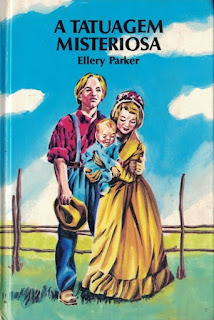
"A tatuagem misteriosa", Ellery Parker (pseudónimo de Mário Domingues?) // "The Mysterious Tatoo", Ellery Parker (pseudonym of Mario Domingues?)

Ainda se lembram da ante-penúltima publicação, sobre As Aventuras de Jim West de Raul Correia? Se não gostaram dela provavelmente não vão gostar desta 21.ª publicação deste blogue mas enfim, aguentem-se quiserem continuar a ler, porque agora voltamos a um western português de meados do século XX, agora mais concretamente a um livro de um misterioso autor de westerns e "livros para raparigas" chamado Ellery Parker. Ora isto ficaria fora do foco do nosso blogue não fosse o não haver sinal nenhum de nenhum Ellery Parker fora das edições portuguesas (o que indicia a velha prática da chamada "pseudo-tradução") e a pessoa apresentada como tradutor e adaptador do texto, o Luso-Santomeense Mário Domingues (1899 - 1977) ser um frequente pseudo-tradutor, autor em nome próprio e um aficionado do género policial (em que existe outro pseudónimo, Ellery Queen, partilhado pelos primos Americanos Frederick Dannay e Manfred Bennington Lee, por sua vez pseudónimos dos verdadeiros e mais obviamente judaicos nome destes, Daniel Nathan e Emanuel Benjamin Lepofsky, sendo que este Ellery poderia bem ser a inspiração para o falso autor estrangeiro de Domingues). Agora, neste western entre infantil e romântico-bucólico (narrado nas palavras de um narrador cujo trisavô foi participante dos casos narrados, conforme foi contado ao narrador pelo seu avô), o nosso herói é Artur Everton, mais de um século antes do tempo do narrador o proprietário do rancho Pequeno Eden na Califórnia (fundado pelo pai Tomás, já velho à altura do começo da narração) perto de uma povoação chamada Fuenton, onde vive com a esposa Helena e a filha Alice, num tempo em que ainda faltavam caminhos-de-ferro, estradas condignas e carros (Everton gastaria na altura duas semanas para ir do rancho à capital estadual de S. Francisco e voltar), e a maioria das tribos indígenas haviam já sido forçadamente pacificadas e a relação entre indígenas e colonos era geralmente pacífica apesar de haverem alguns bandos renegados.
Mário Domingues pelo fim dos anos de 1950 ou durante os anos de 1960.
A narrativa tem o seu verdadeiro começo (depois de uma descrição detalhada da existência e rotina levada pelos residentes do rancho dos Everton) depois de uma das frequentes viagens de negócios de Artur a S. Francisco (Fuenton é descrito como bom centro comercial, mas tinha preços dos produtos demasiado elevados devido à distância em relação ao centros que os forneciam), durante a qual o fiel empregado Mac Gregor vai a Fuenton-City beber uma cerveja, e acaba por derrubar com um murro um rufia que tenta sentar-se na mesa dele sem autorização e que afinal era Big Dick (um belo trocadilho para um Anglo-Saxónico), o chefe duma das quadrilhas mais temidas da altura e que graças àquele derrube é finalmente detido pelo xerife de Fuenton (com isto Mac Gregor ganha 2000 dólares «por um soco» segundo Parker/Domingues). No parágrafo seguinte, já dez anos depois, o empregado de Pequeno Eden ainda recebe louvores sempre que visita Fuenton por causa do feito; na mesma altura, Artur parte novamente em viagem e depois de um atraso inesperado que preocupa a família (apesar do forte gangue de Big Dick já há muito ter sido destruído), chega um cowboy mensageiro algum tempo depois, que relata que em meia-hora Artur chegará com uma grande surpresa. É um menino que não terá mais de 7, 8 meses, com cabelo castanho quase loiro e olhos castanhos escuros quase pretos que fora aparentemente abandonado, o qual Helena logo agarra e ao qual se afeiçoa (aliás, compensando com o recém-chegado uma velha lamentação do casal Everton de faltar um herdeiro masculino).
E através deste narrador não exactamente omnisciente mas que sabe bem a narrativa que lhe é externa e conhece pela narrativa do seu avô (que por sua vez o seu avô, trisavô do narrador, lhe narrou) que o enredo de A tatuagem misteriosa vai avançando, com Alice a afeiçoar-se ao que assume como "irmão" enquanto Artur teme se não deverão evitar adoptar já a criança talvez não tão abandonada assim, até que descobrem ao lavar a criança (que pela dor que a lavagem da cabeça lhe dá é claramente algo a que não está habituado) vestida de camisa suja que esta tem uma tatuagem de uma âncora mal-feita a tinta preta. Depois disso (e isto é episódio interessante dada a etnia mestiça de Domingues), o casal de criados negros primeiro comprados como escravos e alforriados por Tom Everton chamados Maria e Sam tratam da criança a mando de Helena, sendo a propósito deles que o narrador descreve como em tempos (antes de Sam e Maria começarem a ser apreciados por todos os de Fuenton e arredores) uma vez Sam se envolvera numa luta primeiro com um homem e depois de vários cowboys que não aceita que servissem «pretos» nesse lugar (apesar de Sam e Maria serem sempre lá servidos, por serem criados dos respeitados Everton), e como Tom tomara então a coisa como ofensa pessoal e fora pessoalmente espancar o agressor de Sam, partindo-lhe os 3 dentes da frente (e dando-lhe a nova alcunha de Desdentado), e finalmente ficamos a saber as circunstâncias do achado da criança por Artur Everton, num lugar onde só restavam os restos queimados de uma eventual cabana.
Depois de serem visitados uma noite no rancho pelo xerife Jaime Craigh, começa uma busca deste e seus 2 assistentes pelos eventuais pais da criança (ajudados por Artur e Mac Gregor), mas ante o risco de a criança poder estar sozinha, o menino é efectivamente adoptado sob o nome Eduardo (tal como o pai de Mac Gregor, embora mais tarde surja a incoerência de Mac Gregor mais tarde no livro dizer que se chama Heitor... como o seu pai), para muito gosto de Helena e Alice. Durante a cavalgada de investigação do grupo do xerife, assistentes, Artur e Mac Gregor, este último fala aos outros do seu berço na Escócia (numa aldeia perto do Loch Ness), de como passara (depois de abalar de lá para a América à revelia dos pais com dinheiro ganho na lavoura posto de parte às escondidas por ele) mais de metade da vida na América (havia partido com 17 anos) e amava a Califórnia só abaixo da Escócia, e acima de tudo o rancho Pequeno Eden onde Tomás Everton o acolhera e lhe permitira viver nos EUA numa altura em que o Escocês quase se preparava para regressar (mais pobre) à terra natal. Depois de Mac Gregor findar a sua história é que Craigh começa as suas investigações e inquéritos ao longo da caminhada pelos arredores de S. Francisco e Fuenton-City, e numa serra onde uma pequena (que fora enorme antes do confronto com os brancos) tribo índia liderada pelo envelhecido chefe Águia Negra vive com alguma prosperidade em solo relativamente fértil. É Águia Negra que dá as primeiras informações concretas ao grupo de busca, como alguns «rostos pálidos» que se diziam homens do xerife Craigh trabalhavam na cabana em cujos restos Artur tinha achado o menino.
De certa forma há certas semelhanças estilísticas e de enredo para com a anterior As Aventuras de Jim West de Raul Correia, com igual foco familiar, aventuras e mistérios que afastam a família, histórias de recomeços familiares (embora claramente aqui não haja uma narrativa de migração e colonização mas já umas gerações após o enraizamento civilizacional), uma narrativa de aumento do núcleo familiar (neste caso não por aumento natural da mesma mas por adopção) e confronto com inimigos foras-da-lei (aqui mais brancos que Índios, talvez pelo fundo ele próprio mestiço de um tipo de "indígenas", no caso angolano, de Domingues comparado com Correia, por isso sendo mais positivo o autor desta obra no retrato dos Índios e só aplicando a linguagem estereotipada do Índio até certo ponto) e novamente uma demanda de regresso à família cujos desafios têm de ser ultrapassados (o passado juvenil de Domingues como pioneiro do movimento anticolonialista e migrante minoritário em Portugal, e indigenista quanto a África vale a pena notar na ambiguidade do sentimento amigável do indígena mas não anti-colonos-brancos e foco em colonos brancos desta obra
). Podemos  ainda perguntar-nos se o facto de ser nascido numa colónia africana desabitada antes da colonização e exploração de engenhos de açúcar e plantações escravas e como filho de dois colonos da sua terra insular africana (uma africana continental e outro europeu) numa terra em que até os negros eram deslocados não-indígenas, o fazia ter mais simpatia pelos negros americanos que pelos indígenas americanos e até ser relativamente positivo para com os colonos americanos brancos (o que um escritor africano em terra com população indígena negra provavelmente não seria), ou (dados escritos da juventude em que comparava colonização inglesa favoravelmente contra a portuguesa) se está a projectar o "colono bom" nestes anglófonos.
Os diálogos tendem tanto para falas melodramáticas e expansivas como para falas simples e concisas, ambas porém dando pistas quanto à natureza bem individualizada de cada personagem e dando lições quanto uma certa visão da sociedade tanto da América pós-colonização do Oeste como do Portugal do século XX (unidas muito pelo ideal do homem feito a si próprio, condizendo aqui com o perfil do próprio Domingues, um jovem de São Tomé criado pela família Portuguesa que viria a tornar-se jornalista visível, escritor, editor de edições baratas de literatura "pop", e  divulgador de história numa espécie de José Hermano Saraiva do mundo livreiro antes de JHS começar a sua "segunda vida" televisiva). Talvez o maior exemplo disso seja o diálogo de Heitor Mac Gregor (nome que lembra dois heróis "de fronteira", o Heitor Troiano da Guerra de Tróia e o Robert Roy MacGregor, mais conhecido como «Rob Roy», o ganadeiro virado fora-da-lei e guerrilheiro das Terras Altas Escocesas, de onde o ficcional Mac Gregor também é nativo), apoiado por Artur Everton e Jaime Craigh, que definem Tom Everton como exemplo do espírito ideal do empresário que se poderia dizer de "capitalista criativo":
«Diz uma grande verdade — anuiu Mac Gregor. — Raramente os nomes condizem com as coisas. Mas no que se refere ao seu rancho, notamos uma excepção: É um Pequeno Paraíso. Felicito-o por isso.
As felicitações vão todas para meu pai — acudiu Artur com entusiasmo. — Ele não se limitou a desbravar a terra e a torná-la produtiva; desbravou a alma de muita gente rude, nela plantando a bondade, a tolerância, o dever de nos ajudar-mos uns aos outros. O senhor sabe, como ninguém, que no nosso rancho até os animais são tratados humanamente.
— Sim, sei-o, toda a gente o sabe por estas redondezas — disse Jaime Craigh. —Desejariam muitas pessoas deste mundo serem tratadas pelo seu semelhante como os animais são tratados no Pequeno Eden.»
O interesse de uns diálogos assim é ver que não temos uma apologia de latifundiários e colonizadores em si mesmos da parte de um autor que escreveu e viveu a maioria da sua vida sob a Ditadura Militar (ou Nacional) e o Estado Novo, mas um louvor de latifundiários e os colonizadores quando estão ao nível do que o estatuto de elite "lhes exige", quando são pautados por um certo humanismo e conduta criativa e produtiva para as suas próprias sociedades em seu torno. Como Heitor, Heitor Mac Gregor é um crente na sociedade em seu torno, sacrificando-se pela sobrevivência dela e o seu sucesso, crente na sua hierarquia, e um "soldado" esforçado dela, apesar de ser um de "cepa" bastante acima do outro popular "obrigado" a esse tipo de obediência (Heitor sendo um príncipe, enquanto Mac Gregor assume ao falar da sua vida pré-emigração que a sua família escocesa não era pobre mas remediada e tinha pequena propriedade que dava para sustento familiar e acumular receitas extra), e como Rob Roy MacGregor vem de um lar tradicionalista (Rob Roy era antigo apoiante dos Jacobitas, que numa espécie de guerra civil nas ilhas britânicas na passagem do século XVII para XVIII tomavam um papel similar aos Miguelistas da nossa guerra civil confrontados pela família liberal do pai de Domingues) e respeita a estrutura geral da sociedade apesar de se revoltar contra o pior dela de forma reformista, mantendo uma certa crença de que a sociedade poderá auto-regular os seus defeitos e melhorar-se, sendo que a existência de cavalheiros como Tom Everton ajuda a aumentar as probabilidades desse melhorar. O retrato de proprietários torna-se particularmente interessante quando sabemos que Domingues foi na juventude um colaborador do jornal anarquista sindicalista revolucionário A Batalha. A obra de um autor é sempre representativa da crença do próprio, especialmente quando está a escrever ficção mainstream que é lucrativa numa sociedade a que eles se opõem (ou opunham)?
Como em As Aventuras de Jim West, novamente temos o uso da narrativa histórica norte-americana como forma de subtilmente fazer afirmações como contextos similares no Portugal imperial (e mesmo pós-imperial), quanto a formação e louvor de carácter nacional e comentário sobre justiça social, tema que a sociedade portuguesa voltaria a usar, depois da textos como as novelas de Correia e esta de Parker/Domingues terem tido as suas publicações originais (as de Correia n'O Mosquito nos anos de 1930 e 1940 e A tatuagem misteriosa de Domingues que obviamente foi escrita antes da morte do autor em 1977 mas da qual não há até ao momento indicação de edição anterior à de 1979), com a "repescagem" destes textos para servirem de "anti-depressivos culturais" durante e após as duas primeiras intervenções do FMI em Portugal sob governos de coligação de Mário Soares com CDS e depois PSD (1978-79 e 1983-85). E esse, é assim o principal valor deste tipo de livros, que servem de incentivos morais para ideais e heroísmos utilitários como incentivadores, que atraem enquanto aventuras e permitem ao leitor identificar-se com os aventureiros desafiados pelos desafios e mistérios que surgem ante eles no enredo, como em quase todos os livros que temos vindo a resenhar, e continuaremos a resenhar. Este livro pode achar-se na maioria das bibliotecas municipais e algumas de outro tipo, sob a forma de cópias da Colecção Azul para raparigas primeiro editada pela editora Romano Torres e depois pela Casa do Livro Editora e por fim a Editorial Pública e o Círculo de Leitores, por vezes surgindo na mesma biblioteca (como na Municipal de Barcelos) sob a forma de cópias quer da edição de 1979 da Casa do Livro Editora quer da de 1990 da Editorial Pública (mais e melhor ilustrada, e 4 páginas mais longa devido a ter os capítulos separados por uma página em branco e uma página com cada título de capítulo).
Capa da edição de 1990 (de fsla.pt)


You still remember the second-to-last post, on As Aventuras de Jim West/"The Adventures of Jim West" by Raul Correia? If you did not like it you probably will not like this blog's 21st post but alas, endure yourself along if you want to keep reading, becaus we go back to a mid-20th century Portuguese western, now more concretely to a book of a mysterious author of westerns and "books for girls" called Ellery Parker. Well that would stay outside the focus of our blog if it were not for there not being any sign of any Ellery Parker outside the Portuguese editions (what points to the practice of the so-called "pseudo-translation") and the person presented as translator and adapter of the text, the Portuguese-Santomean autor Mário Domingues (1899 - 1977) being a frequent pseudo-translator, author under his own name and an aficionado of the crime-mystery genre (in which there exists another pen-name, Ellery Queen, shared by the American cousins Frederick Dannay and Manfred Bennington Lee, in turn pen-names to the true and more obviously Jewish names of theirs, Daniel Nathan and Emanuel Benjamin Lepofsky, being that this Ellery could well be inspiration for Domingues' false author). Now, in this western between childish and romantic-bucolic (narrated in the words of a narrator whose great-great-grandfather was participant to the narrated affairs, according to what was narrated to the narrator by his grandfather), our hero is Artur [sic] Everton, more than a century before the time of the narrator the owner of the Little Eden ranch in California(founded by his father Tom, already old at the time of the narration's start) near to a settlement called Fuenton, where he lives with the wife Helena and the daughter Alice, on a time in which it still were lacking railways, fitting roads and cars (Everton would spend at that time-point two weeks to go by ranch to the state capital of San Francisco and return), and the majority of the indigenous tribes had already been forcefully pacified and the relation between indigenous and settlers were generally peaceful despite there being some bands of renegades).
Mario Domingues by the late-1950sor during the 1960s.
The narrative has its true start (after a detailed description of the existence and routine taken by the residents from the Everton ranch) afterwards to one of the frequent business trips of Artur to S. Francisco (Fuenton is described as good trading centre, but had prices to the goods too risen-up due to the distance in relation to the centres that supplied it), during which the faithful employee Mac Gregor goes to Fuenton-City to drink a beer, and ends up throwing down with one punch a bully who tried to sit-down at his table without authorisation and who afterall was Big Dick (a good pun for an English-speaking audience), the chief of one of the most feared hoodlum gangsof that time-point and that thanks to that throwing-down is finally detained by the sheriff of Fuenton(with this Mac Gregor earns 2000 dollars «for one jab» according to Parker/Domingues). In the following paragraph, already ten years afterwards, the employee of Little Eden still receives praises anytime he visits Fuenton because of the deed; at the same time, Artur leaves once again on trip and afteran unexpected delay that worries the family (despite the strong gang of Big Dick already well back having been destroyed), it arrives a messenger cowboy some time after, who reports that in half an hour Artur shall arrive with a big surprise. It is a little boy that would not have more than 7, 8 months-old, with brown almost blond hair and dark brown almost black eyes that had been abandoned, whom Helena right-away grabs-up and to whom she grows affectionate with (more so, compensating with the newly-arrived an old lamenting of the Everton couple of lacking a male heir).
And through this narrator not exactly omniscient but that knows well the narrative that is external to it and knows it through his grandfather's narrative (which on his turn his grandfather, the narrator's great-great-grandfather,narrated to him) that the plot of A tatuagem misteriosa/"The Mysterious Tatoo" goes moving on, with Alice growing affectionate to the one she takes over as "brother" while Artur fears if they should not avoid to adopt already the child maybe not that abandoned, till they find out in washing up the child (that by the ache that the headwashing gives him it is clearly something he is not used to) dessed in a dirty shirt that she has an anchor tatoo baddly done on black ink. Atfer that (and this is interesting episode given Domingues' mixed ethnicity), the couple of black servants bought as slaves first and then enfranchisement by Tom Everton called Maria and Sam take care of the child on Helena's ordering, being on their purpose that the narrator describes how in times (before Sam and Maria start to be appreciated by everyone within Fuenton and surroundings) once Sam involved himself into a fight first with one man and afterwards with several cowboys that who do not accept that «negroes» be served in that place (despite Sam and Maria being allways there served, due to being servants to the respected Evertons), and how Tom had taken then thing then as personal offense and went personally to beat Sam's aggressor, breaking him the 3 front teeth (and giving him the new nickname of Toothless), and finally wegot to know the circumstances of the finding of the child by Artur Everton, in a place where it only were left the burnt remains of a likely hut.
Afterwards to being visited one night on the ranch by the sheriff Jaime Craigh, it starts a sarch by the latter and his 2 deputies for the eventual parents to the child (aided by Artur and Mac Gregor), but facing the risk of the child being alone, the little-boy is effectively adopted under the name Eduardo [sic] (just like Mac Gregor, although later it appears the incosistency of Mac Gregor later in the book saying that he is called Heitor... like his father), for much enjoyment of Helena and Alice. During the investigation ride possee of the sheriff, deputies, Artur and Mac Gregor, the latter talks to the others of his craddle in Scotland (in a village near the Loch Ness), of how he passed (afterwards to going off there into America behind the back of the parents with money earned on the tillage put aside hid from sight by him) more than half his life in America (he had departed with 17 years-old) and loved California only second to Scotland, and above all the Little Eden ranch where Tomás Everton had took him in and permited him to live on the USA at a time-point in which the Scotsman almost prepared himself to return (poorer) to the homeland. After Mac Gregor ending his story is it that Craigh starts his investigations and enquiries throughout the trekking by the surroundings of S. Francisco and Fuenton-City, and on a sierra ridge where a small (that had been enormous before the clash wih the whites) American Indian tribe lead by the aged chief Black Eagle lives with some prosperity on relatively fertile soil. It is Black Eagle who gives the first concrete informations to the search party, as some «palefaces» that said themselves sheriff Craigh men worked on a hut in whose remains Artur had found th little-boy.
In a certain way there are stylistic and plot similarities towards the previous As Aventuras de Jim West/"The Adventures of Jim West" by Raul Correia, with equal familial, adventures and mysteries that draw apart the family, stories of family start-overs (although clearly ehere there is not a narrative of migration and colonisation but already some generations after the civilisational rooting-in), a narrative of numeric-increase of a nuclear family (in this case not by natural increase of the same by adoption) and confrontation with outlaw enemies (here more whites than American Indians, maybe by the background itself half-breed from a type of "indigenous-folks", in the case Angolan ones, of Domingues' compared with Correia, due to that being more positive the author of this work in the portrayal of the American Indians and only applying the stereotypical American Indian language to a certain extent) and again a return to the family quest whose challenges have to be overcome (the youthful past of Domingues as pioneer of the anticolonialist and minoritarian migrant in Portugal and indigenist movements in Africa is worth noting in the ambiguity of this work's indigenous friendly but not anti-white-settler feeling and focus on white settlers). We can yet ask ourselves if the fact of being born in an african colony uninhabited before the colonisation and exploration of sugar mills and slave plantations and as son of two settlers to his African insular land (one continental african and the other european) in a land where even the blacks were non-indigenous displacees, made him have more sympathy for the american blacks than for the american natives and even be relatively positive towards the white American settlers (which an African writer on a land with black indigenous population probably would no be).
The dialogues lean as much unto the melodramtic and expansive lines as to the simple and concise lines, both though giving clues about the well individualised nature of each character and giving out lessons about a certain vision of society as much of the post-settling of the West America as of the Portugal of the 20th century (united much by the ideal of the selfmade man, fitting with the profile of Domingues himself, a youngman from SaoTome raised by the Portuguese family who would become a visible journalist, writter, propulariser of history in a kind of Félix Rodríguez de la Fuente or José Hermano Saraiva of the book world before Rodríguez de la Fuente or JHS became visible on television, and publisher of cheap "pop" literature editions). Maybe the biggest example of that would be the dialogue of Heitor Mac Gregor (name that recalls two "borderland" heroes, the Trojan Hector/Heitor of the Trojan War and the Robert Roy MacGregor, more known as «Rob Roy», the cattle-herder turned outlaw and guerrilla from the Scottish Highlands, from where the fictional Mac Gregor is also native to), supported by Artur Everton and Jaime Craigh, that support together Tom Everton as example of the ideal "creative capitalist" businessman spirit:
«Thou say a great trut — conceded Mac Gregor. — Rarely the names match with the things. But in what concerns to your ranch, we notice one exception: It is a Little Paradise. I congratulate you for it.
The congratulations go all towards my father — came to aid Artur with enthusiasm. — He did not limit himself to pioneer open the land and to turn it productive; it pioneered open the soul of many a rude folk, in it planting the goodness, the tolerance, the duty of us helping each other. You mister know, as no one else does, that in our ranch even the animals are treated humanely.
— Yes, I know it so, everybbody knows it throughout these surrounds — said Jaime Craigh. —It would desire many people of this world to be treated by their fellow-man like the animals are treated on the Little Eden.»
The interest of some dialogues like this is to see that we do not have an apologia of landowners and colonisers in themselves on the part of and author that wrote and lived most of his life under the Portuguese Military (or National) Dictatorship and the New State, but a praising of landowners and colonisers when they are to the level that the status of elite "demands them", when they are lined-up along humanism and creative and productive conduct for their own societies around themselves. Like Hector, Heitor Mac Gregor is a believer in the society around about himself, sacrificing himself for the survival of it and its success, believer in its hierarchy, and a industrious "soldier" of it, despite being one of "stock" quite above the other commoner "forced" to that kind of obedience of another (Hector being a prince, while Mac Gregor assumes in talking of his own preemigration life that his Scottish family was not poor but comfotably-off and had small estate that worked for family support and to accumulate extra revenues), and like Rob Roy MacGregor comes from a traditionalist home (Rob Roy was a former supporter of the Jacobites, that in a kind of civil war in the British isles on the passage from the 17th to the 18th century took a role similar to the Miguelists of the Portuguese civil war, opposed by the liberal family of Domingues' father) and respects the general structure of the society despite having to rebel himself against the worst of it in reformist fashion, keeping a certain believe that the society can self-regulate its flaws and improve itself, being that the existence of gentlemen like Tom Everton helps to increase the probabilities of that improving. The portrayal of property-owners in this book becomes particularly interesting when we know that Domingues was in his youth a collaborator of the revolutionary syndicalist anarchist newspaper A Batalha ("The Battle"). Is an author's work always representative of one's believes, especially when he is writing mainstream fiction that is profitable in the society they oppose (or opposed)?
As in As Aventuras de Jim West/"The Adventures of Jim West", again we got the use of the North-American historical narrative as way of subtlelymake statements as similar contexts on the imperial (and even post-imperial) Portugal, about the formation and appraisal of the national character and commentary on social justice, theme that the Portuguese society would go back to use, afterwards to texts like the novellas by Correia and this one by Parker/Domingues having had their original publications (the ones by Correia on O Mosquito in the 1930s and 1940s and A tatuagem misteriosa/"The Mysterious Tatoo" by Domingues that obviously was written before the author's death in 1977 but of which there is as of now indication of edition previous to the 1979 one), but the "fishing back up" of these texts to serve as cultural antidepressants" during and afterwards to the first two IMF interventions in Portugal under the coalition governments of the Socialist Mario Soares with Democratic and Social Centre and afterwards Social Democratic Party (1978-79 and 1983-85). And that, is thus the main value of these types of books, that serve as moral incentives for ideals and heroism as utilitarian as spurring, that attracted while adventures and permit to the reader to identify one's self with the adventurers challenged by the challenges and mysteries that come up before them in the plot, like in all the books that we have come to write-up on, and shall keep writting-up on. This book can find itself in most Portuguese municipal libraries and some of other type, in the shape of copies of the Colecção Azul ("Blue Collection") for girls first published by the Romano Torres publisher and afterwards by the Casa do Livro Editora publisher and at last by the Editorial Pública publisher and the Círculo de Leitores book sales club, sometimes appearing in the same library (like the Barcelos Municipal one) in the shape of copies both of the 1979 edition from the Casa do Livro Editora publisher and of the 1990 one from the Editorial Pública publisher (more and better illustrated, and 4 pages longer due to having the chapters separated by a blank page and a page with each chapter title).
Cover of the 1990 edition (from fsla.pt)