Mostrar mensagens com a etiqueta western. Mostrar todas as mensagens

sexta-feira, 23 de outubro de 2015

"Jim West - O Ataque ao Forte", Raul Correia // "Jim West - The Attack on the Fort", Raul Correia

Ainda se lembram da publicação, sobre As Aventuras de Jim West de Raul Correia? Se não gostaram dela provavelmente não vão gostar desta 43.ª publicação deste blogue mas enfim, eu já vos tinha avisado nessa publicação que ainda íamos voltar a Jim West, não avisei? Porque agora, vamos passar os olhos por uma espécie de "unidade independente" dentro dessa longa novela "em folhetins" (identificada enquanto "unidade" individualizada numa das capas da revista O Mosquito, em que em vez e simplesmente surgir o título geral da novela, As Aventuras de Jim West, lia-se Jim West - O Ataque ao Forte, como se pode ler acima, assinalando uma metade separada da novela, demarcando a etapa final do texto, um desenvolvimento do enredo que já referi por alto na outra publicação).
Depois de Jim West e Nath Pig encontrarem pelo caminho para o Forte Laramie um velho prospector velho amigo deste último, e reencontrar-se o casal West (visto que Louise se encaminhara para lá depois de se separarem, como previamente combinados por ambos, enquanto primeira paragem mais segura para os colonos europeus). Os Sioux que já haviam atacado e perseguido os nossos heróis e as caravanas de «wagons» (como diz Correia usando do termo inglês) até ao forte, pouco depois organizam uma ataque ao mesmo (a novela inteira, da secção anterior até esta, pode bem comparar-se com a estrutura narrativa d'O Último dos Moicanos de Fenimore Cooper, com a estrutura básica fuga-captura-salvamento-segurança nova-fuga nova captura-novo salvamento-conclusão, embora agora com um final mais feliz para os protagonistas), que resulta num ataque que invade o forte e provoca uma resistência desesperada dos colonos (sob um oficial de ascendência francesa e sua mulher da mesma nacionalidade), que apesar de não acabar com o massacre dos colonos, força-os a uma luta desesperada contendo primeiro a invasão indígena do forte e depois a avançar para fora deste atacando as forças do cerco (numa diferença da obra de Cooper em que o cerco não é quebrado, mas os próprios cercados se rendem em troca de permissão de passagem segura, mas de facto são massacrados ou raptados pelos aliados Hurões dos Franceses que os cercam). Durante o contra-ataque branco, Jim avança junto com Nath primeiro e ambos acabam sozinhos num precipício defendendo-se com tiros e pedregulhos lançados sobre os Sioux que abaixo do precipício os rodeiam. Enquanto isso, Louise West, que nem tem a certeza que o marido ainda está vivo, faz parte da carga de cavalaria que ajuda a resgatá-lo e terminar o ataque à população colona radicada em torno e dentro do forte (este episódio e alguns outros ajudam a fazer de Louise, que já agora parece morena nos desenhos apesar de ser descrita como loira pelo texto, mais que uma mera fada-do-lar migrante).
A narração evolui depois, sempre na terceira pessoa através de um narrador omnisciente, falando da reconstrução do forte e da criação dos primeiros povoamentos em redor, conforme a zona se pacificava para os colonos euro-americanos. Depois, Jim e Nath, voltando a falar com o prospector amigo de Nath, Doods, ficam a saber que este havia ficado a saber, de outro prospector, de uma enorme quantidade de ouro em terra pawnee próxima, e assim os três partem seguindo as indicações do falecido explorador que nunca pudera cumprir o projecto de seguir o rasto das informações que reunira, guiados pelo sonho de Jim e Nath de conseguirem o ouro para darem uma vida condigna ao filho recém-nascido de Jim, baptizado de Fred, e (a insistência do próprio Nath, como homem menos educado mas com respeito da educação elevada) pô-lo a estudar para "ser alguém", a longo prazo. Durante o caminho, Jim mata um urso que surge de repente, e está pronto a atacá-lo, e enquanto ainda recupera o folego e Nath comenta a situação com o seu casticismo do Oeste habitual, um tornado levanta-se e os 3 escapam com vida por pouco, e apesar do tornado baralhar os sinais da natureza um pouco, e de um breve ataque de Pawnees, os 3 exploradores descobrem o local onde está guardado o dito ouro e voltar, supomos que para cumprir os sonhos por eles sonhados.
Esta metade da novela de Correia é organizada como a anterior, e segundo a estrutura de duas repetições da estrutura fuga-captura-salvamento d'O Último dos Moicanos, com novamente as personagens perdendo-se, depois de umas peripécias iniciais voltarem a segurança, e finalmente frustrando todos os perigos e ficando em segurança. As personagens ficam "iguais a si próprios" (como é usual dizer-se dos jogadores de futebol), mas algumas ganham mais peso na 2.ª metade da novela aqui, outras substituindo outras no mesmo papel, mas os mesmos lugares de antagonistas ou coadjuvantes ficando claros. A principal diferença é como na 2.ª metade da novela As Aventuras de Jim West, os antagonistas Índios passam de uma oposição quer colectiva quer individual (com alguns chefes e curandeiros oponentes dos colonos individualizados e bem-delineados, outros fortes e ferozes, outros oportunistas sem a mesma força, outros crentes num sistema de crenças tradicional), para um perigo somente colectivo, com o bando colectivo dos Sioux do ataque ou dos Pawnee da busca ao ouro a tomarem o lugar dos inimigos individualizados líderes seculares ou espirituais dos indígenas do princípio da novela. Mas também relacionado com o retrato dos Índios nesta parte desta obra de Raul Correia, é como o retrato ganha alguma complexidade apesar deste "colectivismo" do retrato: depois do primeiro ataque pawnee, Jim decide que eles devem deixa-los viver e não atacá-los, porque eles agora não deveriam voltar a atacar, e no fim de contas eram todos seres humanos que só queriam a sua vida (um comentário curioso, do princípio da humanização do "selvagem" na ficção nos meados do século XX que parece contradizer o retrato mais simples dos Índios da 1.ª metade do livro).
Esta secção de As Aventuras de Jim West continua a ter as falas grandiosas, grandes actos e amores, lealdades e pregações em grande, dignas do seu género. Como por exemplo esta de Louise West para a esposa do comandante Francês do Forte Laramie: «– Não, M.me de Bresse! Por Deus, não! Jim foi para o norte houve três dias... e os Sioux estão em guerra! Se ele foi capaz de chegar a nossa casa, se ele viu que o fogo a devorava, ele deve ir como louco procurando-me! Por Deus, M.me de Bresse! Ele por certo foi à aldeia dos Sioux! Faça com que me deem uma escolta de soldados! É preciso que encontre Jim, antes que seja tarde mais!...» Coisa com força que reforça o próprio enredo e condiz com ele em dramatismo, e que dá ao laço entre Louise West e o seu marido a força e grandeza acima do normal que seria de esperar de um livro de aventuras deste género e da fase no século XX em que foi escrito.
É fascinante ler todo este texto (incluindo a maior abertura aos Índios e comentário de "todos somos humanos") à luz de paralelo da experiência portuguesa de colonização no período da II Guerra Mundial (e a que viria no pós-guerra), quando Portugal começava a aumentar a colonização populacional efectiva e começava a enfrentar o princípio de um nacionalismo cultural e estava numa longa "contagem descrescente" para as guerras entre colonos e indígenas que se seguiriam no fim do Império Português, e também de um ponto de vista latino (com a maioria dos protagonistas tendo segundo descrições e as ilustrações de E. T. Coelho traços mais "étnicos" que o comum para protagonistas de westerns norte-americanos, o que poderemos atribuir à autoria por dupla de autor e desenhador Europeus Latinos) a história e género norte-americanos. Assim aqui vemos afirmações de nacionalismo, sobre a capacidade de construção da vida de alguém que arriscou uma vida nova feita do nada numa terra longuínqua, e um carácter escapista da literatura que seria de esperar de um livro similar escrito nos EUA, mas que da autoria de autor portuguesissimo como Correia e tendo este quase subtexto de latinidade e de paralelo português é algo muito menos usual e assim muito mais interessante. Algo como se pode ler em muitas obras das que temos visto neste blogue até ao momento. Novamente lembro que esta obra de Raul Correia nunca foi publicada em livro, por isso só cópias antigas da revista O Mosquito de 1943 ou vendo online algumas páginas que surgem no blogue dedicado especificamente à revista de estreia desta novela, O voo d'o Mosquito (novamente lembro, com as imagens das páginas de texto algo fora de ordem, embora lidas todas elas consegue-se ordenar de forma algo intuitiva a sua ordem cronológica no enredo, embora ainda assim seja óbvio que alguns capítulos faltam, embora desde a última publicação, algumas páginas mais sejam visíveis).


You still recall the post on As Aventuras de Jim West/"The Adventures of Jim West" by Raul Correia? If you didn't like it you'll likely not like this 43rd post of this blog but well now, I had warned on in that post that we still would go back to Jim West didn't I? Because now, we will pass the eyes over a kind of "independent unit" inside that long novella "in feuilletons" (identified while individualised "unit" in one of the covers of the O Mosquito magazine, in which instead of simply coming up the general title of the novella, As Aventuras de Jim West, it read itself Jim West - O Ataque ao Forte/"Jim West - The Attack on the Ford", as it can be read above, signaling a separate half of the novella, demarcanting the final stage of the text, a plot development that I already refered a shade in the other post).
After Jim West and Nath Pig find themselves along the way to Fort Laramie to an old prospector old friend of the latter, and meeting again the West couple (seen that Louise heade herself to over there after separating, as preciously agreed by both, while first passage safer for the european settlers). The Sioux that already had attacked and chased our heroes and the caravans of «wagons» (as says Correia using of the English term) till the fort, little afterwards organised an attack to the former (the whole novella, from the previous section till this one, can well compare itself with the narrative structure o' The Last of the Mohicans by Fenimore Cooper, with the basic structure escape-capture-rescue-new security-new capture-new rescue-conclusion, although now with a happier end for the leads), that results in an attack that invades the fort and provokes a desperate resistance of the settlers (under an officer of French ancestry and his wife from the same nationality), that despite not ending with the massacre of the settllers, forces them to a desperate struggle containing first an indigenous invasion of the fort and after wards to advance outwards the former attacking the siege's forces (in a difference from Cooper in which the siege is not broken, but the besieged themselves surrender in exchange of permission of safe passage, but in fact are massacred or kidnapped by the Huron allies of the French that besiege them). During the white counter-attack, Jim advances together with Nath first and both end alone on a cliff defending themselves with shots and boulders launched over the Sioux who beneath the cliff do surround them. Meanwhile, Louise West, who isn't even certain that her husband is still alive, makes part of the cavalry charge that helps to rescue him and finish the attack to the settler population established around and inside the fort (this episode nd some others help to make out of Louise, who by the way now looks brunette in the drawings despite being described as blonde by the text, more than a mere migrant household fairy).
The narration evolves afterwards, always in the third person through an all-knowing narrator, taling on the fort's reconstruction and the creation of the first settlements surrounding it, according to how the area pacified itself for the euro-american settlers. Afterwards, Jim and Nath, going back to talk with Nath's prospector friend, Doods, get to know that he had gotten to know, from another prospectivor, of an enormous quantity of gold in nearby Pawnee land, and so the three leave following the indications of the deceased prospector that never got to fulfil the project of following the track of the informations he gathered, guided by the dream of Jim and Nath of getting the gold to give a condign life to Jim's newly-born son, baptised Fred, and (on insistence of Nath himself, as man less educated but with respect for higher education) put him to study for "being someone", on the long run. During the way, Jim kills a bear that comes-up all the sudden, and is ready to attack him, and while he still catches his breath and Nath comments the situation with his usual old-timey-ness from the West, a tornado rises itself and the 3 escape with their lives barely, and despite the tornado scrambling the signs of nature a little, and a brief attack of Pawnees, the 3 explorers discover the locale where it s kept said gold and come back, we suppose that so to fulfil the dreams by them dream.
This half of Correia's novela is organised like the previous one, and according to a structure of two repetitions of the escape-capture-rescue structure o' The Last of the Mohicans, with again the characters losing themselves, after some early mishaps going back to safety, and finally frustrating to all the dangers and staying in safety. The characters stay "just like themselves" (as is usual to be said in Portugal about International Association Football players), but some gain more weight in the 2nd half of the novella here, others replacing others in the same role, but the same places of antagonists or adjuncts staying clear. The main difference is how in the 2nd half of the novella The Adventures ofJim West, the Indian antagonists pass from an opposition both collective and individual (with some chiefs and healers individualised and well delineated opponents, others strong and ferocious, others opportunists with the same strength, others believers in a traditional belief system), to a merely collective danger, with the collective band of the Sioux from the attack or the Pawnees from the search to the gold taking the place of the secular or spiritual chief individualised enemies from the novella's beginning. But also related with the portrait of the Indians in this part of Raul Correia's work, is how the portrayal gains some complexity despite this "colectivism" of the portrayal: after the first Pawnee attack, Jim decides that they should let them live and not attack them, because they shouldn't be going back to attack, and all in all they were all human beings that only wanted their life (a curious comment, from the beginning of the humanisation of the "savage" in fiction in fiction in the mid 20th century that seems to contradict the simpler portrait of the Indians from the book's first half).
This section of The Adventures of Jim West continues to have the grandiose lines, grand acts and loves, loyalties and preachings, worthy of their genre. For example this one of Louise West towards the wife of Fort Laramie's French commander: «– Não, M.me de Bresse! Por Deus, não! Jim foi para o norte houve três dias... e os Sioux estão em guerra! Se ele foi capaz de chegar a nossa casa, se ele viu que o fogo a devorava, ele deve ir como louco procurando-me! Por Deus, M.me de Bresse! Ele por certo foi à aldeia dos Sioux! Faça com que me deem uma escolta de soldados! É preciso que encontre Jim, antes que seja tarde mais!...» («– No, M.me de Bresse! By God, no! Jim went to the north there have gone by three days.. and theSioux are at war! If he was capable of getting to our home, if he saw that the fire devoured it, he must be going like madman looking for me! By God, M.me de Bresse! He for certain went to the village of he Sioux! Make it so that they give me a escour of soldiers! It is needed that I find Jim, before it is too late!...») Thing with force tha reinforces the plot itself and match with it in dramatism, and that gives to the bond between Louise West and her husband the force and greatness above normal that would be to exect out of an adventure book of this kind and the phase of the 20th century it was written on.
It is fascinating to read all this text (including the greater openness to the Indians and "we are all humans" comments) in light of the parallel of the Portuguese experience of colonisation in the World War II period (and the one that would come in the post-war), when Portugal started to increase the actual populational colonisation and started to face the beginning of a cultural nationalism and was in a long "countdown" to the wars between settlers and indigenous that followed to the end of the Portuguese Empire, and also from a latin point of view (with the majority of the leads having according to the descriptions and the E. T. Coelho illustrations more "ethnic" features than the common for leads of north american westerns, what we could attribute to the authorship by latin european author and artist duo) to north american history and genre.So here we see statements of nationalism on the capacity of building of the life of someone who risked a new life made from scratch in a faraway land, and an escapist character out of literature that would be to expect from a similar book written in the USA, but thatby the authorship of a most Portuguese Correia and having the former almost subtext of ltinityand of Portuguese parallel is something much less usual and much more intersting. Something that can be read in many works that we have seen in this blog till the moment. Again I recall that this work by Raul Correia never was published on book, so only old copies of the O Mosquito magazine from 1943 or seeing online some pages hat come-up in th blog dedicated specifically to the magazine of premiere of this novella, O voo d'o Mosquito ("The flight of the Mosquito") (again I remind, with the images of the text pages out of order, although read them one can order them in somewhat intuitive way their chronological order in the plot, although even so it be obvious that some chapters are missing, although since the last post, some pages more be visible).

quinta-feira, 14 de maio de 2015

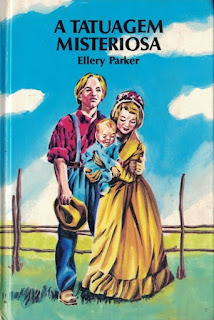
"A tatuagem misteriosa", Ellery Parker (pseudónimo de Mário Domingues?) // "The Mysterious Tatoo", Ellery Parker (pseudonym of Mario Domingues?)

Ainda se lembram da ante-penúltima publicação, sobre As Aventuras de Jim West de Raul Correia? Se não gostaram dela provavelmente não vão gostar desta 21.ª publicação deste blogue mas enfim, aguentem-se quiserem continuar a ler, porque agora voltamos a um western português de meados do século XX, agora mais concretamente a um livro de um misterioso autor de westerns e "livros para raparigas" chamado Ellery Parker. Ora isto ficaria fora do foco do nosso blogue não fosse o não haver sinal nenhum de nenhum Ellery Parker fora das edições portuguesas (o que indicia a velha prática da chamada "pseudo-tradução") e a pessoa apresentada como tradutor e adaptador do texto, o Luso-Santomeense Mário Domingues (1899 - 1977) ser um frequente pseudo-tradutor, autor em nome próprio e um aficionado do género policial (em que existe outro pseudónimo, Ellery Queen, partilhado pelos primos Americanos Frederick Dannay e Manfred Bennington Lee, por sua vez pseudónimos dos verdadeiros e mais obviamente judaicos nome destes, Daniel Nathan e Emanuel Benjamin Lepofsky, sendo que este Ellery poderia bem ser a inspiração para o falso autor estrangeiro de Domingues). Agora, neste western entre infantil e romântico-bucólico (narrado nas palavras de um narrador cujo trisavô foi participante dos casos narrados, conforme foi contado ao narrador pelo seu avô), o nosso herói é Artur Everton, mais de um século antes do tempo do narrador o proprietário do rancho Pequeno Eden na Califórnia (fundado pelo pai Tomás, já velho à altura do começo da narração) perto de uma povoação chamada Fuenton, onde vive com a esposa Helena e a filha Alice, num tempo em que ainda faltavam caminhos-de-ferro, estradas condignas e carros (Everton gastaria na altura duas semanas para ir do rancho à capital estadual de S. Francisco e voltar), e a maioria das tribos indígenas haviam já sido forçadamente pacificadas e a relação entre indígenas e colonos era geralmente pacífica apesar de haverem alguns bandos renegados.
Mário Domingues pelo fim dos anos de 1950 ou durante os anos de 1960.
A narrativa tem o seu verdadeiro começo (depois de uma descrição detalhada da existência e rotina levada pelos residentes do rancho dos Everton) depois de uma das frequentes viagens de negócios de Artur a S. Francisco (Fuenton é descrito como bom centro comercial, mas tinha preços dos produtos demasiado elevados devido à distância em relação ao centros que os forneciam), durante a qual o fiel empregado Mac Gregor vai a Fuenton-City beber uma cerveja, e acaba por derrubar com um murro um rufia que tenta sentar-se na mesa dele sem autorização e que afinal era Big Dick (um belo trocadilho para um Anglo-Saxónico), o chefe duma das quadrilhas mais temidas da altura e que graças àquele derrube é finalmente detido pelo xerife de Fuenton (com isto Mac Gregor ganha 2000 dólares «por um soco» segundo Parker/Domingues). No parágrafo seguinte, já dez anos depois, o empregado de Pequeno Eden ainda recebe louvores sempre que visita Fuenton por causa do feito; na mesma altura, Artur parte novamente em viagem e depois de um atraso inesperado que preocupa a família (apesar do forte gangue de Big Dick já há muito ter sido destruído), chega um cowboy mensageiro algum tempo depois, que relata que em meia-hora Artur chegará com uma grande surpresa. É um menino que não terá mais de 7, 8 meses, com cabelo castanho quase loiro e olhos castanhos escuros quase pretos que fora aparentemente abandonado, o qual Helena logo agarra e ao qual se afeiçoa (aliás, compensando com o recém-chegado uma velha lamentação do casal Everton de faltar um herdeiro masculino).
E através deste narrador não exactamente omnisciente mas que sabe bem a narrativa que lhe é externa e conhece pela narrativa do seu avô (que por sua vez o seu avô, trisavô do narrador, lhe narrou) que o enredo de A tatuagem misteriosa vai avançando, com Alice a afeiçoar-se ao que assume como "irmão" enquanto Artur teme se não deverão evitar adoptar já a criança talvez não tão abandonada assim, até que descobrem ao lavar a criança (que pela dor que a lavagem da cabeça lhe dá é claramente algo a que não está habituado) vestida de camisa suja que esta tem uma tatuagem de uma âncora mal-feita a tinta preta. Depois disso (e isto é episódio interessante dada a etnia mestiça de Domingues), o casal de criados negros primeiro comprados como escravos e alforriados por Tom Everton chamados Maria e Sam tratam da criança a mando de Helena, sendo a propósito deles que o narrador descreve como em tempos (antes de Sam e Maria começarem a ser apreciados por todos os de Fuenton e arredores) uma vez Sam se envolvera numa luta primeiro com um homem e depois de vários cowboys que não aceita que servissem «pretos» nesse lugar (apesar de Sam e Maria serem sempre lá servidos, por serem criados dos respeitados Everton), e como Tom tomara então a coisa como ofensa pessoal e fora pessoalmente espancar o agressor de Sam, partindo-lhe os 3 dentes da frente (e dando-lhe a nova alcunha de Desdentado), e finalmente ficamos a saber as circunstâncias do achado da criança por Artur Everton, num lugar onde só restavam os restos queimados de uma eventual cabana.
Depois de serem visitados uma noite no rancho pelo xerife Jaime Craigh, começa uma busca deste e seus 2 assistentes pelos eventuais pais da criança (ajudados por Artur e Mac Gregor), mas ante o risco de a criança poder estar sozinha, o menino é efectivamente adoptado sob o nome Eduardo (tal como o pai de Mac Gregor, embora mais tarde surja a incoerência de Mac Gregor mais tarde no livro dizer que se chama Heitor... como o seu pai), para muito gosto de Helena e Alice. Durante a cavalgada de investigação do grupo do xerife, assistentes, Artur e Mac Gregor, este último fala aos outros do seu berço na Escócia (numa aldeia perto do Loch Ness), de como passara (depois de abalar de lá para a América à revelia dos pais com dinheiro ganho na lavoura posto de parte às escondidas por ele) mais de metade da vida na América (havia partido com 17 anos) e amava a Califórnia só abaixo da Escócia, e acima de tudo o rancho Pequeno Eden onde Tomás Everton o acolhera e lhe permitira viver nos EUA numa altura em que o Escocês quase se preparava para regressar (mais pobre) à terra natal. Depois de Mac Gregor findar a sua história é que Craigh começa as suas investigações e inquéritos ao longo da caminhada pelos arredores de S. Francisco e Fuenton-City, e numa serra onde uma pequena (que fora enorme antes do confronto com os brancos) tribo índia liderada pelo envelhecido chefe Águia Negra vive com alguma prosperidade em solo relativamente fértil. É Águia Negra que dá as primeiras informações concretas ao grupo de busca, como alguns «rostos pálidos» que se diziam homens do xerife Craigh trabalhavam na cabana em cujos restos Artur tinha achado o menino.
De certa forma há certas semelhanças estilísticas e de enredo para com a anterior As Aventuras de Jim West de Raul Correia, com igual foco familiar, aventuras e mistérios que afastam a família, histórias de recomeços familiares (embora claramente aqui não haja uma narrativa de migração e colonização mas já umas gerações após o enraizamento civilizacional), uma narrativa de aumento do núcleo familiar (neste caso não por aumento natural da mesma mas por adopção) e confronto com inimigos foras-da-lei (aqui mais brancos que Índios, talvez pelo fundo ele próprio mestiço de um tipo de "indígenas", no caso angolano, de Domingues comparado com Correia, por isso sendo mais positivo o autor desta obra no retrato dos Índios e só aplicando a linguagem estereotipada do Índio até certo ponto) e novamente uma demanda de regresso à família cujos desafios têm de ser ultrapassados (o passado juvenil de Domingues como pioneiro do movimento anticolonialista e migrante minoritário em Portugal, e indigenista quanto a África vale a pena notar na ambiguidade do sentimento amigável do indígena mas não anti-colonos-brancos e foco em colonos brancos desta obra
). Podemos  ainda perguntar-nos se o facto de ser nascido numa colónia africana desabitada antes da colonização e exploração de engenhos de açúcar e plantações escravas e como filho de dois colonos da sua terra insular africana (uma africana continental e outro europeu) numa terra em que até os negros eram deslocados não-indígenas, o fazia ter mais simpatia pelos negros americanos que pelos indígenas americanos e até ser relativamente positivo para com os colonos americanos brancos (o que um escritor africano em terra com população indígena negra provavelmente não seria), ou (dados escritos da juventude em que comparava colonização inglesa favoravelmente contra a portuguesa) se está a projectar o "colono bom" nestes anglófonos.
Os diálogos tendem tanto para falas melodramáticas e expansivas como para falas simples e concisas, ambas porém dando pistas quanto à natureza bem individualizada de cada personagem e dando lições quanto uma certa visão da sociedade tanto da América pós-colonização do Oeste como do Portugal do século XX (unidas muito pelo ideal do homem feito a si próprio, condizendo aqui com o perfil do próprio Domingues, um jovem de São Tomé criado pela família Portuguesa que viria a tornar-se jornalista visível, escritor, editor de edições baratas de literatura "pop", e  divulgador de história numa espécie de José Hermano Saraiva do mundo livreiro antes de JHS começar a sua "segunda vida" televisiva). Talvez o maior exemplo disso seja o diálogo de Heitor Mac Gregor (nome que lembra dois heróis "de fronteira", o Heitor Troiano da Guerra de Tróia e o Robert Roy MacGregor, mais conhecido como «Rob Roy», o ganadeiro virado fora-da-lei e guerrilheiro das Terras Altas Escocesas, de onde o ficcional Mac Gregor também é nativo), apoiado por Artur Everton e Jaime Craigh, que definem Tom Everton como exemplo do espírito ideal do empresário que se poderia dizer de "capitalista criativo":
«Diz uma grande verdade anuiu Mac Gregor.  Raramente os nomes condizem com as coisas. Mas no que se refere ao seu rancho, notamos uma excepção: É um Pequeno Paraíso. Felicito-o por isso.
As felicitações vão todas para meu pai  acudiu Artur com entusiasmo.  Ele não se limitou a desbravar a terra e a torná-la produtiva; desbravou a alma de muita gente rude, nela plantando a bondade, a tolerância, o dever de nos ajudar-mos uns aos outros. O senhor sabe, como ninguém, que no nosso rancho até os animais são tratados humanamente.
 Sim, sei-o, toda a gente o sabe por estas redondezas  disse Jaime Craigh. Desejariam muitas pessoas deste mundo serem tratadas pelo seu semelhante como os animais são tratados no Pequeno Eden.»
O interesse de uns diálogos assim é ver que não temos uma apologia de latifundiários e colonizadores em si mesmos da parte de um autor que escreveu e viveu a maioria da sua vida sob a Ditadura Militar (ou Nacional) e o Estado Novo, mas um louvor de latifundiários e os colonizadores quando estão ao nível do que o estatuto de elite "lhes exige", quando são pautados por um certo humanismo e conduta criativa e produtiva para as suas próprias sociedades em seu torno. Como Heitor, Heitor Mac Gregor é um crente na sociedade em seu torno, sacrificando-se pela sobrevivência dela e o seu sucesso, crente na sua hierarquia, e um "soldado" esforçado dela, apesar de ser um de "cepa" bastante acima do outro popular "obrigado" a esse tipo de obediência (Heitor sendo um príncipe, enquanto Mac Gregor assume ao falar da sua vida pré-emigração que a sua família escocesa não era pobre mas remediada e tinha pequena propriedade que dava para sustento familiar e acumular receitas extra), e como Rob Roy MacGregor vem de um lar tradicionalista (Rob Roy era antigo apoiante dos Jacobitas, que numa espécie de guerra civil nas ilhas britânicas na passagem do século XVII para XVIII tomavam um papel similar aos Miguelistas da nossa guerra civil confrontados pela família liberal do pai de Domingues) e respeita a estrutura geral da sociedade apesar de se revoltar contra o pior dela de forma reformista, mantendo uma certa crença de que a sociedade poderá auto-regular os seus defeitos e melhorar-se, sendo que a existência de cavalheiros como Tom Everton ajuda a aumentar as probabilidades desse melhorar. O retrato de proprietários torna-se particularmente interessante quando sabemos que Domingues foi na juventude um colaborador do jornal anarquista sindicalista revolucionário A Batalha. A obra de um autor é sempre representativa da crença do próprio, especialmente quando está a escrever ficção mainstream que é lucrativa numa sociedade a que eles se opõem (ou opunham)?
Como em As Aventuras de Jim West, novamente temos o uso da narrativa histórica norte-americana como forma de subtilmente fazer afirmações como contextos similares no Portugal imperial (e mesmo pós-imperial), quanto a formação e louvor de carácter nacional e comentário sobre justiça social, tema que a sociedade portuguesa voltaria a usar, depois da textos como as novelas de Correia e esta de Parker/Domingues terem tido as suas publicações originais (as de Correia n'O Mosquito nos anos de 1930 e 1940 e A tatuagem misteriosa de Domingues que obviamente foi escrita antes da morte do autor em 1977 mas da qual não há até ao momento indicação de edição anterior à de 1979), com a "repescagem" destes textos para servirem de "anti-depressivos culturais" durante e após as duas primeiras intervenções do FMI em Portugal sob governos de coligação de Mário Soares com CDS e depois PSD (1978-79 e 1983-85). E esse, é assim o principal valor deste tipo de livros, que servem de incentivos morais para ideais e heroísmos utilitários como incentivadores, que atraem enquanto aventuras e permitem ao leitor identificar-se com os aventureiros desafiados pelos desafios e mistérios que surgem ante eles no enredo, como em quase todos os livros que temos vindo a resenhar, e continuaremos a resenhar. Este livro pode achar-se na maioria das bibliotecas municipais e algumas de outro tipo, sob a forma de cópias da Colecção Azul para raparigas primeiro editada pela editora Romano Torres e depois pela Casa do Livro Editora e por fim a Editorial Pública e o Círculo de Leitores, por vezes surgindo na mesma biblioteca (como na Municipal de Barcelos) sob a forma de cópias quer da edição de 1979 da Casa do Livro Editora quer da de 1990 da Editorial Pública (mais e melhor ilustrada, e 4 páginas mais longa devido a ter os capítulos separados por uma página em branco e uma página com cada título de capítulo).
Capa da edição de 1990 (de fsla.pt)


You still remember the second-to-last post, on As Aventuras de Jim West/"The Adventures of Jim West" by Raul Correia? If you did not like it you probably will not like this blog's 21st post but alas, endure yourself along if you want to keep reading, becaus we go back to a mid-20th century Portuguese western, now more concretely to a book of a mysterious author of westerns and "books for girls" called Ellery Parker. Well that would stay outside the focus of our blog if it were not for there not being any sign of any Ellery Parker outside the Portuguese editions (what points to the practice of the so-called "pseudo-translation") and the person presented as translator and adapter of the text, the Portuguese-Santomean autor Mário Domingues (1899 - 1977) being a frequent pseudo-translator, author under his own name and an aficionado of the crime-mystery genre (in which there exists another pen-name, Ellery Queen, shared by the American cousins Frederick Dannay and Manfred Bennington Lee, in turn pen-names to the true and more obviously Jewish names of theirs, Daniel Nathan and Emanuel Benjamin Lepofsky, being that this Ellery could well be inspiration for Domingues' false author). Now, in this western between childish and romantic-bucolic (narrated in the words of a narrator whose great-great-grandfather was participant to the narrated affairs, according to what was narrated to the narrator by his grandfather), our hero is Artur [sic] Everton, more than a century before the time of the narrator the owner of the Little Eden ranch in California(founded by his father Tom, already old at the time of the narration's start) near to a settlement called Fuenton, where he lives with the wife Helena and the daughter Alice, on a time in which it still were lacking railways, fitting roads and cars (Everton would spend at that time-point two weeks to go by ranch to the state capital of San Francisco and return), and the majority of the indigenous tribes had already been forcefully pacified and the relation between indigenous and settlers were generally peaceful despite there being some bands of renegades).
Mario Domingues by the late-1950sor during the 1960s.
The narrative has its true start (after a detailed description of the existence and routine taken by the residents from the Everton ranch) afterwards to one of the frequent business trips of Artur to S. Francisco (Fuenton is described as good trading centre, but had prices to the goods too risen-up due to the distance in relation to the centres that supplied it), during which the faithful employee Mac Gregor goes to Fuenton-City to drink a beer, and ends up throwing down with one punch a bully who tried to sit-down at his table without authorisation and who afterall was Big Dick (a good pun for an English-speaking audience), the chief of one of the most feared hoodlum gangsof that time-point and that thanks to that throwing-down is finally detained by the sheriff of Fuenton(with this Mac Gregor earns 2000 dollars «for one jab» according to Parker/Domingues). In the following paragraph, already ten years afterwards, the employee of Little Eden still receives praises anytime he visits Fuenton because of the deed; at the same time, Artur leaves once again on trip and afteran unexpected delay that worries the family (despite the strong gang of Big Dick already well back having been destroyed), it arrives a messenger cowboy some time after, who reports that in half an hour Artur shall arrive with a big surprise. It is a little boy that would not have more than 7, 8 months-old, with brown almost blond hair and dark brown almost black eyes that had been abandoned, whom Helena right-away grabs-up and to whom she grows affectionate with (more so, compensating with the newly-arrived an old lamenting of the Everton couple of lacking a male heir).
And through this narrator not exactly omniscient but that knows well the narrative that is external to it and knows it through his grandfather's narrative (which on his turn his grandfather, the narrator's great-great-grandfather,narrated to him) that the plot of A tatuagem misteriosa/"The Mysterious Tatoo" goes moving on, with Alice growing affectionate to the one she takes over as "brother" while Artur fears if they should not avoid to adopt already the child maybe not that abandoned, till they find out in washing up the child (that by the ache that the headwashing gives him it is clearly something he is not used to) dessed in a dirty shirt that she has an anchor tatoo baddly done on black ink. Atfer that (and this is interesting episode given Domingues' mixed ethnicity), the couple of black servants bought as slaves first and then enfranchisement by Tom Everton called Maria and Sam take care of the child on Helena's ordering, being on their purpose that the narrator describes how in times (before Sam and Maria start to be appreciated by everyone within Fuenton and surroundings) once Sam involved himself into a fight first with one man and afterwards with several cowboys that who do not accept that «negroes» be served in that place (despite Sam and Maria being allways there served, due to being servants to the respected Evertons), and how Tom had taken then thing then as personal offense and went personally to beat Sam's aggressor, breaking him the 3 front teeth (and giving him the new nickname of Toothless), and finally wegot to know the circumstances of the finding of the child by Artur Everton, in a place where it only were left the burnt remains of a likely hut.
Afterwards to being visited one night on the ranch by the sheriff Jaime Craigh, it starts a sarch by the latter and his 2 deputies for the eventual parents to the child (aided by Artur and Mac Gregor), but facing the risk of the child being alone, the little-boy is effectively adopted under the name Eduardo [sic] (just like Mac Gregor, although later it appears the incosistency of Mac Gregor later in the book saying that he is called Heitor... like his father), for much enjoyment of Helena and Alice. During the investigation ride possee of the sheriff, deputies, Artur and Mac Gregor, the latter talks to the others of his craddle in Scotland (in a village near the Loch Ness), of how he passed (afterwards to going off there into America behind the back of the parents with money earned on the tillage put aside hid from sight by him) more than half his life in America (he had departed with 17 years-old) and loved California only second to Scotland, and above all the Little Eden ranch where Tomás Everton had took him in and permited him to live on the USA at a time-point in which the Scotsman almost prepared himself to return (poorer) to the homeland. After Mac Gregor ending his story is it that Craigh starts his investigations and enquiries throughout the trekking by the surroundings of S. Francisco and Fuenton-City, and on a sierra ridge where a small (that had been enormous before the clash wih the whites) American Indian tribe lead by the aged chief Black Eagle lives with some prosperity on relatively fertile soil. It is Black Eagle who gives the first concrete informations to the search party, as some «palefaces» that said themselves sheriff Craigh men worked on a hut in whose remains Artur had found th little-boy.
In a certain way there are stylistic and plot similarities towards the previous As Aventuras de Jim West/"The Adventures of Jim West" by Raul Correia, with equal familial, adventures and mysteries that draw apart the family, stories of family start-overs (although clearly ehere there is not a narrative of migration and colonisation but already some generations after the civilisational rooting-in), a narrative of numeric-increase of a nuclear family (in this case not by natural increase of the same by adoption) and confrontation with outlaw enemies (here more whites than American Indians, maybe by the background itself half-breed from a type of "indigenous-folks", in the case Angolan ones, of Domingues' compared with Correia, due to that being more positive the author of this work in the portrayal of the American Indians and only applying the stereotypical American Indian language to a certain extent) and again a return to the family quest whose challenges have to be overcome (the youthful past of Domingues as pioneer of the anticolonialist and minoritarian migrant in Portugal and indigenist movements in Africa is worth noting in the ambiguity of this work's indigenous friendly but not anti-white-settler feeling and focus on white settlers). We can yet ask ourselves if the fact of being born in an african colony uninhabited before the colonisation and exploration of sugar mills and slave plantations and as son of two settlers to his African insular land (one continental african and the other european) in a land where even the blacks were non-indigenous displacees, made him have more sympathy for the american blacks than for the american natives and even be relatively positive towards the white American settlers (which an African writer on a land with black indigenous population probably would no be).
The dialogues lean as much unto the melodramtic and expansive lines as to the simple and concise lines, both though giving clues about the well individualised nature of each character and giving out lessons about a certain vision of society as much of the post-settling of the West America as of the Portugal of the 20th century (united much by the ideal of the selfmade man, fitting with the profile of Domingues himself, a youngman from SaoTome raised by the Portuguese family who would become a visible journalist, writter, propulariser of history in a kind of Félix Rodríguez de la Fuente or José Hermano Saraiva of the book world before Rodríguez de la Fuente or JHS became visible on television, and publisher of cheap "pop" literature editions). Maybe the biggest example of that would be the dialogue of Heitor Mac Gregor (name that recalls two "borderland" heroes, the Trojan Hector/Heitor of the Trojan War and the Robert Roy MacGregor, more known as «Rob Roy», the cattle-herder turned outlaw and guerrilla from the Scottish Highlands, from where the fictional Mac Gregor is also native to), supported by Artur Everton and Jaime Craigh, that support together Tom Everton as example of the ideal "creative capitalist" businessman spirit:
«Thou say a great trut conceded Mac Gregor.  Rarely the names match with the things. But in what concerns to your ranch, we notice one exception: It is a Little Paradise. I congratulate you for it.
The congratulations go all towards my father  came to aid Artur with enthusiasm.  He did not limit himself to pioneer open the land and to turn it productive; it pioneered open the soul of many a rude folk, in it planting the goodness, the tolerance, the duty of us helping each other. You mister know, as no one else does, that in our ranch even the animals are treated humanely.
 Yes, I know it so, everybbody knows it throughout these surrounds  said Jaime Craigh. —It would desire many people of this world to be treated by their fellow-man like the animals are treated on the Little Eden.»
The interest of some dialogues like this is to see that we do not have an apologia of landowners and colonisers in themselves on the part of and author that wrote and lived most of his life under the Portuguese Military (or National) Dictatorship and the New State, but a praising of landowners and colonisers when they are to the level that the status of elite "demands them", when they are lined-up along humanism and creative and productive conduct for their own societies around themselves. Like Hector, Heitor Mac Gregor is a believer in the society around about himself, sacrificing himself for the survival of it and its success, believer in its hierarchy, and a industrious "soldier" of it, despite being one of "stock" quite above the other commoner "forced" to that kind of obedience of another (Hector being a prince, while Mac Gregor assumes in talking of his own preemigration life that his Scottish family was not poor but comfotably-off and had small estate that worked for family support and to accumulate extra revenues), and like Rob Roy MacGregor comes from a traditionalist home (Rob Roy was a former supporter of the Jacobites, that in a kind of civil war in the British isles on the passage from the 17th to the 18th century took a role similar to the Miguelists of the Portuguese civil war, opposed by the liberal family of Domingues' father) and respects the general structure of the society despite having to rebel himself against the worst of it in reformist fashion, keeping a certain believe that the society can self-regulate its flaws and improve itself, being that the existence of gentlemen like Tom Everton helps to increase the probabilities of that improving. The portrayal of property-owners in this book becomes particularly interesting when we know that Domingues was in his youth a collaborator of the revolutionary syndicalist anarchist newspaper A Batalha ("The Battle"). Is an author's work always representative of one's believes, especially when he is writing mainstream fiction that is profitable in the society they oppose (or opposed)?
As in As Aventuras de Jim West/"The Adventures of Jim West", again we got the use of the North-American historical narrative as way of subtlelymake statements as similar contexts on the imperial (and even post-imperial) Portugal, about the formation and appraisal of the national character and commentary on social justice, theme that the Portuguese society would go back to use, afterwards to texts like the novellas by Correia and this one by Parker/Domingues having had their original publications (the ones by Correia on O Mosquito in the 1930s and 1940s and A tatuagem misteriosa/"The Mysterious Tatoo" by Domingues that obviously was written before the author's death in 1977 but of which there is as of now indication of edition previous to the 1979 one), but the "fishing back up" of these texts to serve as cultural antidepressants" during and afterwards to the first two IMF interventions in Portugal under the coalition governments of the Socialist Mario Soares with Democratic and Social Centre and afterwards Social Democratic Party (1978-79 and 1983-85). And that, is thus the main value of these types of books, that serve as moral incentives for ideals and heroism as utilitarian as spurring, that attracted while adventures and permit to the reader to identify one's self with the adventurers challenged by the challenges and mysteries that come up before them in the plot, like in all the books that we have come to write-up on, and shall keep writting-up on. This book can find itself in most Portuguese municipal libraries and some of other type, in the shape of copies of the Colecção Azul ("Blue Collection") for girls first published by the Romano Torres publisher and afterwards by the Casa do Livro Editora publisher and at last by the Editorial Pública publisher and the Círculo de Leitores book sales club, sometimes appearing in the same library (like the Barcelos Municipal one) in the shape of copies both of the 1979 edition from the Casa do Livro Editora publisher and of the 1990 one from the Editorial Pública publisher (more and better illustrated, and 4 pages longer due to having the chapters separated by a blank page and a page with each chapter title).
Cover of the 1990 edition (from fsla.pt)

segunda-feira, 20 de abril de 2015

"As Aventuras de Jim West", Raul Correia // The Adventures of Jim West", Raul Correia

Nos anos de 1940 Raul Correia foi o mais notório escritor para jovens na revista O Mosquito (mais conhecido pela sua prosa e guionismo de BD, mas também sendo apreciado pela poesia que publicava sob o pseudónimo de "Um Velho" ou "O Avozinho" na rubrica cantinho de um velho n'O Mosquito), e depois dessa década, só na de 1970 voltou a ter alguma notoriedade, com a Colecção Juvenil Galo de Oiro da Portugal Press (continuação da colecção Galo de Ouro da mesma editora que juntava clássicos internacionais como Ben-Hur ou Os Três Mosqueteiros) que recolheu várias novelas de aventura vindas de revistas anteriores como O Mosquito ou Mundo de Aventuras (uma "dissidência" d'O Mosquito criada pelo escritor e jornalista Roussado Pinto) e algumas novas novelas no mesmo estilo por autores mais novos "herdeiros" do estilo dessas revistas (como Jorge de Magalhães, há já 20 anos notório estudioso e coleccionador de literatura de aventuras e "popular" portuguesa e argumentista de BD), e na década de 1980 Correia foi mais visível quer pela colecção de livros de contos curtos As Histórias do Avozinho, quer como uma espécie de 'velho senador' da literatura para jovens em Portugal, acarinhado pelos fãs, entrevistado com alguma frequência e visto como a figura 'patronal' de uma nova 'encarnação' d'O Mosquito (agora principalmente como revista de BD). Hoje Correia volta a recuperar alguma visibilidade com a sua biografia A Vida de Jesus ilustrada por Carlos Alberto Santos (como muitas obras de Correia) a ser editada pelo Clube do Livro SIC com bastante sucesso de vendas.
Raul Correia
Correia aspesar do seu actual 'semi-olvido', foi um autor prolífico, em tempos muito popular e com bastante estilo literário e que ainda hoje se lê bem como um autor (de estilo polido) para jovens de aventuras históricas ou actuais, mais ou menos realistas (embora a fantasia surja nas suas obras; a ficção científica porém detestava), no estilo da melhor literatura do género no século XIX e primeira metade do XX. Nascido a 11 de Dezembro de 1904 em Lisboa, Raul Correia vinha de uma família da Rua da Prata (então chamada Rua Nova da Rainha), rua de gente dada a ofícios de comércio ouriveseiro e livreiro, tendo-se virado para a escrita pelos anos de 1930 para a revista Tic-Tac (1931-1937) fundada pelo ilustrador Cardoso Lopes (depois co-fundador da O Mosquito com Correia), quando mesmo em Portugal com a dimensão mais modesta do seu mercado de consumo de cultura popular, se vivia um momento de boom e (relativamente) forte vitalidade.
Vindo de um background muito português mas "alimentado" literariamente não só pela literatura clássica portuguesa do Iluminismo ("erudita" ou "de cordel") e do romance histórico à Herculano (que já vimos neste blogue na forma do Eurico) mas também por grandes literaturas clássicas de aventuras universais como Robinson Crusoé, O Último dos Moicanos e as obras de Edgar Rice Burroughs (o criador de Tarzan, de quem Correia traduziu muitas obras para Português pelos anos de 1970). Mas Raul Correia não seguiu só a tradição do romance clássico e/ou de aventuras, nem traduziu a ideologia oficial do Portugal da altura na sua literatura, mas 'traduziu' para o contexto português a ideologia liberal e social que se via na literatura de aventuras infanto-juvenil anglo-saxónica que usou como uma branda resposta ao oficialismo do Estado Novo (com o qual O Mosquito teve um historial de frequentes problemas com a censura), e foi um autores fundadores de um western português e de uma literatura de aventuras pulp similar mas passada no território e história portugueses, que era lida e comercializada de forma algo industrial e de massas, que para melhor e para pior ajudou a ocidentalizar e americanizar os gostos lusos e foi um ganha-pão para muita editora e muito audiovisual em Portugal, e serviria de escapismo a muito cidadão Português durante anos de maior escassez económica ou recessão.
Capa do 1.º número d'O Mosquito
Esta novela, publicada n'O Mosquito entre 27 de Janeiro e 27 de Março(?) de 1943, é a narrativa de Jim West, um colono relativamente jovem de cabelos negros (uma variação de Latino Sul-Europeu ao típico da literatura western) e cara lavada (tudo isso lhe dá um ar vagamente índio, ou pelo menos vagamente à Príncipe Valente), já casado, que parte nos anos de 1840 com a mulher Louise para o Wyoming, viajando nas comuns (e cliché) caravanas de carros-de-cavalos para Oeste. Neste período, os EUA haviam tido as suas primeiras vitórias militares contra os Mexicanos, expandiam-se pelo sudoeste da América do Norte e começavam a expandir-se para o noroeste (onde está o Wyoming) ante o recuar dos caçadores de peles independentes e dos interesses franceses, russos e britânico-canadianos. Pelo caminho, Jim acaba por se perder da mulher, conhecer o velho mountain man Nath Pig (sim, Nath PORCO) e juntos acabam por ver-se no rasto de Siouxs atacantes de um chefe Lobo Cinzento. Quando se vêm novamente livres, Jim e Nath têm de continuar a caminho de Forte Laramie (então o principal povoado da região do Wyoming), para onde a caravana onde Louise segue se dirige, para se reencontrarem com os seus e avisarem todos de um ataque índio que para o Forte se dirige, e ajudarem na defesa contra o mesmo ataque. Para além desta linha de enredo principal, ainda temos uma vida diária e de trabalho de West e Pig tentando sobreviver no Wyoming do início da colonização norte-americana e do fim da economia de comércio de peles.
O grande foco do enredo, para além da acção aventureira e da camaradagem masculina de Jim e Nath, é familiar: do amor de Jim ao lar e à família, e da tentativa de regressar à sua esposa Louise, que está grávida, e constituir um novo lar no lugar de novo estabelecimento no Faroeste. Este texto é um certo louvor de um certo "arrivismo" social positivo e trabalhador (e com ética de trabalho), das famílias vinda de um fundo familiar empobrecido que com uma migração interna de colonização consegue uma posição socialmente mais confortável e um ganha-pão digno e cómodo, mas não depois de uma viagem dura e de um começo muito difícil, e mesmo depois disso nunca conseguindo maior "favorecimento" legal ou capacidade financeira (este é o tipo de filosofia que encaixa na lógica do "Sonho Americano" de classe média ou trabalhadora, mas também pelo mundo fora no ideal da classe média ou do colono de classe baixa e média Europeu, podendo comparar-se esta realidade com a realidade dos colonos Portugueses em África que talvez Correia conhece-se nem que minimamente).
Jim, Louise e Nath Pig
O enredo é assim simultaneamente uma estória de Jim West a tentar voltar para Louise e não mais separar-se dela, uma estória das aventuras de Jim e Nath em busca da riqueza e tesouros que existem naquelas terras e que quando mais jovem Nath explorou, uma estória da criação de um novo lar pela família West depois da nova fixação em terra segura, uma estória dos confrontos com os desafios naturais (climáticos ou animais), indígenas e dentre a sociedade colona depois da fixação, e por fim uma estória do aumento da família West (cujo filho seria o herói de uma sequela também escrita por Correia e desenhada por E. T. Coelho, mas mais próxima da BD pura, Falcão Negro, o filho de Jim West).
Como se vê, o material da narrativa de Correia não deve nada à ficção usual deste género escrita por Norte-Americanos ou outros autores Europeus (principalmente Espanhóis, Italianos, Franceses e Alemães) que "ensaiaram" o western, que se podem ler em várias colecções para este tipo de público infanto-juvenil ou jovem de várias décadas para cá, sendo Correia um dos primeiros (embora não o primeiro de todos) no western em Portugal, e que pelo que se pode ver no blogue Memorial do Búfalo foi um género que teve muita criação por Portugueses, por vezes enchendo colecções inteiras, com estes autores oscilando entre um estilo de inspiração mais literária ou cinematográfica do western clássico ou inspirado mais no western spaghetti italo-espanhol (dependendo dos gostos de uma pessoa podemos ver os "herdeiros" de Correia no western como melhores ou piores que o seu mestre, sendo indiscutível que se em estilística Correia tinha poucos rivais na literatura "popular" portuguesa, em narração e inventividade nem todos os autores ficavam a dever muito a ele), alguns podendo preferir a abordagem mais "dura" ou com temas mais sociais e críticos (e menos com a idealização do "Velho Oeste") de Roussado Pinto e outros autores "tardios", outros preferindo o Oeste aventureiro-pitoresco e belo de Correia (e mesmo o Oeste deste, se não mostra tanta luta de classes, trabalho infantil ou conflitos sociais e raciais, não deixa de mostrar que os colonos tinham entre si muitos bandidos e vigaristas, e se algumas das mulheres do enredo lembram a estereotipada 'flor de porcelana', outras como Louise são mulheres pioneiras mais realistas e que sobrevivem duramente quando os homens estão longe, e a terra é, se bela, principalmente nas ilustrações originais de E. T. Coelho, dura e estranha). Correia como muitos autores de aventuras infanto-juvenis é criticado por "higienizar" contextos de perigo e promover (mesmo se involuntariamente) ideologias politicamente incorrectas, mas a verdade é que em vida era tanto criticado por isto como por escrever narrativas que não promoviam plenamente o ideário do Estado Novo mas que antes sobrepunham a liberdade ao tradicionalismo e o nacionalismo. Preso por ter cão...
Gostemos ou não, o "ideário" (se não é demais ler "ideários" neste tipo de obras) deste obra e similares era um elemento vital à possibilidade de venda delas na altura em que eram vendidas nos meados e meados-final do século XX, em que no tardo-Salazarismo e mais tarde no Marcelismo e na sociedade do consumo pós-25 de Abril, o número de pessoas acima do limiar da pobreza ia gradualmente aumentando, junto com a capacidade de consumo, a economia ia lentamente industrializando-se mais intensamente e ainda mais lentamente terciarizando-se, se ia instalando a sociedade do conforto, do lazer e do entretenimento, e assim apesar do desenvolvimento lento do resto na sociedade eram tempos de optimismo, de entretenimento, de pensamento não das escolas críticas e marxistas que ferviam o sangue ante tal literatura (fazendo excepção do período do PREC em que tais escolas tomaram conta da produção de discurso em Portugal e fizeram guerra e censura a Correia, Roussado Pinto e afins). Com a queda incontestável do poder das escolas marxistas (hoje mesmo os esquerdistas são muito mal instruídos quanto a marxismo e não conseguem distinguir uma citação de Marx de uma de Hugo Chávez ou de Chesterton) a margem de manobra da literatura do tipo da de R. Correia aumentou, embora o consumo de cultura se tenha tornado menor por limitações orçamentais das famílias, e o optimismo seja menos, mas o 'arrivismo social positivo' e espírito de trabalho e combate a dificuldades do texto ainda se coadunam com o entretenimento de uma sociedade em dificuldades, e assim dão um ideal a aspirar aos re-leitores desta literatura no pós-"tempo das vacas gordas" que redescubram os textos de Correia, e outros, hoje.
Os caubóis (para escrever cowboys à portuguesa), colonos, exploradores e cavaleiros de Raul Correia são assim o modelo de muitos heróis desses moldes que surgiriam a partir dos anos da revista O Mosquito (de 1930 a 1940) em literatura portuguesa para leitores mais jovens (ou dados a ler aventuras independentemente da idade), fossem caubóis espaciais, detectives aventureiros ou todo o tipo de heróis tão fortes como bons em livros do tipo que "dão corda" à imaginação do leitor em crescimento, ajudando-o a ir conhecendo a sua própria natureza e o mundo em seu redor. É por estas e por outras que textos como As Aventuras de Jim West e a segunda parte desta relativamente longa novela (que terá o seu tempo de a discutirmos neste blogue) ajudaram a entreter e cultivar numa certa visão não-radical mas libertária da sociedade em Portugal, e a promover a busca pelo leitor das suas próprias lutas, caminhos de exploração do mundo e a sua própria forma de aplicar esses valores individuais, liberais e comunitários, dentro do possível para a vida real.
Infelizmente, ao contrário de algumas obras de Raul Correia, esta nunca foi publicada em livro, por isso excepto consultando cópias antigas da revista O Mosquito de 1943, só vendo online algumas páginas que surgem no blogue dedicado especificamente à revista de estreia desta novela, O voo d'o Mosquito (atenção, com as imagens das páginas de texto algo fora de ordem, embora lidas todas elas consegue-se ordenar de forma algo intuitiva a sua ordem cronológica no enredo, embora ainda assim seja óbvio que alguns capítulos faltam). Que vos faça proveito. A mim fez certamente. E alguma editora bem que podia recuperar esta novela (e as ilustrações de E. T. Coelho) para uma edição para jovens deste texto.


In the 1940s Raul Correia was a notorious writer for young people in the O Mosquito ["The Mosquito"] magazine (more known for his prose and Comics script-writing, but also being enjoyed for the poetry that he published under the pseudonym of "Um Velho" ["An Old-man"] or "O Avozinho" ["The Grandaddy"] in the rubric cantinho de um velho ["little-corner of an old-man"] in O Mosquito), and after that decade, only in the 1970s he went back to have some notoriety, with the Colecção Juvenil Galo de Oiro ["Juvenile Collection Golden Rooster"] from the Portugal Press (continuation of the Galo de Ouro collection of the same publisher that joined international classics like Ben-Hur or The Three Musketeers) that gathered several adventure novellas coming from previous magazines like O Mosquito or Mundo de Aventuras ("World of Aventures", a "dissidence" of O Mosquito created by the writer and journalist Roussado Pinto) and some new novellas in the same style by younger authors "heirs" of the style of those magazines (like Jorge de Magalhães, for 20 years already notorious scholar and collector of Portuguese adventure and "popular" literature and Comics scriptwriter), and in the decade of the 1980s Correia was visible both for the collection of books of short tales As Histórias do Avozinho ("The Grandpa's Stories"), both as a kind of 'old senator' of young people's literature in Portugal, cherished by the fans, interview with some frequency and seen as the 'patronal' figure of a new 'incarnation' of O Mosquito (now mostly as a Comics magazine). Today Correia gets back to recover some visibility with his biography A Vida de Jesus ("The Life of Jesus") illustrated by Carlos Alberto Santos (like many works of Correia) being published by the Clube do Livro SIC (the book club of Portuguese private TV channel SIC) with quite a selling success.
Raul Correia
Correia despite his current 'semi-oblivion', was a prolific author, in other times very popular and with quite a literary style and that still today can be read well as a young people author (of polished style) of historical or current adventures, moreor less realistic (although fantasy comes up in his works; science fiction though he hated), in the style of the best literature of the genre in the 19th century and the first half of the 20th. Born at 11th December, 1904 in Lisbon, Raul Correia came from a family of the Rua da Prata ("Silver Street", then called Rua Nova da Rainha, "Queen's New Street"), street of folk given to trades of jeweler and bookseller comerce, having turned himself for writing by the 1930s for the Tic-Tac magazine (1931-1937) founded by the illustrator Cardoso Lopes (afterwards co-founder of the O Mosquito with Correia), when even in Portugal with the more modest dimension of his market of consumption of popular culture, it did live itself a a moment of boom and (relatively) strong vitality.
Coming from a background very Portuguese but "fed" literarily not just by the classical Portuguese literature of the Enlightenment ("scholarly" or "broadside") and of the Herculano style historical novel (that we already saw in this blog in the form of the Eurico) but also by great classical adventure literatures like Robinson CrusoeThe Last of the Mohicans and the works of Edgar Rice Burroughs (the creator of Tarzan, from who Correia translated many works for Portuguese about the 1970s). But Raul Correia didn't just follow the tradition of the classical and/or adventure novel, nor 'translated' the official ideology of the Portugal of the time into his literature, but 'translated' to the Portuguese context the liberal and social ideology that saw itself in the Anglo-Saxonic children's/juvenile adventure literature that he used as a bland answer to the oficialism of the New State regime (with the which O Mosquito had a trackrecord of frequent problems with the censorship), and was one of founding authors of a Portuguese western and of an pulp adventure literature similar but set in Portuguese territory and history, that was read and commercialized in way somewhat industrial and massified, that for better and for worse helped to westernize and americanize the Luso tastes and was a bread-earner for many a publishing house and much audiovisual in Portugal, and would serve of escapism to many a Portuguese citizen during years of greater economy scarcity or recession.
Cover of the 1st number of O Mosquito
This novella, published in O Mosquito between 27th January and 27th March(?), 1943, is the narrative of Jim West, a relatively young settler of dark hair (a variation of South-European Latin to the typical of the western literature) and clean-shaven (all that gives him a vaguely Indian air, or at least vaguely a la Prince Valiant), already married, that leaves in the 1840s with the wife Louise to Wyoming, travelling in the common (and cliche) horse wwagon caravans West. In this period, the USA had had their first military victories against the Mexicans, expanded themselves through the southwest of North America and started to expand themselves to the northwest (where Wyoming is) before the retreating of the independent fur hunters and of French, Russian and British-Canadian interests. Along the way, Jim ends up losing himself from the wife, meet the old mountain man Nath Pig (yes, Nath PIG) and together they end up seeing themselves in the trail of attacking Sioux of chief Grey Wolf. When they see themselves free again, Jim and Nath have to continue on the way of Fort Laramie (then the main settlement of the Wyoming region), to where the caravan where Louise follows through heads itself, to themselves meet again with their own and warn all of an Indian attack that to the Fort heads itself, and help in the defense from the same attack. Besides that line of the main plot, we still have a daily and work life of West and Pig trying to survive in the Wyoming of the beginning of the North-American colonization and of the ending of the fur trade economy.
The great focus of the plotting, besides of the adventurer action and of the masculine comradery of Jim and Nath, is a family one: of the love of Jim to the home and to his family, and of the attempt of returning to his spouse Louise, who is pregnant, and to constitute a new home in the place of the new settlement in the Far-west. This text is a certain apraisal of a certain posiitive and working (and with work ethic) social "arrivisme", of the families coming from an impoverished family background that with an internal colonization migration gets a socially more comfortable position and a worthy and cozy bread-earner, but not before a hard journey, and even after that never getting greater legal "favouritism-giving" or financial capacity (this is the type of philosophy that fits in the logic of the midle and working class "American Dream", but also throughout the world in the ideal of the middle class or of the lower and middle class European colonist, being able to compare itself this reality with the reality of the Portuguese settlers in Africa that maybe Correia knew even if minimally).
Jim, Louise and Nath Pig
The plot is so simultaneously a story of Jim West at trying to get back to Louise and no more separating himself from her, a story of the adventures of Jim and Nath in search of the wealth and treasures that exist in those lands and that when younger Nath explored, a story of the creation of a new home by the West family afterward of a new setting in safe land, the story of the confrontations with the natural challenges (climatic or animalesque), indigenous and from among the settler society afterwards of the setting, and at last a story of the increase of the West family (whose son would be the hero of a sequel also written by Correia and drawn by E. T. Coelho, but closer to the pure Comics, Falcão Negro, o filho de Jim West, "Black Falcon, the son of Jim West").
As it is seen, the material of Correia's narrative pales nothing by the usual fiction of this genre written by North-Americans or other European authors (mostly Spaniards, Italians, French and Germans) that "rehearsed" the western that can be read in several collections for this type of children's/juvenile or young people's audience from several decades to now, being Correia one of the first (though not t the first of all) in the western in Portugal, and that for what can be seen in the blogue Memorial do Búfalo ["Memorial of the Buffalo"] was a genre that had much creation by Portuguese-people, sometimes filling-up whole collections, with these authors oscilating between a style of more literary or classic western cinematic inspiration or inspired more in the Italian-Spanish western spaghetti (depending on the tastes of a person we can see the "heirs" of Correia in the Portuguese western as better or worse than their master, being unarguable that if in stylistics Correia had few rivals in Portuguese "popular" literature, in narration and inventivity not all the authors stay paling too much before him), some possibly prefering the more "though" and with more social and critical (and less idealization of the "Old West" approach of Roussado Pinto and other "later" authors, others prefering the adventurer-picturesque and fair West of Correia (although even the West of the latter, if it doesn't show so much class struggle, child labor or social an racial conflicts, it doesn't cease of showing that the settlers had among themsellves many bandits and conmen, and if some of the women of the plot remember the stereotypical 'porcelain flower', others like Louise are pioneer women more realistic and who survive harshly when the men are faraway, and the land is, if beautiful, mainly in the original illustrations of E. T. Coelho, hard and strange). Correia like many authors of children's/young people's adventures is criticized for "sanitizing" contexts of danger and promoting (even if unvoluntarily) politically incorrect ideologies, but the truth is that in life he was as much criticized by this as for writing narratives that did not promote the set-of-ideas of the New State but that overplayed liberty to traditionalism and nationalism. Preso por ter cão...
Either liking or not, the "set-of-ideas" (if it is not too much to read "sets-of-ideas" in this kind of works) of this work and similar ones was a vital element to the possibility of sale of them in the time in which they were sold in the mid and mid-late-20th century, in which in the late-Salazarism and later in the Marcelism and in the consumption society post-25th of April, the number of people above the poverty threshold went gradualy increasing, together with the capacity of consumption, the economy went slowly industrializing itself more intensely and even slower tertiary-sector-izing itself, itself went installing the society of comfort, of leisure and of entertainment, of thought not of the critical or marxist schools that boiled their blood before such "lower" literature" (to this lack of influence on the major public of critical/marxist schools making exception of the period of the Portuguese On-Going Revolutionary Process or Processo Revolucionário Em Curso/PREC in which said schools took over the production of speech in Portugal and made "war" and censorship to Correia, Rousado Pinto and the ilk). With the undebateable fall from power of the marxist schools (today even the leftists are very baddly instructed about marxism and cannot distinguish a quote by Marx from one by Hugo Chávez or Chesterton) the leeway of literature of the type of the one of Raul Correia increased, although the consumption of culture itself has become smaller for budgetary constraints of families, and the optimism be lesser, but the 'positive social arrivisme' and spirit of work and combat to dificulties of the text still do stay in line with the entertainment of a society in dificulties, and so, give an ideal to aspire to the re-readers in the post-"time of the fat cows" that do rediscover the texts of Correia, and others, today.
The caubóis (to writte cowboys Portuguese-style), settlers, explorers and knights of Raul Correia are so the model of many heroes of those molds that came out starting from the years of the O Mosquito magazine (from the 1930s to 1940s) in Portuguese literature for readers who are younger (or prone to read adventures regardless of the age), were they space caubóis, adventurer detectives or all kind of heroes as strong as good in books of the type that "give free rein" to the imagination of the growing reader, helping him/her to to get to know his own nature and the world around him. It's on account o these and other things that texts like The Adventures of Jim West and the second part of this relatively long novella (that shall have it's turn of us discussing it in this blog) helped to entertain and cultivate a certain non-radical but libertarian vision from society in Portugal, and to promote the search by the reader of his/her own fights, ways of exploring of the world and his/her own way of put to use those individual, liberal and communitarian values, within the possible for real life.
Unfortunetly, unlike some works of Correia, this one was never published on book, so except checking ancient copies of the O Mosquito magazine from 1943, only seeing online some pages in the Portuguese language original that appear in the blog dedicated specifically to the magazine of premiere of this novella, O voo d'o Mosquito ["The flight of the Mosquito"] (attention, with the images of pages of text somewhat out of order, although read all of them they are able to order themselves in way somewhat intuitive their chronological order in the plot, although it still be obvious that some chapters are missing). That you enjoy them. I most certainly did. And some publisher well could recover this novella (and the E. T. Coelho illustrations) for an edition for young people of this text.