Mostrar mensagens com a etiqueta romance. Mostrar todas as mensagens

quarta-feira, 14 de outubro de 2015

"Esteiros", Soeiro Pereira Gomes // "Stuary-mills", Soeiro Pereira Gomes

Este livro pode ser polémico para incluir aqui, curiosamente tanto para os atacantes como para os defensores. Os atacantes tendem a ser gente de inclinações não esquerdistas (e aqui talvez possamos incluir os Socialistas menos inclinados à esquerda) que foram algo "traumatizados" pela tentativa de catecismo esquerdista durante o Processo Revolucionário em Curso e que foram forçados pelo programa lectivo de 1975 a ler este livro numa idade talvez demasiado jovem para o perceber, e pior ainda, com os professores, pressionados pela esquerda da altura para o ensinarem não como um texto em si mesmo mas como parte de uma "construção do socialismo em Portugal" e de uma nova cultura ideologicamente "engajada". Os defensores serão aqueles que defendem a visão subjacente a esse ensino e que acham neste caso que o texto deve ser dado a crianças e jovens não por ser adequado a elas mas por estarem nas idades ditas "mais impressionáveis" e portanto são mais fáceis de serem levadas a pensar de uma dada forma, mas o livro em si para eles é uma obra-prima adulta e é uma heresia que eu a "atire" aqui para o espaço da literatura infanto-juvenil (mesmo a grande colecção Caminho Jovem da Editorial Caminho que nos anos de 1990 e no princípio deste século publicaram este livro entre outras "pérolas" das obras mais "maduras" da literatura infanto-juvenil, mais juvenil que infanto-, teve de acrescentar à descrição do livro para promoção que "Esteiros é um dos textos inaugurais do neo-realismo e um romance marcante da literatura portuguesa do século XX", quebrando a grande regra da apresentação de qualquer tema aos leitores mais jovens: não usar temas não claros para todos como se o fossem e antes apresentar por palavras mais correntes o que realmente está subjacente a uma dada coisa, e também explicar "marcante porquê?" em vez que "catequizar" que é marcante e pronto).
A minha abordagem aqui não é nem a visão apocalíptica do livro como castigo para jovens e crianças e catecismo ideológico de facto sem qualquer qualidade, nem a de livro marcante e brilhante que é dos melhores da literatura portuguesa de sempre e que lançou uma brilhante corrente literária (no caso o neo-Realismo). Eu (na linha da abordagem de "suavização" das rupturas esquerda-direita e de ultrapassagem de abordagem "religiosa" à política e à ideologia dos anos '90 em que cresci e em que o livro é recuperado pela Caminho como "mera" obra literária sem mais carga) considero que o livro tem claras qualidades de estilo, um bom enredo, personagens bem delineadas com poucas "pinceladas", mas que não é dos livros com estilo mais polido, psicologia mais profunda e com mais simbolismo e substrato (pelo menos à superfície), e acho também que a corrente neo-Realista a que pertenceu (apesar das várias tentativas, de motivações meramente ideológicas para louvarem o neo-Realismo como corrente cheia de brilhantismo e das melhores da literatura portuguesa vintista) foi no geral medíocre, com só uns quantos autores realmente brilhantes (Alves Redol, quer na literatura para adultos quer na infanto-juvenil e até usando da fantasia, Manuel da Fonseca no contismo, no romance e na poesia, Mário Dionísio que era uma sacana com mania de inquisidor-mor em pessoa, ou Egito Gonçalves na poesia, e poucos mais), e muitos autores começaram no neo-Realismo mas só alcançaram realmente o brilhantismo quando começaram a ultrapassar esse estilo (Mário Braga, que deixou não só o neo-Realismo como o esquerdismo, tendo em 1977 publicado Entre Duas Tiranias: Uma Campanha Pouco Alegre em Prol da Democracia, um livro com uma explicita capa em que surgem uma suástica e uma foice e martelo, Fernando Namora que não se limitou pelas convenções do estilo, da Fonseca foi bastante fiel ao neo-Realismo mas não evitou o fantástico nos contos de Um anjo no trapézio e erótico pouco "engajado" nalguns textos, José Cardoso Pires que experimentou o policial, Jorge Reis pregou fidelidade à corrente até morrer mas a sua obra-prima Matai-vos uns aos outros é de facto um policial que ajudou a ir além da já ortodoxia literária neo-Realista, Castro Soromenho não evitou a ficção histórica e o fantástico ou realismo mágico, quase todos os autores neo-Realistas deixaram o estilo aqui ou ali, e os que eram "caninamente" fiéis a ele eram normalmente os piores escritores do estilo, que tinham mais ideologia que talento).
A obra de Soeiro Pereira Gomes é breve (não só esta, mas toda ela, a obra completa cabe num volume com a grossura da maioria dos romances modernos) mas com qualidade formal, e apesar da militância política (PCP) do autor, pela redução dos seus valores a um moralismo e amor a gente comum individualizada e por uma certa qualidade de fábula e uma certa ingenuidade que a torna quase infanto-juvenil, pode ser lida independentemente da ideologia. Mas só por ideologia poderia alguém considerar que este romance ou a obra completa do autor (composta principalmente de pequenas crónicas e contos, a maioria publicado no jornal O Diabo, não confundir com o de extrema-direita fundado em 1977, antes um jornal pró-PCP fundado em 1934 e que foi até ao começo da publicação regular do Avante! em 1941, tinha o Avante! já 10 anos de idade como jornal irregularmente publicado, foi o principal jornal esquerdista, sendo um pouco menos clandestino e mais "encapotado") é algo ao nível de Camilo ou Eça. Críticos pró-PCP como Urbano Tavares Rodrigues bem que tentaram fazer análises a dar uma dimensão épica a este livro e analisá-lo à luz da terminologia e conceitos de Marx ou Lenine...
No artigo O real e o imaginário em Esteiros de Soeiro Pereira Gomes de Tavares Rodrigues para a revista Colóquio Letras, n.º 51 de Setembro de 1979 da Fundação Calouste Gulbenkian, Tavares Rodrigues, ironicamente autor que começou por ser amigável a Salazar, bem tenta, com "frasesonas" grossas como "Em Esteiros não vemos ainda o proletariado organizado, mas é bem evidente a análise das formas e meios de produção, assim como o propósito de desvendar os antagonismos de classe (...). Em Esteiros a natureza (histórica) das relações humanas é determinada pelas relações de produção. Observam-se as classes sociais ligadas ao desenvolvimento económico. Vemos, no próprio acto do trabalho, os estivadores, os descarregadores de carvão da Fábrica Grande, os garotos do Telhal, de lágrimas nos olhos e palavra solta, com os ombros escaldados pelos tijolos. (...) No fundo, as relações económicas - valor de troca, mais valia, dinheiro, capital - são sempre relações que se realizam entre seres humanos, à custa de seres humanos. Em Esteiros são-nos mostradas pessoas deformadas pelo poder que o dinheiro confere (o Sr. Castro) e outras deformadas pela impossibilidade de chegar ao uso, ao consumo. Mas nestes mesmos se vai construir um universo de valores, uma consciência dos direitos que assistem àqueles que dos seus direitos são espoliados. (...) É também importante aspecto de Esteiros o seu alcance desmistificatório, anti-idílico, de romance que inter-relaciona razão e sentimento. Esta unidade realiza-se dialecticamente no receptor da mensagem, e nele progressivamente se constitui a consciência da exploração capitalista e da escravização do proletariado", ele bem tenta...). A mitologia até fala de um livro proibido que só viu a luz após o 25 de Abril ou durante o PREC, mas de facto ele foi primeiro publicado em 1945 de forma limitada e desapareceu pouco depois (quem o assegurará se só por poucas vendas ou também censura política?), e foi novamente publicado durante o período de Marcelo Caetano. Este livro directo, simples e semi-ligeiro não se presta a mitologias ou leituras epicamente dialética, e ainda bem, e é mais forte literariamente este fino livro por causa disso.
Soeiro Pereira Gomes é hoje mais conhecido por dar nome à rua e ao edifício onde se situam a sede nacional do PCP, e enquanto militante deste partido, que entrou na clandestinidade enquanto resistente opositor em 1945 (para desenvolver essa actividade de forma mais livre e militante) e que enquanto fumador compulsivo desenvolveu um cancro pulmonar do qual morreu a 5 de Dezembro de 1949 com 40 anos (e não de tuberculose como por vezes se diz) por na clandestinidade não conseguir obviamente o acesso aos tratamentos médicos que precisava para além de a saúde ter sofrido com a condição esquálida da vida clandestina (ontem na emissão da listagem de "heróis" Portugueses Treze da RTP a propósito de Catarina Eufémia perguntou-se se a esquerda também tem santos e Soeiro surgiu entre essas figuras que poderão ser chamados de santos seculares do PCP), mas para além de uma figura romântica que também foi escritor, também se assemelha ao Francês Antoine de Saint-Exupéry (falecido também novo e em circunstâncias misteriosas, abatido na II Guerra Mundial quando voava como parte da Força Aérea das Forças Livres Francesas no Mediterrâneo nos arredores de Marselha) por parte do estilo, poético mesmo quando realista e com uma inclinação a um jeito de fábula e uma certa natureza de aventura (neste caso aventuras social e política em vez de aventura de aviação, pelas áreas de actividade distintas de cada um deles), e pela obra completa curta mas marcante. De certa forma Esteiros, sendo protagonizado por crianças e jovens e tendo um elemento de maravilhoso, é O Principezinho de Soeiro Pereira Gomes (com a diferença do elemento maravilhoso ser abertamente fantástico em O Principezinho e somente sonho ou visão com pequena possibilidade de ser real em Esteiros).
a foto mais "célebre" e repetida de Soeiro Pereira Gomes
Passando à obra em si, começando pelo título, esteiros era o nome dado às fábricas situadas nos estuários do rio Tejo (daí "esteiros"). São estas o cenário deste romancezinho, especificamente os telhais, as fábricas de telhas, em Alhandra, Vila Franca de Xira, no Ribatejo, e os protagonistas são as crianças do sexo masculino que como comum na altura eram operariado aceitável, especificamente os jovens conhecidos pelas alcunhas de "Gineto" (nome alternativo popular para o mamífero pequeno euro-africano gineta), "Gaitinha" (do hábito de tocar harmónica), "Malesso" (termo para o touro que tem mau sangue que na Beira é usado popularmente para designar biltre, patife, mariola, o que não é de todo injusto para ele) e "Maquineta" (o operador de maquinaria). O romance mostra-nos o percurso da vidas destas crianças e outras que conhecem, e embora Soeiro seja obviamente inspirado pela sua militância política e pela sua visão de cultura envolvida politicamente, ele aborda o operariado alhandrense por um lirismo e uma poética, usando do retrato desse grupo de crianças que nos contam a sua realidade como uma espécie de "coro". Nós vemo-los sujeitos à dureza do trabalho, quando o arranjam, e vadiando, roubando para comer ou mantendo ainda apesar de tudo as brincadeiras da sua idade. Mas o mais interessante é quando os vemos sonhar, sonhos escritos pelo autor supostamente neo-Realista cheios de lirismo e penetrando nos sonhos infantis e com o gigantismo e impossibilidade de bater ou limitar do fantasismo infantil mesmo diante de uma realidade deprimente para o jovem real.
No fim do livro (num episódio com claro simbolismo ideológico para o autor, em que um evento dramático de causa natural ou com um autor não claro age como deus ex machina, "deus na máquina do palco" que "resolve" o enredo quando nenhum dos participantes humanos pode), depois de um incêndio destruir o forno da fábrica de um dos esteiros, Maquineta espera que eles miúdos vão entrar nesse dia mais depressa para a fábrica para trabalhar com os adultos e ganharem a sua vida, mas não acontece assim. Nesse esteiro, um dia ouve-se muito barulho de gente e cavalos: é a feira que chega aí. Gineto fica à espera que venham os amigos e a amiga Rosete para o levarem à feira, mas não aparecem. Porém reconhece uma voz e uma cantiga: é o Gaitinhas. Gineto chama por ele, mas o Gaitinhas e outro dos miúdos da zona (o Sagui) afastam-se juntos a procurar do pai deste primeiro, esperando Gaitinhas voltar com o pai para libertar os restantes miúdos e mandá-los todos para a escola para deixarem de precisar de trabalhar, explorados. Apesar do comunismo marxista-leninista-estalinista incontestável deste livro, Soeiro Pereira Gomes não nos dá uma "massa" anónima e colectiva mas um colectivo feito de indivíduos solidários mas não homogéneos e dá-nos não um relato de revolta operário-campesina mas um retrato de vida dura mas não vazia e com espaço para a esperança e termina com um foco familiar (com a reunião de pai e filho) e um fim quase de "estória de-trapos-para-às-riquezas" norte-americana que podia bem ser de fantasia capitalista (com o comprar da fábrica para a encerrar como método para acabar com a opressão em vez de uma revolução directa; embora claro que Pereira Gomes deve ter escrito isto exactamente para evitar a censura e um comunismo demasiado óbvio ante a censura, não deixa de ser curioso). É por isso que este livro, que se pode encontrar em quase todas as bibliotecas municipais e escolares e que se encontra ainda à venda em edições da Europa-América e outras editoras e em alfarrabistas, feiras do livro e sítios de vendas na rede em edições de várias editoras, valerá hoje para um publico geral de todas as idades (mas talvez maioritariamente para o mais jovem) e todas as inclinações partidário-políticas.


This book can be controversial to include here, curiously as much for the attackers as for the defenders. The attackers tend to be people of non-leftist leanings (and here maybe we can include the less left leaning Socialists) that were somewhat "traumatised" by the leftist catechism attempt during the Processo Revolucionário em Curso/"Portuguese On-Going Revolutionary Process" and were forced by the 1975 school program to read that book at an age maybe too young to get it, and worst still, with teachers, pressured by the left from the time-point for teaching it not as a text in itself but as part of "building of socialism in Portugal" and of a new ideologically "engaged" culture. The defenders would be those that defend an underlying vision to that teaching and that find in this case that the text must be given to children and younguns not for being adequate to them but for being in so-called "more impressionable" ages and hence they are easier to be lead to think in a given way, but the book in itself is an adult masterpiece and it is a heresy that I "throw it" here to the space of the children's/young-people's literature (even the great collection Caminho Jovem/"Young Caminho" or more literally "Path" by the Editorial Caminho publisher that in the 1990s and in the beginning of this century published this book among other "pearls" of the more "mature" works from children's/young-people's literature, more young-people's than children's/, had to add to the book's description for promotion that "Esteiros ("Stuary-mills") is one of the inaugural texts of neorealism and a striking novel of 20th century Portuguese literature", breaking the great rule of introducing any theme to the younger readers: not using terms not clear to all as if they were and instead presenting by more everyday words what is really underlying to a given thing, and also to explain "striking why?" instead of "catechising" that it is remarkable and there).
My approach here is nor the apocalyptic vision of the book as punishment for younguns and children and ideological catechism de facto without any quality, nor the one of striking and brilliant book that is one of Portuguese literature's best ever and that launched a brilliant literary current (in the case neorealism). I (in the line of approach of softening of the left/right break-downs and of overcoming of the "religious" approach to politics and ideology from the '90s in which I grew up and in which the book is recovered by the Caminho as "mere" literary work without anymore charge) consider that the book has clear styling qualities, a good plot, characters well outlined with few "paintbrushings", but who is not from among the books with more polished style, deeper psychology and withmore symbolism and substrate (at least at the surface), and I think that the neorealist current that it belonged to (despite several attempts, of merely ideological motivations to praise neorealism as current full of brilliancy and out of the best of twentieth Portuguese literature) was in the general mediocre, with only a few truly brilliant authors (Alves Redol, either in literature for adults and in the children's/young-people's literature and even using on fantasy, Manuel da Fonseca in the short-story-writing, on novel and on poetry, Mario Dionisio who was a bastard with a fade of being grand inquisitor in person, or Egito Gonçalves on poetry, and few more), and many authors started on neorealism but only really achieved brilliancy when they started overcoming that style (Mario Braga, who left not only neorealism but leftism, having in 1977 published Entre Duas Tiranias: Uma Campanha Pouco Alegre em Prol da Democracia/"Between Two Tyrannies: A Barely Joyful Campaign for Democracy's Sake", a book with an explicit cover in which it come-up a swastica and a hammer and sickle, Fernando Namora who didn't limit himself by the style conventions, da Fonseca was rather faithful to neorealism but didn't avoid the fantastical in the short-stories from Um anjo no trapézio/"An angel on the trapeze" and little "politically engaged" erotical in some texts, Jose Cardoso Pires who tried the detective-mystery/crime story, Jorge Reis preached fidelity to the current till he died but his masterpiece Matai-vos uns aos outros/"Draw blood on one another" is in fact a detective-mystery/crime story that helped to go beyond the alredy neorealist literary orthodoxy, Castro Soromenho did not avoid the historical fiction and the fantastical or magical realist, lmost all the neorealist authors left the style here or there, and the ones that were "dog-like" faithful to it were normally the worst writers of the style, who had more ideology than talent).
Soeiro Pereira Gomes' work is brief (it is not just this one, but all of it, the whole oeuvre fits into one volume with the thickness of most modern novels) but with formal quality, and despite the political militancy (Portuguese Communist Party) of the author, by the reduction of his values to a moralism and love to individualised common folk and by a certain fable quality and a certain ingenuit that turns it almost children's/young-people's-oriented, can be read independently of one's ideology. But only by ideology could someone consider this novel or the author's full oeuvre (composed mainly of small chronicles and short-stories, the majority published in the O Diabo/"The Devil" newspaper, do not confuse with the far right one founded in 1977, instead a pro-Portuguese Communist Party founded in 1934 and which was till the start of the regular publication of the Avante!/"Forward!" in 1941, had the Avante! already 10 years of age as unregularly published newspaper, was the main leftist newspaper, being a little less underground and "covered-up") is something to the level of Camilo or Essa. Pro-Portuguese Communist Party critics like Urbano Tavares Rodrigues much did they try to do analysis to give an epic dimension to this book or analyse it in light of the terminology and concepts of Marx or Lenine...
In the article O real e o imaginário em Esteiros de Soeiro Pereira Gomes ("The real and the imaginarium in Soeiro Pereira Gomes' Stuary-mills") by Tavares Rodrigues for the Colóquio Letras magazine, #51 of September 1979 from the Calouste Gulbenkian Foundation, Tavares Rodrigues, ironically author who started by being friendly to Salazar, well does he try, with thick "big-ass sentences" like "In Stuary-mills we do not see yet the organised proletariate, but it is well evident the analysis of the forms and means of production, as well as the purpose of unraveling the class antagonisms (...). In Stuary-mills the (historical) nature of the human relations is determined by the relations of production. It are observed the social classes connected to the economical development. We see, in the act of work itself, the dockers, the unloaders of coal from the Big Factory, the urchins from Telhal, of tears in their eyes and loose word, with the shoulders blanched by the bricks. (...) All in all, the economical relations - exchange value, surplus value, money, capital - are always relations that work themselves out between human beings, a the expense of human beings. In Stuary-mills it are to us shown people deformed by the power that money provides (Mr. Castro sir) and others deformed by the impossibility of getting to its use, to the consumption. But in the said former it goes to itself constructing a universe of values, a consciousness of the rights that attends to those who from their rights are despoiled. (...) It is also important aspect of Stuary-mills its demystifying, anti-idyllic, aspect of novel that inter-relates reason and feeling. This unity works itself out dialectically in the receptor of the message, and in it progressively constitutes itself the consciousness of the capitalist exploration and of the enslavement of the proletariate"1, well does he try...). Its mythology even talks of a forbidden book that only saw the light afterwards to the April 25th revolution or during the On-Going Revolution, but in fact it was first published in 1945 in limited way and disappeared little afterwards (who can assure it if only because of few sales or also political censorship?), and it was again published during the late-dictatorial Marcello Caetano period. This direct, simple and semi-light book does not lend itself to mythologies or epically dialectical readings, and better so, and it is literarilly stronger this thin book because of that.
Soeiro Pereira Gomes is today more known for giving name to the street and to the building where it locatte themselves the Portuguese Communist Party, and while partisan of this party, who got into the underground while opposing resister in 1945 (to develop that activity in more free and militant way) and that while compulsive smoker developed a pulmonary cancer from which he died at December 5 1949 at 40 year-old (and not from tuberculosis as sometimes it is said due to on the underground not getting obviously the access to medical treatments that he needed besides his health having suffered with the squalid condition of the clandestine living (yesterday in the broadcast of the RTP TV's listing of Portuguese "heroes" Treze/"Thirteen" un purpose of Catarina Eufemia it was asked if the left also has saints and Soeiro came-up among those figures that could be called of Portuguese Communist Party secular saints), but besides a romantic figure that was also a writer, he also resembles the Frenchman Antoine de Saint-Exupéry (deceased also young and in mysterious circumstances, shot down in World War II when he flew as part of the Free French Air Force in the Mediterraneum in Marseilles surroundings) on part of the style, poetic even when realistic and with much leaning to a knack of fable and a certain nature of adventure (in this case social and political adventures instead of aviation adventure, due to the distinct areas of activity of each one of them), and by the short but striking full oeuvre. In certain way Stuary-mills, having as leads children and younguns and having an element of wondrous, is Soeiro Pereira Gomes' The Little Prince (with the difference of the wondrous element being openly fantastical in The Little Prince and dream or vision alone with little possibility of being real in Stuary-mills).
the most "celebrated" and repeated Soeiro Pereira Gomes photo
Passing unto the word in itself, starting by the title, stuary-mills was the name given to the factories situated on the stuaries of the river Taguse (hence "stuary-mills"). It are these the scenario of this little-novel, specifically the Single-mills, the roofing tile factories, in Alhandra, Vila Franca de Xira, on the Ribatejo/North Bank Tagus region, and the leads are the male children that as common back then were acceptable toiling proletariate, specifically the younguns known by the nicknames of "Jenneto" (folksy and common alternative name for the euro-african mamal genet), "Little-Pipes" (from the habit of playing harmonica), "Badblooded" (term for the bull that has bad blood that in the Beira region is used popularly for terming a big-fat-git, scoundrel, miscreant, what is not fully unfair to him) and "Dobby-machine" (the machinery operator). The novel shows us the life course of these children and others that they know, and although Soeiro be obviously inspirred by his political militancy and by his vision of politically involved culture, he approaches the Alhandra-native toiling proletariate with some lyricism and a poetics, using of the portrayal of that group of children that to us tell their reality as a kind of "corus". We see them subjected to the harshness of work, when they get it, and drifting around, stealing to eat or keeping still despite everything the playing of their age. But the most interesting is when we see them dream, dreams writen by the author supposedly neorealis filled with lyricism and penetrating into the childish dreams and with th gigantism and impossibility of beating-down or limiting the childish fantasism even before a reality depressing for the real youngun.
At the book's end (in an episode with a clear ideological simblism for the author, in which a dramatic event of natural cause or with an author not clear acts as a deus ex machina, "god in the stage machine" that "solves" the plot when none of the human participants can), after a fire destroying the oven from the factory of one of the stuary-mills, Maquineta awaits that they kids to enter that day faster unto the factory for working with the adults and earn their living, but it doesn't happen like that.In that stuary-mill, one day it is heard much noise of folk and horses: it is the fair that arrives there. Jenneto stays awaiting that it do come his friends and the friend Rosete for taking him to the fair, but they don't show up. Yet he recognises a voice and a song: it is the Little-pippes. Jenneto calls for him but the Little-pippes and another of the zone's kids (the Marmoset) stand aside together to look for the former's father, awaiting Little-pippes to go back with the father for freeing the remaining kids and send them all to school for them to cease needing to work, exploited. Despite the unarguable marxist-leninist-stalinist communist of this book, Soeiro Pereira Gomes does not give us an anonymous and collective "mass" but a collective made-up of solidary but not homogeneous individuals and gives us not a report of toiling-peasant revolt but a portrait of hard but not empty life and with room for hope and ends with a familial focus (with a reunion of father and son) and an end almost of north-american "rags-to-riches story" that could well be of capitalist fantasy (with the buying of the factory for closing it as method for ending the oppression instead of a direct revolution; although of course that Pereira Gomes must had written this exactly to avoid censoring of a too obvious communism before the censorship, it doesn't cease being curious). It is for that that this book, which can find itself in almost all the Portuguese municipal and school libraries and that it finds itself still for sale in Europa-América editions and other publishers and in old-book-sellers, book fairs and sales websites on the net in editions from several publishers, it shall be worth it today for a general audience from all ages (but maybe mostly the younger one) and of all partisan-political orientations.

1 In the Portuguese language original "Em Esteiros não vemos ainda o proletariado organizado, mas é bem evidente a análise das formas e meios de produção, assim como o propósito de desvendar os antagonismos de classe (...). Em Esteiros a natureza (histórica) das relações humanas é determinada pelas relações de produção. Observam-se as classes sociais ligadas ao desenvolvimento económico. Vemos, no próprio acto do trabalho, os estivadores, os descarregadores de carvão da Fábrica Grande, os garotos do Telhal, de lágrimas nos olhos e palavra solta, com os ombros escaldados pelos tijolos. (...) No fundo, as relações económicas - valor de troca, mais valia, dinheiro, capital - são sempre relações que se realizam entre seres humanos, à custa de seres humanos. Em Esteiros são-nos mostradas pessoas deformadas pelo poder que o dinheiro confere (o Sr. Castro) e outras deformadas pela impossibilidade de chegar ao uso, ao consumo. Mas nestes mesmos se vai construir um universo de valores, uma consciência dos direitos que assistem àqueles que dos seus direitos são espoliados. (...) É também importante aspecto de Esteiros o seu alcance desmistificatório, anti-idílico, de romance que inter-relaciona razão e sentimento. Esta unidade realiza-se dialecticamente no receptor da mensagem, e nele progressivamente se constitui a consciência da exploração capitalista e da escravização do proletariado".

quinta-feira, 1 de outubro de 2015

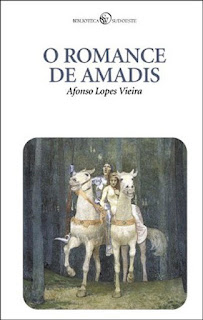
"O Romance de Amadis", Afonso Lopes Vieira // "The Romance of Amadis", Afonso Lopes Vieira

Um clássico do género a que diz respeito este blogue, este é também um velho livro pessoal, uma compra numa feira do livro feita na Escola B2-3 Gonçalo Nunes em Barcelos se bem me lembro (Vitorino Nemésio me perdoe o "gamanço") no meu último ano lá. É uma obra formativa mais que no conteúdo (embora também seja uma obra em que um protagonista cresce e amadurece para a idade adulta), é uma obra que é formativa na criação de sensibilidade estética do leitor, e de uma certa noção de Portugal e de ética. O Leiriense Afonso Lopes Vieira escreveu em 1922 esta obra de um certo neo-Romantismo, que foi um trabalho de amor do autor, nascido de nacionalismo para o próprio.
Tudo começa com um romance de cavalaria do século XVI em 4 volumes (ou «livros»), intitulado Amadis de Gaula. Ora, por algumas referências que referem nomes de personagens do romance (inventados por ele) antes deste surgir impresso como um texto em Castelhano atribuído a um Garcí-Montalvo, a aparentes referências a pedidos de um príncipe D. Afonso no século XIII ter pedido que se mudasse um enredo envolvendo o protagonista Amadis, e ao título da impressão castelhana original referir «novamente historiados» no subtítulo usualmente enorme na altura, há muito que o Amadis tem sido conjecturado ser um texto originalmente português do século XV ou até bastante antes. A maioria das teorias atribuíam a um membro ou outro de uma família de trovadores portuguesa chamada de Lobeira (os "suspeitos do costume" sendo João de Lobeira, contemporâneo de D. Dinis, e Vasco de Lobeira, velho escudeiro ao tempo de Aljubarrota que seria depois da batalha armado cavaleiro, episódio que, como veremos será reproduzido no enredo do Amadis que Lopes Vieira recria). A "questão do Amadis" é algo que ainda não foi conclusivamente provado de uma forma ou outra, visto que ainda não foi encontrado texto manuscrito ou impresso anterior, português ou não, que prove que a versão de Montalvo não é a primeira, embora em Portugal como em Espanha a existência de indícios complexos de uma origem portuguesa impossíveis de ignorar teoricamente seja assumida. Alguns na hispanosfera até ponderam uma origem pré-Montalvo sem incluir Portugal, atribuíndo o romance a Infante Henrique de Castela, "o Senador", que teria tido pela Europa fora viagens e aventuras que lhe inspirariam este enredo (com as principais personagens a paralelarem supostamente conhecidos do Infante).
O romance castelhano original
Ora Lopes Vieira era um crente sem dúvidas na hipótese da origem lusa do romance, e como tal, após alguns anos de projectar a ideia de "devolver" o texto à língua portuguesa, embora numa versão resumida (e encurtada visto que tudo o que era do III livro para lá era considerado criação só de Garcí-Montalvo, que o Português recusou, tentando criar um puro "livro português"), e mais próxima em linguagem do Português moderno, porém mantendo uma "ferrugem" saudável de arcaísmo compreensível, e alguns anos a tentar finalizar essa tentativa, deu-se por imensamente satisfeito com o resultado, principalmente depois de o ler para uma mulher popular parte do texto, fazendo-a reagir positivamente e pedir por mais (a edição que tenho da colecção Biblioteca Sudoeste da Porto Editora detalha depois do texto do livro a biografia do autor, trabalho neste livro, o "contrato" e projecto do prefácio da lusitanista Alemã Carolina Michaelis de Vasconcelos, a recepção do romance, as consequências do livro na carreira do autor e o que ele fez depois).
Afonso Lopes Vieira segundo Columbano Bordalo Pinheiro
O mundo desta estória é uma versão fantasiada da Europa passada na época tardo-romana e medieval-inicial, poucos anos antes da época do Rei Artur. Entre os lugares referidos estão a Pequena Bretanha (uma região de França chamada hoje só Bretanha) onde Amadis nasceu, Gaula (que será ou a Gália ou o País de Gales, ou só a sua própria terra inventada) cujo Rei Perion era pai de Amadis (a sua mãe era a Princesa da Pequena Bretanha), a Escócia (que é assim chamada no romance original e na versão de Lopes Vieira mas então era de facto chamada de Caledónia) onde é criado, a Bretanha (hoje Grã-Bretanha ou Inglaterra) cuja Princesa Oriana ele serve, e combate e luta por vários países a adversários como cavaleiros 'normais', gigantes, bruxos e bruxas e muitos monstros, incluíndo um Rei imaginário (e gigante) da Irlanda que combate com os exércitos de Gaula e da Normandia (anacronisticamente assim é chamado o norte de França), e percorrendo países e locais mal identificados e mais ou menos lendários ou então bem identificados como o país dos Suevos (no que é hoje a Alemanha e cujo povo povoou por essa altura o Norte de Portugal), Grécia (surgindo também uma personagem Grega, o velho escudeiro Macandon), Hungria e a Ilha do Lago Fervente (imaginem uma furna açoriana) que se poderá identificar com a ilha italiana de Pantelleria (perto da Sicília), surgindo ainda uma donzela de companhia de Oriana que é da Dinamarca. No romance original medieval surgia ainda um Rei Árabe e o seu exército, mas este episódio é saltado por cima na versão de Lopes Vieira, com descrições vagas do tipo "ah e tal, o Amadis viajou por muitos sítios e fez muitas coisas dignas de nota, mas isso agora não interessa nada", focando-se na linha principal do enredo.
A Europa segundo as lendas arturianas, aproximadamente a Europa do tempo mítico de Amadis 
O livro começa com uma introdução em que o autor assume a pose de trovador medieval, abordando o público, introduzindo a narrativa, falando do romance original (seguindo a sua tese de que um original português fora levado para Espanha e lá alterado para o novo país). Depois, o enredo apresenta-nos ao Rei Garintes da Pequena Bretanha francesa (neste caso «Piquena Bretanha»), com uma filha casada com o Rei da Grã-Bretanha pré-arturiana mas (sabe-lo-emos depois) ainda sobre domínio romano, e outra solteira e dada só à religião. Esta Elisena, apaixonar-se-á pelo hóspede do seu pai, Perion, Rei de Gaula, e depois dele partir de volta ao seu reino, ela se saberia grávida (segundo Lopes Vieira, gravidez extra-matrimonial só deixaria de ser crime depois desta lei ser revogada pelo Rei Artur), com ajuda da criada escondendo a gravidez e tendo o bebé em segredo. Ela baptizou-o Amadis por causa de um santo popular, alcunhando-o de «o Sem Tempo», imaginando que pouco sobreviveria, visto que depois deitou-o ao mar num caixote feito pela criada, junto com uma espada e um anel, e um pergaminho que o identificava como «Amadis, o Sem Tempo». O Escocês Gandales, que navegava com a família por ali, apanhou-o no mar e criou-o como seu filho junto com o seu filho verdadeiro Agrajes, chamando ao órfão Donzel (Português antigo para "Moço") do Mar. Pouco depois, o enredo dá-nos dois episódios simbólicos muito fortes: um, mostra-nos Perion, que retorna à «Piquena Bretanha» para desposar Elisena, e o faz, a depois ter um sonho intenso em que perde o seu coração, que um sábio da Picardia interpreta como aviso quanto a algo muito próximo dele que ele perdia sem saber; e o pai adoptivo de Amadis, Gandales, é visitado por uma feiticeira que profetiza a Amadis muitos feitos, que seria protector dos fracos e o terror dos fortes.
Anos depois, Amadis é armado cavaleiro pela Princesa Oriana da Grã-Bretanha, de quem se apaixona, e por ela viaja pela ilha da Grã-Bretanha e pela Europa fazendo feitos contra cavaleiros, monstros e feiticeiros e feiticeiras para se dignificar e ser digno dela. Como típico de estórias de cavalaria, Amadis vive grandes aventuras e é fiel e enamorado da sua dama Oriana. Numa das suas viagens, ele chega a Gaula, terra do seu desconhecido pai, e lá toma partido do velho rei contra o Rei Abies da Irlanda invasor de Gaula por esta altura. Em batalha no outro reino governado por Perion e Elisena, a «Piquena Bretanha», exércitos de Gaula e normandos, incluíndo entre as hostes Amadis, combatem os Irlandeses e o próprio protagonista derrota e mata em batalha o gigante Abies (que havia em tempos derrotado e morto ele próprio gigantes). Depois, em gratidão Amadis é feito hóspede do Rei Perion, e é reconhecido pela espada e o anel (que, recordemo-lo, vinham com ele no baú em que navegara bebé) pela mãe, e assim a família se reúne, Amadis conhece os irmãos (tidos pelos pais depois de casarem) que desconhecia, e Perion fica a saber uma verdade que lhe fora escondida e o significado do sonho que antes tanto o perturbara e intrigara. Depois disso Amadis volta, agora como um príncipe, à Grã-Bretanha, portanto agora como igual e digno pretendente para Oriana, e eles continuam unidos em amor fiel e não é possível separá-los até ela ser raptada pelo mago Arcalau, um inimigo fidagal de Amadis que o quer magoar através de magoar a amada deste.
O cavaleiro, como que possesso, cavalga como doido ao encontro dos cavaleiros do mago, e destrói-os completamente, e leva a princesa Britânica consigo, e depois disso eles amam-se na floresta. Novo conflito no enredo virá quando a proximidade de Amadis para com Briolanja, uma dama da Sansonha (o nome medieval para a Saxónia alemã) que ele salvou e a morte de cujo pai ele lhe vingou, e os rumores lhe fazem crer erradamente que ele a traíra. Depois, enlouquecido Amadis retira-se para um ermo junto com um eremita, abdica da sua armadura e toma do eremita uma armadura mais brilhante e assume o novo nome Beltenebroso (obviamente "Belo-tenebroso"), sob o qual faz proezas que ironicamente o povo da altura diz ultrapassarem as de Amadis. É quando chega à corte britânica Macandon, um escudeiro Grego já de idade avançada que traz com ele uma espada baça e uma guirlanda (i.e. grinalda) seca, dizendo que se via condenado a buscar pelo mundo um amor perfeito, que seria identificado pelo homem empunhar a espada e fazer-la reluzir, e a mulher pôr a guirlanda na cabeça e faze-la florescer. Amadis vai como Beltenebroso até Oriana e revela-se a ela, e devido à saudade e o que sentem, reconciliam-se. Assim, disfarçam Oriana de véu e outras roupas e vão os dois à cerimónia onde todos os casais tentam a espada e a guirlanda, e obviamente que são os únicos a fazer os objectos encantados cumprir os fins ante um amor perfeito. Depois disso, o velho Macandon é finalmente armado cavaleiro. O romance termina com Amadis salvando Oriana de ser levada para Roma para casar em casamento de conveniência com o Imperador Romano, e depois de a salvar em alto mar abordando o navio em que segue para Roma, ambos vão para a Ilha Firme e vivem lá juntos até ao fim das suas vidas. (numa insinuação sobre haver mais no Amadís de Gaula castelhano, Lopes Vieira termina dizendo que não seria preciso mais final, e qualquer outro seria mentira, porque o amor é o seu próprio fim e princípio).
Amadis e Oriana numa ilustração de um velho manual de Português do 8.º ano
Afonso Lopes Vieira nesta que é uma das suas raras prosas, mostra aqui alguma da sua poesia tornando-a na forma da prosa poética, e faz neste aparente conto-de-fadas (isto torna-se mais claro na versão O conto de Amadis de Portugal para rapazes portugueses de 1938 e reeditado nos anos '50, mais abertamente infanto-juvenil, com belas ilustrações de António Lino) um texto que serve como metafísica ou teologia do amor, discurso sobre Portugal e portugalidade (tudo usando um enredo que não envolve Portugal ou Portugueses e miticamente passado antes da fundação de Portugal ou sequer de se chamar ao norte do seu território Portucale), um romance histórico com elemento de fantástico, uma tentativa (muito livre, e talvez nunca tendo isto literalmente como objectivo; o modelo de Lopes Vieira, mais do que o texto quinhentista original, talvez fosse a versão resumida e modernizada do Tristão e Isolda de Joseph Bédier Le Roman de Tristan et Iseult de 1900). Este livro pode encontrar-se em várias edições em muitas bibliotecas municipais e escolares (talvez não todas), sendo a edição da Porto Editora relativamente fácil de achar agora que foi apoiada pelo programa Ler+ (estando recomendado para leitura no 8.º ano, havendo ainda um antigo manual desse ano da mesma editora da altura em que estava nesse ano lectivo que tinha alguns extratos do livro incluídos com ilustrações agradáveis e garridas).
Capa da abreviação infantil do autor


A classic of the genre in what concerns this blog, this is also an old personal book, a buy on a book fair done in the Secondary/Middle school and High School Gonssalo Nunes in Barcelos iff I recall it correctly (may Vitorino Nemesio forgive me the "jacking") in my last years there. It is a Bildungsroman work in more than the content (although it be also a work in which a lead grows and matures till adulthood), it is a work that is formative in the creation of aesthetic sensibility of the reader's, and of a certain notion of Portugal and of ethic. The Leiria-native Afonso Lopes Vieira wrote in 1922 this work of a certain neo-Romantismo, which was the author's labour of love, born to his own mind out of nationalism.
Everything starts with a 16th century chivalry novel in 4 volumes (or «books»), titled Amadis de Gaula ("Amadis of Gaul/of Gaula"). Well now, by some references that refer names of characters from the novel (made up by it) before the former came-up printed as a text in Castilian attributed to a Garci-Montalvo, to apparent references to requests of a Prince Don Alfonso in the 13th century having asked that it be changed a plot involving the protagonist Amadis, and the title of the original Castilian print mentioning «again storied» on the subtitle averagely enormous at the time-point, there has long been the Amadis conjectured to be a text originally Portuguese from the 15th century or even quite before. The majority of the theories attributed it to one member or another of Portuguese troubadours called the Lobeiras (the "usual suspects" being Joao de Lobeira, contemporary to King Don Denis, and Vasco de Lobeira, old squire at the time of the Aljubarrota battle who would be after the battle armed knight, episode as we shall see shall be reproduced in the plot of the Amadis that Lopes Vieira recreates). The "Amadis question" is something that still was not conclusively proven on one way or the other, seen that it still was not found previous manuscript or printed text, Portuguese or not, that prove that the Montalvo version is not the first, although in Portugal as in Spain the existence of complexe signs of a Portuguese origin impossible to ignore theoretically be assumed. Some in the hispanosphere even ponder a pre-Montalvo origin without including Portugal, atributing the novel to Infant-prince Henry of Castile, "the Senator", who woyuld have had throughout Europe travels and adventures that would inspire him this plot (with the main characters paralleling supposedly acquaintances of the Infante).
The original Castilian novel
Well now Lopes Vieira was a believer without doubts in the novel's luso origin hypothesis, and as such, after some years projecting the idea of "giving back" the text unto the Portuguese language, although in a summarised version (and shortened seen that everything that was from the III book onwards was considered creation only from Garcí-Montalvo, which the Portagee refused having, trying to create a pure "Portuguese book"), and closer in language to the modern Portuguese, though keeping some healthy "rust" of understandable arcaism, and some years trying to finalise that attempt, gave himself as immensely satisfied with the result, mainly after reading it to a commoner woman part of the text, making her react positively and ask for more (the edition that I got from Porto Editora publisher's Biblioteca Sudoeste/"Southwest Library" details after the book's text the author's biography, work on this book, the "hired-work contract" and project of the foreword by German lusitanist Michaelis de Vasconcelos, the novel's reception, the consequences of the book on the author's career and what he did afterwards).
Afonso Lopes Vieira according to Columbano Bordalo Pinheiro
The world of this story is a fantasised version of Europe set in the late-Roman and early-medieval period, few years before King Arthur's period. Among the places refered are the Little Britin (a region of France called today only Brittany) where Amadis was born, Gaula (which would be either Gaul or Wales, or just its own made-up land) whoe King Perion was Amadis' father (his mother was a Little Britain princess), Scotland (which is so called in the original novel and in Lopes Vieira's version but then was in fact called Caledonia) where he is raised, Britain (today Great-Britain or England) whose Princess Oriana he serves, and combats and struggles through several countries to adversaries like 'normal' knights, giants, witch-doctors and witches and many monsters, including an imaginary (and giant) King of Ireland who fights the armies of Gaula and of Normandy (anachronistically so is called the north of France), and going through countries and locales badly identified and more or less legendary or then well identified like the country of the Suebi (in what is now Germany and whose people settled around that time-point Northern Portugal), Greece (appearing also a Greek character, the old squire Macandon), Hungary and the Island of the Boiling Lake (imagine an azorean furna/lava tube) which one might identify with the Italian island of Pantelleria (near Sicily), coming-up yet a maiden in waiting of Oriana who is from Denmark. In the original medieval novel it came up still an Arab King and his army but this episode is skipped over by Lopes Vieira's version, with vague descriptions of the "ah and such, Amadis travelled by many places and did many things worthy of note, but that now matter none", focusing itself in the plot's main line.
Europe according to the arthurian legends, approximately the Europe from Amadis' mythical time
The bookstarts with an introduction in which the author assumes the pose of medieval troubadour, approaching the audience, ntroducing the narrative, talking of the original novl (following his thesis that a Portuguese original had been taken to Spain and there altered to the new country). Afterwards, the plot introduces us to the King Garintes from the French Little Britain (in this case «Litel Britain»), with one daughter married to the King of the pre-arthurian but (we shall knoow it afterwards) still under Roman domain Great Britain, and another single and only self-given to religion. This Elisena shall fall in love for the guest of her father's, Perion, King of Gaul, and after he leaving back to his kingdom, she would find herself pregnant (according to Lopes Vieira, extramarital pregnancy only would cease being crime after this law being revoked by King Arthur), with help from the maid hidding the pregnncy and having a baby in secret. She baptised him Amadis because of a folk saint, nicknaming him as «the Without Time», imagining that little would he survive, seen that little afterwards she threw him to the sea on a crate made by the maid, together with a sword and a ring, and a scroll that identified him as «Amadis, the Without Time». The Scotsman Gandales, who sailed with the family over there, picked him up at sea and raised him as his son together with his true son Agrajes, calling to the orphan Donzel ("Damoiseau", ancient Portuguese for "Lad") from the Sea. Little after, the plot gives us two very strong simbolic episodes: one shows us Perion, who returns to the «Litel Britain» to bewed Elisena, and does so, afterwards having an intense dream in which he loses his heart, which a wiseman from Picardy interpretes as warning about something very close to him that he lost without knowing; and Amadis' adoptive father, Gandales, is visited by a sorceress who prophesises to Amadis many deeds, that he would be protector to the weak and the terror to the strong.
Years after, Amadis is armed knight by the Princess Oriana of Great Britain, for whom he falls in love, and for her travels through the island of Great Britain and through Europe doing deeds against knights, monsters and wizards and sorceresses to dignify himself and be worthy off her. As typical on chivalry stories, Amadis lives great adventures and is faithful and enamoured to his lady Oriana. In one of this travels, he arrives to Gaula, land from his unknown father, and there takes the old king's party against the King Abies of Ireland invader of Gaula by this time-point. In battle in the other kingdom ruled by Perion and Elisena, the «Litel Britain», armies of Gaula and Normand ones, including among the hosts to Amadis, combat the Irish and the lead himself defeats and kills in battle the giant Abies (who had in times defeated and killed himself to giants). Afterwards, in gratitude Amadis is made guest to the King Perion, and is recognised by the sword and the ring (which, shall we remind it, came with him in the trunk in which he sailed as baby) by the mother, and so the family reunites, Amadis meets his siblings (had by his parents after they got married) he knew not of, and Perion gets to know a truth that had been hidden from him and the meaning of the dream that before so much had bothered and intrigued him. After that Amadis goes back, now as a prince, to Great Britain, hence now equal and worthy suitor for Oriana, and they continue united in faithful love and it is not possible to separate them till she is kidnapped by the mage Arcalau, a cold-hatred enemy of Amadis' who wants to hurt him through hurting his beloved.
The knight, as if possessed, rides as mad to meet-up the mage's knights, and destroys them completely, and takes the British princess with himself, and after that they love each other on the forest. New conflict on the plot shall come when the proximity of Amadis towards Briolanja, a lady from Sansonha ("Saxen", the medieval name for the German Saxony) whom he saved and the death of whose father he avenged, and the rumours do make her believe wrongly that he had betrayed her. Afterwards, maddened Amadis retreats to a waste together with a hermit, abdicates to his armor and takes from the hermit a shinier armor and assumes the new name Be'tenebrous (obviamente "Beau-tenebrous"), under which he does prowesses that ironically the people of that time-point said to overcome Amadis' ones. It is when t arrives to the British court Macandon, a Greek squire already of advanced age who brings with him a dim sword and a dry gerlond (i.e. garland), saying that he saw himself condemned to search through the world a perfect love, that would be identified by the man wielding the sword and making it flash, and the woman putting the gerlond on the head and making it florish. Amadis goes as Be'tenebrous till Oriana and reveals himself to her, and due to the nostalgia and what they feel, they reconcile each other. So, they disguise Oriana in veil and other clothes and go together to the ceremony where all the couples try the sword and the gerlond, and obviously are the only ones to make the enchanted objects fulfil their aims facing a perfect love. After that, the old Macandon is finally knighted. The novel ends with Amadis saving Oriana from being taken to Rome to marry into marriage of convenience with the Roman Emperor, and after saving her at high sea approaching the ship that follows for Rome, both go to the Firm Island and live there together the rest of their lives (in an insinuation on there being more on the Castilian Amadís de Gaula, Lopes Vieira ends saying that there would not be needed more ending, and that any other would be a lie, because love is its own end and beginning).
Amadis and Oriana on and old 8th grade Portuguese Language class manual illustration
Afonso Lopes Vieira in this which is one of his rare proses, shows here some of his poetry turning it into the form of the poetic prose, and does in this apparent fairy-tale (this becomes clearer in the O conto de Amadis de Portugal para rapazes Portugueses/"The tale of Amadis of Portugal for he Portuguese boys" version from 1938 and re-edited in the '50s, more openly children's/young-people's, with fair illustrations by Antonio Lino) a text that serves as metaphysics or theology of love, discourse on Portugal and portugality (all using a plot that does not involve Portugal or Portuguese and mythically set before the foundation of Portugal or even the calling itself to the north of its territory Portucale), a historical novel with a fantasy element, a (very free, and maybe never having this literally as objective; Lopes Vieira's model, more than the original fifteen-hundredth text, maybe it were the summarised and modernised version of the Tristan and Isolde by Joseph Bédier Le Roman de Tristan et Iseult from 1900). This book can find itself in several editions in many Portuguese municipal and school libraries (maybe not all), being the Porto Editora publisher edition relatively easy to find now that it was supported by the Ler+/"Read+" program (being recommended for reading on the 8th grade, there being still an old manual from that year by the same publisher from the time that I was in that school year that had some extracts from the book included with agreeable and garish illustrations).
Cover from the author's children's abbreviation

sexta-feira, 18 de setembro de 2015

"Filha de Branco", Reis Ventura // "Whiteman's Daughter", Reis Ventura

As peripécias coloniais são frequentes, como temos visto, nas obras que têm passado pelas publicações deste blogue. Isto é compreensível dado o passado de Portugal e a forma como a colonização (ou pelo menos algum tipo de imperialismo) em geral representou o passado de muitos povos do mundo, e enriqueceu muitos povos enquanto enfraqueceu muitos outros na 'outra ponta' do processo, pelo que tornou-se um tema muito atraente para os artistas em geral, sob vários prismas. Filha de Branco (Cenas da vida de Luanda), publicado originalmente em 1960 de Reis Ventura (que já foi apresentado na 9.ª publicação deste blogue), é no espírito desses livros centrados no tema da colonização e das suas consequências negativas e positivas e dos "produtos" (até humanos) do encontro entre mundos diversos. O livro fecha uma trilogia de Reis Ventura, Cenas da Vida Em Luanda, trilogia que mostra a realidade das três classes sociais na capital da então Angola Portuguesa entre as décadas de 1920 e de 1950, um volume dedicado à classe baixa (o livro aqui em causa), outro à média e outro à alta, enquanto se começa a formar uma luta por independência numa colónia com vários problemas.
Este último livro da trilogia representa a mestiçagem racial nos bairros limítrofes de Luanda. É aí, na «vasta área» dos chamados muceques (que o autor chamava «a parte mais original da cidade», que lembra «um formigueiro humano em que caldeia a Angola do futuro»), S. Paulo, Vila Clotilde, Muceque Rangel e Casa Branca, que surge no «centro nervoso» da área a Rua de S. Paulo («Ainda não é bem cidade; e já não pode chamar-se muceque») em que lavadeiras negras aposentadas arrendavam casas a brancos a quem curiosamente chamavam de patrão quando reclamavam pela renda atrasada. Nesses bairros de transição «cheios de pitoresco e de imprevisto», com cabanas de adobe ao lado de vivendas modernas, brancos "fura-vidas" e negros culturalmente ocidentalizados (e alguns proto-nacionalistas, membros da «Liga Africana» de então), já previa o autor o fermentar de um «país luso-tropical do porvir», em que brancos e negros interagiam de formas complexas e nem sempre idílicas (note-se que Reis Ventura, apesar de defender a supremacia e domínio português até o final da vida, já anos depois da descolonização, não defendia a segregação dentro das colónias e frequentemente mostrava os brancos pobres e os negros não-de elite local como tendo de se unir para conseguirem sobreviver ante as "vistas curtas" e políticas da burocracia colonial de Luanda, mas reconhece as actividades muitas vezes de oposição, comércio, competição, orgulhos isolacionistas e desigualdades que ocupam frequentemente o lugar que a cooperação devia ter). No amadurecimento do reconhecimento da realidade africana na escrita de Portugueses de África como Reis Ventura, vemos curiosamente um escritor Português, branco, a reconhecer algo que seria parte do protesto dos nacionalistas negros contra um certo segmento da população africana: as mestiças que eram tidas como ambiciosas (terminologia usada mesmo por Reis Ventura) «que tem no sangue a turbulência dos batuques, mas só quer um branco», o que os nacionalistas acusavam como rejeição da parte negra da suas pessoas e como sujeição a uma espécie de influência da hierarquia colonial na vida amorosa e sexual.
Filha de branco não refere-se só à personagem-título em causa (e representada na capa), mas como apontava o próprio Reis Ventura na introdução, «Filha de branco» é «esta Luanda dos Muceques (...) estranha mistura de arraial minhoto e de batuque de sanzala, de mercado indígena e de feira algarvia». Relato datado mas guiado por boas intenções e uma mundo-visão que embora não desafiando a posse colonial de Angola mostra simpatia pelos indígenas e mostra uma vida colonial portuguesa com muitos problemas sociais. Este e outros textos de Reis Ventura, que não importam para aqui, mas que revelam todos a mestria do autor na narração e na escrita (que chegou até ao cinema português em A Voz do Sangue de 1966), e que mais pátina menos pátina do mundo pós-colonial (e mesmo assim há livros muito mais datados vindos já no período pós-colonial como Ilha do meio do mundo do folclorista e escritor Católico Fernando Reis, ainda saudosita colonial em pleno 1982), na discussão da lusofonia e da relação Portugal-África (que hoje parece ser como a protagonista e o Muceque, «Filha de branco, que ficou só, e de preta que não quis resistir...») serão óptimo alimento-para-pensamento. Este livro é raro em bibliotecas (nas de Barcelos e de Braga está completamente ausente, estando porém presente na Biblioteca Nacional de Portugal não só este livro, mas um livro homónimo diferente assinado pelo pseudónimo de autor/autora Lília da Fonseca).


The colonial mishaps are frequent, as we have seen, in the works that have passed by the posts of this blog. This is understandable given Portugal's past and the way how colonisation (or at least some type of imperialism) in general represented the past of many of the world's peoples, and it enriched many peoples while it weakened many others on the 'other end' of the process, for what it became a very atractive theme for the artists in general, under several prisms. Filha de Branco (Cenas da vida de Luanda) (Whiteman's Daughter (Scenes from Luanda's life)", published originally in 1960 by Reis Ventura (who had already been introduced on this blog's 9th post), is in the spirit of those books centered on he theme of colonisation and of its negative and positive consequences and of the "by-products" (even human ones) of encounters between unlike worlds. This book closes a trilogy by Reis Ventura, Cenas da Vida Em Luanda ("Scene from Life in Luanda"), trilogy that shows the reality of the three social classes on the capital of the then Portuguese Angola between the 1920s and the 1950s decade, a volume dedicated to the lower (the book here at stake), another to the middle and another to the upper class, while it started to form itself the independence struggle in a colony with several problems.
This last book of the trilogy represents the racial crossbreeding in the liminal neighbourhoods of Luanda. It is there, in the «wide area» of the so-called muceques slums (which the author called «the more original paart of the city»), Sao Paulo, Vila Clotilde, Muceque Rangel and Casa Branca, that comes-up on the «nerve centre» of the Sao Paulo Street area («It still is not quite city; and it no longer can call itself muceque slum») in which retired black washerwomen rented houses to whites to whom curiously they called boss while they complained on the late rent. In those transition neighbourhoods «full of picturesque and of unforeseeable», with adobe huts alongside modern villas, "hustling" whites and culturally westernised blacks (and some proto-nationalists, members of the «African League» from back then), already predicted the author the fermenting of a «luso-tropical country of the hereafter», in which whites and blacks interacted in complex and not always idyllic ways (let it be noted that Reis Ventura, despite defending the Portuguese supremacy and domain till his later life, already years after the Portuguese decolonisation, did not defend the segregation within the colonies and often showed the poor whites and the local non-elite blacks as having to unite themselves for being able to survive in face of the "short sights" and policies of the Luanda colonial bureaucracy, but recognises the activities many times of opposition, commerce, competition, isolationist prides and inequalities that occupy freuently the place that cooperation should have). In the maturing of the recognition of the african reality in the writing of Portuguese from Africa like Reis Ventura, we see curiously a Portuguese, white, writer recognising somthing that would be part of the protest of the black nationalists against a certain segment of the african populations: the halfbreeds that were held as ambitious (terminology used actually by Reis Ventura) «that has in the blood the turbulence of the drumbeats but, only fancies a whiteman», what the nationalists accused as rejection of the black partt of their personhoods and as suggestion to a kind of influence of the colonial hierarchy into the love and sexual life.
Whiteman's Daughter doesn't refer itself just to the title character at stake (and represented on the cover), but as pointed Reis Ventura himself in the introduction, «Whiteman's daughter» is «this Luanda of the Muceques (...) strange mixture of Minho region country-set-dance and of sanzala village drumbeat, of indigenous market and of algarvian fair». Report dated but guided by good intentions and a worldview that although not challenging the colonial possession of Angola shows sympathy for the indigenous ones and shows a Portuguese colonial life with many social problems. This and other texts by Reis Ventura, which do not matter here, but reveal to all the author's maestry in narration and in writing (which got to Portuguese cinema in A Voz do Sangue/"The Voice of the Blood" from 1966), and that more patina less patina (and even so there are books much more dated coming already in the postcolonial period like Ilha do meio do mundo/"Island from the world's end" by the folklorist and Catholic writer Fernando Reis, still colonial nostalgic in mid 1982), in the lusophony discussion and the Portugal-Africa (that today seems to be as the protagonist and the Muceque, «daughter of whiteman, who was left alone, and of black-woman who didn't want to resist...») will be great food-for-thought. This book is rare in Portuguese libraries (in the Barcelos and Braga ones it is completely absent, being though present in the Portugal National Library not only this book but a different namesake book signed by the penname of male/female author Lilia da Fonseca).

quinta-feira, 10 de setembro de 2015

"História de D. Afonso de Brás, filho de Gil Brás de Santilhana", José da Fonseca // "Story of Don Alphonse Blas, son of Gil Blas de Santillana", Jose da Fonseca

Esta 37.ª obra, de 1838, resenhada no blogue Clássicos da literatura infanto-juvenil portuguesa // Portuguese Children's/Young People's Literature Classics não é uma obra plenamente original mas, novamente, uma adaptação tão solta a ponto de não fazer toda a diferença a existência de material de fonte original (o romance pícaro de 1744 de sequela do Gil Blas de Alain-René Lesage La Vie de Don Alphonse Blas de Lirias, fils de Gil Blas de Santillane, a capa de uma edição francófona de 10 anos depois da original acima, atribuído duvidosamente ao autor do Gil Blas visto que no original vinha sem indicação de autor). O gramático e escritor Português José da Fonseca (1788-1866), radicado em França desde o início do século XIX (famoso mundialmente pela falsa atribuição que o editor e o autor deram a uma pérola do humor involuntário que foi o dicionário Português-Inglês feito pelo verdadeiro autor Pedro Carolino sem qualquer conhecimento de Inglês e traduzindo de Português para Francês e de Francês para Inglês, alcunhada pelo fã Mark Twain de English As She Is Spoke, traduzido como o hilariante "Inglês Como Ela É Falou"), para além desta tradução "solta", fez ainda uma adaptação para crianças do Gil Blas original em O Gil Braz da infancia, ou Aventuras de Gil Braz compendiadas para uso dos meninos, 22 anos depois, espécie de "prequela" (como se chama a obras subsequentes a outra que se passam antes da anterior) desta.
O romance (tal como o original Gil Blas, narrado na primeira pessoa como se memórias fossem) conta a vida do filho mais novo (de 2) de um pícaro Cantábrico que subira na vida como favorito do Rei Filipe IV de Espanha e chegara a secretário do Primeiro-Ministro e através de trabalho duro e inteligência se pudera aposentar num castelo e apreciar uma fortuna ganha honestamente, com uma mulher de alta linhagem (isto apresenta o desafio usual do filho nascido em riqueza de um "homem auto-feito": terá a mesma têmpera do protegenitor que ascendeu a pulso? Que tem ele para fazer na vida, se ele próprio nasceu já "no topo"? Só esperar pela morte do progenitor e herdar?). Quando o Primeiro-Ministro Olivares cai em desgraça (por razões incluindo a Restauração da Independência portuguesa), o padrinho de D. Afonso (do mesmo nome), que é o Vice-Rei (ficcional) de Aragão, é substituído por outro mas devido ao seu bom serviço em muitos cargos é reformado nas suas terras com uma boa reforma, passando a maioria do tempo na biblioteca com a esposa amante das matemáticas, o padre local bem-lido, e um hóspede Alemão D. João de Steinbock, e falando a educar o afilhado (que trata com todas as carícias) só em Latim (a ponto de Afonso falar quase melhor Latim que Espanhol). Chegando a altura de ele se formar, ele regista Afonso na Universidade de Salamanca e envia-o com o Alemão e 2 domésticos. Aí ele passa muito tempo sem ver os pais e o padrinho (a quem pede dinheiro a pedido do Alemão quando acaba o que deu originalmente) e dedica-se com afinco ao estudo e aprende desenho e passeia com o jovem sobrinho-neto do Duque de Médina-Céli nas horas vagas. É por via deste jovem com quem acaba por conviver e convida ao castelo do seu padrinho, que conhece e ambos acabam por se ver sob a protecção (e rodeados da lisonja) de um tal de D. Cipião.
Assim a obra começa realmente, com Cipião (não uma personagem diabólica mas alguém que tenta claramente usar a associação a jovens de estatuto para seu favor) tentando "enrolar" o padrinho e pais de D. Afonso e conseguir tirar dividendos da guarda do jovem, enquanto este vai amadurecendo, fazendo pela vida fazendo uso dos dons para o desenho e o Latim, dos conhecimentos obtidos em Salamanca e aparentemente de um je ne sais quois que podemos imaginar herdado geneticamente do pai (aprendendo ainda várias outras coisas pelo caminho), num modelo que ajudou, pelo uso de modelos estrangeiros, a enriquecer a literatura portuguesa com um carácter de literatura de formação e de aventuras. Com grande força de vontade, fé, ética e uso do corpo quando necessário, depois da partida de Cipião para a América colonial espanhola, D. Afonso e o seu novo amigo Conde Pérez viajam para o México, onde se encontram com Cipião, que de Vera Cruz no centro-sul da costa mexicana se dirigira através do país, e assim vão passando o caminho em peripécias e conseguindo ludibriar Cipião e outros opositores quando necessário, para além de várias descrições vivas de pormenores etnográficos do México setecentista, incluindo curiosos festivais (um deles não sendo de facto visto pelas personagens, mas descrito por Afonso do que este aprende sobre ele de conversas com os locais).
Um episódio das aventuras de D. Cipião nas Américas
A estória evolui assim como uma espécie de versão ficcional e individualizada da criação de um novo mundo colonial para criação de riqueza de saídos da Península Ibérica (Espanhóis como Portugueses), em que D. Afonso de Brás deixa Espanha e fixa-se na América colonial e faz uma nova vida e produz nova riqueza para si, com um espírito desbravador, semi-assimilador à realidade tropical, e cristianíssima (e cristianizadora), numa variação latina do self-made man anglo-saxónico, o "homem auto-feito". Esta "tese" de redenção ou pelo menos de reformulação de um ser humano torna-se mais claro no Capítulo VII, que logo no título torna claro que é sobre «o Diabo feito Santo». Depois disso, Afonso e companhia, ao longo da sua "odisseia" ao longo do México que nos dá o retrato da América Latina colonial, confrontam um pedinte insolente bem agasalhado, e depois têm um "modesto" episódio de aventureirismo picaresco na povoação de Casa Blanca no Novo México (portanto não há aqui Marrocos nem Humphrey Bogart, embora uma personagem anti-heróica do tipo não ficasse muito fora de estilo num romance picaresco como este). Depois disso, alguém assassina o Senhor Cipião, o nosso herói descobrindo os responsáveis pelo complô, que são punidos pela justiça do Vice-Reino da Nova Espanha (o Império americano espanhol na América Central e do Norte e na Venezuela), sendo Afonso depois recompensado com a herança de um grande senhor de Guaxaca (bem no sul do México), e após mais alguns capítulos de episódios (incluindo o Capítulo XII que o título diz deixar à escolha do leitor se o lê ou passa e um Capítulo XIII que trata um pouco de vida tardia do pai do protagonista deste livro), D. Sancho e D. Afonso ajudam a salvar uma personagem secundária que conheciam de mais para o princípio do livro, o Conde de Leyva, de perigo de vida, sendo após isto que D. Afonso de Brás volta a Espanha, a Madrid, para terminar uma vida confortável depois de casar com uma viúva (casamento que, como costume para uniões nobres reais ou ficcionais, tem tanto de acto feliz como de acto socioeconómico): «Esta pobre infeliz, que não foi de algum lado das mais afligidas da morte de seu marido, não se tendo esperado que se coubesse um outro fim, ao trem de vida que conduzia, aceita com alegria a oferta de D. Afonso. Ela foi conduzida até Dom Pedro de Patilhos, que lhe fez caber uma pensão viageira, em reconhecimento que ela lhe havia rendido enquanto que ele estava em Roma.»
É tão divertido e "alimentador" da alma ler este livro, como a "prequela" do mesmo autor sobre o pai de D. Afonso de Brás, em que Gil Brás nasce na miséria a um rapaz-de-estrebaria e uma criada-de-câmara na Cantábria e é educado por um tio em Oviedo, que deixa com a idade de 17 anos, partindo para a Universidade de Salamanca, onde o seu futuro parece tornar-se risonho; uma evolução que é interrompida quando uns ladrões o forçam a ajudá-los em roubos de estrada, sendo depois capturado e enfrentando pena de cadeia que só evita tornando-se criado de um grande senhor, cargo que lhe permite passar o olhar ao longo de várias classes laicas, clericais e fora-da-leis da sociedade ao largo de vários anos, graças à sua adaptabilidade e espirituosidade rápida. Finalmente ele consegue chegar à corte e ter o final feliz e a subida na vida que já referi acima ao falar do princípio do romance sobre o seu filho. Estas duas obras ajudaram a dar o retrato do homem Ibérico pragmático, mostrando assim ser mais que somente missionário ou conquistador, que ajudaram a influenciar o modelo da ficção de aventuras e de "estudo de personagem" posterior, e também abrindo novos caminhos para a literatura europeia, latino-americana e mundial, ajudando ainda a formar muita literatura infanto-juvenil (junto com obras como o já aqui visto O Piolho Viajante, que como vimos na respectiva crítica, até referia por nome o Gil Blas ou Gil Braz original; mas em muito O Piolho Viajante também é uma "resposta" a um certo optimismo e moralismo da obra franco-hispânica que da Fonseca tornou franco-hispano-portuguesa, pelo contrário sendo mais mordaz e sarcástico). Historia de D. Afonso de Braz, filho de Gil Braz de Santilhana e O Gil Braz da infancia, ou Aventuras de Gil Braz compendiadas para uso dos meninos só se encontram na Biblioteca Nacional de Portugal e talvez algumas colecções de origem privada (embora o original francês possa ser lido no Google Livros na edição bem ilustrada de 1744 e na hemeroteca digital francesa gallica na edição de 1754 que não tem metade das ilustrações), mas a adaptação mais moderna do Gil Blas intitulada Gil Brás resolve correr mundo : aventuras de Gil Brás de Santilhana, adaptada por (Henrique) Nascimento Rodrigues para a colecção Juvenil da Portugália de 1966 surge em várias bibliotecas municipais, e nalgumas outras (mais raramente porém) surge a adaptação de Nascimento Rodrigues de outra parte deste ciclo de Lesage, O confidente : aventuras de Gil Brás de Santilhana (do mesmo ano).


This 37th work, from 1838, reviewed in the Clássicos da literatura infanto-juvenil portuguesa // Portuguese Children's/Young People's Literature Classics blog is not a fully original work but again, an adaptation so loose to the point of not making that much difference the existance of original source material (the 1744 picaresque sequel novel to the Gil Blas by Alain-René Lesage La Vie de Don Alphonse Blas de Lirias, fils de Gil Blas de Santillane, the cover of a francophone edition of 10 years afterwards from the original shown above, attributed doubtfully to the author of the Gil Blas seen that in the original it came without indication of the author). The Portuguese gramatician and writer José da Fonseca, established in France since the early 19th century (famous worldwide for the false attribution that the editor and author gave to the pearl of unvoluntary humour which was the Portuguese-English dictionary made by the true author Pedro Carolino without any knowledge of English and translating from Portuguese to French and from French to English, nicknamed by fan Mark Twain with the hillarious English as She is Spoke), besides this "loose" translation, did still an adaption for children of the original Gil Blas in O Gil Braz da infancia, ou aventuras de Gil Braz compendiadas para uso dos meninos ("The Gil Blas of childhood, or Adventures of Gil Blas epitomized for use of the little-children") 22 years afterwards afterwards, kind of prequel (as one calls to works subsequent to another that sets itself before the previous one) to this one.
The novel (just like the original Gil Blas, narrated in the first person as if being memoirs) tells the life of the youngest son (of 2) of a Cantabrian pícaro/rogue that had risen in life as a favourite of the King Philip IV of Spain and got to secretary fo the Prime Minister and through hard work and intelligence himself had been able to pension-off into a castle and enjoy a honestly earned fortune, with a high lineage woman (this presents the usual challenge of the son born in wealth to a "selfmade man": has he the same quenching of the progenitor that rose by its own hand? What has he to do in life, if he himelf was born already "at the top"? Just to wait for the death of the progenitor and to inherit?). When the Prime Minister Olivares falls in disgrace (for reasons including the Portuguese Restoration of Independence), the godfather of Don Alfonso (of the same name), who is the (fictional) Viceroy of ragon, is replaced by another, but due to his good service in many offices is retired in this lands with a good retirement-pension, passing the most time in the library with the wife who is a lover of mathematics, the well-read priest, and a German guest Don John of Steinbock, and talking at educating the godson (whom he treats with all the cares) only in Latin (to the point of Alfonso speaking almost better Latin than Spanish). Arriving the time for him to graduate himself, he registers Alfonso in Salamanca University and sends him with the German and 2 domestics. There he passes much time without seeing the parents and the godfather (to whom he asks for moey on request of the German when it ends the one that he gave originally) and dedicates himself with keenness to the study and learns drawing and walks-about with the young grandnephew of the Duke of Medina-Celi in the vacan hours. It is by way of this young-man with whom he ends up by being on familiar terms and invites to his godfather's castle, that he gets to know and both end by to themselves seeing under the protection (and surrounded by the flatering) of one Don Scipio.
Like-so, the work starts truly, with Scipio (not a diabolical character but someone that tries clearly to use the association to youngmen of status to his favour) trying to "entangle with" the godfather and the parents of Don Alfonso and get to take-away dividends from the keeping of the youngman, while he goes maturing, making a living out of making use of the gifts for drawing and latin, out of the knowledges obtained in Salamanca and apparently out of a je ne sais quois that we can imagine inherited genetically from the father (learning yet several other things along the way), in a model that helped, by the use of foreign models, to enrichen the Portuguese literature with a character of bildungs-roman and adventure literature. With great strength of will, faith, ethics and use of the body when necessary, after the departure of Scipio for Spanish colonial America, Don Alfonso and his new friend Count Perez travel to Mexico, where themselves hey doo meet with Scipio, that from Vera Cruz in the centre-south Mexican coast to himself did head across the country; and so passing the way in mishaps and getting to deceive Scipion and other opponents when needed,besides several lively descriptions of ethnographic detals from seventeenth-century Mexico, including curious festivals (one of them not being in fact seen by the characters but described by Alfonso from what he former learns from conversations with locals).
An episode of the adventures of Don Scipio in the Americas
The story evolves so s a kind of fictional and individualized version of the creation of a colonial new world up for the creation of wealth of ones exited from the Iberian Peninsula (Spaniards and Portuguese), into which Don Alfonso de Blas leaves Spain and settles himself in the colonial Americas and makes a new life and produces wealth for himself with a trail-blazer, semi-assimilator to the tropical reality around, and most-Christian (and christianising) spirit, in a Latin variation of the Anglo-Saxonic self-made man, the "homem auto-feito"/"hombre auto-hecho". This "thesis" of redemption or at least of reformulation of a human being becomes clearer in the chapter VII, that rightaway on the title it becomes clear that it is on «The Devil made into Saint». After that, Alfonso and company, along their "odyssey" along Mexico that to us gives the portrait of the colonial Latin America, confronts an insolent well-coated beggar, and afterwards, have a "modest" episode of picaresque adventurism in the settlement of Casa Blanca in New Mexico (hence there is no Morocco nor Humphrey Bogart, although an anti-heroic character of the type wouldn't stand very out of style on a picaresque novel like this one). Afterwards of that, someone murders Mister Scipio, our hero discovering the ones responsible for the plot, that are punished by the justice of the Viceroyalty of New Spain (the Spanish American Empire in Central and Northern America and in Venezuela), being Alfonso afterwards rewarded with the inheritance of a great lord of Guaxaca (well in the south of Mexico), and afterwards some plus chapters of episodes (including the Chapter XII that in the titles says to leave to the choice of the reader if one reads it or passes it by and a Chapter XIII that takes care of a little of the later life of the father of this book's protagonist), Don Sancho and Don Alfonso help to save a secondary character that they knew from way to the beginning of the book, theCount of Leyva, from living danger, being afterwards of this that Don Alfonso de Blas goes back to Spain, at Madrid, for finishing a comfortable life afterwards the marrying of a widow (marriage that, as usual for real or fictional noble unions, has as much of happy act as of social-economical act): «This unfortunate poor-woman, that wasn't from any side of the most afflicted by death of her husband, not herself having expcted that herself did befit another end, at the convoy of life that she drove, accepts with joy the offer of Don Alfonso. She was driven till Don Pedro of Patillos, who to her made befit a voyage pension, in recognition that she to him had paid off while he was in Rome.»
It is as fun as feeding to the soul to read this book, as the "prequel" of the same author on the father of Don Alfonso de Blas, in which Gil Blas is born in misery to a stable-boy and a chamber-maid in Cantabria and is educated by an uncle in Oviedo, that he leaves with the age of 17 years old, departing for Salamanca University, where his future seems to smile upon himself: an evolution that is interrupted when some thieves unto him force helping on highway theft, being afterwards captured and facing jail time that he only avoids becoming servant of a great lord, position that to him allows to pass his gaze throughout several lay, clerical and outlaw classes of society throughout several years, thanks to his fast adaptability and wit. Finally he can get to the royal court and have the happy ending and the rise in life that I already referred above at talking of the beginning of the novel on his son. These two works helped to give the portrait of the pragmatic Iberian man, showing so to be more than merely missionary or conquistador, that helped to influence the model of the hinder adventure and "character study" fiction, and also opening new ways for the European, Latin-American and worldwide literature, helping to form much children's/young-people's literature (together with works like the already here seen The Travelling Lice, that, as we saw in the respective review, even referred by name the original Gil Blas or Gil Braz; but in much The Travelling Lice likewise is an "answer" to a certain optimism and moralism of the French-Hispanic work that da Fonseca turned French-Hispanic-Portuguese, on the contrary being more sharp and sarcastic). History of Don Slfonso de Blas, son of Gil Blas de Santillana and The Gil Blas of childhood, or Adventures of Gil Blas epitomized for the use by the little-children only do find themselves in the Portugal National Library and maybe some collections of private origin (although the French original may be read on Google Books in the 1744 well illustrated edition and in the French digital newspaper-library Gallica in the 1754 edition that does not have half of the illustrations), but the more modern adaptation of the Gil Blas entitled Gil Brás resolve correr mundo : aventuras de Gil Brás de Santillana ("Gil Blas sorts-out to race-out world : adventures of Gil Blas de Santillana"), adapted by (Henrique) Nascimento Rodrigues for the Portugália Juvenil ("Juvenile Portugália") collection of 1966 comes-up in several Portuguese municipal libraries, and in some other ones (more rarely though) comes-up Nascimento Rodrigues' adaptation of another part of this Lesage cicle, O confidente : aventuras de Gil Brás de Santilhana ("The confidant : adventures of Gil Blas de Santillana", of the same year).