Mostrar mensagens com a etiqueta livro de romance. Mostrar todas as mensagens

quinta-feira, 1 de outubro de 2015

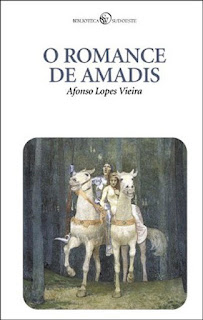
"O Romance de Amadis", Afonso Lopes Vieira // "The Romance of Amadis", Afonso Lopes Vieira

Um clássico do género a que diz respeito este blogue, este é também um velho livro pessoal, uma compra numa feira do livro feita na Escola B2-3 Gonçalo Nunes em Barcelos se bem me lembro (Vitorino Nemésio me perdoe o "gamanço") no meu último ano lá. É uma obra formativa mais que no conteúdo (embora também seja uma obra em que um protagonista cresce e amadurece para a idade adulta), é uma obra que é formativa na criação de sensibilidade estética do leitor, e de uma certa noção de Portugal e de ética. O Leiriense Afonso Lopes Vieira escreveu em 1922 esta obra de um certo neo-Romantismo, que foi um trabalho de amor do autor, nascido de nacionalismo para o próprio.
Tudo começa com um romance de cavalaria do século XVI em 4 volumes (ou «livros»), intitulado Amadis de Gaula. Ora, por algumas referências que referem nomes de personagens do romance (inventados por ele) antes deste surgir impresso como um texto em Castelhano atribuído a um Garcí-Montalvo, a aparentes referências a pedidos de um príncipe D. Afonso no século XIII ter pedido que se mudasse um enredo envolvendo o protagonista Amadis, e ao título da impressão castelhana original referir «novamente historiados» no subtítulo usualmente enorme na altura, há muito que o Amadis tem sido conjecturado ser um texto originalmente português do século XV ou até bastante antes. A maioria das teorias atribuíam a um membro ou outro de uma família de trovadores portuguesa chamada de Lobeira (os "suspeitos do costume" sendo João de Lobeira, contemporâneo de D. Dinis, e Vasco de Lobeira, velho escudeiro ao tempo de Aljubarrota que seria depois da batalha armado cavaleiro, episódio que, como veremos será reproduzido no enredo do Amadis que Lopes Vieira recria). A "questão do Amadis" é algo que ainda não foi conclusivamente provado de uma forma ou outra, visto que ainda não foi encontrado texto manuscrito ou impresso anterior, português ou não, que prove que a versão de Montalvo não é a primeira, embora em Portugal como em Espanha a existência de indícios complexos de uma origem portuguesa impossíveis de ignorar teoricamente seja assumida. Alguns na hispanosfera até ponderam uma origem pré-Montalvo sem incluir Portugal, atribuíndo o romance a Infante Henrique de Castela, "o Senador", que teria tido pela Europa fora viagens e aventuras que lhe inspirariam este enredo (com as principais personagens a paralelarem supostamente conhecidos do Infante).
O romance castelhano original
Ora Lopes Vieira era um crente sem dúvidas na hipótese da origem lusa do romance, e como tal, após alguns anos de projectar a ideia de "devolver" o texto à língua portuguesa, embora numa versão resumida (e encurtada visto que tudo o que era do III livro para lá era considerado criação só de Garcí-Montalvo, que o Português recusou, tentando criar um puro "livro português"), e mais próxima em linguagem do Português moderno, porém mantendo uma "ferrugem" saudável de arcaísmo compreensível, e alguns anos a tentar finalizar essa tentativa, deu-se por imensamente satisfeito com o resultado, principalmente depois de o ler para uma mulher popular parte do texto, fazendo-a reagir positivamente e pedir por mais (a edição que tenho da colecção Biblioteca Sudoeste da Porto Editora detalha depois do texto do livro a biografia do autor, trabalho neste livro, o "contrato" e projecto do prefácio da lusitanista Alemã Carolina Michaelis de Vasconcelos, a recepção do romance, as consequências do livro na carreira do autor e o que ele fez depois).
Afonso Lopes Vieira segundo Columbano Bordalo Pinheiro
O mundo desta estória é uma versão fantasiada da Europa passada na época tardo-romana e medieval-inicial, poucos anos antes da época do Rei Artur. Entre os lugares referidos estão a Pequena Bretanha (uma região de França chamada hoje só Bretanha) onde Amadis nasceu, Gaula (que será ou a Gália ou o País de Gales, ou só a sua própria terra inventada) cujo Rei Perion era pai de Amadis (a sua mãe era a Princesa da Pequena Bretanha), a Escócia (que é assim chamada no romance original e na versão de Lopes Vieira mas então era de facto chamada de Caledónia) onde é criado, a Bretanha (hoje Grã-Bretanha ou Inglaterra) cuja Princesa Oriana ele serve, e combate e luta por vários países a adversários como cavaleiros 'normais', gigantes, bruxos e bruxas e muitos monstros, incluíndo um Rei imaginário (e gigante) da Irlanda que combate com os exércitos de Gaula e da Normandia (anacronisticamente assim é chamado o norte de França), e percorrendo países e locais mal identificados e mais ou menos lendários ou então bem identificados como o país dos Suevos (no que é hoje a Alemanha e cujo povo povoou por essa altura o Norte de Portugal), Grécia (surgindo também uma personagem Grega, o velho escudeiro Macandon), Hungria e a Ilha do Lago Fervente (imaginem uma furna açoriana) que se poderá identificar com a ilha italiana de Pantelleria (perto da Sicília), surgindo ainda uma donzela de companhia de Oriana que é da Dinamarca. No romance original medieval surgia ainda um Rei Árabe e o seu exército, mas este episódio é saltado por cima na versão de Lopes Vieira, com descrições vagas do tipo "ah e tal, o Amadis viajou por muitos sítios e fez muitas coisas dignas de nota, mas isso agora não interessa nada", focando-se na linha principal do enredo.
A Europa segundo as lendas arturianas, aproximadamente a Europa do tempo mítico de Amadis 
O livro começa com uma introdução em que o autor assume a pose de trovador medieval, abordando o público, introduzindo a narrativa, falando do romance original (seguindo a sua tese de que um original português fora levado para Espanha e lá alterado para o novo país). Depois, o enredo apresenta-nos ao Rei Garintes da Pequena Bretanha francesa (neste caso «Piquena Bretanha»), com uma filha casada com o Rei da Grã-Bretanha pré-arturiana mas (sabe-lo-emos depois) ainda sobre domínio romano, e outra solteira e dada só à religião. Esta Elisena, apaixonar-se-á pelo hóspede do seu pai, Perion, Rei de Gaula, e depois dele partir de volta ao seu reino, ela se saberia grávida (segundo Lopes Vieira, gravidez extra-matrimonial só deixaria de ser crime depois desta lei ser revogada pelo Rei Artur), com ajuda da criada escondendo a gravidez e tendo o bebé em segredo. Ela baptizou-o Amadis por causa de um santo popular, alcunhando-o de «o Sem Tempo», imaginando que pouco sobreviveria, visto que depois deitou-o ao mar num caixote feito pela criada, junto com uma espada e um anel, e um pergaminho que o identificava como «Amadis, o Sem Tempo». O Escocês Gandales, que navegava com a família por ali, apanhou-o no mar e criou-o como seu filho junto com o seu filho verdadeiro Agrajes, chamando ao órfão Donzel (Português antigo para "Moço") do Mar. Pouco depois, o enredo dá-nos dois episódios simbólicos muito fortes: um, mostra-nos Perion, que retorna à «Piquena Bretanha» para desposar Elisena, e o faz, a depois ter um sonho intenso em que perde o seu coração, que um sábio da Picardia interpreta como aviso quanto a algo muito próximo dele que ele perdia sem saber; e o pai adoptivo de Amadis, Gandales, é visitado por uma feiticeira que profetiza a Amadis muitos feitos, que seria protector dos fracos e o terror dos fortes.
Anos depois, Amadis é armado cavaleiro pela Princesa Oriana da Grã-Bretanha, de quem se apaixona, e por ela viaja pela ilha da Grã-Bretanha e pela Europa fazendo feitos contra cavaleiros, monstros e feiticeiros e feiticeiras para se dignificar e ser digno dela. Como típico de estórias de cavalaria, Amadis vive grandes aventuras e é fiel e enamorado da sua dama Oriana. Numa das suas viagens, ele chega a Gaula, terra do seu desconhecido pai, e lá toma partido do velho rei contra o Rei Abies da Irlanda invasor de Gaula por esta altura. Em batalha no outro reino governado por Perion e Elisena, a «Piquena Bretanha», exércitos de Gaula e normandos, incluíndo entre as hostes Amadis, combatem os Irlandeses e o próprio protagonista derrota e mata em batalha o gigante Abies (que havia em tempos derrotado e morto ele próprio gigantes). Depois, em gratidão Amadis é feito hóspede do Rei Perion, e é reconhecido pela espada e o anel (que, recordemo-lo, vinham com ele no baú em que navegara bebé) pela mãe, e assim a família se reúne, Amadis conhece os irmãos (tidos pelos pais depois de casarem) que desconhecia, e Perion fica a saber uma verdade que lhe fora escondida e o significado do sonho que antes tanto o perturbara e intrigara. Depois disso Amadis volta, agora como um príncipe, à Grã-Bretanha, portanto agora como igual e digno pretendente para Oriana, e eles continuam unidos em amor fiel e não é possível separá-los até ela ser raptada pelo mago Arcalau, um inimigo fidagal de Amadis que o quer magoar através de magoar a amada deste.
O cavaleiro, como que possesso, cavalga como doido ao encontro dos cavaleiros do mago, e destrói-os completamente, e leva a princesa Britânica consigo, e depois disso eles amam-se na floresta. Novo conflito no enredo virá quando a proximidade de Amadis para com Briolanja, uma dama da Sansonha (o nome medieval para a Saxónia alemã) que ele salvou e a morte de cujo pai ele lhe vingou, e os rumores lhe fazem crer erradamente que ele a traíra. Depois, enlouquecido Amadis retira-se para um ermo junto com um eremita, abdica da sua armadura e toma do eremita uma armadura mais brilhante e assume o novo nome Beltenebroso (obviamente "Belo-tenebroso"), sob o qual faz proezas que ironicamente o povo da altura diz ultrapassarem as de Amadis. É quando chega à corte britânica Macandon, um escudeiro Grego já de idade avançada que traz com ele uma espada baça e uma guirlanda (i.e. grinalda) seca, dizendo que se via condenado a buscar pelo mundo um amor perfeito, que seria identificado pelo homem empunhar a espada e fazer-la reluzir, e a mulher pôr a guirlanda na cabeça e faze-la florescer. Amadis vai como Beltenebroso até Oriana e revela-se a ela, e devido à saudade e o que sentem, reconciliam-se. Assim, disfarçam Oriana de véu e outras roupas e vão os dois à cerimónia onde todos os casais tentam a espada e a guirlanda, e obviamente que são os únicos a fazer os objectos encantados cumprir os fins ante um amor perfeito. Depois disso, o velho Macandon é finalmente armado cavaleiro. O romance termina com Amadis salvando Oriana de ser levada para Roma para casar em casamento de conveniência com o Imperador Romano, e depois de a salvar em alto mar abordando o navio em que segue para Roma, ambos vão para a Ilha Firme e vivem lá juntos até ao fim das suas vidas. (numa insinuação sobre haver mais no Amadís de Gaula castelhano, Lopes Vieira termina dizendo que não seria preciso mais final, e qualquer outro seria mentira, porque o amor é o seu próprio fim e princípio).
Amadis e Oriana numa ilustração de um velho manual de Português do 8.º ano
Afonso Lopes Vieira nesta que é uma das suas raras prosas, mostra aqui alguma da sua poesia tornando-a na forma da prosa poética, e faz neste aparente conto-de-fadas (isto torna-se mais claro na versão O conto de Amadis de Portugal para rapazes portugueses de 1938 e reeditado nos anos '50, mais abertamente infanto-juvenil, com belas ilustrações de António Lino) um texto que serve como metafísica ou teologia do amor, discurso sobre Portugal e portugalidade (tudo usando um enredo que não envolve Portugal ou Portugueses e miticamente passado antes da fundação de Portugal ou sequer de se chamar ao norte do seu território Portucale), um romance histórico com elemento de fantástico, uma tentativa (muito livre, e talvez nunca tendo isto literalmente como objectivo; o modelo de Lopes Vieira, mais do que o texto quinhentista original, talvez fosse a versão resumida e modernizada do Tristão e Isolda de Joseph Bédier Le Roman de Tristan et Iseult de 1900). Este livro pode encontrar-se em várias edições em muitas bibliotecas municipais e escolares (talvez não todas), sendo a edição da Porto Editora relativamente fácil de achar agora que foi apoiada pelo programa Ler+ (estando recomendado para leitura no 8.º ano, havendo ainda um antigo manual desse ano da mesma editora da altura em que estava nesse ano lectivo que tinha alguns extratos do livro incluídos com ilustrações agradáveis e garridas).
Capa da abreviação infantil do autor


A classic of the genre in what concerns this blog, this is also an old personal book, a buy on a book fair done in the Secondary/Middle school and High School Gonssalo Nunes in Barcelos iff I recall it correctly (may Vitorino Nemesio forgive me the "jacking") in my last years there. It is a Bildungsroman work in more than the content (although it be also a work in which a lead grows and matures till adulthood), it is a work that is formative in the creation of aesthetic sensibility of the reader's, and of a certain notion of Portugal and of ethic. The Leiria-native Afonso Lopes Vieira wrote in 1922 this work of a certain neo-Romantismo, which was the author's labour of love, born to his own mind out of nationalism.
Everything starts with a 16th century chivalry novel in 4 volumes (or «books»), titled Amadis de Gaula ("Amadis of Gaul/of Gaula"). Well now, by some references that refer names of characters from the novel (made up by it) before the former came-up printed as a text in Castilian attributed to a Garci-Montalvo, to apparent references to requests of a Prince Don Alfonso in the 13th century having asked that it be changed a plot involving the protagonist Amadis, and the title of the original Castilian print mentioning «again storied» on the subtitle averagely enormous at the time-point, there has long been the Amadis conjectured to be a text originally Portuguese from the 15th century or even quite before. The majority of the theories attributed it to one member or another of Portuguese troubadours called the Lobeiras (the "usual suspects" being Joao de Lobeira, contemporary to King Don Denis, and Vasco de Lobeira, old squire at the time of the Aljubarrota battle who would be after the battle armed knight, episode as we shall see shall be reproduced in the plot of the Amadis that Lopes Vieira recreates). The "Amadis question" is something that still was not conclusively proven on one way or the other, seen that it still was not found previous manuscript or printed text, Portuguese or not, that prove that the Montalvo version is not the first, although in Portugal as in Spain the existence of complexe signs of a Portuguese origin impossible to ignore theoretically be assumed. Some in the hispanosphere even ponder a pre-Montalvo origin without including Portugal, atributing the novel to Infant-prince Henry of Castile, "the Senator", who woyuld have had throughout Europe travels and adventures that would inspire him this plot (with the main characters paralleling supposedly acquaintances of the Infante).
The original Castilian novel
Well now Lopes Vieira was a believer without doubts in the novel's luso origin hypothesis, and as such, after some years projecting the idea of "giving back" the text unto the Portuguese language, although in a summarised version (and shortened seen that everything that was from the III book onwards was considered creation only from Garcí-Montalvo, which the Portagee refused having, trying to create a pure "Portuguese book"), and closer in language to the modern Portuguese, though keeping some healthy "rust" of understandable arcaism, and some years trying to finalise that attempt, gave himself as immensely satisfied with the result, mainly after reading it to a commoner woman part of the text, making her react positively and ask for more (the edition that I got from Porto Editora publisher's Biblioteca Sudoeste/"Southwest Library" details after the book's text the author's biography, work on this book, the "hired-work contract" and project of the foreword by German lusitanist Michaelis de Vasconcelos, the novel's reception, the consequences of the book on the author's career and what he did afterwards).
Afonso Lopes Vieira according to Columbano Bordalo Pinheiro
The world of this story is a fantasised version of Europe set in the late-Roman and early-medieval period, few years before King Arthur's period. Among the places refered are the Little Britin (a region of France called today only Brittany) where Amadis was born, Gaula (which would be either Gaul or Wales, or just its own made-up land) whoe King Perion was Amadis' father (his mother was a Little Britain princess), Scotland (which is so called in the original novel and in Lopes Vieira's version but then was in fact called Caledonia) where he is raised, Britain (today Great-Britain or England) whose Princess Oriana he serves, and combats and struggles through several countries to adversaries like 'normal' knights, giants, witch-doctors and witches and many monsters, including an imaginary (and giant) King of Ireland who fights the armies of Gaula and of Normandy (anachronistically so is called the north of France), and going through countries and locales badly identified and more or less legendary or then well identified like the country of the Suebi (in what is now Germany and whose people settled around that time-point Northern Portugal), Greece (appearing also a Greek character, the old squire Macandon), Hungary and the Island of the Boiling Lake (imagine an azorean furna/lava tube) which one might identify with the Italian island of Pantelleria (near Sicily), coming-up yet a maiden in waiting of Oriana who is from Denmark. In the original medieval novel it came up still an Arab King and his army but this episode is skipped over by Lopes Vieira's version, with vague descriptions of the "ah and such, Amadis travelled by many places and did many things worthy of note, but that now matter none", focusing itself in the plot's main line.
Europe according to the arthurian legends, approximately the Europe from Amadis' mythical time
The bookstarts with an introduction in which the author assumes the pose of medieval troubadour, approaching the audience, ntroducing the narrative, talking of the original novl (following his thesis that a Portuguese original had been taken to Spain and there altered to the new country). Afterwards, the plot introduces us to the King Garintes from the French Little Britain (in this case «Litel Britain»), with one daughter married to the King of the pre-arthurian but (we shall knoow it afterwards) still under Roman domain Great Britain, and another single and only self-given to religion. This Elisena shall fall in love for the guest of her father's, Perion, King of Gaul, and after he leaving back to his kingdom, she would find herself pregnant (according to Lopes Vieira, extramarital pregnancy only would cease being crime after this law being revoked by King Arthur), with help from the maid hidding the pregnncy and having a baby in secret. She baptised him Amadis because of a folk saint, nicknaming him as «the Without Time», imagining that little would he survive, seen that little afterwards she threw him to the sea on a crate made by the maid, together with a sword and a ring, and a scroll that identified him as «Amadis, the Without Time». The Scotsman Gandales, who sailed with the family over there, picked him up at sea and raised him as his son together with his true son Agrajes, calling to the orphan Donzel ("Damoiseau", ancient Portuguese for "Lad") from the Sea. Little after, the plot gives us two very strong simbolic episodes: one shows us Perion, who returns to the «Litel Britain» to bewed Elisena, and does so, afterwards having an intense dream in which he loses his heart, which a wiseman from Picardy interpretes as warning about something very close to him that he lost without knowing; and Amadis' adoptive father, Gandales, is visited by a sorceress who prophesises to Amadis many deeds, that he would be protector to the weak and the terror to the strong.
Years after, Amadis is armed knight by the Princess Oriana of Great Britain, for whom he falls in love, and for her travels through the island of Great Britain and through Europe doing deeds against knights, monsters and wizards and sorceresses to dignify himself and be worthy off her. As typical on chivalry stories, Amadis lives great adventures and is faithful and enamoured to his lady Oriana. In one of this travels, he arrives to Gaula, land from his unknown father, and there takes the old king's party against the King Abies of Ireland invader of Gaula by this time-point. In battle in the other kingdom ruled by Perion and Elisena, the «Litel Britain», armies of Gaula and Normand ones, including among the hosts to Amadis, combat the Irish and the lead himself defeats and kills in battle the giant Abies (who had in times defeated and killed himself to giants). Afterwards, in gratitude Amadis is made guest to the King Perion, and is recognised by the sword and the ring (which, shall we remind it, came with him in the trunk in which he sailed as baby) by the mother, and so the family reunites, Amadis meets his siblings (had by his parents after they got married) he knew not of, and Perion gets to know a truth that had been hidden from him and the meaning of the dream that before so much had bothered and intrigued him. After that Amadis goes back, now as a prince, to Great Britain, hence now equal and worthy suitor for Oriana, and they continue united in faithful love and it is not possible to separate them till she is kidnapped by the mage Arcalau, a cold-hatred enemy of Amadis' who wants to hurt him through hurting his beloved.
The knight, as if possessed, rides as mad to meet-up the mage's knights, and destroys them completely, and takes the British princess with himself, and after that they love each other on the forest. New conflict on the plot shall come when the proximity of Amadis towards Briolanja, a lady from Sansonha ("Saxen", the medieval name for the German Saxony) whom he saved and the death of whose father he avenged, and the rumours do make her believe wrongly that he had betrayed her. Afterwards, maddened Amadis retreats to a waste together with a hermit, abdicates to his armor and takes from the hermit a shinier armor and assumes the new name Be'tenebrous (obviamente "Beau-tenebrous"), under which he does prowesses that ironically the people of that time-point said to overcome Amadis' ones. It is when t arrives to the British court Macandon, a Greek squire already of advanced age who brings with him a dim sword and a dry gerlond (i.e. garland), saying that he saw himself condemned to search through the world a perfect love, that would be identified by the man wielding the sword and making it flash, and the woman putting the gerlond on the head and making it florish. Amadis goes as Be'tenebrous till Oriana and reveals himself to her, and due to the nostalgia and what they feel, they reconcile each other. So, they disguise Oriana in veil and other clothes and go together to the ceremony where all the couples try the sword and the gerlond, and obviously are the only ones to make the enchanted objects fulfil their aims facing a perfect love. After that, the old Macandon is finally knighted. The novel ends with Amadis saving Oriana from being taken to Rome to marry into marriage of convenience with the Roman Emperor, and after saving her at high sea approaching the ship that follows for Rome, both go to the Firm Island and live there together the rest of their lives (in an insinuation on there being more on the Castilian Amadís de Gaula, Lopes Vieira ends saying that there would not be needed more ending, and that any other would be a lie, because love is its own end and beginning).
Amadis and Oriana on and old 8th grade Portuguese Language class manual illustration
Afonso Lopes Vieira in this which is one of his rare proses, shows here some of his poetry turning it into the form of the poetic prose, and does in this apparent fairy-tale (this becomes clearer in the O conto de Amadis de Portugal para rapazes Portugueses/"The tale of Amadis of Portugal for he Portuguese boys" version from 1938 and re-edited in the '50s, more openly children's/young-people's, with fair illustrations by Antonio Lino) a text that serves as metaphysics or theology of love, discourse on Portugal and portugality (all using a plot that does not involve Portugal or Portuguese and mythically set before the foundation of Portugal or even the calling itself to the north of its territory Portucale), a historical novel with a fantasy element, a (very free, and maybe never having this literally as objective; Lopes Vieira's model, more than the original fifteen-hundredth text, maybe it were the summarised and modernised version of the Tristan and Isolde by Joseph Bédier Le Roman de Tristan et Iseult from 1900). This book can find itself in several editions in many Portuguese municipal and school libraries (maybe not all), being the Porto Editora publisher edition relatively easy to find now that it was supported by the Ler+/"Read+" program (being recommended for reading on the 8th grade, there being still an old manual from that year by the same publisher from the time that I was in that school year that had some extracts from the book included with agreeable and garish illustrations).
Cover from the author's children's abbreviation

quinta-feira, 10 de setembro de 2015

"História de D. Afonso de Brás, filho de Gil Brás de Santilhana", José da Fonseca // "Story of Don Alphonse Blas, son of Gil Blas de Santillana", Jose da Fonseca

Esta 37.ª obra, de 1838, resenhada no blogue Clássicos da literatura infanto-juvenil portuguesa // Portuguese Children's/Young People's Literature Classics não é uma obra plenamente original mas, novamente, uma adaptação tão solta a ponto de não fazer toda a diferença a existência de material de fonte original (o romance pícaro de 1744 de sequela do Gil Blas de Alain-René Lesage La Vie de Don Alphonse Blas de Lirias, fils de Gil Blas de Santillane, a capa de uma edição francófona de 10 anos depois da original acima, atribuído duvidosamente ao autor do Gil Blas visto que no original vinha sem indicação de autor). O gramático e escritor Português José da Fonseca (1788-1866), radicado em França desde o início do século XIX (famoso mundialmente pela falsa atribuição que o editor e o autor deram a uma pérola do humor involuntário que foi o dicionário Português-Inglês feito pelo verdadeiro autor Pedro Carolino sem qualquer conhecimento de Inglês e traduzindo de Português para Francês e de Francês para Inglês, alcunhada pelo fã Mark Twain de English As She Is Spoke, traduzido como o hilariante "Inglês Como Ela É Falou"), para além desta tradução "solta", fez ainda uma adaptação para crianças do Gil Blas original em O Gil Braz da infancia, ou Aventuras de Gil Braz compendiadas para uso dos meninos, 22 anos depois, espécie de "prequela" (como se chama a obras subsequentes a outra que se passam antes da anterior) desta.
O romance (tal como o original Gil Blas, narrado na primeira pessoa como se memórias fossem) conta a vida do filho mais novo (de 2) de um pícaro Cantábrico que subira na vida como favorito do Rei Filipe IV de Espanha e chegara a secretário do Primeiro-Ministro e através de trabalho duro e inteligência se pudera aposentar num castelo e apreciar uma fortuna ganha honestamente, com uma mulher de alta linhagem (isto apresenta o desafio usual do filho nascido em riqueza de um "homem auto-feito": terá a mesma têmpera do protegenitor que ascendeu a pulso? Que tem ele para fazer na vida, se ele próprio nasceu já "no topo"? Só esperar pela morte do progenitor e herdar?). Quando o Primeiro-Ministro Olivares cai em desgraça (por razões incluindo a Restauração da Independência portuguesa), o padrinho de D. Afonso (do mesmo nome), que é o Vice-Rei (ficcional) de Aragão, é substituído por outro mas devido ao seu bom serviço em muitos cargos é reformado nas suas terras com uma boa reforma, passando a maioria do tempo na biblioteca com a esposa amante das matemáticas, o padre local bem-lido, e um hóspede Alemão D. João de Steinbock, e falando a educar o afilhado (que trata com todas as carícias) só em Latim (a ponto de Afonso falar quase melhor Latim que Espanhol). Chegando a altura de ele se formar, ele regista Afonso na Universidade de Salamanca e envia-o com o Alemão e 2 domésticos. Aí ele passa muito tempo sem ver os pais e o padrinho (a quem pede dinheiro a pedido do Alemão quando acaba o que deu originalmente) e dedica-se com afinco ao estudo e aprende desenho e passeia com o jovem sobrinho-neto do Duque de Médina-Céli nas horas vagas. É por via deste jovem com quem acaba por conviver e convida ao castelo do seu padrinho, que conhece e ambos acabam por se ver sob a protecção (e rodeados da lisonja) de um tal de D. Cipião.
Assim a obra começa realmente, com Cipião (não uma personagem diabólica mas alguém que tenta claramente usar a associação a jovens de estatuto para seu favor) tentando "enrolar" o padrinho e pais de D. Afonso e conseguir tirar dividendos da guarda do jovem, enquanto este vai amadurecendo, fazendo pela vida fazendo uso dos dons para o desenho e o Latim, dos conhecimentos obtidos em Salamanca e aparentemente de um je ne sais quois que podemos imaginar herdado geneticamente do pai (aprendendo ainda várias outras coisas pelo caminho), num modelo que ajudou, pelo uso de modelos estrangeiros, a enriquecer a literatura portuguesa com um carácter de literatura de formação e de aventuras. Com grande força de vontade, fé, ética e uso do corpo quando necessário, depois da partida de Cipião para a América colonial espanhola, D. Afonso e o seu novo amigo Conde Pérez viajam para o México, onde se encontram com Cipião, que de Vera Cruz no centro-sul da costa mexicana se dirigira através do país, e assim vão passando o caminho em peripécias e conseguindo ludibriar Cipião e outros opositores quando necessário, para além de várias descrições vivas de pormenores etnográficos do México setecentista, incluindo curiosos festivais (um deles não sendo de facto visto pelas personagens, mas descrito por Afonso do que este aprende sobre ele de conversas com os locais).
Um episódio das aventuras de D. Cipião nas Américas
A estória evolui assim como uma espécie de versão ficcional e individualizada da criação de um novo mundo colonial para criação de riqueza de saídos da Península Ibérica (Espanhóis como Portugueses), em que D. Afonso de Brás deixa Espanha e fixa-se na América colonial e faz uma nova vida e produz nova riqueza para si, com um espírito desbravador, semi-assimilador à realidade tropical, e cristianíssima (e cristianizadora), numa variação latina do self-made man anglo-saxónico, o "homem auto-feito". Esta "tese" de redenção ou pelo menos de reformulação de um ser humano torna-se mais claro no Capítulo VII, que logo no título torna claro que é sobre «o Diabo feito Santo». Depois disso, Afonso e companhia, ao longo da sua "odisseia" ao longo do México que nos dá o retrato da América Latina colonial, confrontam um pedinte insolente bem agasalhado, e depois têm um "modesto" episódio de aventureirismo picaresco na povoação de Casa Blanca no Novo México (portanto não há aqui Marrocos nem Humphrey Bogart, embora uma personagem anti-heróica do tipo não ficasse muito fora de estilo num romance picaresco como este). Depois disso, alguém assassina o Senhor Cipião, o nosso herói descobrindo os responsáveis pelo complô, que são punidos pela justiça do Vice-Reino da Nova Espanha (o Império americano espanhol na América Central e do Norte e na Venezuela), sendo Afonso depois recompensado com a herança de um grande senhor de Guaxaca (bem no sul do México), e após mais alguns capítulos de episódios (incluindo o Capítulo XII que o título diz deixar à escolha do leitor se o lê ou passa e um Capítulo XIII que trata um pouco de vida tardia do pai do protagonista deste livro), D. Sancho e D. Afonso ajudam a salvar uma personagem secundária que conheciam de mais para o princípio do livro, o Conde de Leyva, de perigo de vida, sendo após isto que D. Afonso de Brás volta a Espanha, a Madrid, para terminar uma vida confortável depois de casar com uma viúva (casamento que, como costume para uniões nobres reais ou ficcionais, tem tanto de acto feliz como de acto socioeconómico): «Esta pobre infeliz, que não foi de algum lado das mais afligidas da morte de seu marido, não se tendo esperado que se coubesse um outro fim, ao trem de vida que conduzia, aceita com alegria a oferta de D. Afonso. Ela foi conduzida até Dom Pedro de Patilhos, que lhe fez caber uma pensão viageira, em reconhecimento que ela lhe havia rendido enquanto que ele estava em Roma.»
É tão divertido e "alimentador" da alma ler este livro, como a "prequela" do mesmo autor sobre o pai de D. Afonso de Brás, em que Gil Brás nasce na miséria a um rapaz-de-estrebaria e uma criada-de-câmara na Cantábria e é educado por um tio em Oviedo, que deixa com a idade de 17 anos, partindo para a Universidade de Salamanca, onde o seu futuro parece tornar-se risonho; uma evolução que é interrompida quando uns ladrões o forçam a ajudá-los em roubos de estrada, sendo depois capturado e enfrentando pena de cadeia que só evita tornando-se criado de um grande senhor, cargo que lhe permite passar o olhar ao longo de várias classes laicas, clericais e fora-da-leis da sociedade ao largo de vários anos, graças à sua adaptabilidade e espirituosidade rápida. Finalmente ele consegue chegar à corte e ter o final feliz e a subida na vida que já referi acima ao falar do princípio do romance sobre o seu filho. Estas duas obras ajudaram a dar o retrato do homem Ibérico pragmático, mostrando assim ser mais que somente missionário ou conquistador, que ajudaram a influenciar o modelo da ficção de aventuras e de "estudo de personagem" posterior, e também abrindo novos caminhos para a literatura europeia, latino-americana e mundial, ajudando ainda a formar muita literatura infanto-juvenil (junto com obras como o já aqui visto O Piolho Viajante, que como vimos na respectiva crítica, até referia por nome o Gil Blas ou Gil Braz original; mas em muito O Piolho Viajante também é uma "resposta" a um certo optimismo e moralismo da obra franco-hispânica que da Fonseca tornou franco-hispano-portuguesa, pelo contrário sendo mais mordaz e sarcástico). Historia de D. Afonso de Braz, filho de Gil Braz de Santilhana e O Gil Braz da infancia, ou Aventuras de Gil Braz compendiadas para uso dos meninos só se encontram na Biblioteca Nacional de Portugal e talvez algumas colecções de origem privada (embora o original francês possa ser lido no Google Livros na edição bem ilustrada de 1744 e na hemeroteca digital francesa gallica na edição de 1754 que não tem metade das ilustrações), mas a adaptação mais moderna do Gil Blas intitulada Gil Brás resolve correr mundo : aventuras de Gil Brás de Santilhana, adaptada por (Henrique) Nascimento Rodrigues para a colecção Juvenil da Portugália de 1966 surge em várias bibliotecas municipais, e nalgumas outras (mais raramente porém) surge a adaptação de Nascimento Rodrigues de outra parte deste ciclo de Lesage, O confidente : aventuras de Gil Brás de Santilhana (do mesmo ano).


This 37th work, from 1838, reviewed in the Clássicos da literatura infanto-juvenil portuguesa // Portuguese Children's/Young People's Literature Classics blog is not a fully original work but again, an adaptation so loose to the point of not making that much difference the existance of original source material (the 1744 picaresque sequel novel to the Gil Blas by Alain-René Lesage La Vie de Don Alphonse Blas de Lirias, fils de Gil Blas de Santillane, the cover of a francophone edition of 10 years afterwards from the original shown above, attributed doubtfully to the author of the Gil Blas seen that in the original it came without indication of the author). The Portuguese gramatician and writer José da Fonseca, established in France since the early 19th century (famous worldwide for the false attribution that the editor and author gave to the pearl of unvoluntary humour which was the Portuguese-English dictionary made by the true author Pedro Carolino without any knowledge of English and translating from Portuguese to French and from French to English, nicknamed by fan Mark Twain with the hillarious English as She is Spoke), besides this "loose" translation, did still an adaption for children of the original Gil Blas in O Gil Braz da infancia, ou aventuras de Gil Braz compendiadas para uso dos meninos ("The Gil Blas of childhood, or Adventures of Gil Blas epitomized for use of the little-children") 22 years afterwards afterwards, kind of prequel (as one calls to works subsequent to another that sets itself before the previous one) to this one.
The novel (just like the original Gil Blas, narrated in the first person as if being memoirs) tells the life of the youngest son (of 2) of a Cantabrian pícaro/rogue that had risen in life as a favourite of the King Philip IV of Spain and got to secretary fo the Prime Minister and through hard work and intelligence himself had been able to pension-off into a castle and enjoy a honestly earned fortune, with a high lineage woman (this presents the usual challenge of the son born in wealth to a "selfmade man": has he the same quenching of the progenitor that rose by its own hand? What has he to do in life, if he himelf was born already "at the top"? Just to wait for the death of the progenitor and to inherit?). When the Prime Minister Olivares falls in disgrace (for reasons including the Portuguese Restoration of Independence), the godfather of Don Alfonso (of the same name), who is the (fictional) Viceroy of ragon, is replaced by another, but due to his good service in many offices is retired in this lands with a good retirement-pension, passing the most time in the library with the wife who is a lover of mathematics, the well-read priest, and a German guest Don John of Steinbock, and talking at educating the godson (whom he treats with all the cares) only in Latin (to the point of Alfonso speaking almost better Latin than Spanish). Arriving the time for him to graduate himself, he registers Alfonso in Salamanca University and sends him with the German and 2 domestics. There he passes much time without seeing the parents and the godfather (to whom he asks for moey on request of the German when it ends the one that he gave originally) and dedicates himself with keenness to the study and learns drawing and walks-about with the young grandnephew of the Duke of Medina-Celi in the vacan hours. It is by way of this young-man with whom he ends up by being on familiar terms and invites to his godfather's castle, that he gets to know and both end by to themselves seeing under the protection (and surrounded by the flatering) of one Don Scipio.
Like-so, the work starts truly, with Scipio (not a diabolical character but someone that tries clearly to use the association to youngmen of status to his favour) trying to "entangle with" the godfather and the parents of Don Alfonso and get to take-away dividends from the keeping of the youngman, while he goes maturing, making a living out of making use of the gifts for drawing and latin, out of the knowledges obtained in Salamanca and apparently out of a je ne sais quois that we can imagine inherited genetically from the father (learning yet several other things along the way), in a model that helped, by the use of foreign models, to enrichen the Portuguese literature with a character of bildungs-roman and adventure literature. With great strength of will, faith, ethics and use of the body when necessary, after the departure of Scipio for Spanish colonial America, Don Alfonso and his new friend Count Perez travel to Mexico, where themselves hey doo meet with Scipio, that from Vera Cruz in the centre-south Mexican coast to himself did head across the country; and so passing the way in mishaps and getting to deceive Scipion and other opponents when needed,besides several lively descriptions of ethnographic detals from seventeenth-century Mexico, including curious festivals (one of them not being in fact seen by the characters but described by Alfonso from what he former learns from conversations with locals).
An episode of the adventures of Don Scipio in the Americas
The story evolves so s a kind of fictional and individualized version of the creation of a colonial new world up for the creation of wealth of ones exited from the Iberian Peninsula (Spaniards and Portuguese), into which Don Alfonso de Blas leaves Spain and settles himself in the colonial Americas and makes a new life and produces wealth for himself with a trail-blazer, semi-assimilator to the tropical reality around, and most-Christian (and christianising) spirit, in a Latin variation of the Anglo-Saxonic self-made man, the "homem auto-feito"/"hombre auto-hecho". This "thesis" of redemption or at least of reformulation of a human being becomes clearer in the chapter VII, that rightaway on the title it becomes clear that it is on «The Devil made into Saint». After that, Alfonso and company, along their "odyssey" along Mexico that to us gives the portrait of the colonial Latin America, confronts an insolent well-coated beggar, and afterwards, have a "modest" episode of picaresque adventurism in the settlement of Casa Blanca in New Mexico (hence there is no Morocco nor Humphrey Bogart, although an anti-heroic character of the type wouldn't stand very out of style on a picaresque novel like this one). Afterwards of that, someone murders Mister Scipio, our hero discovering the ones responsible for the plot, that are punished by the justice of the Viceroyalty of New Spain (the Spanish American Empire in Central and Northern America and in Venezuela), being Alfonso afterwards rewarded with the inheritance of a great lord of Guaxaca (well in the south of Mexico), and afterwards some plus chapters of episodes (including the Chapter XII that in the titles says to leave to the choice of the reader if one reads it or passes it by and a Chapter XIII that takes care of a little of the later life of the father of this book's protagonist), Don Sancho and Don Alfonso help to save a secondary character that they knew from way to the beginning of the book, theCount of Leyva, from living danger, being afterwards of this that Don Alfonso de Blas goes back to Spain, at Madrid, for finishing a comfortable life afterwards the marrying of a widow (marriage that, as usual for real or fictional noble unions, has as much of happy act as of social-economical act): «This unfortunate poor-woman, that wasn't from any side of the most afflicted by death of her husband, not herself having expcted that herself did befit another end, at the convoy of life that she drove, accepts with joy the offer of Don Alfonso. She was driven till Don Pedro of Patillos, who to her made befit a voyage pension, in recognition that she to him had paid off while he was in Rome.»
It is as fun as feeding to the soul to read this book, as the "prequel" of the same author on the father of Don Alfonso de Blas, in which Gil Blas is born in misery to a stable-boy and a chamber-maid in Cantabria and is educated by an uncle in Oviedo, that he leaves with the age of 17 years old, departing for Salamanca University, where his future seems to smile upon himself: an evolution that is interrupted when some thieves unto him force helping on highway theft, being afterwards captured and facing jail time that he only avoids becoming servant of a great lord, position that to him allows to pass his gaze throughout several lay, clerical and outlaw classes of society throughout several years, thanks to his fast adaptability and wit. Finally he can get to the royal court and have the happy ending and the rise in life that I already referred above at talking of the beginning of the novel on his son. These two works helped to give the portrait of the pragmatic Iberian man, showing so to be more than merely missionary or conquistador, that helped to influence the model of the hinder adventure and "character study" fiction, and also opening new ways for the European, Latin-American and worldwide literature, helping to form much children's/young-people's literature (together with works like the already here seen The Travelling Lice, that, as we saw in the respective review, even referred by name the original Gil Blas or Gil Braz; but in much The Travelling Lice likewise is an "answer" to a certain optimism and moralism of the French-Hispanic work that da Fonseca turned French-Hispanic-Portuguese, on the contrary being more sharp and sarcastic). History of Don Slfonso de Blas, son of Gil Blas de Santillana and The Gil Blas of childhood, or Adventures of Gil Blas epitomized for the use by the little-children only do find themselves in the Portugal National Library and maybe some collections of private origin (although the French original may be read on Google Books in the 1744 well illustrated edition and in the French digital newspaper-library Gallica in the 1754 edition that does not have half of the illustrations), but the more modern adaptation of the Gil Blas entitled Gil Brás resolve correr mundo : aventuras de Gil Brás de Santillana ("Gil Blas sorts-out to race-out world : adventures of Gil Blas de Santillana"), adapted by (Henrique) Nascimento Rodrigues for the Portugália Juvenil ("Juvenile Portugália") collection of 1966 comes-up in several Portuguese municipal libraries, and in some other ones (more rarely though) comes-up Nascimento Rodrigues' adaptation of another part of this Lesage cicle, O confidente : aventuras de Gil Brás de Santilhana ("The confidant : adventures of Gil Blas de Santillana", of the same year).


quarta-feira, 19 de agosto de 2015

"A Filha do Arcediago", Camilo Castelo Branco // "The Daughter of the Archdeacon", Camilo Castello Branco

Todos os corpos pendem para a lei da atracção (ou «da atrição» como se diz mal comicamente no Capítulo XVI deste livro). Mas porque os corpos pendem não quer dizer que caiam assim de qualquer maneira, como apresenta exemplo dos trabalhos provocado pelo pendão da atracção na obra desta 33.ª publicação do Clássicos da literatura infanto-juvenil portuguesa // Portuguese children's/juvenile lit classics. Na passagem dos inícios para os meados do século XIX, no norte rural português, uma menina nasce nesse meio de miséria, a uma mãe que a tivera em bastardia com o arcediago do Barroso Leonardo Taveira, e que logo com 11 anos o pai a votava para com 14 ser tratada como adulta (o que era comum na altura) e pouco depois ser casada (o que tendo ela 11 anos já preocupa o pai, pensando no potencial de a casar e no dote ofertado pelo amigo senhor da Silva). Sem mãe e sem paternidade e mais parentesco conhecido para além do arcediago a cujo cuidado estava, ela é levada para o Porto e assim se cria na casa do comerciante António José da Silva (que tem por elas intenções amorosas), sob o seu nome de Rosa Guilhermina, nome que é quase sempre abreviado para Rosa e que contrapõe em poesia o comum estrambólico do Guilhermina.
Rosa cresce assim perto da Rua de Miragaia no Porto num meio pequeno-burguês pobre emocionalmente e em termos dos meios pertencentes à família descrita, com o obeso proprietário em Agosto de 1815 a suar tanto do calor como das suas tentativas falhadas de abordar a jovem ao seu cuidado. Apesar das limitações do crescimento nesse ambiente, Rosa consegue crescer além dos 15 anos (que tem em 1815) de forma saudável e ainda assim criar um namoro sincero com o filho do vizinho retrozeiro. Neste contexto, com auxílio do arcediago pai da jovem, o comerciante tenta continuadamente cortejar a jovem e convence-la da necessidade da união planeada, e de forma algo cómica os planos destes são afectados pelo dito namoro com o filho do retrozeiro, que Rosa escondia deles. Os dois primeiros capítulos são de facto, apesar do ambiente dramático emocionalmente retratado, tristemente cómicos pelo retrato dado dos envolvidos e a forma como estes agem na tentativa de cumprir os seus fins. A beata senhora Angélica, irmã de António José, tenta "exorcizar" Rosa de ser "filha do pecado" do arcediago e do namoro com o filho do retrozeiro, e Rosa bem tenta evitar todos os pratos e bebidas da velha suspeitando dos seus fins beatos.
Temendo "poucas vergonhas", preparou-se o envio de Rosa para fora da casa do comerciante (este queixa-se directamente a João Retrozeiro das acções, de facto plenamente inocentes, do filho José Bento, provocando uma grande discussão entre as duas partes que acaba o capítulo V num regabofe cómico com murro à mistura), e a rapariga é confiada à gentil dona de uma pensão monástica da Misericórdia local, conhecendo aí e ficando, de entre as outras meninas na pensão, mais próxima de uma órfã de pai e mãe da sua idade chamada Maria Elisa (não a repórter claro) que entrara no recolhimento com 8 anos. Apesar de amigas elas são contrastes não só físicos, Elisa sendo trigueira e morena quando Rosa é o tipo Romântico pálido usual (embora não sendo loira), e a personagem-título sendo aparentemente eternamente cansada enquanto a amiga é uma força da natureza muito interventiva. 
Influenciada por Elisa, a protagonista começa a achar os seus diálogos passados com José Bento algo apagados (comparados com os amores descritos a ela pela nova amiga), e o próprio filho do retrozeiro um patego. Para se entreter, a tão amiga como mesquinha Elisa dá um encontrão na amiga, fazendo-a acertar de forma igual numa freira que está num ritual de saltos sobre fogueiras, fazendo as freiras quererem exorcizar a filha do arcediago para lhe 'tirar o mal', e enquanto faziam os preparativos para o exorcismo a mais culta Elisa entretinha a amiga lendo do romance francês do século anterior do cavaleiro Faublás (sobre um pícaro cheio de qualidades mas que as usa para cumprir os seus vícios, que encaixa bem no perfil da própria Maria Elisa).
O tempo passa e, como Rosa é bastante cumpridora dos poucos deveres que tem e a companhia de Elisa a impede de cair em desespero, a tentativa do pai arcediago de a punir pelas dificuldades que ela criara ao enlaço planeado para ela com uma clausura religiosa é anulado, e depois de poucas peripécias acabou por ser-lhe permitido voltar ao Porto, onde se instala com Elisa, e um dia por acaso ela vê-se a ser olhada de longe pelo ex-namorado José Bento. Elisa pergunta se podiam ir namorá-lo (lembrem-se que até poucas décadas parece que era comum em Portugal as raparigas abordarem rapazes para namoro em grupo, com solidariedade total até ele escolher uma e abrirem-se hostilidades) mas agora Rosa acredita no que Elisa a convencera quanto a ele ser um parvo. Depois de Elisa "meter veneno" entre os dois ex-namorados e provocar uma conversa dos três desconfortável para ambos; todavia lentamente os dois começam a voltar a envolver-se como antes, mas este desenvolvimento é passageiro, surgindo mais tarde ou mais cedo em cena um estudante do 2.º ano jurídico vindo de Coimbra, Augusto Leite.
Augusto Leite, além de estudante e um tradutor de novelas dotado com uma memória fotográfica, é sujeito novo e com perfil mais de herói Romântico e por isso é mais interessante que José Bento para Rosa e para o leitor, e assim ele afirma-se mais no romance e torna-se o verdadeiro protagonista masculino desta. Contrariando a expectativa do leitor, o seu romance com Rosa não é retratado por Camilo como algo tão dramático como o caso similar de heroína com afeição repartida por uma figura mais simples por outra mais grandiosa no A Rosa do Adro que já aqui vimos. Augusto é porém menos conflituoso com Rosa que o herói romântico nobre do outro romance (não a deixando e não criando outro triângulo amoroso como Fernando com a outra Rosa no romance de Manuel Maria Rodrigues). Isto serve um dos vários propósitos deste romance de Camilo Castelo Branco: criticar o formato do folhetim no que tem de cliché e convencional, e brincar com as expectativas do leitor ante um romance assim. Assim Augusto (que também é um "magricela" que não parece ter figura de grande doutor) é tanto uma figura realista como um cumprimento fiel do modelo do herói Romântico, e também uma subversão do mesmo.
Um Camilo mais jovem, por altura da escrita desta obra
Rosa é representada como a mulher feminina mas simultaneamente forte típica do autor (e à Howard Hawks) mas também como bondosa e mais ingénua que a sua amiga Maria Elisa, pelo que a sua inclinação ao bem e o seu carácter fazem com que não veja alguns males nas peripécias que lhe iam ocorrendo e nas pessoas em seu torno (e na sua volátil amiga Maria Elisa). Assim ela sofre algum gozo de outras personagens, azares, e muitas das piadas meta-ficcionais do autor ao longo do texto do romance lidam com as desgraças que lhe passam e como elas ocorrem. Maria Elisa acaba por discutir com Rosa, e casa-se com o nosso "conhecido" negociante António José da Silva. Depois disto Rosa parece ficar "para tia", o que dá origem a um certo dramatismo em torno de relações amorosas ao estilo dos romances dramáticos (o que novamente dá azo ao autor auto-parodiar este estilo de ficção romanesca que ele próprio practicava). Mas em breve a "tia" "cusca" da viela do Bomjardim, Bernarda Estanqueira, está a topar que "há Mouro na costa" quanto a Rosa e que esta namora seriamente o dito estudante Augusto.
Isto abre um período de maturidade e de felicidade romântica na protagonista, namorando com o estudante Augusto Leite (embora a relação evolua a seu tempo e aparentemente com alguma desconfiança e desinteresse a princípio), enquanto Maria Elisa (à qual Rosa já não tinha desprezo porque o novo amor a preocupava mais) casa com António José (numa Capítulo XIX de descrição irónica, cheia de apartes e chamada de «drama em um acto» pelo autor visto que é escrito como uma peça de teatro), e pouco depois do desenlace desta com um homem que a trata com todos os carinhos, Rosa e Augusto também se casam (Camilo ironiza que dois casamentos é demais para um só romance, esperando que o leitor não o leve a mal embora admita que o romance qualitativamente «está caindo muito!»), mas o casamento com Augusto vai decaindo mais (apesar de haver de facto afeição entre o casal e ela se dar com a sogra) devido à verdadeira paixão de Augusto, o jogo. Para além disto, Augusto mantêm "ao lado" uma tricana (isto é, uma mulher de tipo campesino da área de Coimbra) que no Verão de casamento de Rosa e Augusto se mudara para o Porto e prometera à tricana «um cordão de ouro de vinte mil reis, uns brincos de sete mil e duzentos, dous pares de chinelas, umas côr de gemma d'ovo, e outras verde-gaio, afóra um capote de castorina côr de mel», acompanhando-se também muito por ele na Rua de Coruche (onde ele a instalou), "sistema" que resultou até se começar a arruinar no jogo, começando ainda a ter dívidas, e é o juiz dos órfãos (incentivado por António José) que age para salvar o património de Rosa, e assim o faz.
Pouco depois Rosa dá à luz uma menina a que chama Assucena e Augusto é confrontado com o seu estado alterado por Rosa, mas cada vez mais afunda o seu casamento e o património com mais apostas com "sistemas de jogos" falhados, conseguindo algumas ajudas graças a presentes dos velhos amigos (com os quais perdera contacto, como já dissemos) António José e Maria Elisa. Depois disto acontecem alguns sub-enredos como o vizinho de Elisa, Fernandes, a tentar corteja-la, Camilo comenta como lidaria com a situação de Elisa se ele fosse uma mulher casada ou solteira (para uma hilariante comparação da visão do autor sobre a vida real e as convenções da ficção para um caso ou outro), Maria Elisa e Rosa voltam a corresponder-se, Rosa acolhe uma mendiga (episódio que se revelara mais significativo do que parece), fica a conhecer a estória da mulher e como ela acabou mendigando, sabemos dos dramas de António depois de ser pública a traição da mulher que entretanto ocurrera, o autor numa passagem lista as 8 pessoas que morreram no enredo até então, depois desta lista mais 13 personagens morrem (nada disto é descrito de forma muito dramática, só como coisas que acontecem na vida, ou em romance semi-realistas), e o final do enredo é dado por 11 cartas e uma resposta partilhadas por uma senhora do Porto e um pintor chamado Paulo (que revelam os finais dos enredos do livro). Não tendo no fim exactamente um final feliz, os grandes problemas ultrapassam-se, a vida continua, e fica passado, de uma geração para outra, com Assucena crescendo esbelta e ficando para protagonista de outro romance de Camilo Castelo Branco anunciado já neste livro, A Neta do Arcediago de 1856 (dois anos depois do romance original, de 1854).
Nos anos de 1850, fora os seus fins de paródia, A Filha do Arcediago revelava a situação na altura de muitos órfãos, de mulheres dignas e de muitas pessoas do Portugal liberal que acabavam vítimas tento das suas próprias acções como dos vícios da sociedade em seu torno, mesmo assim (para além de permitir algum gozo com o aspecto de auto-paródia do livro) mostrando um certo optimismo (ou não fosse Camilo um ex-miguelista e ex-Maria-da-Fontista) ante os valores tradicionais (ante os vícios "modernaços" como o jogo que arruína Augusto) e a ética vinda com crenças espirituais tradicionais quando libertas de "excreções" como o fanatismo e superstições das freiras e das beatas, ao mesmo tempo que descreve os efeitos positivos e negativos da separação entre Estado e Igreja no Portugal do liberalismo, sendo assim o exemplo de um bom secularismo como o tradicionalista Camilo defenderia, a abordagem ética mas sem beatismos e superstição e sem ateísmo da personagem de Rosa. Embora o romance ainda não seja propriamente Realista e esteja cheio de meta-ficção em jogos com as expectativas do leitor e os rodriguinhos do romance clássico, mas que não deixa de representar gente não só moralmente mas socialmente com falhas, e de representar algumas falhas sociais (como quando o autor aponta que nem todos os magistrados são probos), principalmente no que diz respeito à educação e criação dos jovens e quanto ao papel das mulheres na sociedade da época. A preocupação com essas questões e a denúncia moral e mistura de novelística dramática e essa denúncia é que ajudaram a fazer Camilo Castelo branco um dos autores essenciais do século XIX português, e da literatura portuguesa e universal, como estas obra e Basílio Fernandes Enxertado. Esta obra pode achar-se em algumas bibliotecas mas não todas (edições desta obra não são tão frequentes ao longo do século XX e XXI fora as da Europa-América como foram no XIX quando quase todas as obras do autor era best-sellers) mas pode achar-se em-linha no Gutenberg Project.
Capa de uma edição mais recente d'A Filha do Arcediago


All bodies tilt to the law of attraction (or «of attrition» as it is said comically baddly on this book's Chapter XVI). But because the bodies tilt does not mean that they fall in just any way, as it presents us example of the labours provoked by attraction's tilting in the work from this 33rd post of Clássicos da literatura infanto-juvenil portuguesa // Portuguese children's/juvenile lit classics. In the passage from the early to the mid 19th century, on the Portuguese rural north, a little-girl is born in that milieu of misery, to a mother who had her in bastardy with the Barroso region archdeacon Leonardo Taveira, and who right-away at 11 years-old the father committed her for at 14 years-old being treated as an adult (what was common at the time-point) and little afterwards to be married (what being she 11 years-old already concerns her father, thinking in the potential of marrying her and on the dowry offered by the friend mister da Silva). Without mother and without paternity and more kinship known besides the archdeacon on whose care she was, she is taken to Oporto and so raises herself on the house of the trader António José da Silva (who has for her amorous intentions), under her name of Rosa Guilhermina, name that is almost always abbreviated to Rosa and that counters in poetry the shambolic plainness of Guilhermina.
Rosa grows thus close to Oporto's Miragaia Street on an emotionally poor petite-bourgeois milieu and in terms of the means belonging to the family described, with the obese property-holder in August 1815 sweating as much from the heat as from his failed attempts of approaching the youngun to his care. Despite the growth limitations of that environment, Rosa can grow beyond her 15 years-old (which she has in 1815) in healthy way and so put up a sincere romancing with the son of the haberdasher. In this context, with aid of the young-woman's archdeacon father, the trader tries continuously to court the youngun and convincing her of the need of the planned union, and in somewhat comical way the plans of theirs are affected by said romancing with the haberdasher's son, which Rosa hide from them. The two first chapters are in fact, despite the emotionally portrayed dramatic environment, sadly comical on the portrait given on the involved parties and the way as these act in the attempt of fulfiling their aims. The church-lady misses Angelica, Antonio Jose's sister, tries to "exorcise" Rosa from being "daughter of the sin" of the archdeacon and from the romancing with the haberdasher's son, and Rosa well tries to avoid all the old-woman's dishes and drinks suspecting their holly-roller ends.
Fearing "low shames", it prepared themselves the delivering of Rosa outside the house of the trader (the latter complains directly to Joao Haberdasher on the actions, in fact fully innocent, of his son Jose Bento, provoking a big discussion among the two parties that ends the chapter V on a comical revelry with punching thrown in), and the girl is trusted to the kind lady from a monastic hostel of the local Faith-based Misericórdia welfare, meeting there and staying, among the other little-girl on the hostel, closer to a dual orphan her age called Maria Elisa (not the Portuguese reporter of course) who entered the retirement at 8 years-old. Despite friends they re not only physical contrasts, Elisa being dusky and brunette while Rosa is the usual pale typical type (although not being blonde), and the title character being apparently eternally tired while her friend is a very interventive force of nature.
Influenced by Elisa, the lead starts to find her past dialogues with Jose Bento somewhat dimmed (compared with the loves described to her by the new friend), and the haberdasher's son a dummy. To entertain herself, the as friendky as petty Elisa gives bump into her friend, making her hit in an equal way into nun that is on a fire-jumping ritual, making the nuns want to exorcise the daughter of thearchdeacon to 'take-out the evil', and while they did the preparations for the exorchism the most cultivated Elisa entertained the friend reading from the previous century's French novel on the chevalier Faublas (on a rogue full of qualities but that uses them to fulfil his vices, that fits well in Maria Elisa's own profile).
Time passes by and, as Rosa is quite compliant of the few duties that she does have and the company of Elisa prevents her from faling in despair, the attempt of the archdeacon father of punishing her for the difficulties that she put up to the planned tangling for her with a religious cloister-closure is nullified, and after few mishaps it ended being permited to her to go back to Oporto, where she settles herself with Elisa, and one day by chance she sees her being gazed from afar by her ex-boyfriend Jose Bento. Elisa asks if they could go date him (remember that till few decades ago it seems it was common in Portugal girls approaching boys to date as group, with total solidarity till he picked one and hostilities being let open) but now Rosa believes on what Elisa convinced her of about him being foolish. After Elisa "spitting venom" between both ex-sweethearts and provoking a talk of the three uncomfortable for both; nevertheless slowly the two go back to get involved with each other as before, but this development is passing, coming-up sooner or later a 2nd legal-course year student coming from Coimbra, Augusto Leite.
Augusto Leite, besies student is a translator of novellas gifted with a photographic memory, is a young fellow and with profile more of Romantic hero and due to that it is more interesting than Jose Bento for Rosa and for the reader, and so he asserts himself more on the novel and turns himself into the true male protagonist of it. Contradicting the reader's expectation, his romance with Rosa is not portrayed by Camilo as something as dramatic as the similar case of heroine with affection split by a simpler figure and by a grander one on A Rosa do Adro/"Rosa, the Churchyard's Rose" which we already saw here. Augusto is though less clashing with Rosa than the noble romantic hero from the other novel (not leaving her and not creating another love triangle like Fernando with the other Rosa from Manuel Maria Rodrigues' novel). This serves as one of the several purposes of this novel by Camilo Castello Branco: to criticise the format of the feuilleton serial in what it has of cliche and of conventional, and playing with the reader's expectations before a novel like this. So Augusto (who is also a "runt" who does not seem to have figure of great doctor) is as much a realistic figure as a faithful fulfilment of the Romantic hero model, and also a subversion of the same.
A younger Camilo, around the time of the writing of this work
Rosa is presented as the feminine but simultaneously strong woman typical to the author (Howard Hawks style) but also as kind and more naive than her friend Maria Elisa, so that her leaning towards goodness and her character make it so that some ills in the mishaps that went occuring to her and to other people around her (and on her volatile friend Maria Elisa). So she suffers some mockery from other characters, jinxs, and many of the author's metafictional jokes along the novel's text deal with the misfortunes that go down on her and how they occur. Maria Elisa ends by arguing with Rosa, and marries herself with our "acquaintance" trade Antonio Jose da Silva. After this Rosa seems to be set to "be on the shelf", what gives origin to a certain dramatism around love relations to the style of the dramatic novels (what again leads up to the author self-parodying this style of novelesque fiction which he himself practiced). But soon the "nosey" "ant" from the Bomjardim lane, Bernarda Estanqueira, is noticing that "there was estrogen in the air" about Rosa and that the latter dated seriously said student Augusto.
This opens a period of maturity and of romantic happiness in the lead, dating with the student Augusto Leite (although the relationship evolves to its pacing and apparently with some distrust and desinterest at first), while Maria Elisa (to which Rosa did not have contempt because the new love concerned her more) marries with Antonio Jose (on a Chapter XIX of ironic description, full of asides and called «drama in one act» by the author seen that it is written as a theatre play), and little after the outcome of her with a man who treats her with all tendernesses, Rosa and Augusto also gets married (Camilo ironises that two marriages is too much for one novel, expecting that the reader will not take it the wrong way although he admits that the novel quality-wise «is falling down a lot!»), but the marriage with August goes decaying more (despite there being indeed affection among the coupleand she getting along with the moter-in-law) due to Augusto's true passion, gambling. Besides this, Augusto keeps "on the side" a tricana (that is, a Coimbra area woman of peasant type) that in the Summer of Rosa and Augusto's marriage moved herself to Oporto and he promised to the tricana «a gold lace of one-hundred and sixty reales, some earings of fifty-seven dot six, twain pairs of slippers, some egg yolk colour, and other ones green-jay-tone, aside a tilma-coat in honey colour beaver-cloth», accompanying herself with him on the Coruche Street (where he setled her) a lot as well, "sistem" that worked till he began ruining himself a gambling, starting to have debts, and it is the orphan's court judge (incentivised by Antonio Jose) who acts for saving Rosa's estate, and so he does.
Little after Rosa gives birth to a little-girl that she calls Assucena and Augusto is faced with his altered state by Rosa, but each time more does sink their marriage and the estate with more bets with failed "gambling sistems", getting some helps thanks to presents from the old friends (with whom he had lost contact, as we already said) Antonio Jose e Maria Elisa. After this happened some subplots with Elisa's neighbour, Fernandes, trying to court her, Camilo comments how he would deal with Elisa's situation if he were a married or single woman (for a hillarious comparison of the author's vision on real life and the conventions of fiction for one case or the other), Maria Elisa and Rosa go back to correspond with each other, Rosa picks-up a beggar (episode which would reveal itself more meaningful than it seems), one gets to know the story of the woman and she ended begging, we know on Antonio's dramas after his wife's betrayal that meanwhile had occured becoming public, the author on a passage lists the 8 people that died in the plot so far, after this lists 13 more people die (nothing of this is described in too dramaic a way, just as things that happen in life, or in semi-realisst novels), and the plot's ending is given by 11 letters and an answered shared by an Oporto lady and a painter called Paulo (that reveal the endings of the plots of the book). Not having an exactly happy ending, the grand problems are overcome, life carries on, and it turns into past, from one generation to the other, with Assucena growing-up slender and staying behind for lead of another Camilo Castello Branco novel announced already in this book, A Neta do Arcediago/"The Archdeacon's Daughter" from 1856 (two years after the original novel, from 1854).
In the 1850s, aside its parody aims, The Daughter of the Archdeacon reveals the situation at the time-point of many orphans, of unworthy women and of many people from the liberal Portugal that ended-up victims asmuch from their own actions as from society's vices around them, even so (besides permiting some mockery with the book's self-parody aspect) showing a certain optimism (or were it not Camilo an ex-miguelist and ex-Maria-da-Fontist) before the traditional values (before the "hip" vices like the gambling that ruins Augusto) and the ethnics come with traditional spiritual believes when freed from "excretions" like fanaticism and superstitions of the nuns and church-ladies, at the same time that it describes the positive and negative effects of the separation of Church and state in liberalism's Portugal, being so the example of a good secularism as the traditionalist Camilo defended it, the approach ethical but without holy-rollings and superstition and without atheism of the character of Rosa. Although the novel does not be properly Realist and be full of metafiction in games with the readers expectations and the classic novel's tropes, but that cannot help representing people not only morally but socially with flaws and of portraying some social flaws (as when the author points that not all magistrates are upright), mainly in what concerns to the education and upbringing of the younguns and about the role of women in the time-point's society. The concern with those issues and the moral denunciation and mixture of dramatiic novelistic and that denounciation is what helped to do out of Camilo Castello Branco one of the essential authors from he Portuguese 19th century, and from Portuguese and universal lierature, like this work and Basílio Fernandes Enxertado. this work can find itself in many Portuguese libraries but not all (editions of this work are not as frequent along the 20th and 21st century aside the Europa-América publisher ones as they were on the 19th entury when almst all works by the author were bestsellers) but can find itself online at the Gutenberg Project.
Cover of a more recent edition o' The Daughter of the Archdeacon

sexta-feira, 24 de julho de 2015

"A Mantilha de Beatriz", Manuel Pinheiro Chagas // "The Mantilla of Beatriz", Manuel Pinheiro Chagas

Ao longo deste blogue, Pinheiro Chagas tem vindo a ser um dos autores que mais "cobrimos", e os períodos cobertos pelas suas obras (em obras dele e de outros), i.e., a história de Portugal dos Descobrimentos até aos princípios do século XIX, têm vindo a ser períodos históricos mais cobertos por obras analisadas aqui. Mas será porventura este romance, A Mantilha de Beatriz, aquela obra deste autor e sobre esta época que mais realisticamente e com mais qualidades estilísticas formais retrata este período, dando uma narrativa das que mais impressiona, surpreende e agrada ao leitor na passagem de um retrato desse período passado. E isto diz muito tendo em conta que obras igualmente fortes deste autor sobre este longo período da história de Portugal, como A Jóia do Vice-Rei, A Máscara Vermelha e Os Guerrilheiros da Morte, também passaram por publicações deste blogue.
Deve-se porém ter em conta que eu uso da expressão "realisticamente" não para querer dizer que a narrativa aqui apresentada neste «romance original» (como Pinheiro Chagas chamava aos seus romances históricos não plenamente baseados na história real) é real e histórica, mas somente para expressar que a ficção deste enredo o encaixa nalguns eventos e factos históricos políticos e afins, e a intriga é essencialmente realista no que mostra quer da natureza humana em termos de dinâmica amorosa e de intriga política, como irei demonstrar descrevendo mais a fundo esta obra.
O livro começa com um mecanismo de meta-ficção (a abordagem a uma obra de ficção que abertamente trabalha ou discute o facto de a obra de ficção ser exactamente isso). O livro começa com um representante diplomático em Madrid do Reino de Portugal no tempo de D. Pedro II (portanto, pouco depois de a Guerra da Restauração ser vencida e de Portugal ver a sua independência reconhecida pelo antigo ocupante Espanha) a visitar um dos teatros populares apinhados da época da "Idade de Ouro do Teatro Espanhol", e assistir a uma peça em que surge uma caricatura do Português como amante piegas e intenso (caricatura que devo dizer, era "endémica" do teatro espanhol da altura, tendo até sido aplicado a D. Afonso Henriques na curiosa peça Las quinas de Portugal de Tirso de Molina), e ofendido o diplomata quase chega a "lavar a honra" à espadeirada, não fora outro Português no público, João de Matos Fragoso (dramaturgo Português histórico radicado em Espanha nesta época e que escreveu em Castelhano peças ao estilo da Espanha da época), o avisou de que a peça era antiga e não um ataque directo a Portugal devido à guerra de independência recente. Depois do primeiro contacto, lidando amizade entre si, Matos Fragoso convida o diplomata (Francisco de Mendonça), a vir consigo a um jantar do autor da peça, Pedro Calderón de la Barca. É nesse jantar que Mendonça elogia o autor Espanhol mas diz-lhe que tem uma estória que daria uma peça muito melhor que as que o autor já escrevera. E assim ele começa a narrar a estória da sua vida em torno do casamento com uma loira fidalga chamada Beatriz. Ora isto é meta-ficcional, porque a verdade é que Pinheiro Chagas inspirou o enredo deste romance na peça Antes que todo es mi dama de Calderón de la Barca (e não No son todos ruiseñores de Felix Lope de Vega por vezes atribuído erradamente a Calderón como alguns resumos do livro erradamente afirmam), só que P. Chagas atribui a inspiração original a esta narrativa ficcional "colada" a figuras históricas, e assim a inspiração do livro torna-se assim retroactiva e ficcionalmente peça inspirada no enredo deste romance (quem tiver nós na cabeça nesta altura está desculpado).
Pedro Calderón de la Barca
Ora o enredo propriamente dito começa em torno do Francisco de Mendonça de anos antes, ainda reinava Afonso VI, quando depois de dar uma estocada quase mortal num tal de D. Estevão de Portugal, foge do seu Porto para Lisboa, onde é salvo de uns bandidos por outro jovem chamado Luís, do qual se torna amigo, e algum tempo depois disso, andando pela rua vê uma mantilha cair dos cabelos de uma dama às águas do Tejo e não querendo entregá-la de volta à dona para a manter como recordação, envia à dita Beatriz (pela qual se interessa, e a qual se interessa por ele) uma outra mantilha substituta pela amiga da jovem, Clara, o que cria um 1.º problema porque isto é confundido com Francisco cortejar Clara, e portanto depois o pai de Beatriz, D. Álvaro de Mascarenhas, fica com a falsa impressão de que o jovem Portuense namora as duas, mas depois de algumas peripécias, graças a Gonçalo, o criado de Francisco (que não é santo mas é um grande casamenteiro, para além de querer ele próprio namoriscar a criada dos Mascarenhas, Inês), seguindo-se outra confusão mesmo assim: D. Álvaro é amigo do pai de Francisco e vai à estalagem perguntar por ele para interceder por ele ante a corte, mas o amigo Luís, temendo que o nobre viesse por causa de um duelo, disse-lhe ser ele próprio Francisco, obviamente criando um cenário de comédia de enganos. O enredo centra-se depois principalmente em duas linhas nas quais se sucedem vários eventos. Uma é pessoal, em torno destas personagens principais, rodeando o cenário de enganos criado com o assumir de falsa identidade por Luís, que se adensa quando o altivo e intempestivo D. Estevão de Portugal (afinal irmão de Clara, amiga de Beatriz) vem do Porto para Lisboa, recuperado, não só para acertar contas mas ele próprio interessado em desposar Beatriz, seguindo-se tanto duelos de capa-e-espada como enganos de comédia...
Cartaz de uma produção moderna de Antes que todo es mi dama
E a outra linha é política, em torno da carreira diplomática de Francisco e os principal eventos políticos que ocupam Portugal ao longo dos anos em que a estória de Francisco e Beatriz se vai passando, a Guerra de Restauração continuada pelo filho de D. João IV, D. Afonso VI, e a crise política em torno do destronar deste Rei considerado louco, que ajudam a dar mais "musculatura" e "esqueleto" ao enredo e a torná-lo mais sério para não criar demasiada tensão entre o cómico da comédia de erros e o aventureiro dos duelos e afins, dando assim qualquer coisa da seriedade (no melhor sentido da palavra) de um romance de capa-e-espada politizado à O Homem da Máscara de Ferro de Dumas, Pai a esta obra que seria somente um romance histórico com enredo "à margem" da história real e uma simples aplicação do enredo da peça de Calderón de la Barca numa nova obra, sem isso.
No fim, D. Afonso VI é substituído pelo seu irmão D. Pedro e internado em Sintra (isto não conta como revelações-do-enredo visto que qualquer pessoa com um livro de história pode ver isto), a Guerra da Restauração conclui-se sobre o 3.º rei da IV Dinastia, e tudo acaba em bem também na "frente pessoal" do romance, com Beatriz casando com Francisco, Clara com Luís, Estevão partindo para o Brasil e Gonçalo aparentemente estando destinado para não muito tempo depois disso casar com a criada Inês. E, claro, Calderón de la Barca ganhou um enredo para uma peça de teatro nova.
Assim, como na peça original, Francisco não tem que concluir senão que, antes que qualquer outra coisa e independentemente de todas as complicações ou problemas que Beatriz lhe traga, ela é a sua dama. E no caminho até essa conclusão, encontramos lições sobre a ganância e violência das tramas do poder (no episódio político do destronar de D. Afonso VI), mostras do lado mais excêntrico e menos louvável da classe aristocrática, e como os enganos criados mesmo por boas intenções e para auxiliar os melhores amigos acabam sempre por criar os seus problemas (embora devam inevitavelmente ser postos de lado para que a felicidade possa ser alcançada pelos envolvidos). Finalmente devo notar que o livro ainda é relativamente comum em muitas bibliotecas municipais ou escolares em edições da Europa-América dos anos de 1980, anteriores de outras editoras ou dos anos de 1990 da colecção Clássicos Juvenis TVI editada pela Verbo Juvenil da Editorial Verbo, por vezes surgindo mesmo nas mesmas bibliotecas em edições antes dos anos '90 na secção adulta/genérica da biblioteca e na edição da Verbo Juvenil na secção infanto-juvenil.
Não se esqueça ainda a adaptação (que já aqui referi) d'A Mantilha de Beatriz ao cinema de 1946 em co-produção luso-espanhola realizada por Eduardo G. Maroto.


Along this blog, Pinheiro Chagas has come to be one of the authors that the more "we have covered", and the periods covered by his works (in works of his and of others), i.e., the history of Portugal from the Discoveries till the beginnings of the 19th century, have come to be most covered historical periods by works analysed here. But it would be haply this novel, A Mantilha de Beatriz ("The Mantilla of Beatriz"/"Beatrix's Mantilla"), that work by this author and on this period that more realistically and with more stylistic formal qualities portrays this period, giving a narrative among the ones that impress, surprise and please to the reader on the passage of a portrayal of that past period. And that says much having in mind that equally strong works of this author's on this long period of Portugal's history, like A Jóia do Vice-Rei/"The Jewell of the Vice Roy", A Máscara Vermelha/"The Red Mask" e Os Guerrilheiros da Morte/"The Guerrillas of Death", also passed by posts from this blog.
It must he held in account that I make use of the expression "realistically not to mean that the narrative here presented in this «original novel» (as Pinheiro Chagas called to his historical novels not fully based on real history) is real and historical, but murely to express that te fiction of this plot fits it in some events and political historical facts and the like, and the intrigue is essentially realisic in what it shows both of the human nature in terms of love dynamic and of political intrigue, as I shall demonstrate describing more deeply this work.
The book starts with a mecanism of metafiction (the approach to a work of fiction that openly works on or discusses the fact that the work of fiction is exactly that). The book starts with a diplomatic representative in Madrid from the Kingdom of Portugal in Don Pedro II's time (hence, little after the Portuguese Restoration War being won and Portugal having its independence recognised by the former occupier Spain) visiting one of the crowded popular theatres of the "Golden Age of Spanish Theatre", and watching a play in which it comes up a caricature of the Portagee as mushy and intense lover (caricature that I must say rather "endemic" to the Spanish theatre of the time-point, having even been applied to founder Don Alfonso Henriques in the curious play Las quinas de Portugal/"The Cinque Shields of Portugal" by Tirso de Molina), and offended the diplomat almost gets to "wash his honor" by sword blows, had it not been another Portuguee in the audience, Joao de Matos Fragoso (historical Portuguese playwright established in Spain at this period an who wrote in Castilian plays to the style of the Spain of the period), and warned that the play was ancient and not a direct attack on Portugal due to the recent independence war. After the first contact, stricking friendship amongst themselves, Matos Fragoso invites the diplomat (Francisco de Mendonssa), to come with him to a dinner of the play's author, Pedro Calderon de la Barca. It is in that dinner that Mendonssa praises the Spanish author but tells him that he got a story that would give a much better play than the ones the author already had written. And so he begins to narrate the story of his life around the marriage to a blond landed-lady called Beatriz. Well now this is metaficional, because the truth is that Pinheiro Chagas inspired the plot of this novel on the play Antes que todo es mi dama ("Before all it is my dame") by Calderon de la Barca (and not No son todos ruiseñores/"They're not all nightinghales" by Felix Lope de Vega somestimes tributed wrongly to Calderón as some book abstracts wrongly state), only that P. Chagas attributes the original inspiration to this fictional narrative "glued" to historical figures, and so the inspiration to the book becomes retroactively and fictionally a play inspired in the plot of this novel (whoever might have their head tied into a knot by now is excused).
Pedro Calderon de la Barca
Well the plot proper begins around the Francisco de Mendonssa from years before, it still reigned Alfonso VI, when afterwards to giving a stab almost deadly on some Don Estevao de Portugal, runs away from his Oporto to Lisbon, where he is saved from some bandits by another man called Luis, of whom he becomes friend, and some time after that, walking by the street sees a mantilla falling down from the hairs of a dame into the Tagus waters and not wanting to deliver it to the lady for keeping it as souvenir, sends to said Beatriz, for whom he interests himself in, and who interests herself in him) one other replacement mantilla through the young-woman's friend, Clara, what creates one 1st problem because this is confused with Francisco courting Clara, and hence afterwards Beatriz's father, Don Alvaro de Mascarenhas, gets with the false impression that the young Oporto native romances both, but afterwards to some mishaps, thanks to Gonssalo, Francisco's servant (who is no saint but is a great matchmaker, besides wanting he himself to flirt the maid of Mascarenhas, Inez), following itslf another confusion even so: Don Alvaro is friend to Francisco's father and goes to the inn ask for him and intercede for him before the court, but the friend Luis, fearing that the nobleman came on account of a duel, told him he was Francisco himself, obviously creating a scenari of comedy of errors. Th plot centers itself afterwards mainly on two lines in which it come in succession several events. One is personal, around thse main characters, surrounding the scenario of deeptions created with the assuming of false identity by Luis, that thickens when haughty and thunderous Don Estevao de Portugal (after-all brother of Clara, friend of Breatriz) comes from Oporto to Lisbon, recovered, not only to settle scores but he himself interested in bewedding Beatriz, following themselves as much swashbuckling duels as comedy deceptions...
Poster of a modern production of Antes que todo es mi dama
And the other line is political, around the diplomatic career of Francisco and the main political events that occupy Portugal along the years in which the story of Francisco and Beatriz goes passing itself, the Portuguese Restoration War continued by restorer Don John IV's son, Don Alfonso VI, and the political crisis around the overthrowing of this king, considered mad, that help to give more "musculature" and "skeleton" to the plot and to turn it more serious for not creating too much tension between the comical of the comedy of errors and the adventurous of duels and the like, giving something of seriousness (n the best sense of the word) of a politicised swashbuckler novel Dumas Père's The Man in the Iron Mask-style, to this work that would be merely a historical novel with plot "to the sidelines" of real history and a mere appliyng of the plot of Calderon de la Barca's plot into a new work without it.
In the end, Don Alfonso VI is replaced by his brother Don Pedro and is committed in Sintra (this does not count as spoilers seen that any person with a history book can check this), the Portuguese Restoration War concludes itself under the 3rd king of Portugal's IV dynasty, and all ends well in the novel's "personal front", with Beatriz marrying with Francisco, Clara with Luis, Estevao leaving for Brazil and Gonzalo apparently being destined for not long after that marrying with the maid Inez. And, of course, Calderon de la Barca gained a plot for a new theatre play.
So, as in the original play, Francisco does not have but to conclude that, before any other thing and independently from all complications or problems that Beatriz might bring him, she is his dame. And on the path to that conclusion we find lessons on greed and violence of the power plays (in the political episode of the overthrowing of Don Alfonso VI), shows of more excentric and less praiseworthy sides of the aristocratic class, and how the deceptions created even for good intentions and for aiding our best friends end up always by creating problems to it (although they must be inevitably be cast aside so that the happiness may be reached by the involved parties). Finally I must note that the book is still relatively common in many Portuguese municipal or school libraries in 1980s Europa-América publisher's editions, previous ones from other publishers or from the 1990s on the Clássicos Juvenis TVI ("Portuguese Independent Television Young-people's Classics") collection published by Editorial Verbo publisher's Verbo Juvenil publishing seal, sometimes appearing even in the same libraries in editions before the '90s on the grown-up/generic section of the library and in the Verbo Juvenil edition on the children's/young-people's section.
Let it not be forgotten moreover the adaptation (that I already mentioned here) o' Beatrix's Mantilla to cinema from 1946 in Portuguese-Spanish co-production directed by Eduardo G. Maroto.