Mostrar mensagens com a etiqueta José Nunes da Mata/Matta. Mostrar todas as mensagens

sexta-feira, 27 de novembro de 2015

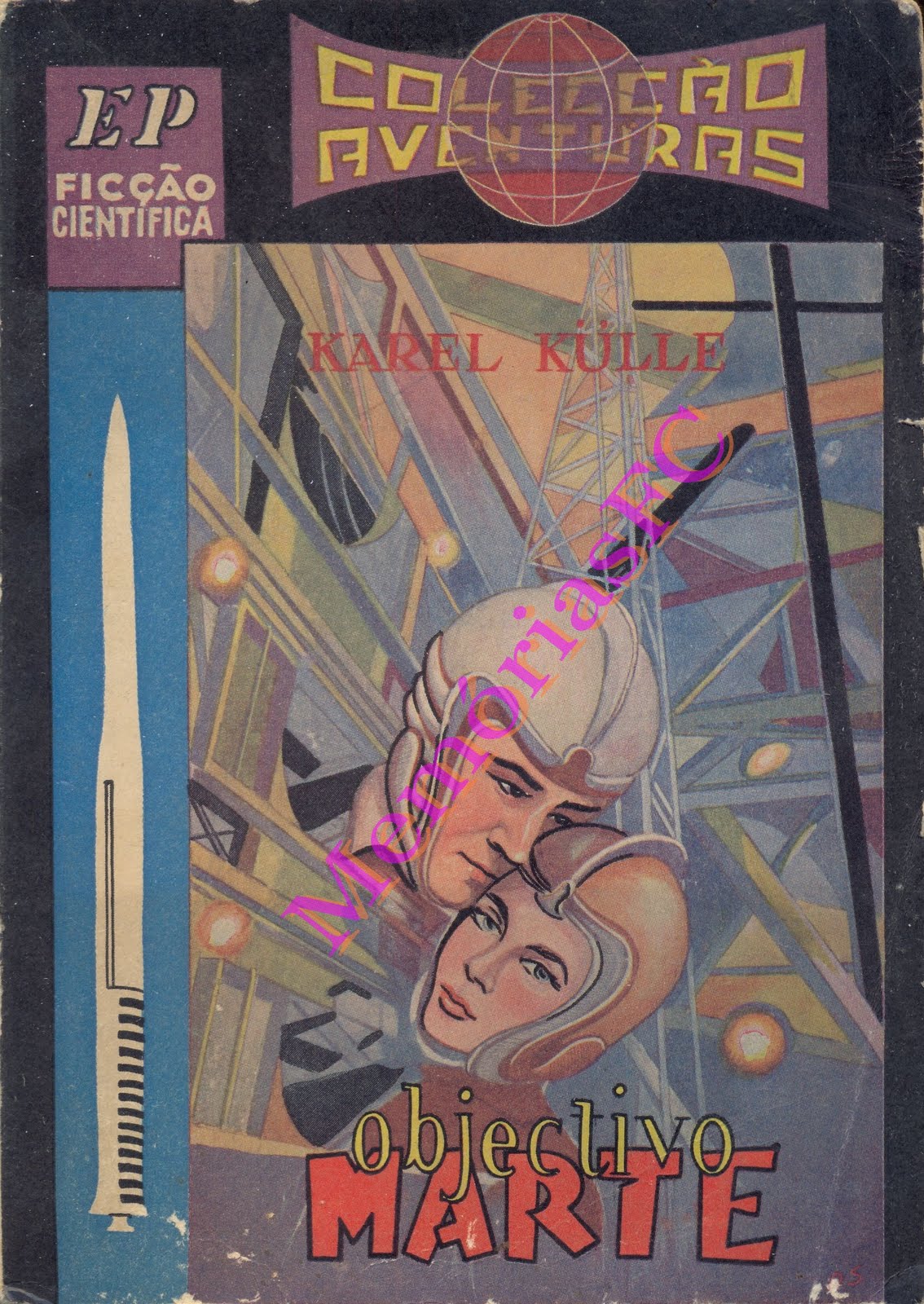
"Objectivo Marte", Karel Külle (pseudónimo de Carlos Sardinha) // "Objective Mars", Karel Külle (pseudonym of Carlos Sardinha)

A publicação desta semana de 23 a 28 de Novembro de 2015 é uma obra de ficção científica nacional contemporânea da fase final da "idade de ouro" do género no mundo anglo-saxónico e de transição para a ficção científica de Nova Vaga dos anos '60 e '70 (a "idade de ouro" deste género é considerada como tendo sido entre 1938, fim da "era da pulp" na fc publicada em imprensa do género, e 1946, os anos '50 sendo considerados "só" época de transição para muitos fãs e críticos do género, embora alguns como Robert Silverberg, autor do género, co-organizador com Lima Rodrigues de uma versão incluíndo textos de autores Portugueses da colectânea do género Terrestres e Estranhos publicada pela Galeria Panorama em 1968 e autor hoje "em contrato" com a Antagonista Editora para publicação em Portugal, achasse que os anos '50 fossem uma continuidade da "idade de ouro" e até os anos mais "de ouro" e típicos da era). Publicado em 1959 pela colecção EP - Ficção Científica da Editorial Popular de F. Bento & Correia Lda. de Lisboa, este foi o segundo relativo sucesso do autor Karel Külle. Mas quem era este autor de nome vagamente nórdico-centro-europeu (Karel é o equivalente de Carlos checo e holandês, Külle surgindo, normalmente sem os pontos conhecidos colectivamente em Alemão como umlaut, em Sueco ou Checo, existindo um apelido similar, com umlaut sobre o u, Ülle, na Estónia)? Não um qualquer autor estrangeiro, mas, por via de mais um caso da prática (que sem discutirmos já vimos algumas vezes até agora) da pseudo-tradução (em que um autor Português, para evitar, entre outras coisas, censura, que durante o Estado Novo tendia a "chatear" mais autores nacionais que estrangeiros, ou para evitar o "estigma" da escrita em género ditos "menores" como policial, fantástico ou ficção científica ao "bom-nome", finge estar a traduzir um autor estrangeiro, o verdadeiro autor tendendo a surgir indicado como tradutor mas por vezes para maior despiste, surgindo o nome de um tradutor profissional da mesma editora), de um autor Portuguesíssimo. Neste caso (como frequente quando um nome que não surge em muitas traduções surge numa mão cheia de obras como tradutor) o tradutor é o verdadeiro nome por detrás de Karel Külle: Carlos Filomeno dos Anjos de Sousa Sardinha, que em 1958 havia "traduzido" o policial A Grande Ameaça sob o pseudónimo de Russel Randall (para a Agência Portuguesa de Revistas), e antes de "criar" Karel Külle já havia produzido pseudo-tradução (mas em ficção romântica) também em 1959 como Pierre de Juvissy (nome que terá sido composto da conjugação de largos em Juvisy-sur-Orge, alguns quilómetros a sul de Paris, com nomes de Pierres, o que junto com a inspiração nórdico-balto-eslava de Karel Külle poderão indicar que estamos ante um autor viajado ou pelo menos culto quanto ao exterior) no romance Se todos os anjos voassem... (para a editora Popular), e ainda antes de Objectivo Marte escreveu (com um pouco menos de vendas e visibilidade, visibilidade no nível de obra 'pulp popular' entenda-se) Bula Matari. 1959, o seu ano mais produtivo como romancista (ou "pseudo-tradutor") acabou com o último romance de Külle, Tigres no Céu.
Carlos Sardinha foi um erudito e intelectual de respeito, que em 1967 dirigiria a revista dedicada a S. Tomé e Príncipe chamada Equador. Sardinha tinha um grande interesse em questões e problemas coloniais (também o demonstra o título dado a Bula Matari; era o nome que os nativos Congoleses deram ao jornalista Henry Morton Stanley quando lá andou em busca do missionário e explorador David Livingston, que cumprimentou com o famoso "Dr. Livingston, suponho?", significando "Parte Pedras" devido a ele frequentemente auxiliar os guias nativos a partir pedras pelo caminho, havendo discussão se a alcunha era dada como louvar ou ironia ante um branco que se "rebaixava" a fazer trabalho para trabalhadores negros). Um leve (e nada panfletário) elemento de crítica social e (no caso da sua ficção científica) analogia e alegoria da situação colonial portuguesa e geral surgem na obra ficcional "traduzida" pelo autor. Sardinha foi desde a sua primeira obra, ainda no policial, relativamente bem vendido para um autor das edições baratas "de género" que eram a "literatura de cordel" do Portugal de meados do século XX, e um caso ainda mais curioso tendo em conta que um erudito de pouca visibilidade e trabalhador de editoras (primeiro da Agência Portuguesa de Revistas e depois de outras) que nem sequer era o nome que surgia na capa dos livros que ele próprio escrevia conseguia ser lido e apreciado por um certo número de leitores jovens e de classe média e média-baixa numa altura de alfabetização ainda baixa em Portugal e em que os livros ainda eram um luxo (embora este tipo de edições fossem das mais acessíveis. Assim, Carlos Sardinha tornou-se no nosso país um vagamente conhecido autor de policial e de ficção científica sem as pessoas repararem no seu nome (disfarçado de "mero" tradutor). E podemos perguntar-nos quantos fãs deste género ainda marginal em Portugal não o terão lido na juventude sem saberem ler um autor nacional, e terão sido influenciado para criar no género vagamente pulp e aventureiro de ficção científica em que ele criou literatura.
O que faz de Objectivo Marte um marco na literatura de ficção científica em Portugal é que é a primeira vez na literatura nacional do género vai para o espaço voluntariamente em em máquinas mais ou menos realistas, não envolvendo invenções feitas na terra, nem "armas do juízo final" ou "raios da morte" (que até no cinema português já haviam aparecido em 1941), intervenção dos ETs em Portugal (como na peça radiofónica A Invasão dos Marcianos de Matos Maia de 1958), ou viagens ao espaço por acidente (do tipo balão setecentista voado para o espaço exterior por acidente de História Autêntica do Planeta Marte do nosso já conhecido Nunes da Mata em 1921) ou viagens autênticas mas em máquinas aerostáticas primitivas que nunca de facto poderiam voar tão longe da terra (em poemas herói-cómicos dos séculos XVIII e XIX como O Foguetário de Pedro de Azevedo Tojal, A Maquina Aerostatica de João Robert da Fond, e Viagens no Sytema Planetário de Patrocínio da Costa), mas também pela forma como se faz analogia (como em todos os romances do género de "Karel Külle") com a colonização africana de Portugal, que surge aqui por alegoria analisada intelectualmente de uma forma tão crítica como não propriamente apelando a descolonização. O extraterrestres, que surgem como antropomórficos e de civilizações algo utópicas (nas obras de Külle como na de Juvissy) são assim os Africanos, com os exploradores do espaço sendo os colonizadores Portugueses. O estilo de Carlos Sardinha, além de pulp e aventureiro como já dito, é também não demasiado preciso na parte técnica e científica das máquinas, como a maioria dos autores do género (com excepções como Júlio Verne ou o também cientista Isaac Azimov). Enquanto Nunes da Mata (como Verne) é um entusiasta da ciência e da matemática e isso é claro no cuidado apresentado no realismo da sua poesia narrativa ou prosa (mesmo quando aparentemente fantástica como na História Autêntica do Planeta Marte), enquanto Sardinha (como H. G. Wells) cria só o básico para sustentar as invenções ou eventos que mostra e está principalmente interessado nestes enredos pela alegoria ou comentário sociais que podem dar.
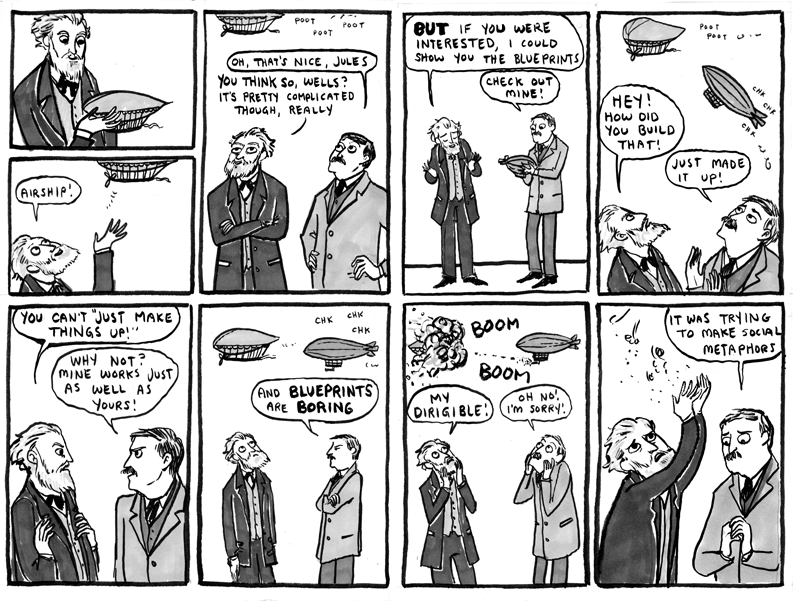
Cartoon contrastando os modos de fc de Verne e Wells (do sítio Hark! A Vagrant)
O enredo em si, envolve a partida de um vaivém chamado «Argonauta I», numa partida, com público assistindo e tudo, descrita de uma forma bastante realista para quem vê hoje as imagens da partida dos foguetões soviéticos ou americanos («Na base do foguetão, as chamas estralejavam. O «Argonauta I» moveu-se lentamente, como se quisesse desafiar a emoção dos assistentes. Sùbitamente [ainda influência da grafia 1911-1942 do Português], como que tomado de estranho poder, investiu contra o céu, transformando-se numa remota safira no firmamento.»). Além da «mais fantástica aventura de todos os tempos: A conquista do Sistema Solar!» (como diz o livro logo a seguir da descrição da partida), existe a dinâmica romântica criada por um casal formado por dois dos astronautas do «Argonauta I». Sem mais revelações de enredo, livro recomendado, infelizmente raro que ainda se consegue encontrar à venda online.


The post of this week from November 23 to 28 2015 is a work of contemporary Portuguese science fiction from the later phase of the genre's "golden age" in the anglo-saxonic world and of transition to the New Wage science fiction from the '60s and '70s (the "golden age" of this genre is considered as having been between 1938, end of the "pulp era" on scifi published in genre press, and 1946, the '50s being considered "just" transition time for many fans and reviewers of the genre, although some like Robert Silverberg, author on the genre, co-organiser with Lima Rodrigues of a version including texts from Portuguese authors of the collection from the genre Earthmen and Strangers/Terrestres e Estranhos published by the Galeria Panorama publishr in 1968 and author today "under contract" with the Antagonista Editora for publication in Portugal, found that the '50s were a continuity of the "golden age" and even the more "golden" and typical years of the era). Published in 1959 by the EP - Ficção Científica collection from Lisbon's Editorial Popular de F. Bento & Correia Lda. publisher, this was the second relative success of the author Karel Külle. But who was this author of name vaguely nordic-central-european (Karel is the Czech and Dutch equivalent to Charles, Külle comming up normally without the dots known collectively in German as umlaut, in Swedish or Czech, existing a similar surname, with umlaut on the u, Ülle, in Estonia)? Not any foreign author, but, via one more case of the practice (that we saw some times till now) of the pseudo-translation (in which a Portuguese author, to avoid, among other things, censorship that during the Portuguese New State tended to "annoy" more Portuguese than foreign authors, or to avoid the "stigma" of the writing in genres said to be "minors" like the detective-mystery/crime story, fantasy or science fiction on one's "good name", pretends to be translating a foreign author, the true author tending to come-up indicated as translator but sometimes for greater muslead, coming-up the name of a professional translator from the same publisher), of a most Portuguese author. In this case (as frequent when a name that doesn't appear in many translations comes-up as such on a handful of books as translator) the translator is the true name behind Karel Külle: Carlos Filomeno dos Anjos de Sousa Sardinha, who in 1958 had "translated" the detective-mystery/crime story A Grande Ameaça ("The Great Threat") under the pen-name of Russel Randall (for the Agência Portuguesa de Revistas/"Portuguese Agency of Magazines"), and before "creating Karel Külle he had already produced pseudo-translation (within romantic fiction) also in 1959 as Pierre de Juvissy (name that would been composited out of plazas at Juvisy-sur-Orge, some kilometers sout of Paris, with the names of Pierres, what together with the nordic-balto-slavic of Karel Külle could indicate that we are before a travelled author or at least cultivated about the abroad) in the novel Se todos os anjos voassem... ("If all the angels did fly..." for the Portuguese Popular publisher), and still before Objectivo Marte/"Objective Mars" wrote (with a little less sales and visibility, visibility on the level of 'pulp popular' literature to be understood) Bula Matari. 1959, his most productive year as novelist (or "pseudo-translator") ended with Külle's last novel, Tigres no Céu/"Tigers in the Sky".
Carlos Sardinha was a respectable scholar and intellectual, that in 1967 directed the magazine dedicted to Sao Tomeh and Principe called Equador ("Equator").Sardinha had a great interest on colonial questions and problems (it also demonstrates it the title given to Bula Matari; it was a name that the Congolese natives gave to the journalist Henry Morton Stanley when he went along over there in search of the missionary and explorer David Livingston, whom he greeted with the famous "Dr. Livingston, I presume?", meaning "Stone Breaker" due to him frequently aiding the native guides to break stones along the way, there being discussion if the nickname as given as appraisal or irony before a white that "lowered" himself to do work for black workers). A light (and not at all panfletary) element of social criticism and (in the case of his science fiction) analogy and allegory of the Portuguese colonial situation in general come-up in the fictional work "translated" by the author. Sardinha was since his first work, still in the detective-mystery/crime story, relatively well sold for an author of cheap "genre" editions which were the "chapbook literature" from the Portugal of the mid-20th century, and a care even more curious having in mind that a scholar of little visibility (first from the Portuguese Agency of Magazines and afterwards from others) that not even was the name that came-up on the cover of the books that he himself wrote could be read and appreciated by a certain number of young and middle and lower-middle class at a time-point of literacy still low in Portugal and in which books still were luxuries (although this type of editions were among the most accessible). So, Carlos Sardinha became in his country a vaguely known detective-mystery/crime and science fiction author without people noticing on his name (disguised as "mere" translator) and we can ask ourselves how many fans of this genre still marginal in Portugal would not have read it in their youth without knowing to be reading a Portuguese author and would have been influence to create on the vaguely pulp and adventurous genre of science fiction in which he created literature.
What makes Objective Mars a stepping stone in the science fiction literature in Portugal is that it is the first time in the Portuguese literature of the genre goes to space voluntarily and in machines more or less realistic, not involving inventions made on earth nor"doomsday machines" or death rays" (that even on the Portuguese cinema already had appeared in 1941), intervention of the ETs in Portugal (as in the War of the World radioplay A Invasão dos Marcianos/"The Invasion of the Martians by Matos Maia from 1958), or travels into space by accident (from the type of the seventeen-hundredth baloon flown to outer space by accident from História Autêntica do Planeta Marte/"Authentic History of the Planet Mars" by our already acquainted Nunes da Matta in 1921) or authentic travels but in primitive aerostatic machine that never indeed could fly so far from the ground (in mock-heroic poems from the 18th and 19th century like O Foguetário/"The Firewarking" by Pedro de Azevedo Tojal, A Maquina Aerostatica/"The Aerostatic Engin" by Joao Robert da Fond, and Viagens no Sytema Planetário/"Travels on the Planetary System" by Patrocinio da Costa), but also fhr way as it is done analogy (as in all the novels in the genre by "Karel Külle") with Portugal's african colonisation that comes up here by allegory analysed intellectually in way as critical as not properly appealing to decolonisation. The extraterrestrials, that come-up as anthropomorphic and from somewhat utopian civilisations (in Külle'd works as in Juvissy's) are thus the africans, with the space explorers being the Portuguese colonisers. Carlos Sardinha's style, besides pulp and adventurous as already said, is also not too much precise on the technical and scientifical part of the machines, as most of the genre's authors (with exceptions like Jules Verne or the also scientist Isaac Azimov). While Nunes da Mata (as Verne) is a science and mathematics enthusiast and that is clear in the care presented on the realism of his narrative poetry or prose (even when apparently fantastical as in Authentic History of the Planet Mars), while Sardinha (like H. G. Wells) creates just the basic for supporting the inventions or events that he shows and is mainly interested in these plots for the allegory or social comment that they can give out.
Cartoon contrasting the scifi moves of Verne and Wells (from the site Hark! A Vagrant)
The plot in itself involves the departure of a shuttle called «Argonaut I», on a departure, with the audience watching and all, described in a quite realistic way for who sees today the images of the departure of the Soviet or American shuttles («On the shuttle's base, the flames crackled out. The «Argonaut I» moved itself slowly, as if it wanted to challenge the emotion of the watchers. Sudenli [archaic for "Suddenly" to parallel the Subitamente written Súbitamente still under influence of the 1911-1942 spelling of the original Portuguese], as if taken-over by strange power it vested against the sky, transforming itself into a remote saphire on the firmament.»). Besides the «most fantastical adventure from all times: The conquest of the Solar System!» (as says the book right-after following the departure's description), it exists the romantic dynamic created by a couple formed by two «Argonaut I» astronauts. Without further spoilers, recommended book, unfortunately rare to find itself for sale online.

sexta-feira, 25 de setembro de 2015

"O sonho do Kaiser", José Nunes da Mata // "The Kaiser's Dream", Jose Nunes da Matta

Este blogue Classicos da literatura infanto-juvenil portuguesa // Portuguese children's/juvenile lit classics tem trazido "à ribalta" (se é que referências neste obscuro blogue são trazer "à ribalta") muitos ilustres desconhecidos da nossa literatura. Agora novamente vamos trazer um. Mas para começar algumas palavras: em Portugal tem-se uma visão bastante restrita do que deve ser a literatura. Não de como deve ser boa literatura, de como a literatura deve ser. Um crítico defende uma estilística ou outra; realista, e nesse caso atacará todos os que não chegam a essa meta, ou não-realista, e atacará todos os que forem estritamente realistas. Há a lógica não de deixar um escritor escrever como quiser e depois analisar a sua qualidade ou falta dela, mas de definir logo como "certa" ou "errada" a maneira de escrever ou a sensibilidade ou temática dele, "recompensando-a" ou "atacando-a". E depois, vê-se: fala-se da literatura portuguesa e a nossa crítica soa algo como: "é o Eça... o Camilo... o Garrett... o Herculano... o Eça... o Camilo... o Cesário Verde... o Eça... o Gil Vicente... o Camilo... o Eça... o Camilo... já disse o Eça? E o Camilo?" Hoje vemos que houve uma imensidão de escritores populares no seu tempo ou poucos anos depois, que por agora ficaram completamente esquecidos, não tanto por aquele fenómeno natural de escritores banais mas que "encaixavam" num dado gosto da sua altura que um mês depois estavam "passés", mas outro em que vários escritores (como João Correia de Oliveira, o Visconde de Moura, João Grave, Soeiro Pereira Gomes que parece só ser lembrado em conjunto com todos os outros neorrealistas ou como ícone do PCP quando é na verdade bastante legível isoladamente, Fernando Namora que é a cada década cada vez menos lido ou conhecido) eram brilhantes, mas a nossa crítica só tem capacidade para "fazer malabarismo" com uns quantos autores ao mesmo tempo, e para mais "não tem serventia".
Para além deste preconceito de correntes, esta "doença" de "amnésia literária", e lógica de "e no fim só pode haver um" que faria os espadachins do Duelo Imortal orgulhosos, a nossa crítica sofre de preconceitos enraizados contra dados géneros. Não só há para eles formas de escrever ou estéticas "certas" e "erradas", mas há géneros "certos" e "errados". Assim autores essencialmente dentro de um ou vários dos géneros "errados" (normalmente chamados pela crítica especializada "géneros menores"), automaticamente são votados a ostracismo, ou esquecimento. Entre esses géneros temos o policial, o fantástico ou fantasia, a ficção científica (estes dois últimos podendo ser associados na categoria "fantasia e ficção científica" ou "ficção científica e fantasia", ou f e fc/fc e f). Isso foi a principal razão de um autor talentoso e competente como Reinaldo Ferreira, o "Repórter X", por ser essencialmente policial, com algumas "perninhas" na fantasia e ficção científica, ficar essencialmente esquecido e mal-visto. O mesmo com ficcionistas de aventuras como Roussado Pinto. E quando escritores que são considerados "dignos" entram nesses géneros, o seu trabalho nesse género é esquecido e fala-se como se fossem "dignos" apesar de tal trabalho: Saramago (fora o seu início na literatura neorrealista) escreveu quase toda a sua obra dentro do género da fantasia e ficção científica (sendo romance histórico, O Memorial do Convento é uma obra com presença do fantástico do dom de visão de Blimunda, Ensaio Sobre a Cegueira é bem um cenário de ficção científica apocalítica disfarçado pelo barroquismo da linguagem e da pontuação de livro 'alegórico sério', A Jangada de Pedra parte de um cenário de desastre digno de ficção científica mas focando-se mais no pós-desastre e na sobrevivência e na vida a assumir nova normalidade e rotina, As Intermitências da Morte parte de a Morte tirar férias e deixar-se de se morrer de todo, etc.), mas claro que ninguém referirá isso e disfarçam o zero realismo das obras e da sua proximidade de obras de ficção científica pulp com palavrões como "alegoria", "realismo maravilhoso", "fabulesco" e comparações com supostas obras e autores que se possam referir como influências mais "respeitáveis" para o Nobel, porque o único Nobel da Literatura Português até agora não pode ser um Nobel da fantasia e ficção científica; e a ligação do bastante respeitado José Cardoso Pires com o policial (O Delfim, Balada da Praia dos Cães, ambos adaptados a cinema) é quase sempre só referida pelos fãs deste género. Embora haja desde os anos de 1980 tentativas de 'respeitabilização' do fantástico na nossa crítica literária, e desde a década seguinte para o policial, e ainda se esteja a começar a fazer o mesmo quanto à ficção científica e a literatura de aventuras, em traços largos ainda não se deu grande diferença na abordagem destes géneros, e quando surgem, por exemplo, cursos universitários sobre estes, tendem a ser contraproducentes (com nomes auto-insultuosos como "Estudo de Literaturas Marginais").
Tudo isto a propósito de nos apresentar a outro ilustre desconhecido que sofreu não só da mudança de modas literárias mas da incapacidade de criação de cânones alargados pela nossa crítica literária e da sua ligação a géneros "menores". José Nunes da Mata (1849-1945; pela grafia da sua época "Matta") era um Republicano Português, um homem da marinha, um matemático (o seu método simplificado para cálculo de trigonometria foi aplicado na França do seu tempo pela sua inovação e praticabilidade), deputado por Castelo Branco e Viana do Castelo durante a I República e um escritor conseguido, não sendo exactamente um best-seller, foi bastante popular e conseguiu ter vários dos seus livros populares com vários tipos de público: os seus livros matemáticos entre estudantes e matemáticos, os políticos entre Republicanos e activistas de vário tipo, a sua poesia com os fãs da melhor poesia do seu tempo, os seus livros sobre viagens e invenções pelos amantes de literatura de não-ficção sobre viagens e tecnologia, as suas peças de teatro sendo representadas com bastante sucesso de público e sendo muito louvadas pelos críticos da altura pela sua poesia, e uma obra que foi apresentada como "tradução" (na verdade era obra sua disfarçada de tradução de um texto perdido de um parente de balonistas setecentistas históricos Franceses) foi popular entre os nossos primeiros leitores de "romance científico" (ficção científica) do século XX, História Autêntica do Planeta Marte (1921).
José Nunes da Mata/Matta
Que razões houve para cair no esquecimento? Principalmente (fora tudo o que disse acima falando de muitos casos similares) o facto de ter cortado com o grupo dominante de Republicanos e criticado massacres e actos faccionalistas entre Republicanos (como a Noite Sangrenta de 1921, em que Republicanos de esquerda mataram membros dos Republicanos de direita então no poder), e dos Republicanos em relação às oposições católicas e monárquicas, o que lhe valeu uma queda de popularidade com os seus "confrades", e (sendo ainda um Republicano democrático que no final da vida ainda fazia uma "mole" semi-oposição de sociedade civil de impacto só local ao Estado Novo) não lhe valeu popularidade com o regime da II República, estando assim mais que esquecido pela altura em que ocorre o 25 de Abril: esquecido pelos "Republicanos Históricos", não reconhecido por socialistas, Comunistas ou anarco-sindicalistas como "um dos seus", e foi esquecido por um centro ou uma direita nascidos novos sem raízes que poderiam ter pegado nele como referência. Outra questão foi a maioria da sua obra ter sido técnica ou matemática (logo os únicos que ainda o lembraram e continuaram a consultar vagamente foram os alunos de universidades e colégios de bibliotecas mais recheadas que frequentemente conseguiam achar um dos livros técnicos ou matemáticos dele). O resto do esquecimento, foi uma normal datação dos estilos, principalmente no seu teatro e poesia (principalmente isto: já não se lê poesia tão comum e normalmente como prosa, e haver poesia narrativa ou dramática quase "a fazer vezes" de teatro, romance ou conto já é algo que não se espera de todo da literatura. Por fim, um autor que escreveu uma obra de ficção científica, várias de não-ficção que poderiam ser lidas quase como obras de aventuras de viagens só que de não ficção, e de várias obras poéticas muitas vezes com elementos de aventura ou de fantasia? A sua obra tinha "géneros menores" escrito por ela toda, logo foi olvidado pelos críticos "na boa".
Mas a literatura portuguesa não pode fazer-se, como qualquer hoje de qualquer cultura, sem narrativas memoráveis, aventuras de heróis ajudados das divindades como Os Lusíadas de Camões, narrativas das peripécias de uma sociedade burguesa como as séries de romances Comédia do Campo e Comédia da Cidade do Realista (contemporâneo de Eça) Teixeira de Queirós (sem parentesco), todo o tipo de lendas e narrativas que podem recordar a história humana, falar do seu presente ou sugerir o que será o seu futuro, e que mostre ao ser humano o que pode fazer com as suas acções, para melhor e para pior. E a obra literária de Nunes da Mata serve para nos apresentar coisas pouco comuns na nossa literatura ficcional nacional: literatura que não é "de formação", nacionalista ou sentimental. Ao publicar em 1916 o relativamente curto (na edição original com 35 páginas, na 2.ª de 1918, talvez com colunas de texto duplas por cada página, com 19) texto episódico O Sonho do Kaiser: Versos heróicos referentes à maldição do Kaiser, lançada por Deus, seu grande amigo (só o título é uma obra prima), Nunes da Mata quis parodiar o início da I Guerra Mundial, numa altura em que Portugal estava prestes a entrar (Portugal entra na guerra nesse ano), atribuindo as culpas do início da guerra ao Imperador (ou Kaiser) Alemão Guilherme II, e expondo-o ao ridículo, e incentivando os Portugueses a apoiarem uma entrada na guerra de um ponto de vista republicano (porém, aqui simulando uma posição mais sobre democracia e republicanismo, do que pelas razões principais de defesa do Império Colonial Português com fronteiras com o Império Colonial Alemão em Angola e Moçambique, e de melhorar a reputação da I República ao aliá-la numa causa com Britânicos e Franceses).
Este poema narrativo, narrado por um narrador omnisciente, mostra o Imperador Alemão dormindo depois de alguns afazeres, e sonhando que Deus, seu protector, entabula conversa com ele, e conforme a conversa avança, mais Guilherme II é uma caricatura, e mais Deus se transforma num professor severo, e mais a conversa é uma censura dura a alguém que o texto passa imagem de dever ser percepcionado como um aluno cábula. Nunes da Mata não estava sozinho neste tipo de poesia no Portugal desta altura. Veja-se abaixo dois exemplos de décimas do poeta popular Baixo-Alentejano contemporâneo de Nunes da Mata, Inocêncio de Brito abaixo:
Tirados daqui e daqui (note-se que o 2.º deve datar do fim da I Guerra todavia, pelo conteúdo do texto)
O poema de Nunes da Mata vale porém por ser mais extenso, o estilo narrativo, o estilo mais talentoso e polido, assim sendo capaz de sobreviver razoavelmente ao fim do contexto em que resultava melhor, e ao tom de propaganda exagerada, pelos graçegos e ironia, pela presença de elementos e linguagem da época que são bastante curiosos, por um ambiente de aventuras descrito quando Deus leva o Kaiser para fora do nosso mundo, numa espécie de momento à Divina Comédia de Dante, em que momentos mais excitantes de viagem através da criação são completos com outros meramente expositivos e satíricos mais aborrecidos hoje que não há Kaiser ou Grande Guerra a parodiar (embora alguns possam querer ressuscitar o texto pelo "ângulo" do anti-germanismo actual, mas eu acho isso ridículo, ainda para mais que hoje até a esquerda teme falar mal de Angela Merkel agora que ela se tornou a "mãe dos refugiados"). É claro porém que Nunes da Mata, enquanto Republicano e militar tem um profundo conhecimento da causa alemã na guerra sua contemporânea (mesmo se afectada pela sua visão politizada de republicano e pessoa anti-Potências-Centrais), para que aquilo que Deus diga ao Kaiser e este diga em resposta a Deus se coadunem com a realidade da altura (para o fim de anti-germanismo e de pró-belicismo dos Republicanos no Portugal ainda neutro, claro). O esforço de estudo das acções militares Alemãs e do seu soberano são notáveis da parte de Nunes da Mata, apesar da distorção propagandística.
Para o leitor que não conhece muito sobre Nunes da Mata, convém apontar que ele escreveu numa altura em que Portugal oscilava entre o fim da carreira dos últimos escritores ultra-Românticos (Pinheiro Chagas e afins), os escritores Realistas ou Naturalistas, uma continuidade do Romantismo chamado de neo-Romantismo (principalmente sob influência de Garrett, neste caso chamado neo-garretismo, e com alguns elementos de Simbolismo e Decadentismo), e novas correntes de influência principalmente anglo-francesa, o Simbolismo que tinha alguma proximidade estética do Romantismo mas enfatizava ainda mais o lado irrealista e do significado não literal das coisas, e o Decadentismo (que em Portugal se encontrava frequentemente fundido com o Simbolismo) que enfatizava a lógica de civilização decadente, de fin de siècle ("fim de século"), de enredar do poeta com os prazeres decadentes, um certo prazer mórbido com a morte. Assim, Nunes da Mata pode ser visto como tendo bebido de todos estes estilos, com forte influência Romântica e Simbolista, não pertencendo de forma clara a um só, sendo talvez a sua escrita melhor descrita como intensamente pessoal, e mais influenciada por um talento natural e pelas suas crenças políticas e pelos seus interesses científicos e humanísticos.
Acrescente-se ainda que foi um dos grandes autores de poesia narrativa, prosa sobre viagens e fantástico em Portugal, sendo ainda um dos primeiros autores de ficção científica no nosso país (não o primeiro, mas um dos primeiros a poder ser incontestavelmente identificado como tal, e um dos melhores dos primeiros), não propriamente uma ficção científica de previsões, mas de uso de elementos desse género para comentário social e proposta para modelo de organização social (como usual na maioria da fc mundial do século XIX e inícios do XX, excepção feita a Verne e Wells entre alguns poucos). Nunes da Mata podia bem ser erguido a "Verne Luso" de aventuras grandiosas e ficção científica "primitiva". Mas voltaremos a falar disso noutra altura. Mas pensem que, mesmo que nunca tenham ouvido falar dele ou o lido, os poucos livros, séries de TV ou filmes de ficção científica em Portugal são "trinetos ilegítimos" desconhecidos de Nunes da Mata, e das suas questões sobre "o que veremos quando chegarmos ao mais além?", questão que mesmo no mais poético/satírico/propagandístico/fantástico O sonho do Kaiser se levanta. Infelizmente este livro está só disponível na Biblioteca Nacional de Portugal (onde está erradamente registado sob o título O Sonho de Kaiser) e poucas mais mas quem estiver interessado talvez ainda possa adquirir uma cópia através da livraria-online/blogue Livreiro Monasticon. Ainda vamos a tempo de um "revivalismo" de Nunes da Mata (de preferência em edição ilustrada usando quiçá alguns dos cartazes, desenhos e postais propagandísticos magníficos da altura)?
Como este (daqui)


This Classicos da literatura infanto-juvenil portuguesa // Portuguese children's/juvenile lit classics blog has brought "to the limelight" (if it is so that references in this obscure blog are bringing "to the limelight") many illustrious unknown from our literature. Now we again are going to bring along one. But for starters some words: in Portugal it is had a rather restricted view of what lierature should be. Not how good literature should be, of how literature should be. A critic defends some stylistics or others; realist, and in that case shall attack all the ones that do not reach that end, or non-realist, and shall attack all the be strictly realistic. There is a logic of not letting the writer write as one wishes and afterwards analysing its quality or lack thereof, but of defining right-away as "right" or "wrong" the writing manner or the sensibility or thematic of them, "rewarding it" or "attacking it". And affterwards, just watch: one talks of Portuguese literature and our reviewers sound somewhat like: "it is Essa sir... Camilo sir... Garrett sir... Herculano sir... Essa sir... Camilo sir... the poet Cesario Verde... Essa sir... the playwright Gil Vicente... Camilo sir... Essa sir... Camilo sir... I already said Essa sir? And Camilo sir?" Today we see that there was an immensity of writers popular on their time or few years afterward, that now got completely forgotten, not so much by that natural phenomenon of writers banal but that "fit" on a given taste from the time-point who a month later were "passés", but another one in which several writers (like Joao Correia de Oliveira, the Viscount of Moura, Joao Grave, Soeiro Pereira Gomes who seems to only be remembered in ensemble with the other neorealists or as Portuguese Communist Party icon when it is in truth rather readable isolatedly, Fernando Namora who at each decade is each time less read or known) were brilliant, but our reviewers only have capacity to "juggle" a few authors at the same time, and for more it "does not avail to".
Besides this prejudice of currents, this "disease" of "literary amnesia", and "in the end there can be only one logic" that would make the Highlander swordsmen proud, our reviewers suffer of rooted prejudices against given genres. Not only there are for them "right" and "wrong" writing ways or aesthetics, but there are "right" and "wrong" genres. So authors essentially within one or several "wrong" genres (normally called by the specialised reviewers "lesser genres"), authomatically are voted to ostracising or oblivion. Among these genres we got the detective-mystery/crime story, the fantastical or fantasy, the science fiction (these last two being able to be associated into the "fantasy and science fiction" or "science fiction and fantasy", or f and scifi/scifi and f). That was the main reason of a talented and competent author like Reinaldo Ferreira, the "Reporter X", for being essentially on detective/mystery, with some "wallowing ins" into fantasy and science fiction, getting essentially forgotten and frowned-upon. The same with adventure fiction-writers like Roussado Pinto. And when writers that are considered "worthy" enters those genres, the labour in that genre is forgotten and it is speak of as if they were "worthy" despite such labour: Saramago (aside his beginning into the neorealist literature) wrote almost all his work inside the fantasy and science fiction genre (being historic novel, O Memorial do Convento/Baltasar and Blimunda is a work with presence of the fantastical of Blimunda's sight of vision, Ensaio Sobre a Cegueira/Blindness is quite the apocalyptic science fiction scenario disguised by the barroqueness of the language and of the punctuation as 'serious allegorical book', A Jangada de Pedra/The Stone Raft is set off out of a disaster scenario worthy of science fiction but focusing itelf more in the post-disaster and in the survival and on the life assuming new normality and routine, As Intermitências da Morte/Death with Interruptions is set off out of Death taking a vacation and it ceasing to there being deaths at all, etc.), but of course that nobody refers that and disguises the zero realism of his works and his proximity to pulp science fiction works with big words like "allegory", "marvelous realism", "fabled" and comparisons with supposed works and authors that can be refered as more "respectable" influences for the Nobel awardee, because the only Portuguese Nobel Prize in Literature thus far cannot be a fantasy and science fiction Nobel awardee; and the connection of the rather respected Jose Cardoso Pires with the detective-mystery/crime story (O Delfim/The Dauphin, Balada da Praia dos Cães/Ballad of Dog's Beach, both adapted to cinema) is almost always only refered by this genre's fans. Although there be since the 1980s attempts of 'respectabilising' of he fantastical in our literary reviewers, and since the following decade to the detective-mystery/crime story, and still is being started to be done the same about our science fiction and the adventure literature, in broad strokes it still didn't come into existence major difference in the approach to these genres, and when they come-up, for example, university courses ob these, tend to be counterproductive (with self-insulting names like "Estudo de Literaturas Marginais"/"Marginal Literatures Research").
All this apropos of introducing us to another illustrious unknown who suffered not only from the change of literary fashions but out of the inhability of creation of widened canons by our literary reviewers and from his connection to "minor" genres. Jose Nunes da Mata (1849-1945; by the period's spelling "Matta") was Portuguese Republican, a navy-man, mathematician (his simplified trigonometry calculation method was applied on the France from his time' for its inovation and pacticality), MP for Castelo Branco and Viana do Castelo during the Portuguese 1st Republic and an attained writer, not being exactly a bestseller, he was rather popular and got many of his books popular with several types of audience: his mathematical books among students and mathematicians, the political ones among Republicans and varied kind activists, his poetry with the fans of the time's best poetry, his books on travels and inventions by the lovers of non-fiction literature on travels and technology, his theatre plays being performed with quite some seats-filled success and being very praised by critics from the time for their poeticness, and one work that was presented as "translation" (in truth it was work of his disguised as translation of a lost text by a relative to French historical seventeen-hundredth baloonists) was popular among Portugal's first "scientific romance" (science fiction) readers from the 20th century, História Autêntica do Planeta Marte ("Authentic History of Planet Mars", 1921).
Jose Nunes da Mata/Matta
What reasons were there to fall into oblivion? Mainly (aside all that I said above talking on many similar cases) the fact of having cut with the dominant group of Republicans and criticised massacres and factionalist acts among Republicans (like the 1921 Bloody Night, in which leftwing Republicans killed members of the rightwing Republicans then in power), and of the Republicans in relation to the Catholic and monarchist oppositions, what owed him a fall of popularity with his "fellow Republicans", and (being still a democratic Republican that at his life's end still did a "soft" civil society semi-opposition of only local impact to the Portuguese New State) are not worth popularity on him with the 2nd Republic's regime, being so more than forgotten by the time that it occured the April 25th revolution: forgotten by his "Historical Republicans", not recognised by socialists, Communist-partisans or anarcho-sindicalists as "one of their own", and was forgotten by a centre and a rightwing born anew without roots that could have picked him up as reference. Another issue was the majority of his work having been technical or mathematical (hence the only ones that still remembered him and continued to consult him vaguely were the students of university and colleges with more stacked libraries that frequently got to find one of the technical or mathematical books of his). The rest of the oblivion, was a normal dating of styles, mainly in his theatre and poetry (mainly this: it already is not read out poetry as common and normally as prose, and there being narrative or dramatic poetry almost "doing turns" as theatre, novel or short-story already is something that is not expected at all out of literature.) At last, an author tht wrote one work of science fiction, several of non-fiction that could be read almost as travel adventure works only non-fiction, and of several poetic works many times with elements of adventure or of fantasy? His work had "lesser genres" written all over it, hence was pretermitted by the critics "nice and easy".
But Portuguese literature cannot be made, like any other culture's, without memorable narratives, adventures of heroes helped by deities like Camoens' The Lusiads, narratives of the mishaps of a bourgeois society like the novel series' Comédia do Campo ("Countryside Comedy") and Comédia da Cidade ("City Comedy") by the Realist (Essa's contemporary) Teixeira de Queiroz (not relation), all the kind of legends and narratives that can recall human history, talk on its present or suggest what could be its future, and that show to the human being what he can do with its actions, for better and for worse. And Nunes da Matta's literary work serves to present us little common things in our national fictional literature: literature that is not "Bildungsroman", nationalist or sentimental. At publishing in 1916 the relatively short (in the original edition with 35 pages, in 1918 2nd one, maybe with double text columns by each page, with 19) episodic text O Sonho do Kaiser: Versos heróicos referentes à maldição do Kaiser, lançada por Deus, seu grande amigo ("The Kaiser's Dream: Heroic verses refering to the Kaiser's curse, cast by God, his great friend"; the title alone is a masterpiece), Nunes da Matta wanted to parody the beginning of World War I, at a time that Portugal was about to get into it (Portugal gets into the war that year), attributing the faults for the war's beginning to the German Emperor (or Kaiser) William II, and exposing him to ridicule, and incentivising the Portuguese to support an entry into the war from aa republican point of view (yet, here simulating a position more on democracy and republicanism, than on the main reasons of defense of the Portuguese Colonial Empire with borders with the German Colonial Empire in Angola and Mozambique, and of improving the Portuguese 1st Republic's reputation by allying it in a cause with British and French).
This narrative poem, narratd by an all-knowing narrator, shows the German Emperor sleeping after some regular tasks, and dreaming that God, his protector, strikes-up conversation with him, and as the conversation advances, the more William II is a caricature, and more God turns himself into stern teacher, and more the talk is a hard reproach to someone from whom the text passes image of being due to be perceptioned as a truant student. Nunes da Matta is not alone in that type of poetry in that time-point. Let it be seen two examples of octosyllabic decimas by the Lower-Alentejo poet contemporary to Nunes da Matta, Inocencio de Brito below:
Taken from here and from here (let it be noted that the 2nd must date from the World War's end though, by the text's content)
Nunes da Matta's poem is worth though for being more extensive, the style narrative, the style more talented and polished, so being capable of surviving reasonably to the end of the context in which it worked better, and to the exagerated propaganda tone, due to the jests and irony, by the presence of elements and language of the time that are quite curious, by an adventure environment described when God takes the Kaiser out of our world, in a kind of moment Dante's Divine Comedy style, in which more exciting moments of travel through creation are completed by others more dull merely expository and satirical nowadays that there is no Kaiser or Great War to parody (although some might want to resurrect the text by the "angle" europan anti-germanism, but I find that ridiculous, even more so that today even the left fears to talk ill of Angela Merkel now that she became the "mother of refugees"). It is clear though that Nunes da Matta, while Republican and military has a deep knowledge of the German cause on the war contemporary of his (even if affected by his politicised view of Republican and anti-Central-Powers person), for that which God say to the Kaiser and the latter say in response to God befit with the time-point's reality (for the anti-germanism and pro-belicism of the Republicans in the Portugal still neutral, of course). The effort of study of the German military actions and of their sovereign are remarkable on Nunes da Mattta's part, despite the propagandistic distortion.
For the reader that does not know much on Nunes da Matta, it is convenient to point that he wrote at a time in which Portugal oscillated between the career end of the last ultra-Romantic writers (Pinheiro Chagas and the like), the Realist or Naturalist writers, a continuity from Romanticism called neo-Romanticism (mainly under Garrett's influence, in this case called neo-garretism, and with some elements of Symbolism and Decadentism), and new currents of influence mainly Anglo-French, the Symbolism that had some aesthetic proximity from Romanticism but emphacised even more the unrealistic side and the not literal meaning of things, and th Decadentism (that in Portugal found itself frequently fused with the Symbolism) that emphasised the logic of decaying civilisation, of fin de siècle ("end of the century"), of entangling of the poet with the decadent pleasures, a certain morbid pleasure with death. So, Nunes da Matta can be seen as having drank fromall these styles, with strong Romantic and Symbolism influence, not belonging in clear way to a single one, being maybe his writing best described as intensely personal, and more influenced by a natural talent and by his political believes and by his scientific and humanist interests.
Let it be added still tha he was one of the great authors if narrative poetry, prose on travels and fantasy in Portugal, being one of the first authors of science fiction in Portugal (not the first, but one of the first to be able to be unarguably identified as such, and one of the best from the first), not properly a science fiction of predicions, but of use of elements of that genre for social commentary and proposal for social organisation model (as usual in most of the 19th century and early-20th century worldwide scifi, exception be made to Verne and Wells among few others). Nunes da Matta could well be lifted upto "Lusitanian Verne" of gandiose adventures and "early" science fiction. But we shall come back to talk of that another time. But think on it that, even if you never heard talk of him or read him, the few science fiction books, TV series or films in Portugal are Nunes da Matta's unknown "illegitimate great-great-grandchildren", and from his questions on "what shall we see when we arrive to the further beyond?", question that even in the more poetic/satirical/propagandistic/fantastical The Kaiser's Dream it arises itself. Unfortunately this book is available only on the Portugal National Library (where it is wrongly registered under the title O Sonho de Kaiser/"The Dream of Kaiser") and few more in Portugal but who be interested maybe can acquire a copy through the online-bookstore/blo Livreiro Monasticon. We still are on time of a Nunes da Matta "revival" (preferably in edition illustrating using perhaps some of the propagandistic posters, drawings and postcards from that time-point)?
Like this one (out from here)