Mostrar mensagens com a etiqueta fantasia. Mostrar todas as mensagens

quarta-feira, 30 de dezembro de 2015

"Iratan e Iracema", Olavo D'Eça Leal // "Iratan and Iracema", Olavo D'Essa Leal

Última publicação, último livro. Assim o nosso blogue chega ao fim (pelo menos de uma eventual primeira série. Mas já aí vamos), e para acabar em beleza, voltamos a outro "unicórnio" raro e especial da literatura portuguesa, o género não dos mais cultivados cá até há poucas décadas atrás, do romance de fantasia infantil. História Extradordinária de Iratan e Iracema -- os meninos mais malcriados do mundo de Olavo D'Eça Leal foi publicado em 1939, como uma compilação de 38 textos que foram lidos pelo autor no programa Meia Hora de Recreio na Emissora Nacional portuguesa pouco antes da publicação, com bastante sucesso (embora só esgotando a 1.ª edição, não havendo mais nenhuma até 44 anos depois), e na altura era uma excepção na literatura portuguesa e um dos poucos na literatura infanto-juvenil mundial que fugiam a uma certa intenção moralizante e além do uso do maravilhoso fantástico, tinha uma certa inclinação para bizarria e surrealismo, de forma comparável aos dois livros de Alice de Lewis Carroll (e de forma que na década seguinte, como já vimos, surgiria na literatura portuguesa sob a forma a duologia Dona Redonda de Virgínia de Castro e Almeida), e louvando de certa forma um certo carácter "anarca" das crianças em relação às regras adultas (os heróis são «os meninos mais malcriados do mundo» e estes nunca são "corrigidos" pelo curso da estória). Na literatura infanto-juvenil do Estado Novo (principalmente naquela sob nome próprio e sem simulação de "pseudo-tradução" de original estrangeiro) este livro era uma feliz anomalia que foi por isso bem recebida pelos jovens (e mais velhos) leitores.
A edição original das Edições Romano Torres
O livro começa com um irmão e uma irmã (que têm curiosamente nomes que nos fazem pensar no Brasil, facto que não é abordado, apesar de aperecer alguma influência de folclore brasileiro no texto, com referências à personificação «Bicho Careta» ou ao «Sássí-Pêrêrê»; a bem dizer o livro não é especificamente localizado em Portugal, ou mesmo no Brasil, parecendo até ambos e ganhando uma aura de universalidade por isso) que têm uma existência rotineira junto com os primos num mundo normal algo cinzento, do qual se refugiam pelo sonho. Assim, um belo dia decidem desviar-se do caminho do costume para a escola em busca de uma Moura encantada num poço, e depois de encontrarem um desconhecido de ar ameaçador que lhes pergunta indicações para a aldeia próxima e se afasta, fogem temendo «cúmplices» do mesmo, e depois de encontrarem um lobo que conta a Iratan que era um jovem roubado de casa e embruxado em lobo por uma bruxa, os 2 irmãos perdem-se nos seus sonhos, indo ter a mundos fantasiosos fora do normal, vivendo através deles aventuras extraordinárias. Estes dois meninos pouco louváveis são de facto heróis dignos neste livro e personagens vivas (que, segundo insinua a dedicatória que abre o livro, devem esta "vida" a serem "desenhados" sobre as personalidades do próprio autor e do seu filho Paulo Guilherme d'Eça Leal).
Olavo D'Eça Leal ante um microfone da Emissora Nacional
Voltando ao enredo, as suas aventuras passam-se através de mundos com algo de fábula e outros imaginários folclóricos e tradicionais: embora eles passem por muitos mundos e fenómenos da criação da imaginação do autor (incluindo um palácio encantado misterioso, na verdade a versão transformada pela imaginação do seu casarão de aldeia com um criado que pode ou não estar já morto), e um livro enorme «das Horas Mais Mortas do Que Vivas...» (trocadilho com os livros de horas) escrito pelo avô poeta dos irmãos (que Iracema conjectura como tendo sido roubado pelo «Sássí-Pêrêrê» da Biblioteca Imperial de Viena, local que ela não tem certeza de existir excepto por «Em Viena existiram imperadores e bibliotecas», nada impedindo «que haja [...] uma biblioteca Imperial»; por curiosidade existe, mas é só "Nacional Austríaca" desde 1920); uma Cidade do Silêncio onde os locais os perseguem por fazerem barulho e donde só se safam com a ajuda de um tal de Pássaro Bisnau e o conseguir da chave da cidade duma fortaleza de ferro onde conhecem personificação como «o Bichinho do Ouvido», «o Bicho Careta, o Bicho Carpinteiro, o Bicho Homem, o Bicho da Cozinha, o Bicho de 7 Cabeças (que não era tão feio como o pintavam) [...] os Macaquinhos do Sótão [...] e [...] o Coca Bichinhos» e passam por uma sala que tem o cosmos lá dentro; enfrentam uma tempestade provocada por um peixe-espada voador que afinal é um faquir com ambições de ser mau-da-fita e de conseguir a pedra filosofal (e transformar tudo em ouro); são descobertos e cercados na floresta por bruxas de chapéus altos bicudos e grande "pencas" tradicionais (a quem, tentando impedi-las de lhes fazerem mal antes do nascer do Sol, que as mandaria embora, Iratan entretem com a estória de uma ilha da verdade em que quem sabe mentir "é rei"); passam pelo inferno da mitologia grega com mistura de catolicismo à Dante mas em que infernal só a maçada de nada acontecer lá (e com barqueiro Caronte, cão de 3 cabeças Cérebro à porta e rio do esquecimento à volta, depois do qual compram memórias de volta de um vendedor de memórias, entre as quais tem à venda a memória de Pedro Sem ou Cem do folclore luso); conhecem a estória da busca fracassada pela liberdade do Príncipe Ivan do folclore russo (que ouvem da memória do mesmo, no mesmo episódio do vendedor de memórias) e um País dos Sonhos (com poucos habitantes porque pouca gente sonha) onde nem a Rainha de tal país acredita nas peripécias da viagem dos dois irmãos. Depois voltam ao mundo real, sendo descobertos pela família a dormir sobre a última página do «Livro das Horas Mais Mortas do Que Vivas».
Iratan e Iracema e as bruxas
Um ponto curioso do livro é como os dois irmãos têm entre si um laço quase romântico (pode-se bem comparar com o romance infantil entre Kai e Gerda em A Rainha da Neve de Hans-Christian Andersen, com o seu elemento de crianças com um laço forte entre si e que vêm este laço ameaçado mas que acaba por não quebrar). O texto é complementado por várias ilustrações de Paulo Ferreira, um dos mais principais artistas da segunda geração da arte Modernista portuguesa que fora um dos principais artistas que trabalhavam para o Estado durante o Salazarismo no seio da "Política do Espírito" do homem da cultura de Salazar, António Ferro. Enfim, apesar de no todo ser um livro atípico dos meados do século XX, fora do moralismo da literatura da época (e mesmo da maioria da literatura do género infantil/infanto-juvenil da I República), Iratan e Iracema recebeu no ano de publicação um dos prémios do Secretariado de Propaganda Nacional (o equivalente do Ministério da Cultura do princípio do Estado Novo), o Prémio Maria Amália Vaz de Carvalho para literatura infantil. Em 1987, um filme foi adaptado pelo próprio filho do autor (a quem o livro foi dedicado), Paulo Guilherme (que no seu trabalho em cinema curiosamente surge à vez como somente Paulo Guilherme ou pelo nome completo). O filme é uma raridade hoje, foi só um pouco visto (embora muito publicitado) na altura, mas passou com algum sucesso como minissérie em 1987 e 1988. Além de algumas audiências, este filme ganhou o Troféu de Ouro do Festival de Cinema dos Países de Língua Oficial Portuguesa, Aveiro em 1988.
Paulo Guilherme d'Eça Leal
O livro, esse é bastante mais fácil de encontrar em bibliotecas, existindo por vezes quer em exemplares da 1.ª edição da editora Romano e Torres (ou da 2.ª edição facsímile de 1983 da 1.ª), quer na 3.ª edição de 1987 da Pensamento associada ao filme e com páginas finais dedicadas à história da produção da adaptação e fotogramas do mesmo. Existem ainda uma edição nova com ilustrações e capa novas de 2002 e de 20?? com as ilustrações originais de Ferreira, ambas da Vega (editora que deve ser louvada pelo esforço de relembrar este outro clássico esquecido do género da literatura infanto-juvenil em Portugal).
Mas o fim desta publicação traz-me a uma questão importante. Na 1.ª publicação eu colocava a questão de uma possível 2.ª série deste blogue, dependente do sucesso do mesmo. Ora, por esta altura eu tive umas razoáveis mas nada extraordinárias quase 800 visualizações, mas 0 comentários. Ora, se ninguém de quem tem andado a seguir isto comentar até este Sábado às 12 da tarde, ficamos por aqui, adeus até nunca mais, e foi um prazer fazer esta viagem convosco. Se alguém comentar, começamos ainda esta semana.


Last post, last book. So our blog reaches the end (at least for an eventual first series. But we'll get there), and to end handsomely, we go back to another rare and special "unicorn" of Portuguese literature, the genre not among the most cultivated here till a few decades ago, the children's fantasuy novel one. História Extradordinária de Iratan e Iracema -- os meninos mais malcriados do mundo ("Extraordinary History of Iratan and Iracema -- the rudest little-children in the world") by Olavo D'Eça Leal was published in 1939, as an epithome of 38 texts that were read by the author in the program Meia Hora de Recreio ("Half an Hour of Recess" or "Half an Hour of Recreation") in the Portuguese Emissora Nacional ("National Broadcaster") radio little before the publication, with quite a success (although only running out of books the 1st edition, not being any other till 44 years afterwards), and at the time it was an exception among the Portuguese literature and one of the few in the world children's/young-people's literature that did escape a certain moralising intent and beyond the use of the fantastical wondrous, it had a certain leaning towards bizareness and surrealism, in way comparable to the two Alice books by Lewis Carroll (and in way that in the following decade, as we already saw, would come up among the Portuguese literature under the form of the Lady Round duology by Virgínia de Castro e Almeida), and praising in certain way a certain "anarcho" character of the children in relation to the grown-up rules (the heroes are «the rudest little-children in the world» and these are never "corrected" by the story's course). In the children's/young-people's literature of the Portuguese New State (mainly in that one under one's name and without simulation of "pseudo-translation" of foreign original) this book was a happy anomaly that was for that well received by the young (and older) readers.
The original edition of the Edições Romano Torres
The book starts with a brother and a sister (who got curiously names that make us think of Brazil, fact that is not dealt with, despite of appearing some Brazilian folklore influence in the text, with reference to the personification «Bicho Careta» («Poor Critter») or the «Sássí-Pêrêrê»; properly stated the book is not specifically located in Portugal, or even in Brazil, seeming even both and gaining an aura of universality for that) who got a routine existance with the cousins in a world somewhat grey, from which they do take refuge for themselves through dreaming. So, one fair day they decide to wander off the usual path for school in search of an enchanted Mooress in a well, and afterwards finding a John Doe of threatening look who does ask them for directions for the nearby village and wanders off, they run away fearing «accomplices» of the former, and afterwards meeting a wolf that tells to Iratan that he was a young-man stollen away from his home and bewitched into wolf by a witch, the 2 siblings lose themselves into their dreams, going to get to fantasious worlds out of the ordinary, living through them extraordinary adventures. These two barely commendable little-children are in fact worthy heroes in this book and lively characters (that, according to insinuating of the dedication that opens the book, owe that "liveliness" to being "drawn over the personalities of the author himself and of his son Paulo Guilherme d'Eça Leal).
Olavo D'Eça Leal before a microphone of the Emissora Nacional
Going back to the plot, their adventures transpire themselves through world with something of fables and other folkloric and traditional imaginariums; though they pass by several world and fenomenons out of the creation of the author (including an mysterious enchanted palace, in truth an imagination transformed version of the village manor house with a man-servant who may or may not be dead), and an enormous book «of Hours More of Deadtime than Of Uptime...» (wordplay with the books of hours) written by the poet grandfather of the siblings (which Iracema conjectures as having been stollen by the «Sássí-Pêrêrê» out of the Imperial Library of Vienna, place that she did not quite held as certain that it existed except for «In Vienna there existing emperors and libraries», nothing preventing «that there be [...] an Imperial libary»; by curiosity it exists, but it is just "Austrian National" since 1920); a City of the Silence where the locals chase them for making noise and from where they only get away with it from with the help of some Bisnau Bird and the getting of the key of the city from a fortress of iron where they meet the critter-based personifications of the «Sylph that Winds Up Someone», «the Poor Critter, the Ant Bedbugs In One's Pants, the Human Beast, the Cooking Bug, the Snake with Seven Heads (which was not as much of a hydra-headed problem as it was made up to be) [...] the Monkey Business Toys in the Attic [...] and [...] the Perfinnikiniety1» and pass by a room that has the cosmos in there; they face a storm provoked by a flying swordfish that afterall is a fakir with ambitions of being a-bad-guy and of getting the philosopher's stone (and transforming everything into gold); are discovered and surrounded in the forest by witches in traditional pointy high hats and big "schnozes" (to whom, trying to prevent them of harming them before the rising of the Sun, that would cast them away, Iratan entertains them with the story of an island of truth in which who knows how to lie "is king"); they pass by the hell of the Greek mythology with admixture of Catholicism Dante-style, but in which infernal is only the bother of nothing happening there (and with the boatman Charon, 3 headed dog Cerberus at the door and river of forgetfulness around it, after the which they buy memories back to a salesman of memories among which he has for sale the memory of Pedro Sem or Cem from Portuguese folklore); they get to know the story of the failed search for freedom of the Prince Ivan from Russian folklore (which they hear out of the memory of he himself, in the same episode of the salesman of memories) and a Country of Dreams (with few inhabitants because few people dream) where not even the Queen of such a country believes in the mishaps of the voyage of the two siblings. Afterwards they come bck to the real world, being discovered by their family sleeping over the last page of the «Book of Hours More of Deadtime than Of Uptime».
Iratan and Iracema and the witches
A curious point of the book is how the two siblings have amongst themselves a bond almost romantic (it can well be compared with the childre's romance between Kai and Gerda in The Snow Queen by Hans-Christian Andersen, with its element of children with a strong bond amongst themselves and that see that bond threatened but it ends up by not breaking-downc). The text is complemented by several illustrations by Paulo Ferreira, one of the main artists of the second generation of the Portuguese Modernist Art who had been one of the main artists who worked for the state during salazarism in the midst of the "Politics of the Spirit" of the man of culture of Salazar, António Ferro. All in all, despite of being in the whole an atypical book of the mid of the Portuguese 20th century, outside the moralism of literature of the period (and even of the majrity of the literature of the children's/children's & young-people's genre from the Portuguese 1st Republic), Iratan e Iracema received in the publication year one of the prizes of the National Propaganda Secretariate (the equivalent to the Ministry of Culture of the beginning of the Portuguese New State), the Maria Amália Vaz de Carvalho Prize for children's literature. In 1987, a film was adapted by the author's own son (to whom the book was dedicated), Paulo Guilherme (who in his work in cinema curiously appears at turns just as Paulo Guilherme or by the full name). The film is a rarity today, it was just a little seen (although very publicised) at the time, but aired with some success as miniseries in 1987 and 1988. Besides some ratings, this film won the Troféu de Ouro ("Gold Trophy") of the Portuguese Language Countries' Film Festival, Aveiro, in 1988.
Paulo Guilherme d'Eça Leal
The book, that is quite easier to find in libraries, existing sometimes either in copies of the 1st edition of the Romano e Torres publisher (or from the 1983 facsímile 2nd edition of the 1st one), or in the 3rd edition from 1987 by the Pensamento publisher associated with the film an with the final pages dedicated to the history of the film adaptation and screenshots of it. It exists yet a new edition with illustrations and new covers from 2002 and 20?? with the original illustrations by Ferreira, both by Vega (publisher that must be praised for the effort of remembering this other forgotten classics of the children's/young-people's literature genre in Portugal).
But the ending of this post brings me to an important question. In the 1st post I put the issue of a possible 2nd series of this blog, depending on the success of the same. Well now, by this time I had some reasonable but nothing extraordinary near 800 views, but 0 comentaries. Well now, if no one from who has been following this comments till this Saturday at 12 p.m., we stick here, goodbye, see you never, and it was a pleasure to do this journey with you. If anyone comments, we start still this week.
 

wordplay composite of the Italian perfino for "even"/"just" and the English finnikini for a type of rock pigeon combined as alternative to the Scots/English "pernickety"/"persnickety" for "picky"; hence personifying being pick to the just right measure as pigeon animal]

quarta-feira, 9 de dezembro de 2015

"A Espada do Rei Afonso", Alice Vieira // "The Sword of King Alfonso", Alice Vieira

Quando o jornal Público organizou a colecção infanto-juvenil Colecção Geração Público em 2004-2005, só três obras que podiam reivindicar autoria portuguesa a englobaram: por ligeira "batota" a tradução/adaptação de Eça de Queirós de As Minas do Rei Salomão sob o título As Minas de Salomão (com que abrimos as recensões deste blogue), Os Cavaleiros da Távola Redonda de Augusto da Costa Dias que também já por aqui passou, e o livro que "trazemos" aqui hoje, A Espada do Rei Afonso. Em parte este blogue foi criado pela pouca visibilidade de livros infanto-juvenis (ou que pela evolução dos gostos ou dos tipos de narrativas mainstream foram "corridos" para esta categoria de literatura) de autoria portuguesa ou pelo menos lusófona em colecções de clássicos deste género como estas, a origem dos livros sendo ou sempre estrangeira ou a origem portuguesa sendo limitada a poucos volumes, por vezes com recurso a "batotas" como a do livro de Rider Haggard como trabalhado pelo nosso Eça. Mas é compreensível que, tendo só 3 sido postas nessa colecção do jornal Público, uma fosse a queirosianamente vivaz versão de Rider Haggard, outra uma versão portuguesa dessa mitologia clássica de cavalaria de Artur, e outra fosse uma das principais obras de uma das principais autoras infanto-juvenis e juvenis Portuguesas (embora também com obra para adultos; durante o anterior governo houve uma breve gafe em torno de um livro de poemas amorosos para adultos de A. Vieira que foi incluído no Programa Ler + para jovens leitores, erro que depois de aviso público da própria escritora foi prontamente corrigido).
Edição da Geração Público
Alice Vieira criou aqui neste seu quarto livro (e quarto livro infanto-juvenil, género pelo qual começou a sua carreira em 1979 com Rosa, Minha Irmã Rosa), de 1981, um livro que (num método que ela reutilizaria em Este Rei Que EU Escolhi, 2 livros e 2 anos depois) para ensinar os jovens leitores sobre história de Portugal, usa de uma mistura de ficção científica e fantasia para fazer jovens viajar no tempo para conhecerem em primeira-mão o passado que antes só conheciam, e mal, dos livros escolares de história e da história popular como descrita pelos leigos da sua comunidade (por exemplo, eles acreditam literalmente no cliché que «D. Afonso Henriques batia na mãe»), voltando ao tempo de D. Afonso Henriques, 1.º Rei de Portugal. O ano específico a que eles retornam, 1147 é bastante significativo: eles voltam ao ano em que Portugal acabava de conquistar Lisboa (que só se tornaria capital do Reino mais de 100 anos depois com D. Afonso III, bisneto de Afonso Henriques ou I) que uma peste grassava na nova conquista e o Rei estava instalado na cidade enquanto lidava com a peste e preparava o avanço para a conquista seguinte, de Santarém.
Começando pelo princípio, o livro começa com três irmãos, Mafalda, Fernando e Vasco, que ajudam o mais «coca-bichinhos» (i. e., picuinhas e exaustivo) dos 3 a procurar uma moeda antiga para a colecção dele, estando no Castelo de São Jorge a fazer a sua "prospecção amadora" quando acham por fim dita moeda e surgem «Ovnis» (mais especificamente um disco voador) sobre o castelo, e quando dão por si estão à porta do castelo em 1147, podendo ver ao vivo os Portugueses seus antepassados a "fazerem história". Eles depois de se verem no passado, conhecem o alegre bobo da corte, D. Bibas (tirado do romance O Bobo do nosso "conhecido" Alexandre Herculano), e vêm um D. Afonso Henriques que ainda não foi reconhecido pelo Papa como Rei de Portugal (o que só aconteceria já no final da sua vida), embora já fosse aclamado pela população depois da Batalha de Ourique, portanto na passagem de 1139 para 1140, e já fosse reconhecido como soberano independente depois do Tratado de Zamora de 1143, e que ainda não conquistara a maioria do território de Portugal fora o Algarve e Olivença que seriam adições posteriores, ocupando o Castelo de São Jorge na então ainda Al-Usbuna. Eles contactam com Bibas e o Rei (e o seu feitio de "pavio curto"), com quem conversam desmontando alguns mitos sobre a sua enorme espada e o Rei quase gigante (o Rei interroga, depois de os aceitar como visitantes do futuro, sobre o que se sabe no futuro sobre a sua espada, a qual como sabemos não ganhou reputação à Excalibur arturiana ou Joyeuse carolíngia, fora a fama de enorme e forte, além de lhes "pôrem perspectiva" essa estória quanto a ele e a sua mãe), e procuram de novo a moeda perdida que falta à colecção de moedas, numa altura em que esta ainda não é antiga mas moeda corrente e em uso. Depois de aprenderem a sua "história ao vivo" e de terem por fim a moeda perdida numa forma ou outra, os «Ovnis» surgem e eles retornam ao seu tempo, mudados, para melhor pelo que parece, pela experiência. Este livro tão leve como interessante é recomendado não só para leitores do género como para introdução à história de Portugal do reinado de D. Afonso Henriques, e para fãs de fantástico e fc pela forma de viagem no tempo, sendo muito cómodo que ainda se encontre "no prelo" e à venda em várias edições e se encontre em quase todas as bibliotecas.


Whe the Público newspaper organised the children's/young-people's Colecção Geração Público ("Público Generation Collection") in 2004-2005, only three works that could claim Portuguese authorship comprised it: by slight "cheating" Essa de Queiroz's translation/adaptation of King Solomon's Mines under the title As Minas de Salomão/"Solomon's Mines" (with which we opened up this blog's write-ups), Os Cavaleiros da Távola Redonda/"The Knights of the Round Table" by Augusto da Costa Dias that also by here passed by, and the book that we "bring" here today, A Espada do Rei Afonso ("The Sword of King Alfonso"). In part this blog was created due to the little visibility of children's/young-people's books (or that by the evolution of tastes or of the types of mainstream narratives were "ran-away" unto this category of literature) of Portuguese authorship or at least Portuguese-speaking in collections of classics of this genre as these, the origin of the books being or always foreign or the Portuguese origin being limited to a few volumes, but sometimes with resource to "cheating" like the one of the Rider Haggard book as worked-upon by Portugal's Essa. But it is undestandable that, having only 3 been put on that Público newspaper collection, one were the very querozianly vivacious Rider Haggard version, another a Portuguese version of that classical chivalry mythology of Arthur, and the other were one of the main works of one of the main Portuguese children's/young-people's and young-people's specific authors (although also with work for grown-ups; during the previous Portuguese government there was a brief gaffe around a book of love poems for adults by A. Vieira that was included on the Programa Ler +/"Read + Program" for young reders, error that after public warning by the writer herself was swiftly corrected).
Edition from Geração Público
Alice Vieira created here with her forth book (and forth children's/young-people's book, genre in which she debuted her career in 1979 with Rosa, Minha Irmã Rosa/Rosa, My Sister Rosa), from 1981, a book that (in a method she would reuse in Este Rei Que EU Escolhi/"This King That *I* Chose", 2 books and 2 years after) to teach the young readers on Portugal's history, uses of a mixture of science fiction and fantasy to make younguns time travel to meet in person the past that they only knew, and badly, from the school history and popular history books as described by the laymen from their community (for example, they believe literally on the cliche that «Don Alfonso Henriques hit his mother»), going back to the time of Don Alfonso Henriques, first king of Portugal. The specific year that they go back to, 1147 is quite significant: they go back to the year in which Portugal just had conquered Lisbon (that would only become capital to the Kingdom more than 1000 years later with Don Alfonso III, great-grandson of Alfonso Henriques or the First), that a plague raged in the new conquest and the King was installed on the city while he dealt with the plague and prepared the advance unto the following conquest, of Santarein.
Starting by the beginning, the book starts with three brothers, Mafalda, Fernando and Vasco, who help the most «persnickety» (i. e., picky and exausting) of the 3 to look up an ancient coin for his collection, being in the Sao Jorge Castle doing his "amateur prospection" when they find at last said coin and it come-on-by «UFOs» (more specifically a flying saucer) over the castle, and when they come to themselves they're at the castle's dour in 1147, being able to see live the Portuguese ancestors of their "making history". They afterwards to seeing themselves in the past, meet the joyful court jester Don Bibas (taken from the novel O Bobo/The Jester by our "acquaintance" Alexandre Herculano), and see a Don Alfonso Henriques that still had not been recognised by the Pope as King of Portugal (what would only happen to his life's ending), although he were already aclaimed by the population after the Battle of Ourique, hence in the passage from 1139 to 1140, and he were already known as independent sovereign after the 1143 Treaty of Zamora, and that he yet had not conquered the majority of Portugal's territory aside the Algarve and Olivenza which would be further additions, occupying the Sao Jorge Castle at the then still Al-Usbuna. They contact with Bibas and the King (and his "short fuse" temper), with whom they talk disassembling some myths on his enormous sword and the almost giant King (the King interrogates himself, after accepting them as travellers from the future, on what is known at the future on his sword, the which we know did not gain a reputation arthurian Excalibur or carolingian Joyeuse style, aside the fame of enormous and strong, besides "putting them in perspective" that story about him and his mother), and look-up for again the lost coin that lacks to the coin collection at a time-point in which the former is not yet ancient but current and in use a coin. After learning their "live history" and having at last the lost coin in one form or another, the «UFOs» come-on-by and they return to their time, changed, for the best it seems like it, by the experience. This book as light as interesting is recommended not only for reader of this genre as for the introduction to the history of the Portugal of Don Alfonso Henriques' reign, and for fans of fantastical and scifi for the time travel form, being very commodius that it still "gets itself into the print" and for sale in several editions and finds itself in almost all Portuguese libraries.

sexta-feira, 27 de novembro de 2015

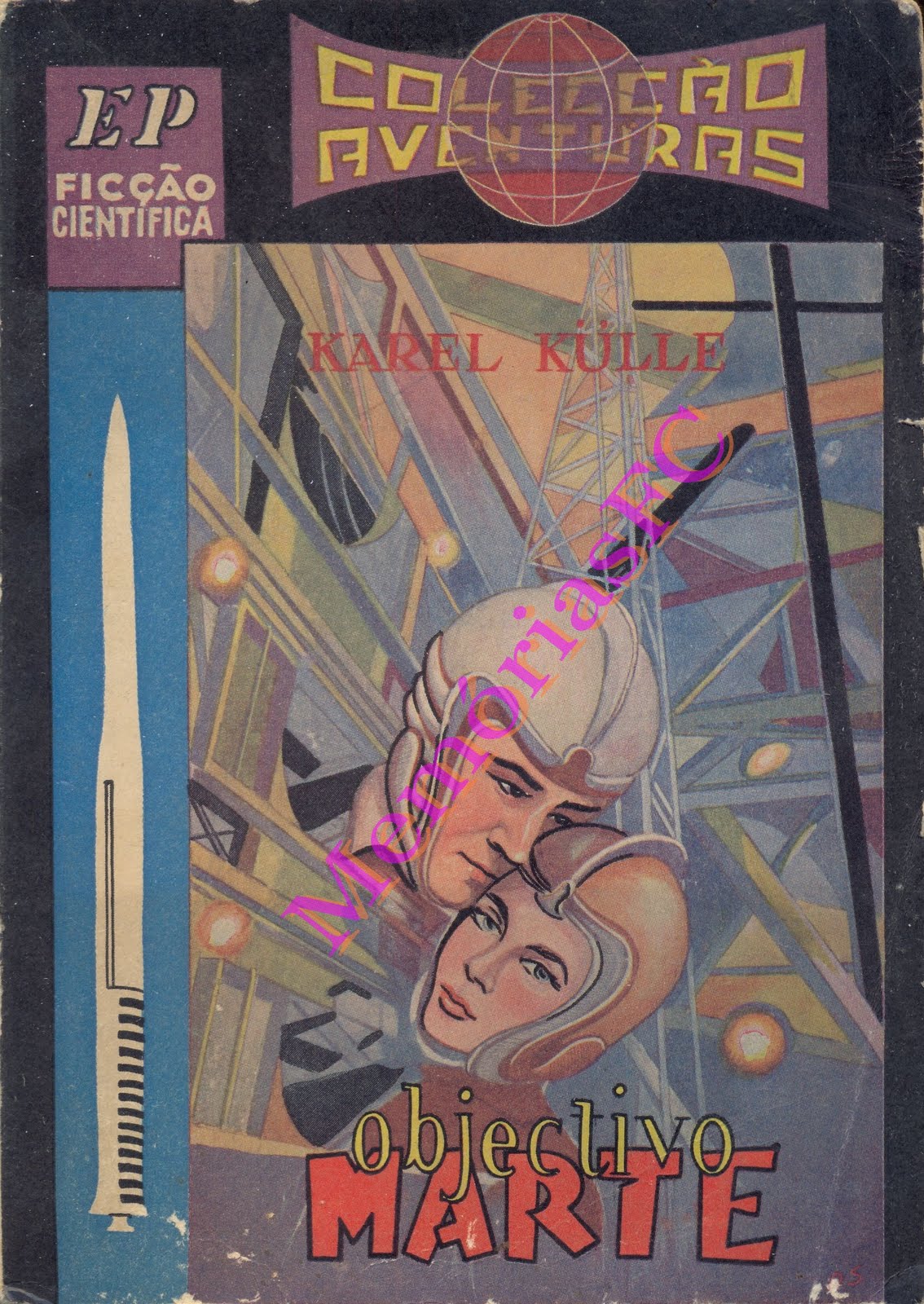
"Objectivo Marte", Karel Külle (pseudónimo de Carlos Sardinha) // "Objective Mars", Karel Külle (pseudonym of Carlos Sardinha)

A publicação desta semana de 23 a 28 de Novembro de 2015 é uma obra de ficção científica nacional contemporânea da fase final da "idade de ouro" do género no mundo anglo-saxónico e de transição para a ficção científica de Nova Vaga dos anos '60 e '70 (a "idade de ouro" deste género é considerada como tendo sido entre 1938, fim da "era da pulp" na fc publicada em imprensa do género, e 1946, os anos '50 sendo considerados "só" época de transição para muitos fãs e críticos do género, embora alguns como Robert Silverberg, autor do género, co-organizador com Lima Rodrigues de uma versão incluíndo textos de autores Portugueses da colectânea do género Terrestres e Estranhos publicada pela Galeria Panorama em 1968 e autor hoje "em contrato" com a Antagonista Editora para publicação em Portugal, achasse que os anos '50 fossem uma continuidade da "idade de ouro" e até os anos mais "de ouro" e típicos da era). Publicado em 1959 pela colecção EP - Ficção Científica da Editorial Popular de F. Bento & Correia Lda. de Lisboa, este foi o segundo relativo sucesso do autor Karel Külle. Mas quem era este autor de nome vagamente nórdico-centro-europeu (Karel é o equivalente de Carlos checo e holandês, Külle surgindo, normalmente sem os pontos conhecidos colectivamente em Alemão como umlaut, em Sueco ou Checo, existindo um apelido similar, com umlaut sobre o u, Ülle, na Estónia)? Não um qualquer autor estrangeiro, mas, por via de mais um caso da prática (que sem discutirmos já vimos algumas vezes até agora) da pseudo-tradução (em que um autor Português, para evitar, entre outras coisas, censura, que durante o Estado Novo tendia a "chatear" mais autores nacionais que estrangeiros, ou para evitar o "estigma" da escrita em género ditos "menores" como policial, fantástico ou ficção científica ao "bom-nome", finge estar a traduzir um autor estrangeiro, o verdadeiro autor tendendo a surgir indicado como tradutor mas por vezes para maior despiste, surgindo o nome de um tradutor profissional da mesma editora), de um autor Portuguesíssimo. Neste caso (como frequente quando um nome que não surge em muitas traduções surge numa mão cheia de obras como tradutor) o tradutor é o verdadeiro nome por detrás de Karel Külle: Carlos Filomeno dos Anjos de Sousa Sardinha, que em 1958 havia "traduzido" o policial A Grande Ameaça sob o pseudónimo de Russel Randall (para a Agência Portuguesa de Revistas), e antes de "criar" Karel Külle já havia produzido pseudo-tradução (mas em ficção romântica) também em 1959 como Pierre de Juvissy (nome que terá sido composto da conjugação de largos em Juvisy-sur-Orge, alguns quilómetros a sul de Paris, com nomes de Pierres, o que junto com a inspiração nórdico-balto-eslava de Karel Külle poderão indicar que estamos ante um autor viajado ou pelo menos culto quanto ao exterior) no romance Se todos os anjos voassem... (para a editora Popular), e ainda antes de Objectivo Marte escreveu (com um pouco menos de vendas e visibilidade, visibilidade no nível de obra 'pulp popular' entenda-se) Bula Matari. 1959, o seu ano mais produtivo como romancista (ou "pseudo-tradutor") acabou com o último romance de Külle, Tigres no Céu.
Carlos Sardinha foi um erudito e intelectual de respeito, que em 1967 dirigiria a revista dedicada a S. Tomé e Príncipe chamada Equador. Sardinha tinha um grande interesse em questões e problemas coloniais (também o demonstra o título dado a Bula Matari; era o nome que os nativos Congoleses deram ao jornalista Henry Morton Stanley quando lá andou em busca do missionário e explorador David Livingston, que cumprimentou com o famoso "Dr. Livingston, suponho?", significando "Parte Pedras" devido a ele frequentemente auxiliar os guias nativos a partir pedras pelo caminho, havendo discussão se a alcunha era dada como louvar ou ironia ante um branco que se "rebaixava" a fazer trabalho para trabalhadores negros). Um leve (e nada panfletário) elemento de crítica social e (no caso da sua ficção científica) analogia e alegoria da situação colonial portuguesa e geral surgem na obra ficcional "traduzida" pelo autor. Sardinha foi desde a sua primeira obra, ainda no policial, relativamente bem vendido para um autor das edições baratas "de género" que eram a "literatura de cordel" do Portugal de meados do século XX, e um caso ainda mais curioso tendo em conta que um erudito de pouca visibilidade e trabalhador de editoras (primeiro da Agência Portuguesa de Revistas e depois de outras) que nem sequer era o nome que surgia na capa dos livros que ele próprio escrevia conseguia ser lido e apreciado por um certo número de leitores jovens e de classe média e média-baixa numa altura de alfabetização ainda baixa em Portugal e em que os livros ainda eram um luxo (embora este tipo de edições fossem das mais acessíveis. Assim, Carlos Sardinha tornou-se no nosso país um vagamente conhecido autor de policial e de ficção científica sem as pessoas repararem no seu nome (disfarçado de "mero" tradutor). E podemos perguntar-nos quantos fãs deste género ainda marginal em Portugal não o terão lido na juventude sem saberem ler um autor nacional, e terão sido influenciado para criar no género vagamente pulp e aventureiro de ficção científica em que ele criou literatura.
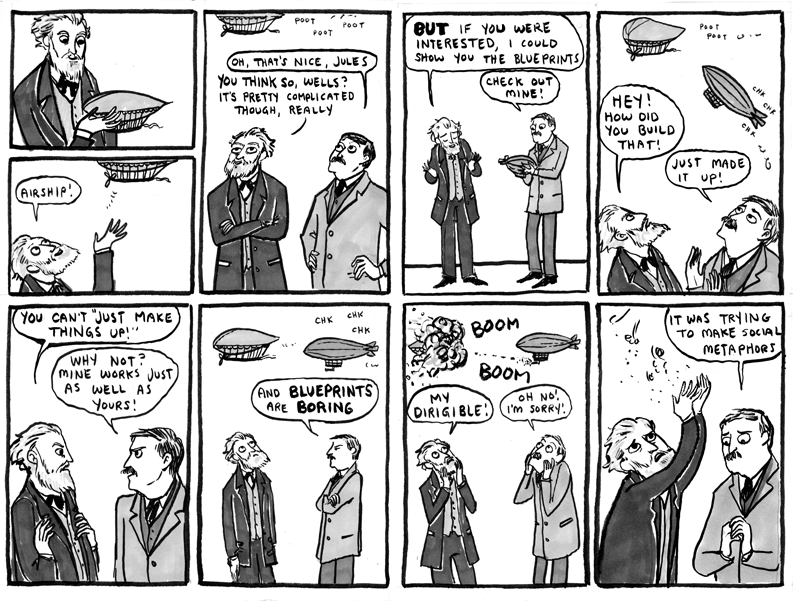
O que faz de Objectivo Marte um marco na literatura de ficção científica em Portugal é que é a primeira vez na literatura nacional do género vai para o espaço voluntariamente em em máquinas mais ou menos realistas, não envolvendo invenções feitas na terra, nem "armas do juízo final" ou "raios da morte" (que até no cinema português já haviam aparecido em 1941), intervenção dos ETs em Portugal (como na peça radiofónica A Invasão dos Marcianos de Matos Maia de 1958), ou viagens ao espaço por acidente (do tipo balão setecentista voado para o espaço exterior por acidente de História Autêntica do Planeta Marte do nosso já conhecido Nunes da Mata em 1921) ou viagens autênticas mas em máquinas aerostáticas primitivas que nunca de facto poderiam voar tão longe da terra (em poemas herói-cómicos dos séculos XVIII e XIX como O Foguetário de Pedro de Azevedo Tojal, A Maquina Aerostatica de João Robert da Fond, e Viagens no Sytema Planetário de Patrocínio da Costa), mas também pela forma como se faz analogia (como em todos os romances do género de "Karel Külle") com a colonização africana de Portugal, que surge aqui por alegoria analisada intelectualmente de uma forma tão crítica como não propriamente apelando a descolonização. O extraterrestres, que surgem como antropomórficos e de civilizações algo utópicas (nas obras de Külle como na de Juvissy) são assim os Africanos, com os exploradores do espaço sendo os colonizadores Portugueses. O estilo de Carlos Sardinha, além de pulp e aventureiro como já dito, é também não demasiado preciso na parte técnica e científica das máquinas, como a maioria dos autores do género (com excepções como Júlio Verne ou o também cientista Isaac Azimov). Enquanto Nunes da Mata (como Verne) é um entusiasta da ciência e da matemática e isso é claro no cuidado apresentado no realismo da sua poesia narrativa ou prosa (mesmo quando aparentemente fantástica como na História Autêntica do Planeta Marte), enquanto Sardinha (como H. G. Wells) cria só o básico para sustentar as invenções ou eventos que mostra e está principalmente interessado nestes enredos pela alegoria ou comentário sociais que podem dar.
Cartoon contrastando os modos de fc de Verne e Wells (do sítio Hark! A Vagrant)
O enredo em si, envolve a partida de um vaivém chamado «Argonauta I», numa partida, com público assistindo e tudo, descrita de uma forma bastante realista para quem vê hoje as imagens da partida dos foguetões soviéticos ou americanos («Na base do foguetão, as chamas estralejavam. O «Argonauta I» moveu-se lentamente, como se quisesse desafiar a emoção dos assistentes. Sùbitamente [ainda influência da grafia 1911-1942 do Português], como que tomado de estranho poder, investiu contra o céu, transformando-se numa remota safira no firmamento.»). Além da «mais fantástica aventura de todos os tempos: A conquista do Sistema Solar!» (como diz o livro logo a seguir da descrição da partida), existe a dinâmica romântica criada por um casal formado por dois dos astronautas do «Argonauta I». Sem mais revelações de enredo, livro recomendado, infelizmente raro que ainda se consegue encontrar à venda online.


The post of this week from November 23 to 28 2015 is a work of contemporary Portuguese science fiction from the later phase of the genre's "golden age" in the anglo-saxonic world and of transition to the New Wage science fiction from the '60s and '70s (the "golden age" of this genre is considered as having been between 1938, end of the "pulp era" on scifi published in genre press, and 1946, the '50s being considered "just" transition time for many fans and reviewers of the genre, although some like Robert Silverberg, author on the genre, co-organiser with Lima Rodrigues of a version including texts from Portuguese authors of the collection from the genre Earthmen and Strangers/Terrestres e Estranhos published by the Galeria Panorama publishr in 1968 and author today "under contract" with the Antagonista Editora for publication in Portugal, found that the '50s were a continuity of the "golden age" and even the more "golden" and typical years of the era). Published in 1959 by the EP - Ficção Científica collection from Lisbon's Editorial Popular de F. Bento & Correia Lda. publisher, this was the second relative success of the author Karel Külle. But who was this author of name vaguely nordic-central-european (Karel is the Czech and Dutch equivalent to Charles, Külle comming up normally without the dots known collectively in German as umlaut, in Swedish or Czech, existing a similar surname, with umlaut on the u, Ülle, in Estonia)? Not any foreign author, but, via one more case of the practice (that we saw some times till now) of the pseudo-translation (in which a Portuguese author, to avoid, among other things, censorship that during the Portuguese New State tended to "annoy" more Portuguese than foreign authors, or to avoid the "stigma" of the writing in genres said to be "minors" like the detective-mystery/crime story, fantasy or science fiction on one's "good name", pretends to be translating a foreign author, the true author tending to come-up indicated as translator but sometimes for greater muslead, coming-up the name of a professional translator from the same publisher), of a most Portuguese author. In this case (as frequent when a name that doesn't appear in many translations comes-up as such on a handful of books as translator) the translator is the true name behind Karel Külle: Carlos Filomeno dos Anjos de Sousa Sardinha, who in 1958 had "translated" the detective-mystery/crime story A Grande Ameaça ("The Great Threat") under the pen-name of Russel Randall (for the Agência Portuguesa de Revistas/"Portuguese Agency of Magazines"), and before "creating Karel Külle he had already produced pseudo-translation (within romantic fiction) also in 1959 as Pierre de Juvissy (name that would been composited out of plazas at Juvisy-sur-Orge, some kilometers sout of Paris, with the names of Pierres, what together with the nordic-balto-slavic of Karel Külle could indicate that we are before a travelled author or at least cultivated about the abroad) in the novel Se todos os anjos voassem... ("If all the angels did fly..." for the Portuguese Popular publisher), and still before Objectivo Marte/"Objective Mars" wrote (with a little less sales and visibility, visibility on the level of 'pulp popular' literature to be understood) Bula Matari. 1959, his most productive year as novelist (or "pseudo-translator") ended with Külle's last novel, Tigres no Céu/"Tigers in the Sky".
Carlos Sardinha was a respectable scholar and intellectual, that in 1967 directed the magazine dedicted to Sao Tomeh and Principe called Equador ("Equator").Sardinha had a great interest on colonial questions and problems (it also demonstrates it the title given to Bula Matari; it was a name that the Congolese natives gave to the journalist Henry Morton Stanley when he went along over there in search of the missionary and explorer David Livingston, whom he greeted with the famous "Dr. Livingston, I presume?", meaning "Stone Breaker" due to him frequently aiding the native guides to break stones along the way, there being discussion if the nickname as given as appraisal or irony before a white that "lowered" himself to do work for black workers). A light (and not at all panfletary) element of social criticism and (in the case of his science fiction) analogy and allegory of the Portuguese colonial situation in general come-up in the fictional work "translated" by the author. Sardinha was since his first work, still in the detective-mystery/crime story, relatively well sold for an author of cheap "genre" editions which were the "chapbook literature" from the Portugal of the mid-20th century, and a care even more curious having in mind that a scholar of little visibility (first from the Portuguese Agency of Magazines and afterwards from others) that not even was the name that came-up on the cover of the books that he himself wrote could be read and appreciated by a certain number of young and middle and lower-middle class at a time-point of literacy still low in Portugal and in which books still were luxuries (although this type of editions were among the most accessible). So, Carlos Sardinha became in his country a vaguely known detective-mystery/crime and science fiction author without people noticing on his name (disguised as "mere" translator) and we can ask ourselves how many fans of this genre still marginal in Portugal would not have read it in their youth without knowing to be reading a Portuguese author and would have been influence to create on the vaguely pulp and adventurous genre of science fiction in which he created literature.
What makes Objective Mars a stepping stone in the science fiction literature in Portugal is that it is the first time in the Portuguese literature of the genre goes to space voluntarily and in machines more or less realistic, not involving inventions made on earth nor"doomsday machines" or death rays" (that even on the Portuguese cinema already had appeared in 1941), intervention of the ETs in Portugal (as in the War of the World radioplay A Invasão dos Marcianos/"The Invasion of the Martians by Matos Maia from 1958), or travels into space by accident (from the type of the seventeen-hundredth baloon flown to outer space by accident from História Autêntica do Planeta Marte/"Authentic History of the Planet Mars" by our already acquainted Nunes da Matta in 1921) or authentic travels but in primitive aerostatic machine that never indeed could fly so far from the ground (in mock-heroic poems from the 18th and 19th century like O Foguetário/"The Firewarking" by Pedro de Azevedo Tojal, A Maquina Aerostatica/"The Aerostatic Engin" by Joao Robert da Fond, and Viagens no Sytema Planetário/"Travels on the Planetary System" by Patrocinio da Costa), but also fhr way as it is done analogy (as in all the novels in the genre by "Karel Külle") with Portugal's african colonisation that comes up here by allegory analysed intellectually in way as critical as not properly appealing to decolonisation. The extraterrestrials, that come-up as anthropomorphic and from somewhat utopian civilisations (in Külle'd works as in Juvissy's) are thus the africans, with the space explorers being the Portuguese colonisers. Carlos Sardinha's style, besides pulp and adventurous as already said, is also not too much precise on the technical and scientifical part of the machines, as most of the genre's authors (with exceptions like Jules Verne or the also scientist Isaac Azimov). While Nunes da Mata (as Verne) is a science and mathematics enthusiast and that is clear in the care presented on the realism of his narrative poetry or prose (even when apparently fantastical as in Authentic History of the Planet Mars), while Sardinha (like H. G. Wells) creates just the basic for supporting the inventions or events that he shows and is mainly interested in these plots for the allegory or social comment that they can give out.
Cartoon contrasting the scifi moves of Verne and Wells (from the site Hark! A Vagrant)
The plot in itself involves the departure of a shuttle called «Argonaut I», on a departure, with the audience watching and all, described in a quite realistic way for who sees today the images of the departure of the Soviet or American shuttles («On the shuttle's base, the flames crackled out. The «Argonaut I» moved itself slowly, as if it wanted to challenge the emotion of the watchers. Sudenli [archaic for "Suddenly" to parallel the Subitamente written Súbitamente still under influence of the 1911-1942 spelling of the original Portuguese], as if taken-over by strange power it vested against the sky, transforming itself into a remote saphire on the firmament.»). Besides the «most fantastical adventure from all times: The conquest of the Solar System!» (as says the book right-after following the departure's description), it exists the romantic dynamic created by a couple formed by two «Argonaut I» astronauts. Without further spoilers, recommended book, unfortunately rare to find itself for sale online.

quinta-feira, 19 de novembro de 2015

"Aventuras de Dona Redonda", Virgínia de Castro e Almeida // "Adventures of Lady Round", Virginia de Castro e Almeida

O livro da publicação anterior (como insinuei em partes da resenha anterior, teve uma continuação), publicada logo no ano seguinte, 1943. Tendo sido logo publicada no ano seguinte, é surpreendente por um aspecto: a influência de um racialismo à nacional-socialismo pareceu desaparecer de todo. A Zipriti foi completamente redesenhada nas ilustrações (agora de outro autor mas de traço similar), parecendo agora nem ser mulata de todo (passando por assim dizer de caricatura de negra a boneca Emília d'O Sítio do Picapau Amarelo), Bonda desapareceu de todo não sendo sequer referido (Dick e Franz também não surgem, mas são insinuados em referências aos eventos do livro anterior nuns comentários de gente de fora da "gente" da personagem-título quando esta é pela primeira vez referida neste livro) e não surge qualquer racismo subentendido (a única figura subtextualmente estrangeira é Iria, a protagonista, que pode bem ser outra refugiada da II Guerra Mundial mas isto nem é aprofundado nem ela é apresentada negativamente). A actriz São José Lapa, que numa propriedade que lhe pertence na Margem Sul fez algumas representações ao ar livre de uma adaptação sua do 2.º dos dois livros da Dona Redonda, descreve que Virgínia de Castro e Almeida terá escrito este livro numa fase de ruptura com o Estado Novo; embora tal posição seja talvez um exagero (ainda vemos aqui uma certa crença na autoridade incontestável de quem "sabe mandar", no caso Dona Redonda), é verdade que surge um certo anarquismo filosófico, na forma como Dona Redonda organiza a sua comunidade à margem da sociedade, ignorando as críticas da "boa sociedade", adoptando várias crianças de várias etnias e raças (aqui Zipriti passando definitivamente da criatura quase sobrenatural do 1.º livro a uma incontestável criança apesar de continuar a ser um poço de sarilhos) e D. Redonda (como o livro em geral) humilham os aristocratas e as suas convenções (curiosamente aqui o racismo sendo passado para os ridículos opositores aristocráticos, que consideram bizarro Dona Redonda adoptar uma criança mulata), e que neste 2.º livro a aproximação da autora ao nazismo estava totalmente posta de lado.
O enredo deste livro, novamente não começa com a personagem-título, mas chega até ela, literalmente, envolvendo a viagem de uma criança até ela: desta vez é Iria, uma jovem que vivia numa pousada possuída por uma tal de Dona Catapulta no topo de um alto chamado Toutiço (i.e., topo de cabeça ou cocuruto), e uma manhã bem cedo ela sai da pousada e vai pelo caminho até encontrar um rapaz chamado Bruno e o seu cavalo Caracol. Os dois juntos encontram, depois de percorrerem casas com jardins tortos e um grupo de novos-ricos de manias bizarras, o Chico do primeiro livro, que os leva a casa da Dona Redonda. Depois disso há um enredo hilariante e errante envolvendo o casamento do Mostrengo, o dragão que serve a Dona Redonda desde o primeiro livro, obras na casa da Dona Redonda, novas adições à "gente" dela, o conflito com os aristocratas (que acabam tendo de ceder à aceitação dos valores da "gente" e humilhados vendo a linhagem verdadeiramente "sangue azul" da personagem-título que desprezavam), o encolher de Dona Redonda para ir visitar um formigueiro (talvez o momento mais anárquico e eventualmente anti-autoritário do livro, com uma crítica de uma organização social hierarquizada inflexível e a paródia de D. Redonda a ser confundida com uma deusa e uma loucura de destruição do formigueiro e 'distribuição de porrada' pela formigas de uma Redonda pelos cabelos com a estupidez das formigas é confundida pelas mesmas com uma dança divina; mas esta crítica continua a ser uma crítica de base religiosa e moralista mais que liberal ou laboral) mais viagens no tempo para ensinar história (agora grega antiga) e moral tradicional, e também para Chico, Iria e Bruno verem uma Dona Redonda mais nova no século XVIII num vestido com rabo postiço, e creio que a primeira aparição de um macaco no nariz na literatura portuguesa (num episódio de mijar a rir em que a incapacidade de remover um macaco do nariz que se prende na cara da criada dos aristocratas do enredo e da desistência dela de o tirar provoca o desmaio da patroa. Faz sentido no contexto). Como o livro anterior, este é um livro da tradição nonsense e por isso uma descrição de enredo a fundo é um pouco desnecessária no sentido em que o enredo é episódico, com vários fios e respectivas meadas e não um todo unido todo para um fim, o que não afecta porém a comicidade e valor de entretenimento deste livro em nada.
Virgínia de Castro e Almeida morreria em 1945, não se sabendo se o não surgimento doutro qualquer livro sobre esta personagem deveu-se ao não desejo de não escrever mais deles (ou mais livro nenhum) até morrer com 70 anos (não chegando ao aniversário a 24 de Novembro), ou se a morte a impediu de começar um novo (tem-se porém certeza que não tinha já começados apontamentos para nenhum livro novo da série). Mas felizmente que temos os dois livros desta série que temos, presentes em muitas bibliotecas municipais e escolares (como o livro anterior, principalmente na edição do início da década de 1990), com a Clássica Editora ainda vendendo este clássico do seu espólio escrito pela sua antiga directora, várias cópias pessoais encontrando-se à venda em sítios como o OLX.pt e o Coisas.com, e ainda as versões para download na Luso Livros.

A capa da edição dos anos '90 da Clássica Editora e a capa "modernizada" para a versão da Luso Livros


The book from the previous post (as I insinuated on parts of the previous write-up, had a continuation), published right-away on the following year, 1943. Having been published in the following year, it is surprising on one aspect: the influence of a racialism national socialism-style seemed to disappear at all. Ms. Zipriti was completely redrawn in the illustrations (nowby another author but of similar stroke), seeming now not even to be mulatta at all (passing so to speak from black-female's caricature to Doll Emilia from Yellow Woodpecker Ranch-farm). Bonda disaappeared at all not even being referred to (Dick and Franz also do not come-up, but are insinuated in references to the events from the previous book in some commentaries from folk from outside the title character's "folk" when she is for the first time referred on this book) and it does not come up any understated racism (the only subtextually foreign character is Iria, the lead, that may well be another World War II refugee but shuch is not deepened nor is she presented negatively). The Portuguese actress Sao Jose Lapa, who in an estate that belonged to her on the Tagus South Bank did some outdoors performances from an adaptation of hers of the 2nd of the two Lady Round books, describes that Virginia de Castro e Almeida would have written this book in a period of breakup with the Portuguese New State, although such position maybe would be an exageration (we still see here a certain belief on the undeniable authority of who "knows how to boss-around", in the case Lady Round), it is true that it comes up a certain philosophical anarchism, in the way how Lady Round organises her community at society's edges, ignoring the criticisms of the "good society", adopting several children from several ethnicities and races (here Zipriti passing definitely from the almost supernatural creature from the 1st book to an undisputed child despite cointinuing to be a paragon of troubles) and LY. Round (as the book in general) humiliate the aristocrats and their conventions (curiously here the racism being passed unto the ridiculous aristocratic opponents, who consider bizarre Lady Round adopting a mulatta child), and that on this 2nd book the author's rapprochement to nazism was totally set aside.
The plot of this book, again does not start with the title character, but gets to her, literally, involving the trip from a child up to her: this time it is Iria, a youngun that lived on a hostel possessed by one Lady Catapult at the top of a height called Mazard (i.e., head's top or head-dome), and one morning quite early she leaves the hostel and goes along the way till finding a boy called Bruno and his horse Curl. The two of them together find, after going through houses with crooked gardens and a group of nouveaux riches of bizarre manners, to Chico from the first book, who takes them to Lady Round's house. After that there is a hillarious and wandering plot involving the marriage of the Caliban, the dragon that serves to Lady Round since the first book, construction-works at Lady Round's house, new additions to her "folk", the conflict with the aristocrats (who end up having to give in tothe acceptance of the values of the "folk" and humiliated seeing the truly "blue blood" lineage of the title character that they despise), the shrinking of Lady Round to go visit an anthill (maybe the most anarchical and eventually antiauthoritarian moment from the book, with a criticism of an inflexible ranked social organisation and the parody of LY. Round being confused with a goddess and a madness of destruction of the anthil and 'distribution of whooping' among the ants by a Round up to the tips of her hair with the stupidity of the ants confused by the latter with a divine dance; but this critique continues being a critique of religious and moralist basis more than liberal or lib-labourite) plus time travel to teach history (now ancient Greek) and traditional morals, and also for Chico, Iria and Bruno to see a younger Lady Round in the 18th century in a dress with a pannier butt, and I believe so that the first appearance by a nose booger in Portuguese literature (in an episode to piss one's self in which the inability of removing a nose nooger that gets stuck on the face of the maid of the aristocrats of the plot and of her giving up on taking it out provokes the fainting of the lady-boss. It makes sense in context). Like the previous book, this is a book from the nonsense tradition and for that a description of plot in depth is a little unnecesary in the sense that the plot is episodic, with several threads and respective skeins and not a whole united all to one end, what doesn't affect though the comicalness and entertainment value of this book in anything.
Virginia de Castro e Almeida would die in 1945, not being known if the not appearing of any other book on this character owed itself to the none desire of writing more of them (or any other book) up till dying at 70 (not getting to her November 24th birthday), or if the death prevented her of starting again (it is had though certainty that she didn't have already started notes for any new book of the series). But fortunately that we got the two books of the series that we got, present in many Portuguese municipal and school libraries (like the previous book, mainly in the early 1990s edition, with the Clássica Editora publisher still selling this classic from its spoilage written by its former lady-director, several personal copies pessoais finding themselves for sale in sites like the OLX.pt and the Coisas.com, and yet the versions for download at Luso Livros.

A cover from the '90s edition by the Clássica Editora publisher and the "modernised" cover for the Luso Livros version

quinta-feira, 12 de novembro de 2015

"História de D. Redonda e da Sua Gente", Virgínia de Castro e Almeida // "Story of Lady Round and of her Folk", Virginia de Castro e Almeida

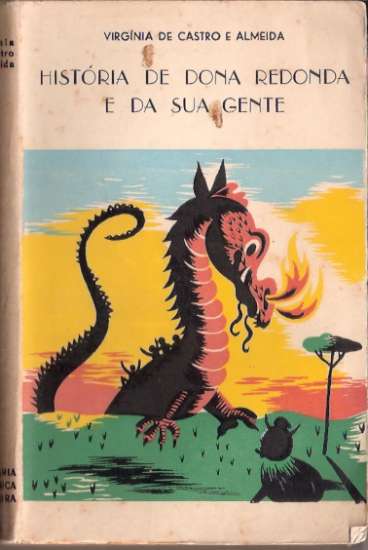
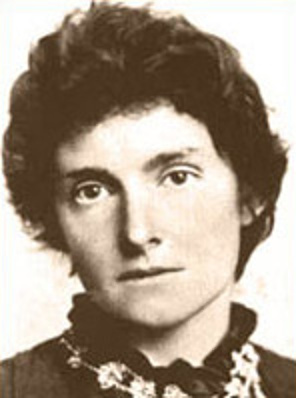
Na continuação da publicação anterior do blogue, hoje trago outro livro mais esquecido (embora mais acessível em bibliotecas municipais) que pode ser hoje algo mais polémico por evolução daquilo a que hoje se convenciona chamar "sensibilidades raciais". O livro de hoje é História de D. Redonda e da Sua Gente de Virgínia de Castro e Almeida, de 1942, escrito por uma autora originalmente notável pela sua ficção realista para crianças e por vários livros de história de Portugal (incluindo ensaios adultos) e que foi uma escritora, ao longo dos primeiros anos do Estado Novo, de uma série de romances ou de narrativas históricas romanceadas sobre vários períodos da nossa história, sempre vistos por um olhar patriótico e anti-liberal. Esta obra representou uma mudança interessante na obra desta autora: Virgínia de Castro e Almeida, que se estreara com o texto A Fada Tentadora sob o pseudónimo de Gy e depois recusara este texto como uma estreia menor, a princípio considerava que não se devia encher a cabeça das crianças de fantasias, assim as suas primeiras novelas infanto-juvenis (mais juvenis até) nos anos de 1890 e de 1900 eram narrativas realistas, passadas no mundo como o conhecemos, envolvendo protagonistas jovens, os seus guardiões adultos, viagens, e a apresentação dos jovens protagonistas a coisas reais de cada país e factos da ciência (efectivamente fazendo dela a "antepassado" da linha dos livros Uma Aventura de Ana Maria Magalhães e Isabel Alçada). Pelos anos de 1940, mais velha (e mais pesada; o texto parece insinuar que a Dona Redonda é um alter-ego da autora, como a sua amiga Dona Maluka é um alter-ego da sua amiga e ilustradora Inglesa), mudou de ideias quanto a isto, considerando o fantástico outro nível e forma de verdade, e portanto considerando aceitável o uso do maravilhoso e do irreal para crianças mais velhas e como forma de diversão e também de aprendizagem sobre a diferença real/irreal, sendo esta a sua primeira obra de fantasia desde a obra de estreia, sucedendo-se uma outra. 
Fotografia e perfil da autora numa revista dos princípios do século XX
Torna-se também curioso reparar como esta evolução na obra da autora começou a dar-se com uma evolução ideológica da própria enquanto cidadã: os seus primeiros livros de aventuras juvenis realistas vinham da sua fase de republicanismo liberal e cooperativista, depois sucedendo-lhes livros narrativos ou ensaísticos de história pátria patriótica assinalando a sua evolução para o apoio da direita republicana e depois o Estado Novo (começando nas suas novelas de divulgação histórica o começo das suas cedências quanto ao realismo, embora devidas mais ao uso de linguagem rica de simbolismo do que por uso de maravilhoso irreal propriamente dito), e o seu regresso ao modo fantástico vem neste livro ao fim duma fase sua de quase "ultrapassagem pela direita" do Estado Novo (com aproximação do racialismo Nazi) e o seu segundo livro fantástico juvenil, também com D. Redonda, virá na altura de uma suave ruptura com o Estado Novo e adopção de um certo anarquismo filosófico ainda com espaço para patriotismo e tradicionalismo. E será isso que nos levará ao ponto polémico deste texto, mas já aí iremos...
Apesar de tudo isto, Virgínia de Castro e Almeida bem merecia ser ainda publicada e estar em todas as bibliotecas escolares, pelo papel notável que teve na evolução da literatura infanto-juvenil portuguesa. Ela foi a primeira escritora ou escritor em Portugal que não se limitou a registar contos tradicionais, a escrever livros de contos infantis originais, publicar pequenos volumes só com um conto ou a publicar teatro infantil ou poesia infantil, ajudando a impulsionar a prosa infanto-juvenil portuguesa com originais, longos (novelas e romances) e importando para Portugal o modelo da ficção infanto-juvenil e juvenil de aventuras britânico vitoriano e eduardiano, só uma ou duas décadas depois desse modelo de literatura cristalizar no final da época vitoriana e na passagem para o reinado do sucessor da Rainha Vitória Eduardo VII, sendo a Inglesa Edith Nesbit o paralelo principal da Portuguesa (França adoptava propriamente esse modelo na mesma altura em que de Castro e Almeida o trazia para Portugal: a literatura infantil/infanto-juvenil gaulesa era dominada por prosa longa ou curta tendendo ao moralista de influencia católica e dos contos tradicionais, com os autores mais aventureiros que hoje associamos a literatura para jovens como Júlio Verne na altura sendo considerados autores para adultos ou, vá lá, para jovens, o fosso entre literatura infantil e "genérica" sendo tão grande em França como cá); quem, seguindo o modelo britânico, ajudou a criar um meio-termo entre literatura infantil pura e literatura adulta (o vago conceito de literatura infanto-juvenil, e a criar um espaço "tampão" entre literatura infantil e adulta, a literatura juvenil) em Portugal foi Virgínia de Castro e Almeida, e dizer isto tudo ajuda a perceber a sua qualidade literária, dando para perceber que é uma autora de enredos mexidos, linguagem fácil sem ser facilitista, com enredo excitante e tudo o que se esperava dos melhores autores infanto-juvenis do final do século XIX e inícios do XX. Deve reconhecer-se porém que na lusofonia, Virgínia de Castro e Almeida tivera um precursor na adopção do modelo anglo-saxónico de novela fantástica infanto-juvenil, o Brasileiro Monteiro Lobato com A menina do narizinho arrebitado de 1922 (estreia de Narizinho e lançamento da série de livro sobre o Sítio do Picapau Amarelo).
E. Nesbit e Monteiro Lobato
Este livro passa-se em torno de Chico, um jovem Português que vai andando de bicicleta na floresta na região Oeste de Portugal, sonhando com aventuras caçando em África e afins, quando se encontra por acaso com Dick e Franz, um ruivo Inglês e um loiro Alemão, refugiados da II Guerra (sempre era 1942), e depois de uma breve discussão com o Inglês, os 3 ficam amigos e partem pelo mato em busca de pinhas (e pinhões) e quiçá de aventuras. Ora os 3 encontram em cima de uma árvore uma criança ainda mais nova, uma mulata que dá pelo nome de Zipriti. A partir daqui o livro não deixa ser complexado, visto que apesar de inofensivo, ganha aqui bastante subtexto e elementos claros que podem fazer impressão. Embora desde o princípio o trio seja um conjunto de personificações dos respectivos países e de conjuntos dos defeitos e qualidades estereotipados dos seus povos, isto é inofensivo até a personificação da África europeizada entrar em cena. Mas Zipriti até é uma personagem relativamente inofensiva visto que a sua personalidade quase hiperactiva faz dela interessante para o leitor, e a sua idade pode desculpar isto como caraterização realista de uma criança hiperactiva (apesar de não deixar de se ver assim personificada África como mais nova e mais infantil que os outros 3 países personificados pelas crianças brancas).
Zipriti nas ilustrações originais
Bem pior é quando surge um negro mais velho que trabalha na casa da D. Redonda (uma senhora gorda, redonda literalmente que nem uma bola que acolhe os 4 miúdos como "a sua gente" na sua casa), Bonda, uma figura quase tão infantil como Zipriti, que fala de forma parecida (menos desculpável num adulto), e reparamos que as ilustrações originais representam Zipriti e Bonda como outras "imagéticas darky" como referimos na publicação anterior. Mas pior talvez seja mesmo o que surge no "último acto" da novela: D. Redonda a certa altura começa a rir tanto que perde o juízo e cai ao chão e parte-se em fanicos, literalmente, partindo-se em muitas Donas Redondas pequeninas; os seus amigos guardam todas, e depois magicamente são levados a um caminho para a salvação da D. Redonda, contra vários desafios, e contra cada um, só um dos 4 (Chico, Dick, Franz e D. Maluka, Bonda e Zipriti sendo deixados para trás juntos com os Pikis, os cães de D. Redonda, o que também tem umas certas "implicações infelizes" em termos de subtexto) triunfa sobre o desafio em cada um deles, os outros 4 sendo derrotados por ele (dependendo da personalidade de cada um), e o desafio final, ultrapassado por Chico é um de humildade (de acordo com a imagem do Português humilde e de "pobreza digna") ante um adversário que parece saído de uma caricatura Nazi chamado «Isaac, o Rei dos Avarentos». Esta merece ainda mais um credo que o aspecto do Jobim d'O Pretinho de Angola.
Bem, fora todas estas questões, o livro é fortemente escrito no seu género para esta faixa etária, e é bastante fácil de ler e atraente, tendo várias sequências interessantes em que, depois de encontrarem Zipriti, os 3 rapazes encontram-se transportados no tempo magicamente, assumindo identidades adultas dentro dessas épocas históricas, viajando à conquista de Lisboa por D. Afonso Henriques, ao tempo do Infante D. Henrique como sábios que vão para a Escola de Sagres ver o retorno de marinheiros, e outras peripécias mais cómicas e "comezinhas". Como o livro da publicação anterior, com revisão das ilustrações e mudança neste caso da fala de Bonda (Zipriti como criança pequena ainda vá lá falar tanto na terceira pessoa, num adulto fica bizarro), podia ser um leitura popular. Este livro está presente em edições dos anos de 1990 em quase todas as bibliotecas municipais, e este livro e a sequela da mesma autora surgem também no sítio de downloads português Luso Livros, além de ter sido editada em Barcelona uma tradução castelhana ricamente ilustrada pelo ilustrador Espanhol Jorge Ravassa Masoliver que parece ter sido bastante popular com os leitores jovens locais.
 
Capa de uma edição dos anos de 1990 e a capa "modernizada" da Luso Livros


In the continuation of this blog's previous post, today I bring another book more forgotten (although more accesible in Portuguese municipal libraries) that can be today somewhat more polemic by evolution of what today is established to be called "racial sensibilities". Today's book is História de D. Redonda e da Sua Gente ("Story of Lady Round and of her Folk") by Virginia de Castro e Almeida, from 1942, written by an author originally remarkable for her realistic fiction for children and by several books of history of Portugal (including adult essays) and who was a writter that throughout the first years of the Portuguese New State, of a series of novels or romanced historical narratives on several periods of Portugal's history, always seen by an anti-liberal patriotic gaze. This work represented an interesting change on this author's work: Virginia de Castro e Almeida, who debuted herself with the text A Fada Tentadora ("The Tempting Fairy") under the pseudonym of Gy and afterwards refused that text as a minor debut, at first considered that one should not fill children's heads with fantasies, so her first children's/young-people's (and young-people's even) novellas in the 1890s and 1900s were realistic narratives, set in the world as we know it, involving young leads, and their adult guardians, travels, and the introduction of the young leads to real things from each country and science facts (effectively making her the "ancestor" of the line from the Uma Aventura/An Adventure books by Ana Maria Magalhães and Isabel Alçada). By the 1940s, older (and heavier; the text seems to insinuate that the Lady Round is an alter ego of the author's, as her Lady Krazy is an alter ego of her friend and English illustrator), changer her mind about that, considering the fantasy another level and form of truth, and hence considering acceptable the use of wondrous and of the unreal for older children and as form of amusement and also of learning on the difference real/unreal, being this her first work of fantasy since the debut work, following itself another one thus. 
Author photography and profile in an early-20th century magazine
It turns itself curious to notice how this evolution of the author's work started to give itself with the ideological evolution of herself while citisen: her first realistic young-people's adventure books came from her phase of liberal and cooperativist republicanism, afterwards following themselves to them narrative or essay-like patriotic fatherland's history books signaling her evolution unto the support of the republicsn rightwing and afterwards the Portuguese New State (starting in her historical popularising novellas the start of her yieldings about realism, although due more to the use of language rich on symbolism than for use of unreal wondrous proper), and her return to the fantasy mode comes in this book at the end of a phase of hers of almost "overtaking on the right lane" to the Portuguese New State (with approximation to the Nazi racialism) and of her second young-people's fantasy book, also with Dona Round, will come in the time-point of a suave break-up with the Portuguese New State and adoption of a certain philosophical anarchism still with room for patriotism and traditionalism. And it will be that that will take us to the controversial point of this text, but we shall get there...
Despite all this, Virginia de Castro e Almeida well does deserve to be still published and be in all the Portuguese school libraries, for the remarkable part that she had in the evolution of the Portuguese children's/young-people's literature. She was the first female or male writer that didn't limit one's self to record traditional tales, to write books of original children's tales, publish small volumes with just one short-story or to publish children's theatre or children's poetry, helping to boost the Portuguese children's/young-people's prose with originals, long ones (novellas and novels), and importing to Portugal the victorian and edwardian British adventure children's/young-people's and young-people's fiction model, onlu one or two decades after that literature model crystallising at the end of the victorian period and on the passage to the reign of the Queen Victoria's successor Edward VII, being the Englishwoman Edith Nesbit the main paralel to the Portuguese one (France adopted properly that model at the same time in which de Castro e Almeida brought it to Portugal: the Gaulish children's/children's & young-people's literature was dominated by long or short prose tending to the moralising of Catholic and traditional tale influence, with the more adventurous authors that today we associate to literature for youngungs like Jules Verne at the time being considered authors for grown-ups or, the farther, for young people, the chams between children's and "generic" literature being so big in France as here); who, following the British model, helped to create a golden mean between children's and grown-up literature (the vague concept children's-juvenile literature, and to create a "buffer" space between children's and adult literature, the young-people's literature) in Portugal was Virginia de Castro e Almeida, and to say all this helps to understand her literary quality, aiding one to understand that she is an author of stirred plots, language easy without being laxed, with exciting story and all that is expected out of the best children's/young-people's authors from the late 19th century and early 20th. Must recognise itself though that on lusophony, Virginia de Castro e Almeida had a precursor at the adoption of the anglo-saxonic model of children's/young-people's fantasy novella,the Brazilian Monteiro Lobato with A menina do narizinho arrebitado/"The Girl of the Little Turned-Up Nose" from 1922 (debut of Lucia "Little Nose" and launch of the book series about the Sítio do Picapau Amarelo/"Yellow Woodpecker Ranch-farm").
E. Nesbit and Monteiro Lobato
This book is set around Chico, a Portuguese youngster that goes around by bicycle on the forest of the West region of Portugal, dreaming with adventures hunting in Africa and alike, when he finds himself by chance with Dick and Franz, a redhead Englander and a blonde German, World War II refugees (it was 1942), and after a brief discussion with the Englander, the 3 become friends and leave through the backwood looking for pinecones (and pine-nuts) and perhaps for adventures. Well now the 3 find on top of a tree a younger child, a mulatta that goes by the name of Zipriti. Starting from here the book cannot help being complexed, seen that despite harmless, it gains here quite some subtext and clear elements that might irk one's self. Although from the beginning the trio be an ensemble of embodiments of the respective countries and of ensembles of stereotypical shortcomings and qualities of their peoples, this is harmless till europeanised Africa's embodiment enters the stage. But Zipriti is quite a relatively harmless character seen that the almost hyperactive personality of hers makes her interesting for the reader, and her age can excuse this as realistic characterization of a hyperactive child (despite not helping the seeing thus personified to Africa as younger and more childish than the 3 other countries personified by the white children).
Zipriti in the original illustrations
Much worse is when it comes-up an older black-man that works at Dona Redonda's house (a fat lady, round literally as only a ball can be who takes in the 4 kids as "her folk" at her house), Bonda, a figure almost as childish as Zipriti, who talks in way like her (less excusable on an adult), and we notice that the original illustrations represent Zipriti and Bonda as other "darky imageries" as we refered on the previous post. But worse maybe would really be what comes up in the "last act" of the novella: Dona Round at a certain point start laughing so much she looses her sense and falls to the ground and breaks herself into bits, literaly, breaking into many tiny Lady Rounds; and her friends guard all of them, and afterwards magicall are taken to a pathway for the salvation of Dona Round, against several challenges, and against each one, only one of the 4 (Chico, Dick, Franz and Dona Krazy, Bonda and Zipriti being left behind with the Pikis, the dogs of Dona Round, what also has certain "unfortunate implication" in terms of subtext) triumphs over the challenge in each one of them, the other 4 being defeated by it (depending on each one's personality), and the final challenge, overcome by Chico is one of humility (in agreement with the image of the Portuguese humble and of "dignified poverty) before an adversary that seems come out from a nazi caricature called «Isac, the King of the Misers». This one deserves even more a darn than Jobim's look fro' O Pretinho de Angola/"The Little Negro from Angola".
Well, aside all these questions, the book is strongly written in its genre for this age group, and it is quite easy to read and attractive, having several interesting sequences in which, after finding Zipriti, the three boys find themselves transported in time magically, assuming grown-up identities within those historical times, travelling to the conquest of Lisbon by King Don Alfonso Henriques, to the time of the Infant-prince Don Henry as wisemen that go to the School of Sagres to see the return of sailors, and other mishaps more comical and "humdrum". Like the book from the previous post, with revision of the illustrations and change in this case of Bonda's speak (Zipriti as a small child still doesn't go too far she talking so much on the third person, on a grown-up it gets bizarre), could be a popular read. This book is present in editions from the 1990s in almost all Portuguese municipal libraries, and this book and the same author's sequel come-up also at the Portuguese download website Luso Livros ("Luso Books"), besides having been edited in Barcelona a Castilian Spanish translation richly illustrated by the Spanish illustrator Jorge Ravassa Masoliver that seems to have been popular local young readers.
 
Cover of one 1990s edition and "modernised" cover from Luso Livros