Mostrar mensagens com a etiqueta Neo-Romantismo. Mostrar todas as mensagens

quinta-feira, 1 de outubro de 2015

"O Romance de Amadis", Afonso Lopes Vieira // "The Romance of Amadis", Afonso Lopes Vieira

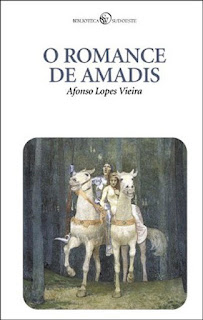
Um clássico do género a que diz respeito este blogue, este é também um velho livro pessoal, uma compra numa feira do livro feita na Escola B2-3 Gonçalo Nunes em Barcelos se bem me lembro (Vitorino Nemésio me perdoe o "gamanço") no meu último ano lá. É uma obra formativa mais que no conteúdo (embora também seja uma obra em que um protagonista cresce e amadurece para a idade adulta), é uma obra que é formativa na criação de sensibilidade estética do leitor, e de uma certa noção de Portugal e de ética. O Leiriense Afonso Lopes Vieira escreveu em 1922 esta obra de um certo neo-Romantismo, que foi um trabalho de amor do autor, nascido de nacionalismo para o próprio.
Tudo começa com um romance de cavalaria do século XVI em 4 volumes (ou «livros»), intitulado Amadis de Gaula. Ora, por algumas referências que referem nomes de personagens do romance (inventados por ele) antes deste surgir impresso como um texto em Castelhano atribuído a um Garcí-Montalvo, a aparentes referências a pedidos de um príncipe D. Afonso no século XIII ter pedido que se mudasse um enredo envolvendo o protagonista Amadis, e ao título da impressão castelhana original referir «novamente historiados» no subtítulo usualmente enorme na altura, há muito que o Amadis tem sido conjecturado ser um texto originalmente português do século XV ou até bastante antes. A maioria das teorias atribuíam a um membro ou outro de uma família de trovadores portuguesa chamada de Lobeira (os "suspeitos do costume" sendo João de Lobeira, contemporâneo de D. Dinis, e Vasco de Lobeira, velho escudeiro ao tempo de Aljubarrota que seria depois da batalha armado cavaleiro, episódio que, como veremos será reproduzido no enredo do Amadis que Lopes Vieira recria). A "questão do Amadis" é algo que ainda não foi conclusivamente provado de uma forma ou outra, visto que ainda não foi encontrado texto manuscrito ou impresso anterior, português ou não, que prove que a versão de Montalvo não é a primeira, embora em Portugal como em Espanha a existência de indícios complexos de uma origem portuguesa impossíveis de ignorar teoricamente seja assumida. Alguns na hispanosfera até ponderam uma origem pré-Montalvo sem incluir Portugal, atribuíndo o romance a Infante Henrique de Castela, "o Senador", que teria tido pela Europa fora viagens e aventuras que lhe inspirariam este enredo (com as principais personagens a paralelarem supostamente conhecidos do Infante).
O romance castelhano original
Ora Lopes Vieira era um crente sem dúvidas na hipótese da origem lusa do romance, e como tal, após alguns anos de projectar a ideia de "devolver" o texto à língua portuguesa, embora numa versão resumida (e encurtada visto que tudo o que era do III livro para lá era considerado criação só de Garcí-Montalvo, que o Português recusou, tentando criar um puro "livro português"), e mais próxima em linguagem do Português moderno, porém mantendo uma "ferrugem" saudável de arcaísmo compreensível, e alguns anos a tentar finalizar essa tentativa, deu-se por imensamente satisfeito com o resultado, principalmente depois de o ler para uma mulher popular parte do texto, fazendo-a reagir positivamente e pedir por mais (a edição que tenho da colecção Biblioteca Sudoeste da Porto Editora detalha depois do texto do livro a biografia do autor, trabalho neste livro, o "contrato" e projecto do prefácio da lusitanista Alemã Carolina Michaelis de Vasconcelos, a recepção do romance, as consequências do livro na carreira do autor e o que ele fez depois).
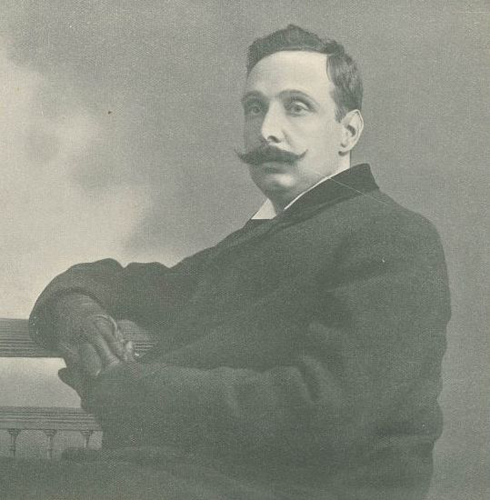
Afonso Lopes Vieira segundo Columbano Bordalo Pinheiro
O mundo desta estória é uma versão fantasiada da Europa passada na época tardo-romana e medieval-inicial, poucos anos antes da época do Rei Artur. Entre os lugares referidos estão a Pequena Bretanha (uma região de França chamada hoje só Bretanha) onde Amadis nasceu, Gaula (que será ou a Gália ou o País de Gales, ou só a sua própria terra inventada) cujo Rei Perion era pai de Amadis (a sua mãe era a Princesa da Pequena Bretanha), a Escócia (que é assim chamada no romance original e na versão de Lopes Vieira mas então era de facto chamada de Caledónia) onde é criado, a Bretanha (hoje Grã-Bretanha ou Inglaterra) cuja Princesa Oriana ele serve, e combate e luta por vários países a adversários como cavaleiros 'normais', gigantes, bruxos e bruxas e muitos monstros, incluíndo um Rei imaginário (e gigante) da Irlanda que combate com os exércitos de Gaula e da Normandia (anacronisticamente assim é chamado o norte de França), e percorrendo países e locais mal identificados e mais ou menos lendários ou então bem identificados como o país dos Suevos (no que é hoje a Alemanha e cujo povo povoou por essa altura o Norte de Portugal), Grécia (surgindo também uma personagem Grega, o velho escudeiro Macandon), Hungria e a Ilha do Lago Fervente (imaginem uma furna açoriana) que se poderá identificar com a ilha italiana de Pantelleria (perto da Sicília), surgindo ainda uma donzela de companhia de Oriana que é da Dinamarca. No romance original medieval surgia ainda um Rei Árabe e o seu exército, mas este episódio é saltado por cima na versão de Lopes Vieira, com descrições vagas do tipo "ah e tal, o Amadis viajou por muitos sítios e fez muitas coisas dignas de nota, mas isso agora não interessa nada", focando-se na linha principal do enredo.
A Europa segundo as lendas arturianas, aproximadamente a Europa do tempo mítico de Amadis 
O livro começa com uma introdução em que o autor assume a pose de trovador medieval, abordando o público, introduzindo a narrativa, falando do romance original (seguindo a sua tese de que um original português fora levado para Espanha e lá alterado para o novo país). Depois, o enredo apresenta-nos ao Rei Garintes da Pequena Bretanha francesa (neste caso «Piquena Bretanha»), com uma filha casada com o Rei da Grã-Bretanha pré-arturiana mas (sabe-lo-emos depois) ainda sobre domínio romano, e outra solteira e dada só à religião. Esta Elisena, apaixonar-se-á pelo hóspede do seu pai, Perion, Rei de Gaula, e depois dele partir de volta ao seu reino, ela se saberia grávida (segundo Lopes Vieira, gravidez extra-matrimonial só deixaria de ser crime depois desta lei ser revogada pelo Rei Artur), com ajuda da criada escondendo a gravidez e tendo o bebé em segredo. Ela baptizou-o Amadis por causa de um santo popular, alcunhando-o de «o Sem Tempo», imaginando que pouco sobreviveria, visto que depois deitou-o ao mar num caixote feito pela criada, junto com uma espada e um anel, e um pergaminho que o identificava como «Amadis, o Sem Tempo». O Escocês Gandales, que navegava com a família por ali, apanhou-o no mar e criou-o como seu filho junto com o seu filho verdadeiro Agrajes, chamando ao órfão Donzel (Português antigo para "Moço") do Mar. Pouco depois, o enredo dá-nos dois episódios simbólicos muito fortes: um, mostra-nos Perion, que retorna à «Piquena Bretanha» para desposar Elisena, e o faz, a depois ter um sonho intenso em que perde o seu coração, que um sábio da Picardia interpreta como aviso quanto a algo muito próximo dele que ele perdia sem saber; e o pai adoptivo de Amadis, Gandales, é visitado por uma feiticeira que profetiza a Amadis muitos feitos, que seria protector dos fracos e o terror dos fortes.
Anos depois, Amadis é armado cavaleiro pela Princesa Oriana da Grã-Bretanha, de quem se apaixona, e por ela viaja pela ilha da Grã-Bretanha e pela Europa fazendo feitos contra cavaleiros, monstros e feiticeiros e feiticeiras para se dignificar e ser digno dela. Como típico de estórias de cavalaria, Amadis vive grandes aventuras e é fiel e enamorado da sua dama Oriana. Numa das suas viagens, ele chega a Gaula, terra do seu desconhecido pai, e lá toma partido do velho rei contra o Rei Abies da Irlanda invasor de Gaula por esta altura. Em batalha no outro reino governado por Perion e Elisena, a «Piquena Bretanha», exércitos de Gaula e normandos, incluíndo entre as hostes Amadis, combatem os Irlandeses e o próprio protagonista derrota e mata em batalha o gigante Abies (que havia em tempos derrotado e morto ele próprio gigantes). Depois, em gratidão Amadis é feito hóspede do Rei Perion, e é reconhecido pela espada e o anel (que, recordemo-lo, vinham com ele no baú em que navegara bebé) pela mãe, e assim a família se reúne, Amadis conhece os irmãos (tidos pelos pais depois de casarem) que desconhecia, e Perion fica a saber uma verdade que lhe fora escondida e o significado do sonho que antes tanto o perturbara e intrigara. Depois disso Amadis volta, agora como um príncipe, à Grã-Bretanha, portanto agora como igual e digno pretendente para Oriana, e eles continuam unidos em amor fiel e não é possível separá-los até ela ser raptada pelo mago Arcalau, um inimigo fidagal de Amadis que o quer magoar através de magoar a amada deste.
O cavaleiro, como que possesso, cavalga como doido ao encontro dos cavaleiros do mago, e destrói-os completamente, e leva a princesa Britânica consigo, e depois disso eles amam-se na floresta. Novo conflito no enredo virá quando a proximidade de Amadis para com Briolanja, uma dama da Sansonha (o nome medieval para a Saxónia alemã) que ele salvou e a morte de cujo pai ele lhe vingou, e os rumores lhe fazem crer erradamente que ele a traíra. Depois, enlouquecido Amadis retira-se para um ermo junto com um eremita, abdica da sua armadura e toma do eremita uma armadura mais brilhante e assume o novo nome Beltenebroso (obviamente "Belo-tenebroso"), sob o qual faz proezas que ironicamente o povo da altura diz ultrapassarem as de Amadis. É quando chega à corte britânica Macandon, um escudeiro Grego já de idade avançada que traz com ele uma espada baça e uma guirlanda (i.e. grinalda) seca, dizendo que se via condenado a buscar pelo mundo um amor perfeito, que seria identificado pelo homem empunhar a espada e fazer-la reluzir, e a mulher pôr a guirlanda na cabeça e faze-la florescer. Amadis vai como Beltenebroso até Oriana e revela-se a ela, e devido à saudade e o que sentem, reconciliam-se. Assim, disfarçam Oriana de véu e outras roupas e vão os dois à cerimónia onde todos os casais tentam a espada e a guirlanda, e obviamente que são os únicos a fazer os objectos encantados cumprir os fins ante um amor perfeito. Depois disso, o velho Macandon é finalmente armado cavaleiro. O romance termina com Amadis salvando Oriana de ser levada para Roma para casar em casamento de conveniência com o Imperador Romano, e depois de a salvar em alto mar abordando o navio em que segue para Roma, ambos vão para a Ilha Firme e vivem lá juntos até ao fim das suas vidas. (numa insinuação sobre haver mais no Amadís de Gaula castelhano, Lopes Vieira termina dizendo que não seria preciso mais final, e qualquer outro seria mentira, porque o amor é o seu próprio fim e princípio).
Amadis e Oriana numa ilustração de um velho manual de Português do 8.º ano
Afonso Lopes Vieira nesta que é uma das suas raras prosas, mostra aqui alguma da sua poesia tornando-a na forma da prosa poética, e faz neste aparente conto-de-fadas (isto torna-se mais claro na versão O conto de Amadis de Portugal para rapazes portugueses de 1938 e reeditado nos anos '50, mais abertamente infanto-juvenil, com belas ilustrações de António Lino) um texto que serve como metafísica ou teologia do amor, discurso sobre Portugal e portugalidade (tudo usando um enredo que não envolve Portugal ou Portugueses e miticamente passado antes da fundação de Portugal ou sequer de se chamar ao norte do seu território Portucale), um romance histórico com elemento de fantástico, uma tentativa (muito livre, e talvez nunca tendo isto literalmente como objectivo; o modelo de Lopes Vieira, mais do que o texto quinhentista original, talvez fosse a versão resumida e modernizada do Tristão e Isolda de Joseph Bédier Le Roman de Tristan et Iseult de 1900). Este livro pode encontrar-se em várias edições em muitas bibliotecas municipais e escolares (talvez não todas), sendo a edição da Porto Editora relativamente fácil de achar agora que foi apoiada pelo programa Ler+ (estando recomendado para leitura no 8.º ano, havendo ainda um antigo manual desse ano da mesma editora da altura em que estava nesse ano lectivo que tinha alguns extratos do livro incluídos com ilustrações agradáveis e garridas).
Capa da abreviação infantil do autor


A classic of the genre in what concerns this blog, this is also an old personal book, a buy on a book fair done in the Secondary/Middle school and High School Gonssalo Nunes in Barcelos iff I recall it correctly (may Vitorino Nemesio forgive me the "jacking") in my last years there. It is a Bildungsroman work in more than the content (although it be also a work in which a lead grows and matures till adulthood), it is a work that is formative in the creation of aesthetic sensibility of the reader's, and of a certain notion of Portugal and of ethic. The Leiria-native Afonso Lopes Vieira wrote in 1922 this work of a certain neo-Romantismo, which was the author's labour of love, born to his own mind out of nationalism.
Everything starts with a 16th century chivalry novel in 4 volumes (or «books»), titled Amadis de Gaula ("Amadis of Gaul/of Gaula"). Well now, by some references that refer names of characters from the novel (made up by it) before the former came-up printed as a text in Castilian attributed to a Garci-Montalvo, to apparent references to requests of a Prince Don Alfonso in the 13th century having asked that it be changed a plot involving the protagonist Amadis, and the title of the original Castilian print mentioning «again storied» on the subtitle averagely enormous at the time-point, there has long been the Amadis conjectured to be a text originally Portuguese from the 15th century or even quite before. The majority of the theories attributed it to one member or another of Portuguese troubadours called the Lobeiras (the "usual suspects" being Joao de Lobeira, contemporary to King Don Denis, and Vasco de Lobeira, old squire at the time of the Aljubarrota battle who would be after the battle armed knight, episode as we shall see shall be reproduced in the plot of the Amadis that Lopes Vieira recreates). The "Amadis question" is something that still was not conclusively proven on one way or the other, seen that it still was not found previous manuscript or printed text, Portuguese or not, that prove that the Montalvo version is not the first, although in Portugal as in Spain the existence of complexe signs of a Portuguese origin impossible to ignore theoretically be assumed. Some in the hispanosphere even ponder a pre-Montalvo origin without including Portugal, atributing the novel to Infant-prince Henry of Castile, "the Senator", who woyuld have had throughout Europe travels and adventures that would inspire him this plot (with the main characters paralleling supposedly acquaintances of the Infante).
The original Castilian novel
Well now Lopes Vieira was a believer without doubts in the novel's luso origin hypothesis, and as such, after some years projecting the idea of "giving back" the text unto the Portuguese language, although in a summarised version (and shortened seen that everything that was from the III book onwards was considered creation only from Garcí-Montalvo, which the Portagee refused having, trying to create a pure "Portuguese book"), and closer in language to the modern Portuguese, though keeping some healthy "rust" of understandable arcaism, and some years trying to finalise that attempt, gave himself as immensely satisfied with the result, mainly after reading it to a commoner woman part of the text, making her react positively and ask for more (the edition that I got from Porto Editora publisher's Biblioteca Sudoeste/"Southwest Library" details after the book's text the author's biography, work on this book, the "hired-work contract" and project of the foreword by German lusitanist Michaelis de Vasconcelos, the novel's reception, the consequences of the book on the author's career and what he did afterwards).
Afonso Lopes Vieira according to Columbano Bordalo Pinheiro
The world of this story is a fantasised version of Europe set in the late-Roman and early-medieval period, few years before King Arthur's period. Among the places refered are the Little Britin (a region of France called today only Brittany) where Amadis was born, Gaula (which would be either Gaul or Wales, or just its own made-up land) whoe King Perion was Amadis' father (his mother was a Little Britain princess), Scotland (which is so called in the original novel and in Lopes Vieira's version but then was in fact called Caledonia) where he is raised, Britain (today Great-Britain or England) whose Princess Oriana he serves, and combats and struggles through several countries to adversaries like 'normal' knights, giants, witch-doctors and witches and many monsters, including an imaginary (and giant) King of Ireland who fights the armies of Gaula and of Normandy (anachronistically so is called the north of France), and going through countries and locales badly identified and more or less legendary or then well identified like the country of the Suebi (in what is now Germany and whose people settled around that time-point Northern Portugal), Greece (appearing also a Greek character, the old squire Macandon), Hungary and the Island of the Boiling Lake (imagine an azorean furna/lava tube) which one might identify with the Italian island of Pantelleria (near Sicily), coming-up yet a maiden in waiting of Oriana who is from Denmark. In the original medieval novel it came up still an Arab King and his army but this episode is skipped over by Lopes Vieira's version, with vague descriptions of the "ah and such, Amadis travelled by many places and did many things worthy of note, but that now matter none", focusing itself in the plot's main line.
Europe according to the arthurian legends, approximately the Europe from Amadis' mythical time
The bookstarts with an introduction in which the author assumes the pose of medieval troubadour, approaching the audience, ntroducing the narrative, talking of the original novl (following his thesis that a Portuguese original had been taken to Spain and there altered to the new country). Afterwards, the plot introduces us to the King Garintes from the French Little Britain (in this case «Litel Britain»), with one daughter married to the King of the pre-arthurian but (we shall knoow it afterwards) still under Roman domain Great Britain, and another single and only self-given to religion. This Elisena shall fall in love for the guest of her father's, Perion, King of Gaul, and after he leaving back to his kingdom, she would find herself pregnant (according to Lopes Vieira, extramarital pregnancy only would cease being crime after this law being revoked by King Arthur), with help from the maid hidding the pregnncy and having a baby in secret. She baptised him Amadis because of a folk saint, nicknaming him as «the Without Time», imagining that little would he survive, seen that little afterwards she threw him to the sea on a crate made by the maid, together with a sword and a ring, and a scroll that identified him as «Amadis, the Without Time». The Scotsman Gandales, who sailed with the family over there, picked him up at sea and raised him as his son together with his true son Agrajes, calling to the orphan Donzel ("Damoiseau", ancient Portuguese for "Lad") from the Sea. Little after, the plot gives us two very strong simbolic episodes: one shows us Perion, who returns to the «Litel Britain» to bewed Elisena, and does so, afterwards having an intense dream in which he loses his heart, which a wiseman from Picardy interpretes as warning about something very close to him that he lost without knowing; and Amadis' adoptive father, Gandales, is visited by a sorceress who prophesises to Amadis many deeds, that he would be protector to the weak and the terror to the strong.
Years after, Amadis is armed knight by the Princess Oriana of Great Britain, for whom he falls in love, and for her travels through the island of Great Britain and through Europe doing deeds against knights, monsters and wizards and sorceresses to dignify himself and be worthy off her. As typical on chivalry stories, Amadis lives great adventures and is faithful and enamoured to his lady Oriana. In one of this travels, he arrives to Gaula, land from his unknown father, and there takes the old king's party against the King Abies of Ireland invader of Gaula by this time-point. In battle in the other kingdom ruled by Perion and Elisena, the «Litel Britain», armies of Gaula and Normand ones, including among the hosts to Amadis, combat the Irish and the lead himself defeats and kills in battle the giant Abies (who had in times defeated and killed himself to giants). Afterwards, in gratitude Amadis is made guest to the King Perion, and is recognised by the sword and the ring (which, shall we remind it, came with him in the trunk in which he sailed as baby) by the mother, and so the family reunites, Amadis meets his siblings (had by his parents after they got married) he knew not of, and Perion gets to know a truth that had been hidden from him and the meaning of the dream that before so much had bothered and intrigued him. After that Amadis goes back, now as a prince, to Great Britain, hence now equal and worthy suitor for Oriana, and they continue united in faithful love and it is not possible to separate them till she is kidnapped by the mage Arcalau, a cold-hatred enemy of Amadis' who wants to hurt him through hurting his beloved.
The knight, as if possessed, rides as mad to meet-up the mage's knights, and destroys them completely, and takes the British princess with himself, and after that they love each other on the forest. New conflict on the plot shall come when the proximity of Amadis towards Briolanja, a lady from Sansonha ("Saxen", the medieval name for the German Saxony) whom he saved and the death of whose father he avenged, and the rumours do make her believe wrongly that he had betrayed her. Afterwards, maddened Amadis retreats to a waste together with a hermit, abdicates to his armor and takes from the hermit a shinier armor and assumes the new name Be'tenebrous (obviamente "Beau-tenebrous"), under which he does prowesses that ironically the people of that time-point said to overcome Amadis' ones. It is when t arrives to the British court Macandon, a Greek squire already of advanced age who brings with him a dim sword and a dry gerlond (i.e. garland), saying that he saw himself condemned to search through the world a perfect love, that would be identified by the man wielding the sword and making it flash, and the woman putting the gerlond on the head and making it florish. Amadis goes as Be'tenebrous till Oriana and reveals himself to her, and due to the nostalgia and what they feel, they reconcile each other. So, they disguise Oriana in veil and other clothes and go together to the ceremony where all the couples try the sword and the gerlond, and obviously are the only ones to make the enchanted objects fulfil their aims facing a perfect love. After that, the old Macandon is finally knighted. The novel ends with Amadis saving Oriana from being taken to Rome to marry into marriage of convenience with the Roman Emperor, and after saving her at high sea approaching the ship that follows for Rome, both go to the Firm Island and live there together the rest of their lives (in an insinuation on there being more on the Castilian Amadís de Gaula, Lopes Vieira ends saying that there would not be needed more ending, and that any other would be a lie, because love is its own end and beginning).
Amadis and Oriana on and old 8th grade Portuguese Language class manual illustration
Afonso Lopes Vieira in this which is one of his rare proses, shows here some of his poetry turning it into the form of the poetic prose, and does in this apparent fairy-tale (this becomes clearer in the O conto de Amadis de Portugal para rapazes Portugueses/"The tale of Amadis of Portugal for he Portuguese boys" version from 1938 and re-edited in the '50s, more openly children's/young-people's, with fair illustrations by Antonio Lino) a text that serves as metaphysics or theology of love, discourse on Portugal and portugality (all using a plot that does not involve Portugal or Portuguese and mythically set before the foundation of Portugal or even the calling itself to the north of its territory Portucale), a historical novel with a fantasy element, a (very free, and maybe never having this literally as objective; Lopes Vieira's model, more than the original fifteen-hundredth text, maybe it were the summarised and modernised version of the Tristan and Isolde by Joseph Bédier Le Roman de Tristan et Iseult from 1900). This book can find itself in several editions in many Portuguese municipal and school libraries (maybe not all), being the Porto Editora publisher edition relatively easy to find now that it was supported by the Ler+/"Read+" program (being recommended for reading on the 8th grade, there being still an old manual from that year by the same publisher from the time that I was in that school year that had some extracts from the book included with agreeable and garish illustrations).
Cover from the author's children's abbreviation

terça-feira, 25 de agosto de 2015

"A Conspiração de 1817", Raul Brandão // "The Conspiracy of 1817", Raul Brandao

(de Coisas.com)
Há livros que pela capa não parecem muito impressionantes nem particularmente atraentes para se pegar neles, chegando a capa a ser dissuasora à leitura. O mesmo se pode passar com o nome. Neste caso, quer a capa pouco ilustrada como a da edição original quer o título puramente descritivo de quando se passa este evento histórico e do tipo de evento que era, provocariam um pouco essa reacção (embora a fama enquanto escritor moderno Português do autor Raul Brandão deva dar alguma confiança, embora alguns poderão descreram disso de qualquer forma). Mas se já o provérbio diz que "Não se deve julgar um livro pela capa", então a leitura deste livro histórico (ou nem tanto assim, mas já aí iremos) bem o comprova.
Escrito em 1914 por um grande admirador da literatura de Herculano e Garrett e que respeitava o anteriormente aqui visto Rebelo da Silva (porém criticando o maquiavelismo político com que este "lixou" o seu próprio amigo Latino Coelho para chegar a Ministro no lugar dele) e Pinheiro Chagas enquanto ficcionista (respeitando-o enquanto ficcionista e enquanto pessoa, tendo começado a escrever para o periódico Correio da Manhã deste, mas pelo contrário criticava-lhe violentamente o seu dramalhão histórico no teatro, e principalmente a "descendência" que este estilo deixou no teatro português posterior), este livro assim tinha mais destas influências histórico-Românticas e escapava ao usual de Brandão, de obras de prosa sobre realidade com algo do psicologismo do Russo Dostoiévsky que Brandão admirava (embora por vezes com algum estilo de aventura, como se pode ver nalgumas páginas de Os Pescadores), com este livro de história bastante ficcionado (não propriamente um romance histórico per se mas tem demasiado estilo literário e análise filosófica, simbólica e psicológica da história para historiografia propriamente dita).
O autor estava numa fase de escrita de história romanceada na fase da sua carreira de 1912 a 1915, pegando num velho interesse por história e cultura do seu país de Brandão, e (numa revisão da velha abordagem de algum romance histórico Romântico que olha para o passado para não enfrentar o pior do presente) lidava com a história quando os Portugueses enfrentavam os problemáticos tempos da I República, que tinha um conflito forte com os grupos opostos à ideologia do chamado "republicanismo histórico" burguês (monárquicos, Igreja, minorias ideológicas, grupos não-burgueses), e a I Guerra Mundial começava (embora Portugal só entrasse em 1916). Assim este livro, embora não sendo um divertimento escapista (falando disso, esta obra pode ser apresentada ao público juvenil apesar da maturidade da escrita e do tema, pela forma relativamente clara e simples com que é apresentada por escrito e pela introdução à história que faz, como a peça do mesmo tema Felizmente Há Luar! dada agora no 12.º ano e por vezes noutros anos do liceu), servia para dar que pensar quanto a política do tempo do autor e para permitir aos contemporâneos, por uma vez, ver problemas de outra geração de Portugueses (e que cada leitor livremente interpretasse a coisa como quisesse; Brandão, que tinha simpatia pelo liberalismo monárquico mas era crítico das falhas desse regime e, como se pode ver nas suas memórias, não menos ou até mais do regime republicano sem idealizar o monárquico mas tendo uma opinião positiva da Família Real, até mais positiva da IV Dinastia que outros monárquicos críticos como Herculano, Garrett e Pinheiro Chagas, e na opinião dele os eventos em Portugal antes e depois do 5 de Outubro eram continuidades da mesma realidade, no negativo e no positivo).
O autor
Neste livro de história ficcionado, o autor leva-nos ao reinado de D. João VI de Portugal, e com o poder descritivo e a prosa poética associados a este autor Português, recria o ambiente desta época, em que os invasores Franceses Napoleónicos haviam sido derrotados (como de forma igualmente brilhante Brandão retrata no livro também de história ficcionada El-Rei Junot) mas os aliados Ingleses se tornaram uma espécie de governantes por protectorado com auxílio de uma junta governante portuguesa, enquanto a Família Real que se instalara no Brasil fugindo da 1.ª Invasão Francesa ainda não havia regressado a Portugal, e em 1817 rebenta no Pernambuco, no Brasil Colonial, uma revolta independentista. Embora esta revolta falhasse, ela deixou uma centelha de inspiração e revolucionismo não só nos Brasileiros (que continuaram a sonhar uma independência) como nos liberais Portugueses, que pensaram em imitar o exemplo dos "irmãos" Brasileiros para instalar um regime liberal constitucional em Portugal e expulsar os Britânicos e (ante uma provável independência brasileira mais dia menos dia) fazer a Família Real voltar a território continental Português.
É para isso que, um conjunto de oficiais militares Portugueses de ideologia liberal (alguns deles tendo combatido, como muitos liberais Portugueses por tacticismo ideológico, por Napoleão, algo que Brandão descreve em El-Rei Junot com detalhes por vezes quasi-cómicos), e como seu líder, coloca-se o General Gomes Freire de Andrade, filho de um diplomata Português que servira na corte austríaca (o próprio General nascera em Viena em 1757) e a sua esposa nobre nativa desse país (e parente da 2.ª mulher, Austríaca, do Marquês de Pombal). Um homem que tivera a educação regrada típica da sua classe e bastante culto, um óptimo militar e um maçom engajado na sua sociedade secreta, começou a servir no Exército Português de 1782 a 1788, no Russo de então a 1790, novamente no Português de 1790 a 24 de Maio de 1807, na Legião Portuguesa do Exército Francês (que já vimos em Os Guerrilheiros da Morte de Pinheiro Chagas) de 1807 a 5 de Maio de 1814, em defesa da própria França depois da derrota das últimas Invasões em solo Português (como outros liberais Lusos, como já referimos) e pela terceira vez no Português após retornar ao país em 1814 (sob o acordo que marcou o 1.º exílio de Napoleão), sendo em 1815 inocentado de julgamento militar pelo serviço com os Franceses.
Uma reprodução da famosa imagem estilo "mártir no céu" de Gomes Freire
A primeira parte deste 'romance/livro de história' pode ser considerada o 'montar do palco', descrevendo a altura, quem era quem na política da altura que envolvia a situação da conspiração de Gomes Freire, o desenvolvimento da conspiração, os envolvidos nesta, as suas acções, os seus perfis, as suas personalidades e como estas iam evoluíndo, etc.. Também é traçado o retrato geral no exército na altura, num sistema de quase ditadura militar regida pela Regência que em 1817 era composta por António José de Miranda Henriques, pelo Marquês de Olhão, pelo Conde de Peniche, pelo Marquês de Borba e por D. Miguel Pereira Forjaz (por esta altura, quem teve de ler no Liceu Felizmente Há Luar! terá mais que algum reconhecimento dos eventos e figuras e do que se passará, mas não estraguemos a coisa para os restantes) e de coronel para cima quase todos os oficiais do nosso exército eram Britânicos (o que perdeu a Beresford quase toda a simpatia que ganhara dos Portugueses enquanto organizador da guerra contra os invasores Franceses). A conspiração de Gomes Freire e outros oficiais, principalmente ex-Legionários-Portugueses de Napoleão re-inseridos no exército nacional, ergue-se assim contra este estado de coisas e sob influência do liberalismo dos conspiradores, numa altura em que não havia qualquer outro grupo de Portugueses que ousasse conjurar contra a Junta de Regência.
O General Beresford
Por isso seria uma surpresa para Beresford quando o ajudante de ordens João de Andrade Corvo de Camões (sem parentesco com o poeta) em Abril de 1817 o informa da existência do plano de revolta desta conspiração, já com um certo número de envolvidos. Este trata logo de buscar os fios dos conjurados da intentona denunciada através de Lisboa, mandando chamar o informador de Corvo de Camões, o Capitão Pedro Pinto de Morais Sarmento. O Britânico ordena a Pinto de Morais Sarmento que entre na conspiração, para melhor poder acompanhar o desenvolvimento do plano e melhor poder denunciá-la à regência. Beresford não se ficou por aqui, convencendo o bacharel João de Sá e dois oficiais do exército a fazerem o mesmo e a servirem também de "toupeiras", na esperança de assim conseguir todas e quaisquer provas necessárias para condenar os conspiradores. Enquanto isso, a ideia inicial de Beresford de um julgamento militar dos traidores é substituída, após consulta com o diplomata Cipriano Ribeiro Freire, com o Visconde de Santarém e com José António de Oliveira Leite de Barros e informar do governo português do ocorrido, por um processo legal apropriado posto em ordem, enquanto o general Britânico dá as ordens para as forças militares da cidade se precaverem de qualquer motim antes de tempo e para deterem os conspiradores sem falha.
Depois de mais algum tempo em que a conspiração continua como se nada se passasse, a 25 de Maio os conspiradores são todos detidos. Brandão trata o processo como o confronto de um homem segundo o autor à frente do seu tempo que era grande demais para o mundo "claustrofóbico" à sua volta (Gomes Freire) e dois homens que ele diz serem «o passado» (D. Miguel Pereira Forjaz e Beresford). Para além de uma questão política e de manutenção da ordem para os opositores de Gomes Freire, na descrição de Brandão isto passa também a uma questão de ódio pessoal, com D. Miguel (também primo de Gomes Freire) a ser apresentado como odiando pessoalmente o general. O processo vai decorrendo de forma escorreita depois de instaurado, lavrando-se por fim uma sentença que condena à morte muitos dos conspiradores que são réus do processo. Depois, apesar de os governadores do reino não pedirem à Casa Real a sanção real do julgamento, os presos são divididos entre a cadeia do Limoeiro e o Castelo de S. Jorge, Gomes Freire sendo encerrado na Torre de S. Julião (hoje S. Julião da Barra). Durante estas prisões, o intendente geral da polícia, Barbosa de Magalhães, mais os seus ajudantes Casal Ribeiro (curiosamente um descendente seu seria um agente da PIDE/DGS) e João Gaudêncio, procedem a interrogatórios profundos dos presos e o general é exposto a grandes crueldades. Porém, pouco depois o governador da Torre de S. Julião é substituído pelo Marechal Archibald Campbell, que trata o general com mais benevolência.
Miguel Pereira Forjaz
Como em qualquer história romanceada em que a arte e a moral do autor e a realidade muita vez cruel se misturam, o fim não é feliz, mas é algo grandioso para o protagonista e permite uma certa "vitória moral" (embora para Brandão a luta de Gomes Freire continuasse no seu tempo): condenado à morte, Gomes Freire resiste a ser enforcado e pede o fuzilamento, e na manhã de 18 de Outubro de 1817 pensa que vai ter o que pediu (e como tal veste-se de uniforme ao invés do manto branco dos condenados à força do Portugal setecentista e oitocentista-inicial, como se pode ver no quadro da execução do independentista Brasileiro alcunhado "Tiradentes") mas de facto ordenam-lhe que traje de enforcado, e após o general ter um desmaio da afronta, recupera e serenamente vai para a morte no alto de Algueirão, e com o próprio corpo (pelo menos na descrição de Brandão) debatendo-se com a corda e a morte, até que falece às 9 da manhã desse dia. Apesar do general ser cremado e algumas horas depois o corpo que não queimou totalmente virando cinzas é lançado ao mar (cumprindo a plenitude da sentença), sendo relançado à praia duas vezes (e sendo roído por cães) como se recusasse ser deixado assim, e por fim acabam os vivos por ceder e enterrá-lo na praia. (Embora Brandão não o refira pelo foco em Gomes Freire, no mesmo dia são enforcados e igualmente cremados e tendo as cinzas atiradas ao mar outros 7 réus, 4 sendo enforcados sem cremação, sendo degredados para Angola e Moçambique 1 réu para cada então província e outro sendo exilado para fora de território português). Apesar da ironia amarga de Brandão, como na interpretação usual dos liberais, democratas e maçons posteriores, Gomes Freire é o grande homem que se torna um tipo de santo mártir da liberdade e/ou da maçonaria, e 3 anos depois haveria (na sucessão dos protestos contra o processo do general) uma revolução liberal no Porto que finalmente faria a Família Real voltar do Brasil, os Britânicos deixarem Portugal (fora o Algarve, aparentemente) e o regime liberal ser implantado. Apesar de a nota da história romanceada de Brandão terminar mais agridoce, porém os apontamentos finais e bibliografia no fim permitem uma condigna e justa homenagem a Gomes Freire como general e liberal.
A leitura do livro em si vale não só pelo drama e enredo (com qualquer coisa de aventura trágica real com alguma vitória moral) que traz, mas pela introdução à história que faz, para além das descrições dos detalhes e fait-divers da Lisboa da altura (nos livros de história ficcionada que escreveu, os detalhes da vida corrente, os preços da altura e os episódios anedóticos do tempo eram o que mais lhe interessavam, como o próprio assumia), dando principalmente um grande retrato da gente comum que tanto interessava a Brandão (como se pode ver nas suas obras mais famosas Os Pescadores e Os Pobres), e "apresentando-nos" às figuras históricas célebres da época. Mas mais que a história que ensina, o estilo literário ou a grande mistura de prosa e drama (ou não fosse o autor também um dramaturgo completo, entre as suas peças estando O Gebo e a Morte, que foi adaptado, em texto Francês num dos últimos filmes de Manoel de Oliveira), mas por isso tudo na obra permitir ao autor "semear" ironias e sátira ao longo do texto e fazer retratos profundos (elogiosos como negativos), criticar opressão social e as características negativas e anti-individualistas das instituições tradicionais, em linha com o próprio pensamento do autor (como em El-Rei Junot e O Cerco do Porto, pelo Coronel Owen de 1915, edição comentada por Brandão das memórias do cerco da Guerra Civil Portuguesa do oficial Galês Hugh Owen). O facto de mesmo esta obra essencialmente histórica, devido ao estilo forte, irónico e "activista" (de autor que parecia revelar sempre a sua visão simultaneamente à esquerda e à direita do Republicanismo) de Brandão, não tenha ficado tão célebre como outras mais do autor e tenha tido uma história de publicação com edições espaçadas no tempo e com mudança de título (para Vida e Morte de Gomes Freire), mostra como mesmo um mero livro de história pode ser mais que um mero livro se tocar em certas "cordas" na psique da sociedade. Este livro pode ser consultado em muitas bibliotecas ou adquirido em-linha em sítios como o Coisas.com, existindo várias edições desde a do movimento cultural Renascença Portuguesa do amigo do autor (e co-autor com ele da peça Jesus Cristo em Lisboa) à de 2007 da colecção Obras Clássicas da Literatura Portuguesa da Relógio d'Água, estando ainda o texto completo da edição de 1914 no Internet Archive.


(from Coisas.com)
There are book that by the cover they do not seem very impressive nor particularly attractive to pick them up, geting to the point of the cover being dissusive to its reading. The same may pass with the name. In this case, both the little illustrated cover like the original edition one as the title purely descriptive of when it went on this historical event and the kind of event it was, would provoke a little that reaction (although the fame as Portuguese modern writer of the author's Raul Brandao must give some confidence, although some might disbelieve that anyhow). But if the proverbe says that "You shouldn't judge a book by its cover", then this historical (or not that much, but we will already get there) book does show it well.
Written in 1914 by a great admirer of the literature of Herculano and Garrett and who respected the previously here seen Rebelo da Silva (yet criticising the political machiavellianism with which he "screwed" his own friend Latino Coelho to get to Minister in his stead) and Pinheiro Chagas while fiction-writter (respecting him while fiction-writter and while person, having started to write for his Correio da Manhã periodical, but on the contrary criticising him violently for his historical tearjerk-drama in theatre and mainly the "descent" that this style left on the posterior Portuguese theatre), this book thus had more of these historical-Romantic influences and escaped to Brandao's usual, of works on reality with something of the psychologism of the Russian Dostoyevsky whom Brandao admired (although sometimes with some adventure style, as it can be seen on some pages of Os Pescadores/"The Fishermen"), with this quite fictionalised history book (not properly a historical novel per se but has too much literary style and philosophical, symbolical e psychological analysis of history for historiography proper).
The author was on a phase of writing of romanced history on the phase of his career from 1912 to 1915, picking up on an old interest for history and culture of his country of Brandao's, and (in a revision of the old approach of some Romantic historical novel that looks at the past for not facing the worst of the present) dealt with history when the Portuguese faced the problematic times of the 1st Republic that had a strong conflict with the groups opposed to the ideology of the bourgeois so-called "historical republicanism" (monarchists, Church, ideological minorities, non-bourgeois groups), and the 1st World War started (although Portugal only entered it in 1916). So this book, while not being an escapist amusement (talking of that, this work can be presented to the young-people's audience despite the maturity of the writing and of the theme, for the relatively clear and simple way with which it is presented in writing and for the introduction to history that it does, like the play of the same theme Felizmente Há Luar!/Thankfully There is Moonlight! given now in the Portuguese 12th grade and sometimes in other Portuguese high school years), served to give one to think about the politics of the time and of the author and to allow to the contemporaries, for once, to see problems of another generation of Portuguese (and that each reader freely interpreted the thing as one wished; Brandao, who felt simpathy for the monarchical liberalism but was critical of the failings of that regime and, as it can be seen in his memoirs, not less or even more of the republican regime without idealising the monarchist one but having a positive opinion on the Royal Family, even more positive on the IV Dynasty than other critical monarchist like Herculano, Garrett and Pinheiro Chagas, and in his opinion the events in Portugal before and afer the October 5 republic establishment were continuities to the same reality, on the negative and on the positive).
The author
In this fictionalised history book, the author takes us to the reign of Don John VI of Portugal, and with the describing power and the poetic prose associated to this Portuguese author, recreates the period's environment, in which the Napoleonic French invaders had been defeated (as in equally brilliant way Brandao portrays in the book also of fictionalised history El-Rei Junot/"Ye-King Junot") but the English allies turned themselves into a kind of rullers through protectorate with the aid of a Portuguese ruling junta, while the Royal Family which installed itself in Brazil running away from Portugal's 1st French Invasion still hadn't returned to Portugal, and in 1817 it blows-up on Pernambuco, in Colonial Brazil, an independentist revolt. Although this revolt failed, it let out a spark of inspiration and revolutionism not only in the Brazilians (who continued dreaming an independence) as in the Portuguese liberals, that thought in imitating the example of the Brazilian "brothers" to install a constitutional liberal regime and expel the British and (before a likely Brazilian independence give or take a day) would make the Royal Family come back to Portuguese territorial continental territory.
It is for such that, an ensemble of Portuguese military officials of liberal ideology (some of them having fought, as many Portuguese liberals for ideological tacticism, for Napoleon, something that Brandao describes on El-Rei Junot/"Ye-King Junot" with details sometimes quasi-comical), and as their leader, put himself the General Gomes Freire de Andrade, son of a Portuguese diplomat that served on the Austrian court (the General himself had been born in Vienna in 1757) and his noble spouse native to that country (and relative to the, Austrian, 2nd wife of the Prime Minister the Marquis of Pombal). A man that had the orderly education typical of his class and rather cultivated, a great military-man and a freemason engaged with its secret society, started to serve on the Portuguese Army from 1782 to 1788, on the Russian from then to 1790, again in the Portuguese from 1790 to May 24 1807, on the French Army's Portuguese Legion (which we already say on Os Guerrilheiros da Morte/"The Gurrillas of Death" by Pinheiro Chagas) from 1807 to May 5 1814, in defence of France itself after the defeat of the last invasions on Portuguese soil (as other Luso liberals as we already refered to) and for the third time on th Portuguese one afterwards to returning to the country in 1814 (under the agreement that marked Napoleon's 1st exile), being in 1815 cleared from military trial for the service with the French.
Uma reprodução da famosa imagem estilo "mártir no céu" de Gomes Freire
The first part of this 'romance/history book' can consider itself the 'setting the stage', describing the time-point, who was who in the politics of the time-point that involved the Gomes Freire conspiracy, the development of the conspiracy, the engaged parties on the latter, their actions, their profiles, their personalities and how they went evolving, etc.. But it is also traced the general portrait of the army at the time, on a system of almost military dictatorship ruled by the Regency that in 1817 was composed by Antonio Jose de Miranda Henriques, by the Marquis of Olhao, by the Count of Peniche, by the Marquis of Borba and by Don Miguel Pereira Forjaz (by this time-point, one who had to read in Portuguese high school Thankfully There is Moonlight! would have more than some recognition of the events and figures and of what shall pass by, but lets not ruin the thing for the rest) and from colonel upwards almost all officers on the Portuguese army were British (what lost to Beresford almost all the sympathy he had won from the Portuguese while organiser of the war against the French invaders). The conspiracy of Gomes Freire and other officers, mainly ex-Portuguese-Legionaires of Napoleon's re-inserted in the national army, arises itself thus against this state of affairs and under influence of the liberalism of the conspirators, at a time-point in which there wasn't any other group of Portuguese that dared to plot against the Regency Junta.
General Beresford
There for it would be a surprise for Beresford and the boodle aide-de-camp Joao de Andrade Corvo de Camoens (no relation to the poet?) in April 1817 informs him of the existence of the revolt plan of this conspiracy, already with a certain number of involved parties. The former takes care right-away of searching the threads of the plotters of the denounced putsch throughout Lisbon, ordering to fetch Corvo de Camoens' informant, Captain Pedro Pinto de Morais Sarmento. The Briton orders to Pinto de Morais Sarmento that he enter unto the conspiracy, so as to better accompany the development of the plan and better to be able to denounce it to the regency. Beresford did not stick to that alone, convincing the bachelor's graduate Joao de Sa and two army officers to do the same to serve also as "moles", in the hope of so getting all the evidences necessary to convict the conspirators. Meanwhile, Beresford's initial idea of a military trial of the traitors is replaced, after consultation with the diplomat Cipriano Ribeiro Freire, with the Viscount of Santarém and with Jose Antonio de Oliveira Leite de Barros and inform to the Portuguese government of the occured, through an appropriated legal process set in place, while the British general gives the orders for the city's military forces to forearm themselves to any mutiny before time and to detain the conspirators without fail.
After some more time in which the conspiracy continues as if nothing went on, at May 25 the conspirators are all detained. Brandao deals with the case trial as a clash of a man acording to the author ahead of its time who was too big for the "claustrophobic" world around him (Gomes Freire) and two men that he says to be «from the past» (Don Miguel Pereira Forjaz and Beresford). Besides a political and order upkeeping issue for Gomes Freire's opponents,in Brandao's description this passes also into an issue of personal hatre, with Don Miguel (also Gomes Freire's cousin) being presented as hating personally the general. The case trial goes elapsing on smooth way after installed, grafting itself at last a sentence that condemns to death many of the conspirators who are defendants of the case trial. Afterwards, despite the kingdom's governors not asking to the Royal House the royal sanction on the trial, the arrestees are divided between the Limoeiro jail and the Sao Jorge Castle, Gomes Freire being enclosed on the Sao Juliao Tower (today Sao Juliao da Barra). During these prisons, the general police intendant, Barbosa de Magalhaens, plus his aides Casal Ribeiro (curiously a descendant of his would be a New State PIDE/DGS secret police agent) and Joao Gaudencio, proceed to deep questionings on the arrestees and the general is exposed to great cruelties. Nevertheless, short after the Sao Juliao Tower governoris replaced by the Field-Marshal Archibald Campbell, who treats the general with more benevolence.
Miguel Pereira Forjaz
As in any romanced story in which the author's art and morals and the often cruel reality mixed themselves, the ending is not happy, but is somewhat grandiose for the lead and permits a certain "moral victory" (although for Brandao the struggle of Gomes Freire continued in his time): condemned to death, Gomes Freire resists being hanged and asks for the firing-squad, and in the morning of October 18, 1817 he thinks that he is going to have what he ordered (and as such dressed himself in uniform unlike the white cloak of the comdemned to hang from the eighteen-hundredth and nineteen-hundredth Portugal, as it can be seen in the picture of the execution of the Brazilian independentist nicknamed "Tiradentes"/"Tooth-puller") but in fact they order him to garb as hanged-man, and afterwards to the bgeneral having a fainting from the outrage, he recovers and serenely goes towards death on the heights from Algueirao hamlet, and with the body itself (at least in Brandao's description) trashing-about against the rope and death, till he passes away at the 9 a.m. of that day. Despite the general being cremated and some hours afterwards the body that did not burn totally to turn into ash is launched to the sea (fulfiling the fullness of the sentence), being recast to the beach twice (and being gnawed by dogs) as if it refused itself to be left likt that, and at last end the living by giving in and bury him on the beach.(Although Brandao does not mention it for focus on Gomes Freire, on the same day being hanged and equally cremated and having the ashes thrown to the sea other 7 defendants, 4 being hanged without cremation, being uprooted to Angola and Mozambique one defendant each then Portuguese province and another being exiled outside Portuguese territory). Despite Brandao's bitter irony, as in the usual interpretation of the ensuing liberals democrats and freemasons, Gomes Freire is the great man who turns himself into a kind of martyred saint of liberty and/or the freemasonry, and 3 years after there would be (in the succession to the protests against the general's case rial) a liberal revolution in Oporto that finally would make the Royal Family come back from Brazil, the British leave Portugal (aside the Algarve, apparently) and the liberal regime be established. Despite the note from Brandao's romanced history ending more bittersweet, yet the final notes and the bibliography at the end allow for a worthy and just homage to Gomes Freire as general and liberal.
The book's reading in itself in worth not only for the drama and plot (with something of real tragic adventure with some moral victory) that it brings, but for the introduction to history that it does, besides the descriptions of the details and fait-divers of the Lisbon of the time-point (in the fictionalised history books that he wrote, the details of the ordinary life, the time-point's prices and the anecdotal episodes of the time were what interested him the most, as he himself assumed), giving mainly a great portrayal of the common folk that interested so much to Brandao (as it can be seen from his most famous works, Os Pescadores/"The Fishermen" and Os Pobres/The Poor), and "introducing us" to the celebrated historical figures of the period. But more than the history it teaches, the literary style or the great mixture of proses and drama (or were it not the author also a full-on playwright, among his plays being O Gebo e a Morte/Gebo and the Shadow, which was adapted in French text into one of the last films by Manoel de Oliveira), but for that everything on this workpermits to the author to "seed" ironies and satire along the text and do deep portraits (complimentary as negative one), to criticise social oppression and the negative and anti-individualist characteristics of the traditional institutions in line with the author's own thought (as in El-Rei Junot/"Ye-King Junot" and O Cerco do Porto, pelo Coronel Owen/"The Siege of Oporto, by the Colonel Owen" from 1915, Brandao commented edition of the memoirs of the Portuguese Civil War's siege of Oporto by the Welsh officer Hugh Owen). The fact that even this essentially historical work, due to a strong, ironic and "activist" (from an author that seemed to rebel always his vision simultaneously to the left and to the right of Republicanism) style of Brandao's, had not gotten as celebrated as others by the author and had had a publication history with editions spreaded-out through time and with title change (for Vida e Morte de Gomes Freire/"Live and Death of Gomes Freire"), shows how even a mere history book can be more than a mere book if it plays on certain "stringers" in society's psyche. This book can be consulted in many libraries or acquired online in sites like Coisas.com, existing several editions since the one by the Renascença Portuguesa ("Portuguese Renaissance") cultural movement by the author's friend (and co-author with him the play Jesus Cristo em Lisboa/"Jesus Christ in Lisbon") till the 2007 one from the Obras Clássicas da Literatura Portuguesa ("Portuguese Literature Classic Works") collection from he Relógio d'Água publisher, being still the 1914 edition's full text at the Internet Archive.

terça-feira, 17 de março de 2015

"A Rosa do Adro", Manuel Maria Rodrigues // "Rosa, the Churchyard's Rose", Manuel Maria Rodrigues

Um dos géneros que mais foi produzido ao longo do século XIX, tendo tido também alguns exemplos na literatura portuguesa (porém eventualmente em menor número no nosso país) foi o que os Alemães chamavam de Entwicklungsroman (ou "romance de desenvolvimento"), i.e. uma ficção em torno de um protagonista de alguma forma a formar carácter ou adquirir formação em termos de conhecimento da vida em qualquer idade, quer literalmente crescimento e amadurecimento a caminho da vida adulta (o sub-género do coming-of-age/"crescimento" anglo-saxónico), quer que passa uma forma qualquer de experiência que lhes serve como algum tipo de iniciação (o sub-género da initiation story/"estória de iniciação" anglo-saxónica), quer algum tipo de "formação/iniciação" (Bildungsroman), quer de experiência de desilusão que lhes abre os horizontes para a vida (Desillusionsroman/"romance de desilusão"), ou de experiências de crescimento no sistema educativo (Erziehungsroman/"romance educativo", similar à school story ou school novel anglo-americano). Como podem imaginar, essa "famílias" de tipos de romance seguirá aproximadamente esta estrutura: o protagonista menos maduro (ou mesmo criança ou pelo menos jovem) sofre algum problema, passa várias dificuldades que o testam e lhe desenvolvem o carácter, e por fim já iluminado (ou mesmo adulto) pode dar o seu "exemplo" para usufruto do leitor. Ainda só tratámos de 14 livros neste blogue Clássicos da literatura infanto-juvenil portuguesa // Portuguese children's/juvenile lit classics e já podemos descrever como de uma forma ou outra parte deste género (no 1.º, 2.º, 4.º, 5.º e 6.º casos, eles sendo EntwicklungsromansBildungsro-mans ou Desillusionsroman sem a parte infantil da biografia dos heróis embora com heróis jovens que amadurecem até sairem de cena) As Minas de Salomão (se pensarmos em Umbopa), A Jóia do Vice-Rei (se pensarmos em D. Lourenço de Almeida), Aventuras de Basílio Fernandes Enxertado, a novela título de Nitockris e O Malhadinhas e Aninhas de Aquilino Ribeiro, e agora o livro desta publicação é um 7.º exemplo do género na literatura Portuguesa. Portanto uns 20-30% das obras vistas até agora caiem sob esta categoria e este blogue ainda mal começou a sua "missão". Isto é compreensível visto que a literatura adequada para leitores infanto-juvenis frequentemente usa destas estórias de "aprendizagem" visto que tem esta literatura por vezes auto-dada a "missão" de educar os seus leitores, considerando o romance de formação/iniciação uma boa forma de associar o leitor e a lição do enredo ao fazer o enredo a lição de um herói identificado com o leitor que ele próprio está a passar por um crescimento (físico ou físico e emocional) e aprendizagem.
Muito similarmente aos romance de formação camilianos (até porque o autor do livro aqui em causa, jornalista e arqueólogo de Valença do Minho que escreveu ainda o romance Infelizes e as operetas Na Lua e Diabretes, era um leitor atento de Camilo e Júlio Dinis, o que se nota no estilo e tipo de enredos explorados), Manuel Maria Rodrigues usa do contexto socioeconómico e político do Portugal dos inícios-meados do século XIX para criar o cenário do seu romance, que é a narrativa da vida de Rosa, uma bela jovem costureira de uma aldeia muito conservadora não-nomeada a umas cinco ou seis léguas do Porto, com aquele tipo físico celto-nórdico comum em muitos Nortenhos e que vivia com a avó perto do adro-da-igreja local, a partir da altura em que deixou o seu passado de não se conhecer qualquer namoro e tratava com o mesmo trato gentil todos os rapazes da vila, sendo ainda jovem não se impressionando facilmente para se envolver de forma séria, até ter o seu "despertar" amoroso com Fernando, filho do dono de uma herdade a uma légua da igreja que estuda no Porto e está em férias escolares de volta à "terrinha". Rosa devota-se seriamente a Fernando numa relação correspondida, mas que não podem ainda consumar dada a pobreza de Rosa contrastando com a riqueza do galanteador e que largo tempo depois, após de tentativas de consumação de um noivado falhadas, tiveram de deixar "em águas de bacalhau" sem serem vistos em público ou falarem para evitarem o falatório que a relação causava. O "enredo engrossa" logo pouco depois do começo da afeição entre ambos com um residente de outra herdade, António (curiosamente um liberal naquele meio bem conservador), começa a "rondar" a Rosa e "semear-lhe" a dúvida quanto à fidelidade e honestidade dos sentimentos de Fernando. Assim se vai formando um proto-triângulo amoroso entre a aldeã e Fernando e o (por agora) somente fazedor de avisos e confidente António (um proto-triângulo que ganha um certo nível político e social, quando vemos que temos na luta pelo coração de Rosa um Miguelista e um Liberal, um rico e um pobre como ela).
Com o casal "deixar em lume brando" a relação e as férias escolares de Fernando a terminar, Rosa começava a definhar presa em casa , mesmo fisicamente (embora note Maria Rodrigues que mantendo ou até aumentando o encanto mas com maior palidez e os lábios secos e desbotados «como as pétalas de um rosa, crestada pelo sol»), de uma forma que os conterrâneos e a própria avó atribuem a alguma doença e não ao amor por Fernando (que por seu lado começava aparentemente a mostrar menos afeição e mais frieza pela enamorada, o que começava a magoá-la fortemente), e por fim Fernando partiu para o Porto. É algum tempo depois que a viúva Baronesa de F... (dada por vezes a localização do F... misterioso do seu título como sendo Fonte Arcada, a nível de curiosidade, o local de nascença da mítica Maria da Fonte, um levantamento que seria, como já dissemos na publicação anterior, de fusão liberal-miguelista) vem viver para a aldeia de Rosa, e lá a filha da Baronesa, Deolinda, conhece Rosa e esta torna-se amiga, confidente e criada da filha da baronesa viúva, daí que quando pouco depois a Baronesa se muda com a família para o Porto, Rosa acompanha Deolinda como sua criada. É em casa da Baronesa que Rosa volta a ver Fernando, enquanto convidado da casa, ficando despeitada apesar do incentivo de Deolinda e da mãe desta para que a camponesa ultrapassasse a desdita passada, que apesar das negações da jovem claramente ainda não estão ultrapassadas.
É no Porto que depois ocorre a maioria do resto do enredo, com a tensão entre Rosa e Fernando pelo seu passado, Fernando a apaixonar-se por Deolinda e ser cortejado (e o seu morgadio de herança) pela Baronesa para marido da filha, vários outros eventos dramáticos, e acima de tudo, o ocorrer da fase mais intensa do cerco da cidade do Porto durante a Guerra Civil. Depois de uma nova aproximação entre o casal e Fernando a basicamente "deixar-se de coisas" e voltar a aquecer essa 'pedra de gelo' no peito para com Rosa, o encaminhar do enredo para um aparente final feliz é frustrado pelo vitimar de Fernando por dois tiros, e embora acamado ele casou com Rosa, e é só mais tarde que ele falece, deixando para trás uma Rosa compreensivelmente destroçada e que volta a cair num grande mal-estar físico, ficando "presa" na mesma cama onde falecera o seu velho amado.
Quando o fim de Rosa veio, toda a aldeia a chorou, incluindo o muito arrependido António, que morava nesta altura com o padre local, que revelou a António um segredo sobre ele e Rosa (não o revelarei eu agora...) que causa a fuga do homem depois de admitir em carta escrita deixada para o padre que ele fora o matador de Fernando, e nunca mais ninguém o encontrou (seriam ossadas achadas 10 ou 12 anos depois realmente dele? Nunca ninguém o apurou segundo o autor). Deolinda e a Baronesa, essas ficaram-se pelo Porto, e lá "entregaram-se a Deus" entrando num convento. Obviamente, um romance deste tipo transborda de sentimentalismo, e não deixa de haver uma aprendizagem e um optimismo de "compensação" religiosa e da vida levada antes do fim. É uma narrativa sentimental com o seu lado aventureiro e psicológico, que agarra o leitor, entretém-no, aos mais comovíveis emociona-os, e apresenta um grande drama, que não deixa de ser também um livro sobre a sociedade e sobre a política, pelo menos como esta era à quase dois séculos atrás, e uma narrativa que atraiu o interesse de leitores Portugueses por vários anos (no início do século XX podia dizer-se que Portugal era dividido nos que liam A Rosa do Adro e nos que liam O Capital de Karl Marx), e que inspirou duas adaptações cinematográficas em Portugal (em 1919, actualizando-o para os tempos então recentes, e 1938).
O livro em si, pode encontrar-se em várias edições do século XX e uma já deste século da Moderna Editorial Lavores à venda (que é a que possuo), e em quase todas as bibliotecas em cópias frequentemente das edições da Porto Editora dos anos de 1970 para a Colecção Portuguesa.


One of the more produced genres throughout the 19th century, having also some samples on Portuguese literature (although eventully in minor number in our country) was what the Germans called Entwicklungsroman (or "development novel"), i.e. a fiction around a lead in some way forming character or acquiring formation in terms of life knowledge in any age, either literally growing and maturing on the pathway to adult life (the anglo-saxonic coming-of-age subgenre), either passing some sort of experience that serves one as some sort of initiation (the anglo-saxonic subgenre of the initiation story subgenre), either some kind of "formation/initiation" (Bildungsroman), either the experience of disapointment that opens them horisons on life (Desillusionsroman/"disapointment novel"), or of growing up experiences in the educational system (Erziehungsroman/"educational novel", similar to the Anglo-American school story or school novel). As you can imagine, such romance will follow aproximately this structure: the lead less mature (or even child or at least young) suffers some problem, passes by several difficulties that test one's self and develop one's character, and at last already enlightened (or even adult or elder) can give one's "example" for full-enjoyment of the reader. We still just dealt with 14 books in this Clássicos da literatura infanto-juvenil portuguesa // Portuguese children's/juvenile lit classics blog and we already can describe as on a way or another part of this genre (in the 1st, 2nd, 4th, 5th and 6th cases, them being EntwicklungsromanBildungsro-mans or Desillusionsroman without the childish part of the heroes' biography) As Minas de Salomão/"The Mines of Solomon" (if we think of Umbopa), A Jóia do Vice-Rei/"The Jewel of the Viceroy" (if we think of Don Lourensso de Almeida), Aventuras de Basílio Fernandes Enxertado/"Adventures of Basilio Fernandes Enxertado", the title novella of Nitockris and O Malhadinhas/"The Little Tabbie" and Aninhas/"Little-Ana" by Aquilino Ribeiro, and now the book of this post is a 6th example of the genre on Portuguese literature. Hence some 20-30% of the works seen so far fall under this category and this blog still barely started its "mission". This is understable seen that the literature adequate to children/young-people readers frequently uses these stories of "learning" seen that it has this literature sometimes self-given "mission" of educating its readers, considering the coming-of-age/initiation novel a good way of associating the reader and the plot's lesson in making the plot out to be the lesson of a hero identified with the reader that one's self is is passing by a (physical or physical and emotional) growth and learning.
Very similarly to the camilian coming-of-age novel (more so because the author of the book here at stake, journalist and archeologist from Valenssa do Minho who wrote more so the novel Infelizes/"Unfortunate-ones" and the operettas Na Lua/"Up on the Moon" and Diabretes/"Puckish-ones", Manuel Maria Rodrigues, was an attentive reader of Camilo and Julio Diniz, what makes itself noted in the style and type of plots explored). He uses the social-economical and political context of the Portugal from the early-mid-19th century to create the scenario of his novel, which is the narrative of Rosa's life, a fair young seemstress from an unnamed very conservative village to some five or six leagues from Oporto, with that celto-nordic type common in many Portuguese Northerners and who lived with the grandmother near the local churchyard, starting from the time she left her past of not being known any dating of hers and she trated with the same gentle care all the town boys, being still young and not impressing herself easily for involving herself in serious way, until having her amorous "awakening" with Fernando, son of the owner of an estate a league away from the church who studies in Oporto and is on school holidays back to the "old country(side)". Rosa devotes herself seriously to Fernando in a reciprocated relationship, but cannot consume it yet given Rosa's poverty contrasting with the gallant charmer and who long time after, afterwards to the attempts of consummation of a failed engagement had to leave "be left in the air" without being seen in public or talking to each other for avoiding the tittle-tattle which the relation caused. The "plot thickens" a short while rightaway to the start of the affection between both with a resident from another estate, Antonio (curiously a liberal in that very much conservative milieu), started to "make the rounds" on Rosa and to "sow her" the doubt about the fidelity and honesty of Fernando's feelings. So it goes forming a proto-love tiangle between the lady-villager and Fernando and the (for now) merely maker of warnings and confidant Antonio (a proto-love triangle that earns a certain political when social level, when we see that we got in the fight for Rosa's heart a Miguelist and a Liberal, a richman and a poorman like her).
With the couple "leaving burning low" the relationship and the school holidays of Fernando finishing up, Rosa starts to dwindle-away stuck at home, even physically (althogh it notices Maria Rodrigues that keeping and even increasing the charm but with greater paleness and the lips dry and washed-out «like the petals of a rose, seared by the sun»), in a way that the countrymen and her own grandmother attribute to some disease and not to the love for Fernando (who on his hand started apparently to show less affection and more coldness for his enamored-one, what started to hurt her strongly), and at last Fernando left to Oporto. It is some time afterwards that the Baroness of F... (given sometimes the location of the mysterious F... from her title as being Fonte Arcada, on the level of trivia, the locale of birth of the mythical Maria da Fonte, an uprising that would be, as we already said on the previous post, of liberal-miguelist fusion) comes to live unto Rosa's village, and there the Baroness daughter, Deolinda, meets Rosa and the latter becomes her friend, confidant and servant to the widowed baroness' daughter, hence that when little afterwards the Baroness moves with the family to Oporto, Rosa accompanies Deolinda as her servant. It is in the baroness' house that Rosa gets to see again Fernando, as guest to the house, getting spited despite the incentive of Deolinda and her mother so that the peasant overcame the past acursing, that despite the denials on the young woman clearly are still not overcome.
It is in Oporto that it occurs the majority of the rest of the plot, with the tension between Rosa and Fernando for their past, Fernando falling in love with Deolinda and being corted (and his inheritance majorate-holding) by the Baroness for her daughter's husband, several other dramatic events, and on top of everything, the occuring of the most intense phase of the Siego of Oporto city during the Portuguese Civil War. Afterwards to a new coming together between the couple and Fernando basically "cutting the bollocks" and going back to warm up that 'ice stone' within the chest towards Rosa, the steering of the plot to an apparent happy ending is frustrated by the victimising of Fernando by two shots, and although bedridden he married Rosa, and it is only later that he passes away, leaving behind a understandably wrecked and who went back to befall into great physical unease, dwelling "hang-up" on the same bed where did passed-away her old beloved.
When Rosa's end came, all the village cried, including the very regretful Antonio who lived at this time with the local priest, who revealed to Antonio a secret on him and Rosa (I will not reveal it now...) that causes the run away of the man fterwards to admiting in written letter left for the priest that he had been the killer of Fernando, and never anyone else found him (would it be bones found 10 or 12 years afterwards really his? Never nobody did ascertain it according to the author). Deolinda and the Baroness, those sticked themselves with Oporto, and there "delivered themselves unto God" entering into a convent. Obviously, a novel of this type overflows sentimentalism, and there cannot help from being a learning and an optimism of religious "compensation" and of the life well lived before the end. It is a sentimental narrative with its adventurous and psychological side, that grabs the reader, entertained him, to the most movable it moves them, and presents a grand drama, that doesn't set aside being also a book on society and on politics, at least as they were almost two centuries ago, and a narrative that attracted the interests of the Portuguese readers for several years (in the beginning of the 20th century could be said that Portugal was divided among those who read A Rosa do Adro/"Rosa, the Churchyard Rose" and on the ones that read Das Kapital by Karl Marx), and that inspired two cinematic adaptations in Portugal (in 1919, updating it for the then current times, and 1938).
The book itself, can be found in severall editions from the 20th century and one already from this century from Moderna Editorial Lavores publisher for sale (which is the one that I possess), and in almost all the Portuguese libraries in copies frequently from the editions by Porto Editora publisher from the 1970s for the Colecção Portuguesa ("Portuguese Collection").