Mostrar mensagens com a etiqueta romance de cavalaria. Mostrar todas as mensagens

quinta-feira, 1 de outubro de 2015

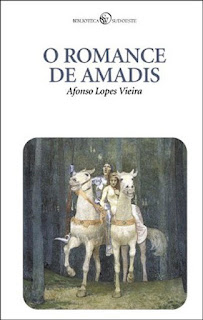
"O Romance de Amadis", Afonso Lopes Vieira // "The Romance of Amadis", Afonso Lopes Vieira

Um clássico do género a que diz respeito este blogue, este é também um velho livro pessoal, uma compra numa feira do livro feita na Escola B2-3 Gonçalo Nunes em Barcelos se bem me lembro (Vitorino Nemésio me perdoe o "gamanço") no meu último ano lá. É uma obra formativa mais que no conteúdo (embora também seja uma obra em que um protagonista cresce e amadurece para a idade adulta), é uma obra que é formativa na criação de sensibilidade estética do leitor, e de uma certa noção de Portugal e de ética. O Leiriense Afonso Lopes Vieira escreveu em 1922 esta obra de um certo neo-Romantismo, que foi um trabalho de amor do autor, nascido de nacionalismo para o próprio.
Tudo começa com um romance de cavalaria do século XVI em 4 volumes (ou «livros»), intitulado Amadis de Gaula. Ora, por algumas referências que referem nomes de personagens do romance (inventados por ele) antes deste surgir impresso como um texto em Castelhano atribuído a um Garcí-Montalvo, a aparentes referências a pedidos de um príncipe D. Afonso no século XIII ter pedido que se mudasse um enredo envolvendo o protagonista Amadis, e ao título da impressão castelhana original referir «novamente historiados» no subtítulo usualmente enorme na altura, há muito que o Amadis tem sido conjecturado ser um texto originalmente português do século XV ou até bastante antes. A maioria das teorias atribuíam a um membro ou outro de uma família de trovadores portuguesa chamada de Lobeira (os "suspeitos do costume" sendo João de Lobeira, contemporâneo de D. Dinis, e Vasco de Lobeira, velho escudeiro ao tempo de Aljubarrota que seria depois da batalha armado cavaleiro, episódio que, como veremos será reproduzido no enredo do Amadis que Lopes Vieira recria). A "questão do Amadis" é algo que ainda não foi conclusivamente provado de uma forma ou outra, visto que ainda não foi encontrado texto manuscrito ou impresso anterior, português ou não, que prove que a versão de Montalvo não é a primeira, embora em Portugal como em Espanha a existência de indícios complexos de uma origem portuguesa impossíveis de ignorar teoricamente seja assumida. Alguns na hispanosfera até ponderam uma origem pré-Montalvo sem incluir Portugal, atribuíndo o romance a Infante Henrique de Castela, "o Senador", que teria tido pela Europa fora viagens e aventuras que lhe inspirariam este enredo (com as principais personagens a paralelarem supostamente conhecidos do Infante).
O romance castelhano original
Ora Lopes Vieira era um crente sem dúvidas na hipótese da origem lusa do romance, e como tal, após alguns anos de projectar a ideia de "devolver" o texto à língua portuguesa, embora numa versão resumida (e encurtada visto que tudo o que era do III livro para lá era considerado criação só de Garcí-Montalvo, que o Português recusou, tentando criar um puro "livro português"), e mais próxima em linguagem do Português moderno, porém mantendo uma "ferrugem" saudável de arcaísmo compreensível, e alguns anos a tentar finalizar essa tentativa, deu-se por imensamente satisfeito com o resultado, principalmente depois de o ler para uma mulher popular parte do texto, fazendo-a reagir positivamente e pedir por mais (a edição que tenho da colecção Biblioteca Sudoeste da Porto Editora detalha depois do texto do livro a biografia do autor, trabalho neste livro, o "contrato" e projecto do prefácio da lusitanista Alemã Carolina Michaelis de Vasconcelos, a recepção do romance, as consequências do livro na carreira do autor e o que ele fez depois).
Afonso Lopes Vieira segundo Columbano Bordalo Pinheiro
O mundo desta estória é uma versão fantasiada da Europa passada na época tardo-romana e medieval-inicial, poucos anos antes da época do Rei Artur. Entre os lugares referidos estão a Pequena Bretanha (uma região de França chamada hoje só Bretanha) onde Amadis nasceu, Gaula (que será ou a Gália ou o País de Gales, ou só a sua própria terra inventada) cujo Rei Perion era pai de Amadis (a sua mãe era a Princesa da Pequena Bretanha), a Escócia (que é assim chamada no romance original e na versão de Lopes Vieira mas então era de facto chamada de Caledónia) onde é criado, a Bretanha (hoje Grã-Bretanha ou Inglaterra) cuja Princesa Oriana ele serve, e combate e luta por vários países a adversários como cavaleiros 'normais', gigantes, bruxos e bruxas e muitos monstros, incluíndo um Rei imaginário (e gigante) da Irlanda que combate com os exércitos de Gaula e da Normandia (anacronisticamente assim é chamado o norte de França), e percorrendo países e locais mal identificados e mais ou menos lendários ou então bem identificados como o país dos Suevos (no que é hoje a Alemanha e cujo povo povoou por essa altura o Norte de Portugal), Grécia (surgindo também uma personagem Grega, o velho escudeiro Macandon), Hungria e a Ilha do Lago Fervente (imaginem uma furna açoriana) que se poderá identificar com a ilha italiana de Pantelleria (perto da Sicília), surgindo ainda uma donzela de companhia de Oriana que é da Dinamarca. No romance original medieval surgia ainda um Rei Árabe e o seu exército, mas este episódio é saltado por cima na versão de Lopes Vieira, com descrições vagas do tipo "ah e tal, o Amadis viajou por muitos sítios e fez muitas coisas dignas de nota, mas isso agora não interessa nada", focando-se na linha principal do enredo.
A Europa segundo as lendas arturianas, aproximadamente a Europa do tempo mítico de Amadis 
O livro começa com uma introdução em que o autor assume a pose de trovador medieval, abordando o público, introduzindo a narrativa, falando do romance original (seguindo a sua tese de que um original português fora levado para Espanha e lá alterado para o novo país). Depois, o enredo apresenta-nos ao Rei Garintes da Pequena Bretanha francesa (neste caso «Piquena Bretanha»), com uma filha casada com o Rei da Grã-Bretanha pré-arturiana mas (sabe-lo-emos depois) ainda sobre domínio romano, e outra solteira e dada só à religião. Esta Elisena, apaixonar-se-á pelo hóspede do seu pai, Perion, Rei de Gaula, e depois dele partir de volta ao seu reino, ela se saberia grávida (segundo Lopes Vieira, gravidez extra-matrimonial só deixaria de ser crime depois desta lei ser revogada pelo Rei Artur), com ajuda da criada escondendo a gravidez e tendo o bebé em segredo. Ela baptizou-o Amadis por causa de um santo popular, alcunhando-o de «o Sem Tempo», imaginando que pouco sobreviveria, visto que depois deitou-o ao mar num caixote feito pela criada, junto com uma espada e um anel, e um pergaminho que o identificava como «Amadis, o Sem Tempo». O Escocês Gandales, que navegava com a família por ali, apanhou-o no mar e criou-o como seu filho junto com o seu filho verdadeiro Agrajes, chamando ao órfão Donzel (Português antigo para "Moço") do Mar. Pouco depois, o enredo dá-nos dois episódios simbólicos muito fortes: um, mostra-nos Perion, que retorna à «Piquena Bretanha» para desposar Elisena, e o faz, a depois ter um sonho intenso em que perde o seu coração, que um sábio da Picardia interpreta como aviso quanto a algo muito próximo dele que ele perdia sem saber; e o pai adoptivo de Amadis, Gandales, é visitado por uma feiticeira que profetiza a Amadis muitos feitos, que seria protector dos fracos e o terror dos fortes.
Anos depois, Amadis é armado cavaleiro pela Princesa Oriana da Grã-Bretanha, de quem se apaixona, e por ela viaja pela ilha da Grã-Bretanha e pela Europa fazendo feitos contra cavaleiros, monstros e feiticeiros e feiticeiras para se dignificar e ser digno dela. Como típico de estórias de cavalaria, Amadis vive grandes aventuras e é fiel e enamorado da sua dama Oriana. Numa das suas viagens, ele chega a Gaula, terra do seu desconhecido pai, e lá toma partido do velho rei contra o Rei Abies da Irlanda invasor de Gaula por esta altura. Em batalha no outro reino governado por Perion e Elisena, a «Piquena Bretanha», exércitos de Gaula e normandos, incluíndo entre as hostes Amadis, combatem os Irlandeses e o próprio protagonista derrota e mata em batalha o gigante Abies (que havia em tempos derrotado e morto ele próprio gigantes). Depois, em gratidão Amadis é feito hóspede do Rei Perion, e é reconhecido pela espada e o anel (que, recordemo-lo, vinham com ele no baú em que navegara bebé) pela mãe, e assim a família se reúne, Amadis conhece os irmãos (tidos pelos pais depois de casarem) que desconhecia, e Perion fica a saber uma verdade que lhe fora escondida e o significado do sonho que antes tanto o perturbara e intrigara. Depois disso Amadis volta, agora como um príncipe, à Grã-Bretanha, portanto agora como igual e digno pretendente para Oriana, e eles continuam unidos em amor fiel e não é possível separá-los até ela ser raptada pelo mago Arcalau, um inimigo fidagal de Amadis que o quer magoar através de magoar a amada deste.
O cavaleiro, como que possesso, cavalga como doido ao encontro dos cavaleiros do mago, e destrói-os completamente, e leva a princesa Britânica consigo, e depois disso eles amam-se na floresta. Novo conflito no enredo virá quando a proximidade de Amadis para com Briolanja, uma dama da Sansonha (o nome medieval para a Saxónia alemã) que ele salvou e a morte de cujo pai ele lhe vingou, e os rumores lhe fazem crer erradamente que ele a traíra. Depois, enlouquecido Amadis retira-se para um ermo junto com um eremita, abdica da sua armadura e toma do eremita uma armadura mais brilhante e assume o novo nome Beltenebroso (obviamente "Belo-tenebroso"), sob o qual faz proezas que ironicamente o povo da altura diz ultrapassarem as de Amadis. É quando chega à corte britânica Macandon, um escudeiro Grego já de idade avançada que traz com ele uma espada baça e uma guirlanda (i.e. grinalda) seca, dizendo que se via condenado a buscar pelo mundo um amor perfeito, que seria identificado pelo homem empunhar a espada e fazer-la reluzir, e a mulher pôr a guirlanda na cabeça e faze-la florescer. Amadis vai como Beltenebroso até Oriana e revela-se a ela, e devido à saudade e o que sentem, reconciliam-se. Assim, disfarçam Oriana de véu e outras roupas e vão os dois à cerimónia onde todos os casais tentam a espada e a guirlanda, e obviamente que são os únicos a fazer os objectos encantados cumprir os fins ante um amor perfeito. Depois disso, o velho Macandon é finalmente armado cavaleiro. O romance termina com Amadis salvando Oriana de ser levada para Roma para casar em casamento de conveniência com o Imperador Romano, e depois de a salvar em alto mar abordando o navio em que segue para Roma, ambos vão para a Ilha Firme e vivem lá juntos até ao fim das suas vidas. (numa insinuação sobre haver mais no Amadís de Gaula castelhano, Lopes Vieira termina dizendo que não seria preciso mais final, e qualquer outro seria mentira, porque o amor é o seu próprio fim e princípio).
Amadis e Oriana numa ilustração de um velho manual de Português do 8.º ano
Afonso Lopes Vieira nesta que é uma das suas raras prosas, mostra aqui alguma da sua poesia tornando-a na forma da prosa poética, e faz neste aparente conto-de-fadas (isto torna-se mais claro na versão O conto de Amadis de Portugal para rapazes portugueses de 1938 e reeditado nos anos '50, mais abertamente infanto-juvenil, com belas ilustrações de António Lino) um texto que serve como metafísica ou teologia do amor, discurso sobre Portugal e portugalidade (tudo usando um enredo que não envolve Portugal ou Portugueses e miticamente passado antes da fundação de Portugal ou sequer de se chamar ao norte do seu território Portucale), um romance histórico com elemento de fantástico, uma tentativa (muito livre, e talvez nunca tendo isto literalmente como objectivo; o modelo de Lopes Vieira, mais do que o texto quinhentista original, talvez fosse a versão resumida e modernizada do Tristão e Isolda de Joseph Bédier Le Roman de Tristan et Iseult de 1900). Este livro pode encontrar-se em várias edições em muitas bibliotecas municipais e escolares (talvez não todas), sendo a edição da Porto Editora relativamente fácil de achar agora que foi apoiada pelo programa Ler+ (estando recomendado para leitura no 8.º ano, havendo ainda um antigo manual desse ano da mesma editora da altura em que estava nesse ano lectivo que tinha alguns extratos do livro incluídos com ilustrações agradáveis e garridas).
Capa da abreviação infantil do autor


A classic of the genre in what concerns this blog, this is also an old personal book, a buy on a book fair done in the Secondary/Middle school and High School Gonssalo Nunes in Barcelos iff I recall it correctly (may Vitorino Nemesio forgive me the "jacking") in my last years there. It is a Bildungsroman work in more than the content (although it be also a work in which a lead grows and matures till adulthood), it is a work that is formative in the creation of aesthetic sensibility of the reader's, and of a certain notion of Portugal and of ethic. The Leiria-native Afonso Lopes Vieira wrote in 1922 this work of a certain neo-Romantismo, which was the author's labour of love, born to his own mind out of nationalism.
Everything starts with a 16th century chivalry novel in 4 volumes (or «books»), titled Amadis de Gaula ("Amadis of Gaul/of Gaula"). Well now, by some references that refer names of characters from the novel (made up by it) before the former came-up printed as a text in Castilian attributed to a Garci-Montalvo, to apparent references to requests of a Prince Don Alfonso in the 13th century having asked that it be changed a plot involving the protagonist Amadis, and the title of the original Castilian print mentioning «again storied» on the subtitle averagely enormous at the time-point, there has long been the Amadis conjectured to be a text originally Portuguese from the 15th century or even quite before. The majority of the theories attributed it to one member or another of Portuguese troubadours called the Lobeiras (the "usual suspects" being Joao de Lobeira, contemporary to King Don Denis, and Vasco de Lobeira, old squire at the time of the Aljubarrota battle who would be after the battle armed knight, episode as we shall see shall be reproduced in the plot of the Amadis that Lopes Vieira recreates). The "Amadis question" is something that still was not conclusively proven on one way or the other, seen that it still was not found previous manuscript or printed text, Portuguese or not, that prove that the Montalvo version is not the first, although in Portugal as in Spain the existence of complexe signs of a Portuguese origin impossible to ignore theoretically be assumed. Some in the hispanosphere even ponder a pre-Montalvo origin without including Portugal, atributing the novel to Infant-prince Henry of Castile, "the Senator", who woyuld have had throughout Europe travels and adventures that would inspire him this plot (with the main characters paralleling supposedly acquaintances of the Infante).
The original Castilian novel
Well now Lopes Vieira was a believer without doubts in the novel's luso origin hypothesis, and as such, after some years projecting the idea of "giving back" the text unto the Portuguese language, although in a summarised version (and shortened seen that everything that was from the III book onwards was considered creation only from Garcí-Montalvo, which the Portagee refused having, trying to create a pure "Portuguese book"), and closer in language to the modern Portuguese, though keeping some healthy "rust" of understandable arcaism, and some years trying to finalise that attempt, gave himself as immensely satisfied with the result, mainly after reading it to a commoner woman part of the text, making her react positively and ask for more (the edition that I got from Porto Editora publisher's Biblioteca Sudoeste/"Southwest Library" details after the book's text the author's biography, work on this book, the "hired-work contract" and project of the foreword by German lusitanist Michaelis de Vasconcelos, the novel's reception, the consequences of the book on the author's career and what he did afterwards).
Afonso Lopes Vieira according to Columbano Bordalo Pinheiro
The world of this story is a fantasised version of Europe set in the late-Roman and early-medieval period, few years before King Arthur's period. Among the places refered are the Little Britin (a region of France called today only Brittany) where Amadis was born, Gaula (which would be either Gaul or Wales, or just its own made-up land) whoe King Perion was Amadis' father (his mother was a Little Britain princess), Scotland (which is so called in the original novel and in Lopes Vieira's version but then was in fact called Caledonia) where he is raised, Britain (today Great-Britain or England) whose Princess Oriana he serves, and combats and struggles through several countries to adversaries like 'normal' knights, giants, witch-doctors and witches and many monsters, including an imaginary (and giant) King of Ireland who fights the armies of Gaula and of Normandy (anachronistically so is called the north of France), and going through countries and locales badly identified and more or less legendary or then well identified like the country of the Suebi (in what is now Germany and whose people settled around that time-point Northern Portugal), Greece (appearing also a Greek character, the old squire Macandon), Hungary and the Island of the Boiling Lake (imagine an azorean furna/lava tube) which one might identify with the Italian island of Pantelleria (near Sicily), coming-up yet a maiden in waiting of Oriana who is from Denmark. In the original medieval novel it came up still an Arab King and his army but this episode is skipped over by Lopes Vieira's version, with vague descriptions of the "ah and such, Amadis travelled by many places and did many things worthy of note, but that now matter none", focusing itself in the plot's main line.
Europe according to the arthurian legends, approximately the Europe from Amadis' mythical time
The bookstarts with an introduction in which the author assumes the pose of medieval troubadour, approaching the audience, ntroducing the narrative, talking of the original novl (following his thesis that a Portuguese original had been taken to Spain and there altered to the new country). Afterwards, the plot introduces us to the King Garintes from the French Little Britain (in this case «Litel Britain»), with one daughter married to the King of the pre-arthurian but (we shall knoow it afterwards) still under Roman domain Great Britain, and another single and only self-given to religion. This Elisena shall fall in love for the guest of her father's, Perion, King of Gaul, and after he leaving back to his kingdom, she would find herself pregnant (according to Lopes Vieira, extramarital pregnancy only would cease being crime after this law being revoked by King Arthur), with help from the maid hidding the pregnncy and having a baby in secret. She baptised him Amadis because of a folk saint, nicknaming him as «the Without Time», imagining that little would he survive, seen that little afterwards she threw him to the sea on a crate made by the maid, together with a sword and a ring, and a scroll that identified him as «Amadis, the Without Time». The Scotsman Gandales, who sailed with the family over there, picked him up at sea and raised him as his son together with his true son Agrajes, calling to the orphan Donzel ("Damoiseau", ancient Portuguese for "Lad") from the Sea. Little after, the plot gives us two very strong simbolic episodes: one shows us Perion, who returns to the «Litel Britain» to bewed Elisena, and does so, afterwards having an intense dream in which he loses his heart, which a wiseman from Picardy interpretes as warning about something very close to him that he lost without knowing; and Amadis' adoptive father, Gandales, is visited by a sorceress who prophesises to Amadis many deeds, that he would be protector to the weak and the terror to the strong.
Years after, Amadis is armed knight by the Princess Oriana of Great Britain, for whom he falls in love, and for her travels through the island of Great Britain and through Europe doing deeds against knights, monsters and wizards and sorceresses to dignify himself and be worthy off her. As typical on chivalry stories, Amadis lives great adventures and is faithful and enamoured to his lady Oriana. In one of this travels, he arrives to Gaula, land from his unknown father, and there takes the old king's party against the King Abies of Ireland invader of Gaula by this time-point. In battle in the other kingdom ruled by Perion and Elisena, the «Litel Britain», armies of Gaula and Normand ones, including among the hosts to Amadis, combat the Irish and the lead himself defeats and kills in battle the giant Abies (who had in times defeated and killed himself to giants). Afterwards, in gratitude Amadis is made guest to the King Perion, and is recognised by the sword and the ring (which, shall we remind it, came with him in the trunk in which he sailed as baby) by the mother, and so the family reunites, Amadis meets his siblings (had by his parents after they got married) he knew not of, and Perion gets to know a truth that had been hidden from him and the meaning of the dream that before so much had bothered and intrigued him. After that Amadis goes back, now as a prince, to Great Britain, hence now equal and worthy suitor for Oriana, and they continue united in faithful love and it is not possible to separate them till she is kidnapped by the mage Arcalau, a cold-hatred enemy of Amadis' who wants to hurt him through hurting his beloved.
The knight, as if possessed, rides as mad to meet-up the mage's knights, and destroys them completely, and takes the British princess with himself, and after that they love each other on the forest. New conflict on the plot shall come when the proximity of Amadis towards Briolanja, a lady from Sansonha ("Saxen", the medieval name for the German Saxony) whom he saved and the death of whose father he avenged, and the rumours do make her believe wrongly that he had betrayed her. Afterwards, maddened Amadis retreats to a waste together with a hermit, abdicates to his armor and takes from the hermit a shinier armor and assumes the new name Be'tenebrous (obviamente "Beau-tenebrous"), under which he does prowesses that ironically the people of that time-point said to overcome Amadis' ones. It is when t arrives to the British court Macandon, a Greek squire already of advanced age who brings with him a dim sword and a dry gerlond (i.e. garland), saying that he saw himself condemned to search through the world a perfect love, that would be identified by the man wielding the sword and making it flash, and the woman putting the gerlond on the head and making it florish. Amadis goes as Be'tenebrous till Oriana and reveals himself to her, and due to the nostalgia and what they feel, they reconcile each other. So, they disguise Oriana in veil and other clothes and go together to the ceremony where all the couples try the sword and the gerlond, and obviously are the only ones to make the enchanted objects fulfil their aims facing a perfect love. After that, the old Macandon is finally knighted. The novel ends with Amadis saving Oriana from being taken to Rome to marry into marriage of convenience with the Roman Emperor, and after saving her at high sea approaching the ship that follows for Rome, both go to the Firm Island and live there together the rest of their lives (in an insinuation on there being more on the Castilian Amadís de Gaula, Lopes Vieira ends saying that there would not be needed more ending, and that any other would be a lie, because love is its own end and beginning).
Amadis and Oriana on and old 8th grade Portuguese Language class manual illustration
Afonso Lopes Vieira in this which is one of his rare proses, shows here some of his poetry turning it into the form of the poetic prose, and does in this apparent fairy-tale (this becomes clearer in the O conto de Amadis de Portugal para rapazes Portugueses/"The tale of Amadis of Portugal for he Portuguese boys" version from 1938 and re-edited in the '50s, more openly children's/young-people's, with fair illustrations by Antonio Lino) a text that serves as metaphysics or theology of love, discourse on Portugal and portugality (all using a plot that does not involve Portugal or Portuguese and mythically set before the foundation of Portugal or even the calling itself to the north of its territory Portucale), a historical novel with a fantasy element, a (very free, and maybe never having this literally as objective; Lopes Vieira's model, more than the original fifteen-hundredth text, maybe it were the summarised and modernised version of the Tristan and Isolde by Joseph Bédier Le Roman de Tristan et Iseult from 1900). This book can find itself in several editions in many Portuguese municipal and school libraries (maybe not all), being the Porto Editora publisher edition relatively easy to find now that it was supported by the Ler+/"Read+" program (being recommended for reading on the 8th grade, there being still an old manual from that year by the same publisher from the time that I was in that school year that had some extracts from the book included with agreeable and garish illustrations).
Cover from the author's children's abbreviation

sexta-feira, 31 de julho de 2015

"Memorial das Proezas da Segunda Távola Redonda", Jorge Ferreira de Vasconcelos // "Memorial of the Deeds of the Second Round Table", Jorge Ferreyra de Vasconcellos

Antes de se começar a leitura deste Memorial das Proezas da Segunda Távola Redonda, o desconhecedor pode imaginar que o livro é algo ao estilo da colectânea de lendas arturianas de Augusto da Costa Dias que já resenhámos aqui. Na verdade este livro é um romance original, no estilo de romances de cavalarias que é uma espécie de sequela à lenda arturiana original. Este livro, escrito (na única experiência de ficção em prosa) por um dos autores dramatúrgicos da "escola vicentina" que sucedeu a Gil Vicente, Jorge Ferreira de Vasconcelos, é um romance algo longo mas não excessivamente pesado (fora pelas diferenças que a evolução do Português literário sofreu desde os meados-finais do século XVI),teria sido escrito quando Ferreira de Vasconcelos era cortesão da corte (primeiro de D. João III e depois do nosso "velho amigo" D. Sebastião), sendo o texto editado em 1567 (a primeira versão do romance, sob o título Triunfos de Sagramor seria de 1554, mas a versão final tinha algum texto extra e refere D. Sebastião, para além de o prólogo lhe ser dedicado) em Coimbra para esse jovem Rei (como já expliquei), e desejando-lhe que fosse um monarca e cavaleiro cristão no modelo de Artur ou do seu sucessor, Constante Sagramor (herói deste romance), sendo exemplo perfeito do romance épico de cavalaria que seria parodiado (em época de decadência e extinção da cavalaria real) no D. Quixote e, em parte (embora o alvo fosse mais o romance sentimental de aventuras que foi herdeiro do de cavalaria), no Constante Florinda (que também já analisámos aqui), constituído por enredos de amor cortês e aventura, encantamentos sobrenaturais e vários sub-enredos.
A principal narrativa deste livro é em torno do que se passa depois da queda de Artur, sendo sucedido como Rei da Bretanha pelo seu sobrinho Constantino Sagramor (isto é uma fusão original feita pelo autor de duas personagens arturianas, o cavaleiro Sagramore e Constantino III, o sucessor de Artur segundo as crónicas pseudo-históricas; esta fusão é original de Ferreira de Vasconcelos e só o próprio saberá porque o fez, se é que houve alguma razão), que a exemplo do seu tio cria uma Távola Redonda na sua nova capital inglesa e tenta reunir novo grupo de cavaleiros, os melhores do seu tempo (na maioria filhos inventados por Ferreira de Vasconcelos para os cavaleiros dos romances arturianos), para que consigam fazer o ideal da cavalaria sobreviver depois da derrota de Artur e dos seus cavaleiros. Isto faz mais sentido tendo em conta a estrutura da obra: o romance começa com uma "linhagem" da «ordem da cavalaria», que Ferreira de Vasconcelos (como muitos na Idade Média e Renascimento) fazia remontar ao grupo dos heróis da mitologia grega fundado com a conquista da Índia por «Baco Índico» e que incluía Hércules, Teseu, os Argonautas de Jasão (que partiam para a zona do Cáucaso para recuperar para a Grécia um velo de carneiro de ouro), Peleu (pai de Aquiles) e vários heróis gregos até aos cavaleiros de Alexandre o Grande, a cavalaria romana dos equites (cavaleiros) liderados pelo Imperador Augusto (modelo do que a teologia católica chamava de "pagão virtuoso", e antes da cavalaria moderna e completamente histórica passaria pelos 12 pares de França de Carlos Magno, e com os cavaleiros de D. João III (dos quais um torneio factual é descrito com detalhe pelo autor neste romance, misturado com o enredo ficcional de 10 séculos antes) e D. Sebastião. Ora como se vê, entre Augusto e os antigos Romanos de um lado e Carlos Magno no século VIII-IX, havia primeiro Artur, e depois faltava explicar: como tinha a cavalaria sobrevivido depois do fim trágico de Camelot, para chegar a séculos seguintes? Em parte este novo enredo é para responder a isso.
Enquanto o narrador relata as aventuras de Constantino Sagramor no seu esforço de manter a Bretanha independente dos invasores Anglo-Saxões e da influência dos últimos imperadores (com pouco poder) de Roma, combatem Mouros em terras distantes, combatem encantamentos e monstros e outros elementos tradicionais da lenda arturiana que aqui por imaginação própria, o autor aplica a um novo ciclo de sua criação e a um período imediatamente "herdeiro" do anterior. É um livro muito de colectivo e centrado na ideia de recordar várias narrativas relativamente independentes localizadas num passado supostamente histórico (daí "Memorial"), destacando-se enquanto personagens realmente, só o próprio Sagramor e o seu cavaleiro Lucidardos (criação da cabeça de Ferreira de Vasconcelos). Note-se que, imediatamente do início do enredo principal (da Segunda Távola Redonda), Ferreira de Vasconcelos resume a estória de Artur e a Távola Redonda original e consegue acrescentar alguns toques interessantes (por exemplo, ao descrever o fim de Artur, o velho tema de Artur não morrer mas ser levado para a Ilha de Avalon onde não morre mas dorme numa espécie de sono suspenso para voltar um dia como D. Sebastião, é descrito como uma carantonha voadora chegando ao campo de batalha, de lá saíndo uns homens selvagens e levando o Rei dos Bretões para dentro da carantonha, para nunca mais ser visto novamente. É curioso, à luz do que passou a D. Sebastião já depois da escrita deste livro e da lenda que sobre ele se formou, ver aqui este quase 'sebastianismo antes de haver sebastianismo' neste livro no que a um Artur ensanguentado sendo levado para fora do campo de batalha diz respeito (e nem mencionemos a transformação da leva de Artur para Avalon numa cena quase de levada para disco voador à descrição de encontros imediatos pré-modernos).
Entre outras narrativas com elementos de maravilhoso fantástico, chama-me a atenção o episódio que leva o livro ao seu fim (e une enredo pós-arturiano aos tempos de D. João III e D. Sebastião): a feiticeira Merlinda (uma espécie de Merlim “de saias”) permite a Sagramor que tenha uma visão do futuro, da Lisboa quinhentista, e do torneio de Xabregas. Não sendo exactamente per se um enredo aventureiro ou notável, porém é bastante bem escrito e as suas descrições são fortes e vívidas.
Muitos dos livros que temos vindo a analisar neste blogue têm interesse não só por si próprias mas pelas muitas outras obras literárias e inspirações a que deram origens: assim neste vemos a raíz de muito arturianismo e pseudo-arturianismo português e lusófono, do narrar do mito arturiano por Monteiro Lobato na série de livros Sítio do Pica-pau Amarelo, a mitologia e a ficção do sebastianismo e ainda a ficção de inspiração arturianas de autores Galegos a favor do Reintegracionismo do Galego no Português como Daniel Cortezón (como As Covas do Rei Cintolo de 1956).
Para além de estas inspirações maioritariamente indirectas (até porque esta obra nunca foi directamente adaptada; o jogo de vídeo Spirit of Excalibur/"Espírito de Excalibur" send provavelmente o mais próximo com o seu enredo de aventuras de cavaleiros sob Constantino III, embora não chamado Sagramor também aí), o tipo de estórias deste livro mostra-nos uma visão de sociedade e de política, visto que o livro para além de romance, tem no final de cada capítulo recomendações que didacticamente o autor recomendava a D. Sebastião quanto a governo e a ser cavaleiro, mostrando o texto algum louvor (com o suave relativismo cultural dos humanistas renascentistas) de muitos não-cristãos (embora afirmando a superioridade do Catolicismo, ou não fosse o livro publicado durante a regência do Cardeal e líder da Inquisição portuguesa D. Henrique em nome do jovem D. Sebastião), defesa da ética cavaleiresca medieval como revista pelo valores renascentistas e louvor de um modelo de corte que talvez estivesse ultrapassado (e que terminaria na cruzada falhada de Alcácer Quibir) e que o autor achava que poderia ser renovado para uma nova glória com um regresso aos valores de uma Idade Média idealizada, renovados pelo novo humanismo do Renascimento. E é isso que realmente sustenta e dá substância a este livro no seu desequilíbrio entre enredo ficcional e texto didáctico, para além da obra em si já transformar em ficção todo estes tipo de questões, de factos e de valores. Quem quiser confirmar tudo isso por si só, pode encontrar em várias bibliotecas e ainda à venda, principalmente cópias da edição da colecção Grandes Clássicos da Literatura Portuguesa dirigida pelo saudoso Vasco Graça Moura, e muito mais raramente da da Lello Editores que teve primeira edição em 1998 editada pelo falecido escritor e estudioso João Palma-Ferreira, principal historiador das "pérolas" esquecidas da literatura portuguesa (no topo da publicação apresentada).


Before starting the reading of this Memorial das Proezas da Segunda Távola Redonda ("Memorial of the Deeds of the Second Round Table"), the unknowledgeable may imagine that the book is something in the style of collection of arthurian legends by Augusto da Costa Dias that we already outlined here. In truth this book is an original novel, in the style of chivalry novels that is a kind of sequel to he original arthurian legend.This book, written (in the only experience of prose fiction) by one of the "vicentine school" playwrights that succeeded to modern Portuguese theatre founder Gil Vicente, Jorge Ferreira de Vasconcelos, is a somewhat long but not excessively heavy novel (aside the differences that literary Portuguese's evolution suffered since the mid-late-16th century), would have been written when Ferreira de Vasconcelos was courtly courtesan (first of Don John III and afterwards of our "old friend" Don Sebastian), being the text published in 1567 (the first version of the novel, under the title Triunfos de Sagramor/"Triumphs of Sagramore" would be from 1554, but the final version had some extra text and refers Don Sebastian, besides the prologue being dedicated to him) in Coimbra for that young King (as I already explained), and wishing him that he were a monarch and Christian knight in the model of Arthur or of his successor, Constans Sagramore (hero of this novel), being perfect example of the chivalry epic novel that would be parodied (in time of decadence and extinction of the real chivalry class) in the Don Quijote and, in part (although the target were more the adventure sentimental romance that was heir to the chivalry one), in the Constante Florinda/"Constant Florinda" (which we also already analysed here), made out of plots of courtly love and adventure, supernatural enchantments and several subplots.
The main narrative of this book is around what passes by after the fall of Arthur, being succeeded as King of Britain by his nephew Constantino Sagramor ("Constantine Sagramore"; this is an original fusion done by the author of two arthurian characters, the knight Sagramore and Constantine III, Arthur's successor according to the pseudo-historical chronicles; this fusion is original to Ferreira de Vasconcelos and only he himself would know why hedid it, if there is any reason), who on his uncle's example created a Round Table in his new English capital and tries to gather new group of knights, the best of his time (mostly sons made-up by Ferreira de Vasconcelos for the knights from the arthurian novels), so that they can make the ideal of chivalry survive after the defeat of Arthur and his knights. This makes more sense having in mind the structure of the oeuvre: the novel starts with a "lineage" of the «order of chivalry", which Ferreira de Vasconcelos (as many in the Middle Ages and Renaissance) made go far back to the conquest of India by «Indian Bacchus» and which included Hercules, Theseus, Jason's Argonauts (which departed to the Caucasus zone to recover for Greece a golden ram's fleece), Peleus (Achilles' father) and several Greek heroes till the knights of Alexander the Great, the Roman cavalry of the equites (knights) lead by Emperor Augustus (model of what Catholic theology called a "virtuous pagan"), and before the modern chivalry and completely historical would pass by Charlemagne's 12 peers of France, and with Don John III's knights (of whom a factual tournament is described with detail by the author in this novel, mixed with the fictional plot from 10 centuries before) and Don Sebastian). Well how it is seen, between Augustus and the ancient Romans on one side and Charlemagne in the 8th-9th century, there was first Arthur, and afterwards it was to be explained: how had chivalry survived after the tragic end of Camelot, to get to the following centuries? Partly this new plot is for answering that.
Whle the narrator reports the adventures of Constantine Sagramore in his effort of keeping Britain independent from Anglo-Saxon invaders and from the influence of the last Emperors (with little power) of Rome, combat Moors in distant lands, combat enchantments and monsters and other traditional elements of the arthurian legen that here by his own imagination, the author applies to a new cycle of his creation and to an immediately "heir" period to the previous. It is a very collective book and centered in the idea of remembering several relatively independent narratives located on a supposedly historical past (hence "Memorial"), highlighting themselves while characters really, only Sagramor himself and his knight Lucidardos (creation of Ferreira de Vasconcelo's head). Let it be noted that, immediately from the beginning of the main plot (the Second Round Table), Ferreira de Vasconcelos summarises the story of Arthur and the original Round Table and can add interesting detals (for example, at describing Arthur's end, the old theme of Arthur not dying but being taken to the Island of Avalon where he does not die but sleeps in a kind of suspended sleep to return one day like the Sleeping Hero like Don Sebastian for the Portuguese, is described as a flying Jessant arriving to the battlefield, from it exiting some savage men and taking the King of the Britons unto inside the Jessant, for never to be seen again. It is curious, in light of what went down with Don Sebastian already after the writing of this book and of the legend that on him did form itself, to see here almost a 'sebastianism before there being sebastianism' in this book in what to an Arthur being taken outside a battlefield concerns (and lets not even mention the transformation of the taking of Arthur to Avalon into a scene almost of take-away unto flying saucer pre-modern close encounters description-style).
Among other narratives with elements of fantastical wondrous, it calls unto my attention the episode that takes the book to its ending (and unites post-arthurian plot to the times of Don John III and Don Sebastian): the sorceress Merlinda (a kind of “lady Merlin”) permits to Sagramor that he have a vision of the future, of the fifteen-hundredth Lisbon, and of he tournament of Lisbon's Xabregas place. Not being exactly per se an adventurous or remarkable plot, yet it is quite well written and its descriptions are strong and vivid.
Many of the books that we have come to analyse on this blog have interest not only on themselves but for many other literary works and inspirations to which they gave root to: so in this we see the root of many Portuguese and lusophone arthurianism and pseudo-arthurianism, from the narrating of the arthurian myth by Monteiro Lobato in the Sítio do Pica-pau Amarelo/Yellow Woodpecker Ranch-farm book series, the mythology and the fiction of sebastianism and moreover the fiction of arthurian inspiration of Galician authors in favour of Galician language's Reintegrationism into the Portuguese language like Daniel Cortezon (like As Covas do Rei Cintolo/"The Caves of King Cintolo" from 1956).
Besides these mostly indirect inspirations (even because this work never was directly adapted; the videogame Spirit of Excalibur being probably the closest with its plot on adventures of knights under Constantine III, although not called Sagramore too there), the type of stories from this book shows us a vision of society and of politics, seen that the book besides novel, has at the end of each chapter recommendationsthat didactically the author recommended to Don Sebastian about government and being a knight, showing the text some apraisal (with the suave cultural relativism of the Renaissance humanists) of many non-Christians (although stating the superiority of Catholicism, or were it not a book published during the regency of the Cardinal and leader of the Portuguese Inquisition Don Henrique on the young Don Sebastian's name), defense of the medieval chivalrous ethics as revised by the Renaissance values and apraisal of a model of cour that maybe was oudated (and that would end in the failed crusade of Alcazar El-Kebir) and which the author thought so that it could be renewed for a new glory with a return to the values of an idealised Middle Ages, renewed by the Renaissance's new humanism. And it is that that really supports and gives substance to this book in its unbalance between fictional plot and didactical text, besides the work in itself lready transforming into fiction all this type of issues, of facts and of values. Who may wish to confirm all tis for themselves, may find in several Portuguese libraries and still for sale, mainly copies of the edition from the Grandes Clássicos da Literatura Portuguesa ("Great Classics of Portuguese Literature") directed by the nostalgia-worthy poet/scholar Vasco Graça Moura, and much more rarely the Lello Editores one that had first edition in 1998 published by the late writer e scholar Joao Palma-Ferreira, main historian of forgotten "perls" from Portuguese literature principal historiador das "pérolas" esquecidas da literatura portuguesa (at the post's top presented).

quarta-feira, 24 de junho de 2015

"Os Cavaleiros da Távola Redonda", Augusto da Costa Dias // "The Knights of the Round Table", Augusto da Costa Dias

Depois de uma introdução que localiza a acção deste livro no tempo e os fins do texto enquanto adaptação de um ciclo de lendas e ficção, este livro que trabalha as famosas estórias do chamado ciclo arturiano, que sob várias formas desde à séculos têm ocupado literatura e modos não-literários de ficção com as suas estórias do Rei Artur e da sua Távola Redonda, começa.
Esta 26.ª publicação do blogue Clássicos da literatura infanto-juvenil portuguesa // Portuguese children's/juvenile lit classics é dedicada a principal e mais clássica versão portuguesa deste ciclo de narrrativas, o volume originalmente de 1960 Os Cavaleiros da Távola Redonda de Augusto da Costa Dias, como apresentado em subtítulo do volume original, «adaptação e actualização da matéria da Bretanha» (o nome do mundo francófono para o ciclo arturiano). Não sendo obra plenamente original, este "colar" de quase todas as narrativas principais deste ciclo de lendas e novelas de cavalaria deve a sua estrutura unificada principalmente ao modelo do texto quatrocentista misturando poesia e prosa Le Morte d'Arthur de Sir Thomas Malory (uma das principais epopeias inglesas).
O livro segue o plano já clássico das obras que tentam recolher de forma coesa a matéria ficcional sobre o Rei Artur: começa com o contexto do tempo do seu pai Uther Pendragon e do Mago Merlim, as condições do seu nascimento e como foi criado por uma família adoptiva, como retirou a espada Excalibur da bigorna sobre uma pedra e chegou a Rei, como casou com Guinebra (ou Guinevere; este livro segue o antigo aportuguesamento dos nomes na linha das novelas de cavalaria medievais portuguesas), do que ocorreu no seu longo reinado até à mútua destruição do seu exército e do exército do seu sobrinho e filho incestuoso Mordred no campo de batalha. E entre esses marcos do reinado de Artur, temos várias narrativas sobre heróis específicos da Távola Redonda: Dom Lançarote do Lago (Lancelot du Lac), Tristão e o santo filho de Lançarote/Lancelot, Galaaz (o Galahad da literatura franco-britânica), entre vários outros cavaleiros menos celebrados de nome mas que em tempos foram todos protagonistas das suas lendas ou romances.
Ilustração da edição original de 1960
Particularmente grande é o episódio narrativo (com vários capítulos incluídos) em torno de Tristão, que nos descreve o seu nascimento, a sua vida heróica até chegar à corte de Camelot e a sua vida depois de a deixar e à confraria de 150 cavaleiros, uma estória de grande interesse literário e dramático mas que enquanto narrativa dentro da de Artur é lateral, só ligada pela breve passagem de Tristão pela irmandade da Távola Redonda como um dos principais cavaleiros desta (um elemento da matéria da Bretanha que de tão forçado tem sido sugerido como uma adição posterior à lenda de Tristão e Isolda, para unir a sua lenda com o principal ciclo de lendas literárias britânicas da altura).
Augusto da Costa Dias escreve este livro com o estilo grandiloquente e heróico que é de esperar, empregando linguagem levemente arcaica e formal, misturando elementos da Grã-Bretanha imediatamente pós-romana real em que um verdadeiro Artur poderia ter vivido, com os elementos da cultura medieval anglo-normanda mais tardia do tempo em que estas narrativas realmente começaram a ser escrita (depois da passagem de Artur por crónicas em prosa do século IX a XII). Assim temos neste livro o maravilhoso ainda vagamente celta, um espírito cristão, um princípio da narrativa explicado pela saída dos Romanos do que hoje é Inglaterra e pelas invasões dos Anglo-Saxões e em que a linhagem de Artur é explicada como parcialmente romana, em que as armaduras e os castelos são porém do meio da Idade Média ou até da Baixa Idade Média (com um pouco de Renascimento) e os comportamentos das personagens são por códigos de amor cortês da Alta Idade Média. Tudo isto contribui para um ambiente fantástico mas com o concreto de um certo realismo da sociedade medieval na sua brutalidade e códigos estritos, mostrando uma sociedade onde se vive ou morre pela lança ou espada.
Ilustração do episódio maravilhoso de Galvão e o Cavaleiro Verde na edição de 1960
Esta é uma narrativa romanceada que Augusto da Costa Dias, um ensaísta essencialmente de temas políticos, um intelectual activista do PCP e tradutor (para além de marido da escritora infanto-juvenil e tradutora/adaptadora Portuguesa do Cabo Verde colonial Maria Helena da Costa Dias), criou na única experiência mais própria de literatura ficcional original na sua bibliografia a partir das fontes dispersas da "matéria da Bretanha", acrescentando-lhe um talento da descrição, da escrita, do ritmo do enredo e da transição de estória para estória que ninguém esperaria dele dada a sua bibliografia completa (quiçá este talento fosse bebido da literatura de aventuras que traduziu ou da influência da esposa), dando à literatura portuguesa uma obra cuja força ultrapassa a questão da existência ou não de algum Artur histórico, de alguns dos lugares aqui referidos, da ligação de algum cálice de Jesus com a Grã-Bretanha (aliás das narrativas mais belas do ciclo arturiano, incluíndo como narrada aqui por da Costa Dias) ou de muitos outros eventos ou pessoas que aqui surgem. Não interessa. Como Eça disse encimando A Relíquia, «Sobre a nudez crua da realidade, o manto diáfano da fantasia.»
O ciclo arturiano sempre ganhou em popularidade apesar das dúvidas sobre historicidade de sequer 50% do que narra, tendo dado origem ao género do romance ou novela de cavalaria, ao ciclo rival carolíngio (em tempos igualmente popular, principalmente no espaço ibero-americano, apesar de sempre lhe ter faltado a aura de mistério e tragédia inevitável que fizeram o arturiano tão atraente) e a ciclos imitadores ibéricos como o dos Amadises (começando com o Amadis de Gaula para uns criação castelhana do século XVI e para outros portuguesa do XIII ou XIV) ou o dos Palmeirins (partilhado no século XV-XVI por romances castelhanos como El Palmeirín de Oliva ou portugueses O Palmeirim de Inglaterra). Na Idade Média, a influência do ciclo arturiano em Portugal foi imensa, dando origem a inúmeras pessoas com nomes como Lançarote, Guinebra, Perceval ou afins, tendo influenciado D. Nuno Álvares Pereira a almejar ao cavaleirismo quase monástico de Galaaz (o seu grande modelo) e D. João I comparar os seus cavaleiros da Crise de 1383-1385 aos de Artur e a si próprio com o rei Bretão. A partir do século XVIII, fora a influência dos rimances ou xácaras arturianas no Romanceiro de A. Garrett ou na recriação do possível texto do romance de cavalaria medieval perdido Tristão, o enamorado por Teófilo Braga em 1914, pouca influência esta matéria teve na nossa literatura, fora o conto Sir Galahad de Eça de Queirós (só publicado postumamente em 1966) e o romance Vitória de Parsifal do hoje pouco lembrado mas bastante talentoso João Grave (1922). Mas apesar desta pouca criação original, os Portugueses nunca deixaram de consumir material arturiano exterior, como os romances "revisionistas" da Norte-Americana Marion Zimmer Bradley, os romances históricos do Britânico Bernard Cornwell ou os mais vagamente tolkienianos romances do Francês Jean-Louis Fetjaine, para além de milhentos filmes e programas de televisão, incluíndo mais recentemente o historicista Rei Artur de 2004 e às séries respectivamente "revisionista" e auto-paródica já desta década Camelot e Merlin (não esquecendo a cómica Kaamelot francesa).
Obras como esta de da Costa Dias lembram-nos do sentido, enredo e valor original do mito como era originalmente narrado, quando era uma forma de promover uma Inglaterra e uma sociedade feudal que já não existem (aquela sociedade de privilégios senhoriais que no tempo d'O Piolho Viajante de António Policarpo da Silva já visto aqui, já estava em decadência). Mesmo depois de este ícone se tornar um ícone comercializado e vendável (e isto começava ainda na promoção desta literatura à sua fandom medieval), continuou sempre a ser um ícone e símbolo principalmente e acima de tudo de optimismo, de apelo aos melhores instintos das pessoas, de respeito, de moral e ética e de amizade fiel, como se poderá ver ao longo deste livro, e se pode ver que foi a falta ou violação de tudo isso que destruiu Camelot e o reinado de Artur. Edições originais de 1960 ainda se podem encontrar à venda online e ocasionalmente em bibliotecas, mas é mais fácil hoje encontrar cópias da edição de 2004 da colecção Geração Público do jornal Público, que ajudou a introduzir uma nova geração a este clássico antes pouco recordado (mas que infelizmente não reutilizou as belas ilustrações da edição original, mantendo a coerência de não ilustrar nenhum dos livros incluídos na colecção fora da capa.


After an introduction that locates this book's action in time and the aims of the text s adaptation of a cycle of legends and fiction, this book that works on the famous stories of the so-called arthurian cycle, which under several forms since centuries ago has occupied literature and non-literary modes of fiction with its stories of King Arthur and of his Round Table, starts.
This 26th post of the Clássicos da literatura infanto-juvenil portuguesa // Portuguese children's/juvenile lit classics blog is dedicated to the main and most classical Portuguese version of this cycle of adventures, the volume originally from 1960 Os Cavaleiros da Távola Redonda ("The Knights of the Round Tables") by Augusto da Costa Dias, as presented in subtitle to the original volume, «adaptation and updating of the matter of Britain» (the French-speaking world's name for the arthurian cycle). Not being fully original work, this "sticking-together" of almost all the main narratives of this cycle of legends and chivalry novellas ows its unified structure mainly to the fourteen-hundredth text mixing poetry and prose Le Morte d'Arthur by Sir Thomas Malory (one of the main English epics).
The book follows the already classical plan of the works that attempt to gather in cohese form the fictional matters on King Arthur: it starts with the context of the time of his father Uther Pendragon and the Mage Merlim, the conditions of his birth and how he was created by an adoptive family, how he removed the word Excalibur from the anvil on the stone and got to King, how he married with Guinebra (or Guinevere; this book follows the ancient Portuguesefying of the names on the line of Portuguese chivalry novellas), of what occurs throughout his long reign till the mutual destruction of his army and the army of his nephew and incestuous son Mordred no campo de batalha. And between those marks of the reign of Arthur, we got many narratives on specific heroes of the Round Table: Don Lanssarote of the Lake (Lancelot du Lac), Tristao (Tristan) and the sainted son of Lanssarote/Lancelot, Galaaz (the Galahad from the French-British literature), among several other knights less celebrated by name but that back in the day were all protagonists of their legends or novels.
Illustration from the original 1960 edition
Particularly big is the narrative episode (with several chapters included) around Tristao, that describes us his brith, his heroic life up till getting to the Camelot court and his life after leaving it and to the confraternity of 150 knights, a story of great literary and dramatic interest but that while narrative inside Arthur's is a sideshow, only connected by the bief passage of Tristao by the Round Table brotherhood s one of the main knights of the latter (an element of the matter of Britain that from so forced has been suggested as a latter addition to the Tristan and Isolde legend, to united their legend with the main British literary legend cycle of the time-point).
Augusto da Costa Dias writes with book with the grandiloquent and heroic style that is to expect, employing lightly archaic and formal language, mixing elements of the real immediate post-Roman Great Britain in which a true Arthur could have lived, with the elements of the later Anglo-Norman medieval culture from the time in which these narratives really started to be written (after the passage of Arthur by prose chronicles from the 9th to 12th century). So we got in this book the still vaguely Celtic wondrous, a Christian spirit, a beginning of the narrative explained by the exit of the Romans from what today is England and by the invasions of the Anglo-Saxons and in which the lineage of Arthur is explained as partially Roman, in which the armors and the castels are though from the middle of the Middle Ages or even from the Late Middle Ages (with a little of Renaissance) and the behaviours pf the characters are by courtly love codes from the High Middle Ages. All this contributes for a fantasy environment but with the concrete of a certain realism of the medieval society in its brutality and strict codes, showing a society where one lives or dies by the lance or sword.
Illustration of the wondrous Galvao and he Green Knight episode in the 1960 edition
This is a romanced narrative that Augusto da Costa Dias, an essay-writer mainly of political themes, an activist intellectual from the Portuguese Communist Party and translator (besides being husband to the children's/young-people's writer and translator from colonial Cape Verde Maria Helena da Costa Dias), created in the only experiment more proper of original fictional literature in his bibliography out of the dispersed sources of the "matter of Britain", adding it a talent on description, on writing, on plot rhythm and on the transition from story to story that nobody would expect from him gven his full bibliography (perhaps that talent were drunk out of the adventure literature he translated or of the influence of his wife), giving unto Portuguese literature a work whose strength overcomes the issue of the existence or not of some historical Arthur, of some of the places refered here, of the connection of some chalice of Jesus with Great Britain (besides from among the most beautiful narratives of the arthurian cycle, including as narrated here by Costa Dias) or of many other events or people that here do come-up. It does not matter. As Essa said topping The Relic, «Sobre a nudez crua da realidade, o manto diáfano da fantasia.» («Over the raw nudity of the truth, the diaphanous cloak of fantasy.»)
The arturian cycle always won in popularity despite the doubts on the historicity of even 50% of what it narrates, having given origin to the genre of the chivalry novel or novella, to the carolingian rival cycle (times back equally popular, especially in the Ibero-American space, despite always having lacked it the aura of mystery and innevitable tragedy that made the arthurian one so attractive) and the Iberian immitator cycles like the Amadises one (starting with the Amadis of Gaul for some Castilian creation from the 16th century and for other Portuguese from the 13th or 14th) or the Palmeirins one (shared in the 15th-16th century by Castilian novels like the El Palmeirín de Oliva or the Portuguese The Palmeirin of England). In the Middle Ages, the influence of the arthurian cycle in Portugal was imense, giving origin to numerous people with names like Lanssarote, Guinebra, Perceval or the like, having influenced Constable Don Nuno Alvares Pereira to crave for the almost monastichal chivalrism of Galaaz (his big rolemodel) and King Don John I comparing his knights from the 1383-1385 Portuguese Interregnum to the ones of Arthur's and to himself with the Briton king. Starting from the 18th century, aside the influence of the arthurian verse-romances or ballads in the Romanceiro ("Balladeer") by A. Garrett or in the recreation of the possible lost medieval chilvalry novel text Tristão, o enamorado ("Tristan, the enamoured") by Teofilo Braga in 1914, little influence this matter had in Portuguese literature, aside the short-story Sir Galahad by Essa de Queiroz (only published posthumously in 1966) and the novel Vitória de Parsifal ("Victory of Parsifal") by the today little recalled but quite talented Joao Grave (1922). But despite this little original creation, the Portuguese never ceased consuming foreignarthurian matterial, like the "revisionist" novels by the North American Marion Zimmer Bradley, the historical novels by the Briton Bernard Cornwell or the more vaguely tolkienean novels by the Frenchman Jean-Louis Fetjaine, besides a zillion films and television shows, including more recently the historicist King Artur from 2004 and the series respectively "revisionist" and self-parodical already from this decade Camelot and Merlin (not forgetting the French comedic Kaamelot).
Works like this one by da Costa Dias remind us of the sense, plot and original value of the myth as it was originally narrated, when it was a form of promoting a England and a feudal society that no longer exists (that society of lordly privileges that in the time o' Antonio Policarpo da Silva's O Piolho Viajante/"The Travelling Lice" already seen here, was already in decay). Even afterwards to this icon becoming a comercialised and sellable icon (his started still in the promotion of this literature and its medieval fandom), continued always to be an icon and symbol mainly and above all of optimism, of apeal to the best instincts of people, of respect, of moral and ethics and of faithful friendship, as it can be seen throughoutthis book, and it can be seen that it was the lack or violation of all that whch destroyed Camelot and the reign of Arthur. Original editions from 1960 stll can be found for sale online and occasionaly in Portuguese libraries, but it is easier today to find copies from the 2004 edition of the Público newspaper's Geração Público collections, that helped to introduce a new generation o this classic before barely remembered (but which unfortunately did not reutilise the fair original edition illustrations, keeping the coherence of not illustrating any of the books included in the collection outside the cover.

quarta-feira, 17 de junho de 2015

"Livro de Linhagens do Conde D. Pedro", Conde D. Pedro de Barcelos // "Book of Lineages of the Count Don Pedro", Count Don Pedro of Barcelos

Dentre os livros medievais portugueses conhecidos, O Livro de Linhagens do Conde D. Pedro conhecido como o quarto (e último) livro de linhagens português por data de escrita (acima a capa iluminada de uma edição do século XVII) era no Portugal medieval era provavelmente o livro mais consultado depois da Bíblia (e com o mesmo zelo). Redescoberto e publicado por Alexandre Herculano nos meados do século XIX (e que dele tirou o material para alguns dos seus melhores contos e novelas, como A Dama Pé-de-Cabra ou A Morte do Lidador), o conjunto de histórias de família radicadas em Portugal (de origem portuguesa ou estrangeira) baseou-se nas tradições das próprias famílias (e por vezes nas das rivais), portuguesas, galegas, castelhanas, biscainhas e algumas casas reais europeias. A partir publicação oitocentistas é que começou a ser chamado também de livro nobiliárquico (termo para o tipo de livro dado só a partir do século XIX).
Todas as diversas fontes são coligidas pelo filho ilegítimo de D. Dinis e 3.º Conde de Barcelos Pedro Afonso, que se encontra hoje enterrado no Mosteiro de S. João de Tarouca. Estes contos parecem falar de milhentas famílias nobres de Portugal, mas analisando o material disponível não só não há aqui nacionalismo excessivo (o que não admira: afinal o nacionalismo como hoje entendido nem existia) como dá a verdadeira ideia da nobreza "multinacional" com famílias com raízes estrangeiras e incluindo junto com as narrativas de famílias reais de toda a cristandade (até a narrativa original do Rei Lear e as estórias do Rei Artur são incluídas aqui). Muitas são as versões e origens deste texto, sabendo hoje que algumas versões do texto têm várias adições (as principais ainda na Idade Média foram do chamado "refundidor" que terá feito adições e alterações ao texto a partir de 1388), e entre as várias traduções para Castelhano nos séculos seguintes algumas terão também feito "refundições". No quadro destas tradições familiares de tipo quase de conto popular não faltam algumas narrativas fantásticas com magos e fadas, outras de reis e servos, outras de baixa-nobreza, de clérigos, nobres adulteras e afins. Seria interessante ver edições para introduzir o texto a leitores jovens, por questão de faixa etária, os contos de carácter erótico ou escatológico removidos ou expurgados.
O Conde D. Pedro de Barcelos numa árvore geneológica iluminada da Genealogia dos Reis de Portugal iluminado e coligido pelo iluminista de origem neerlandesa António de Holanda
O texto começa com uma introdução com os "salamaleques" de abordagem ao leitor e de louvar de Deus gerais, explicando os fins do texto e a importância de saber e estudar a histórias da famílias de "sangue azul". Depois seguem-se várias narrativas da família Sousa, seguindo-se várias outras, seguindo encadeamento de unidades temáticas de família, e passando por alguma ligação famíliar ou de rivalidade para outra unidade temática de outra família, e por aí fora. Com isto nasceu um texto de não-ficção que mesmo assim foi um dos primeiros a mostrar os elementos da ficção literária na literatura medieval portuguesa, um dos primeiros trabalhos com ficção curta, antepassado de muita contística seguinte. Este é claramente um dos primeiros clássicos literários da nossa literatura, e dos primeiro com extrema beleza formal (até que ponto isso vem da prosa do próprio Conde, e não de copistas contratados pelo próprio não há certeza).
Túmulo do autor em Tarouca
Neste livro, os leitores encontram todo o tipo de estórias, que poderiam em edições modernas ser compiladas de várias formas, por temas de estórias, por nacionalidades das famílias ou estórias (como fez José Mattoso na antologia Narrativas dos Livros de Linhagens) ou por núcleos temáticos. Entre as narrativas deste livro temos as da célebre família de-Entre-Douro-e-Minho dos Sousas (principalmente as das irmãs de D. Gonçalo de Sousa, Chamoa Mendes e Ouroana Mendes), a da viagem no Iraque do cavaleiro Português Rui Babilón (adição do refundidor de 1388), a da família castelhana de Lara (com os famosos Sete Infantes que muito deram que falar no cordel luso-brasileiro e castelhano). A linguagem pode ser relativamente acessível em muitas linhas apesar da diferença dada pelos séculos às variedades de Português (embora falte uma edição para Português moderno do texto inteiro tanto quanto saiba), e há algumas descrições mais completas das paisagens, ambientes e roupas (porém não prevalentes ao longo do texto) que pintam o quadro da sociedade feudal portuguesa e dos ambientes da Europa cristã e da Mourama pré-modernas, até terras tão distantes de Portugal como a Babilónia visitada por Rui Babilón.
Falta uma edição ilustrada condigna (pelo menos pós-medieval?), mas as palavras ilustram por si só um quadro fino e belo, como complexo, da Idade Média cavalaresca representada, e também das fições e lendas de fadas, demónios, reis, heróis, heroínas, vilãos e vilãs. Além disso, imperdível é a história do Rei Ramiro. Este soberano leonês que fez razias em terras do Douro e do Tejo em Portugal e em Espanha apaixonou-se pela irmã do Rei Mouro Almançor de Gaia (na altura a fronteira entre cristandade e mourama estava no Rio Douro e o Porto desde os anos de 800 era estavelmente cristão e asturo-leonês). Envolveram-se apesar do casamento do Rei cristão com uma boa cristã e do irmão da Moura se opôr a tal relação. Ambos afastados e distanciados por contexto não deixaram de se amar à distância e de forma proibida. Mas eis que, um dia, o Rei Mouro raptaria a mulher de Ramiro, levando este a partir numa missão de resgate até Gaia no outro lado do rio. A aventura que se segue é a de libertar a esposa legítima, de novas revelações sobre esta e de uma união final do rei Leonês com a princesa Moura. Esta é aliás uma lenda familiar que se tornou parte do folclore moderno dos povos de Gaia, do Porto, de Vila Praia de Âncora e da Maia (e da família Maia que se cria gerada da união do Leonês e da Moura).
Representação de linhagens de cruzamento cristo-mouro neste livro de linhagens (fonte aqui) 
Como já comentei, existem algumas narrativas mais picantes, alarves ou complexas que deveriam ser deixadas fora de eventuais edições modernas deste texto clássico para públicos mais jovens, mas os curiosos poderão encontrá-las na Wikisource que pôs online (ver a partir desta página aqui; note-se que o texto não está todo digitalizado) o texto da publicação no Portugal Monumenta Historia (secção Scriptores ou "Escritores") por Alexandre Herculano (do qual há um estudo dos livros de linhagens que se pode ler na Wikisource aqui), nalgumas bibliotecas e extractos inseridos em várias obras sobre o estudo de literatura medieval portuguesa, esta obra específica, nobiliários em geral ou vários outros temas ou pela internet fora em partes. Existem algumas traduções desta obra para Castelhano como já disse mas creio que não para outras línguas que não esta (se não estiver enganado). Uma das obras mais acessíveis em edição ou em bibliotecas é Narrativas dos Livros de Linhagem de José Mattoso, que recolhe algumas das narrativas de todos os 4 livros de linhagem (infelizmente no Português arcaico da altura) e os analisa na introdução a cada capítulo por temas (de origem de narrativas ou da família em causa). O essencial é não deixar cair no esquecimento este texto pioneiro da ficção e dos textos de curiosidades e de miscelânea simultaneamente, que são uma das raízes sobre a qual se construiu a identidade portuguesa e lusófona, servindo uma e outra vez este tipo de lendas, gabarolices de clãs, genealogias e narrativas de brutalidades medievais e de correcções de justiça brutais para construção de muitas narrativas mais surgidas posteriormente e que podem influenciar e alimentar a mundo-visão dos leitores de formas que nem os próprios por vezes conscientemente se aperceberão. E esse enriquecimento via-literatura é um caminho que vale sempre a pena percorrer.
A colectânea de Mattoso


From among the known Portuguese medieval books, O Livro de Linhagens ("Book of Lineages") of the Count Don Pedro Afonso known as the fourth (and last) Portuguese book of lineages by date of writing (above the illuminated cover of an edition of the 17th century) was in the medieval Portugal probably the most consulted book after the Bible (and with the same zeal). Rediscovered and published by Alexandre Herculano in the mid-19th century (and who from it took out the material for some his best short-stories and novellas, like A Dama-Pé-de-Cabra/"The Goat-Foot-Lady" or A Morte do Lidador/"The Death of the Toiler"), the ensemble of histories of families established in Portugal (of Portuguese or foreign origin) based itself in the traditions of the families themselves (and sometimes in those of rival ones), Portuguese, Galician, Castilian, Basque and some european royal houses. Starting from the eighteen-hundredth publication it is that it started being called of peerage record book too (term given to the tipe of book only starting on the 19th century).
All the diverse sources are collected by the illegitimate son of King Don Denis and 3rd Count of Barcelos Pedro Afonso, who finds himself today buried in the Monastery of Sao Joao de Tarouca. These tales seem to talk of a gazillion noble families from Portugal, but analysing the material available not only there is not here excessive nationalism (what does not startle one's self: after all nationalism as nowaday understood did not even exist) as it gives a real idea of the "multinational" nobility with families with foreign roots and including together with narratives of royal familiesfrom all Christendom (even the original King Lear narrative and the King Arthur stories are included here). Many are the versions and origins of this text, knowing today that some versions of the text have many additions (the main ones still in the Middle Ages were by the so-called "recaster" that would have made additions and alterations to the text startings from 1388), and among the various translations to Castilian in the following centuries some would also had made "recastings". Into the framework of these family traditions of type almos of folk tale do not lack many fantastical narratives with mages and fairies, others of kings and serfs, others of petty-nobility, of clergymen, adulterer noble-women and alike. It would be interesting to see editions to introduce the text to young readers, by matter of age group, the tales of erotic or scatological character cut out or bowdlerised.
The Count Don Pedro Of Barcelos in an illuminated family tree of the Genealogia dos Reis de Portugal ("Geneology of the Kings of Portugal") illuminated and collected by the Netherlandic origin illuminater Antonio de Holanda/Anthony from Holland
The text begins with an introduction with the general "salaam saying rite" of approaching the reader and of praising to God, explaining the text's aims and the importance of knowing and studying the histories of the "blue blood" families. Afterwards it follow themselves several Sousa family narratives, following themselves several others, following chaining of family thematic unions, and passing by some family or rivalry connection unto another family thematic unity, and so forth. With this was born a non-fiction text that even so was one of the first to show the elements of literary fiction on mmedieval Portuguese literature, one of the first works with short fiction, ancestor of many a following short-story-writing. This is clearly one of the first literary classics of our literature and among the first with extreme formal beauty (to what point that comes from the Count himself's prose, and not from copyists hired by himself there is no certainty).
Author's tomb in Tarouca
In this book, the readers find all sort of stories, that could in modern editions be compiled in several forms, by story themes, by family nationalities or stories (as did José Mattoso in the anthology Narrativas dos Livros de Linhagens/"Narratives of the Books of Lineages") or by thematic nuclei. Among the narratives of this book we got the ones of the celebrated family from-Between-Durius-and-Minho-rivers of the Sousas (mainly the ones of the sisters of Don Gonssalo de Sousa, Chamoa Mendes and Ouroana Mendes), the one of the travel in Iraq of the Portuguese knight Rui Babilon (addition of the 1388 recaster), the one of the Castilian family of Lara (with the famous Seven Infant-princes that so much would cause a stir on the Portuguese-Brazilian and Castilian chapbooks). The language can be relatively accessible in many lines despite the difference given by the centuries to the varieties of Portuguese (although there is missing an edition of the whole text into modern Portuguese as far as I know), and there are some more complete description of the landscapes, environments and clothes (yet not prevalent along the text) that paint the tableaux of the Portuguese feudal society and of the environments of the pre-modern Christian Europe and Moor-lands, even lands as distant from Portugal as the Babylon visited by Rui Babilon.
It is llacking a fitting illustrated edition (at least post-medieval one?), but the words illustrate in themselves a fine and fair, as complex, picture of the chivalresque Middle Ages represented, and also of th fictions and legends of fairies, demons, kings, heroes, heroines, villains and villainesses. Besides that, unmissable is the story of the King Ramiro. This Leonese sovereign who did raids in lands of the Durius and the Tagus rivers in Portugal and in Spain fell in love with the sister of the Moorish King Almanzor of Gaia (at the time the border between Christendom and Moor-lands was on the Durius River and Oporto since the 800s was stability Christian and Asturileonese). They got involved despite the Christian King's marriage to a good Christian woman and the Mooress' brother opposing to such relationship. Both cast apart and distanced by the context, did not cease loving each other from afar and in forbidden way. But here is when, one day, the Moorish King kidnaps Ramiro's wife, taking the latter to leave on a rescue mission till Gaia on the other side of the river. The adventure that follows is the one of liberating the legitimate spouse, of new revelations on her and of final union of the Leonese king with the Moorish princess. What is more this is a family legend that turned itself part of the modern folklore of the peoples of Gaia, of Oporto, of Vila Praia de Ancora and of Maia (and of the Maia family that believed itself generated from the union of the Leonese and the Mooress).
Representation of lineages of Christo-Moorish crossing in this book of lineages (source here) 
As I already commented, there exist some spicier, boorish or complex narratives that should have been left outside eventual modern editions of this classic text for younger audiences, but the more curious ones can find them on Wikisource which put online (see starting from this page here; let it be noted that the text is not all digitalised) the text of the publication on the Portugal Monumenta Historia (section Scriptores or "Writers") by Alexandre Herculano (of which there is a study of the books of lineage that can be read on Wikisource here), in some libraries and extracts inserted in several works on the study of Portuguese medieval literature, this specific work, peerage record books in general or severalo other themes or throughout the internet in parts. There exist some translations of this work into Castilian Spanish as I already said, but I believe so that there are not unto other languages not this one (if I am not mistaken). One of the more accessible works in print or in Portuguese libraries is Narrativas dos Livros de Linhagens ("Narratives of the Books of Lineages") by Jose Mattoso, that collects some of the narratives of all the 4 books of lineages (unfortunately in the archaic Portuguese of the time-point) and analyses them in the introducion to each chapter by theme (of origin of narratives or of the family at stake). The essential is not to let fall into oblivion this pioneer text of fiction and of the texts of curiosities and of miscellaneous simultaneously, which are one of the roots on which it built itself the Portuguese and Portuguese-speaking, serving one and again this type of legends, clan braggings, geneologies and narratives of medieval brutalities and rightings of brutals justices for the construction of many narratives come-up thereafter and that may influence and feed the worldview of the readers in ways that not even they themselves sometimes consciously will realise themselves. And that enrichment via-literature is a path that is always worth going through.
The Mattoso collection